

Coffee, instant, decaffeinated, reconstituted
Common food
Reconstituted instant decaffeinated coffee is brewed coffee that has been dehydrated into granules or powder, then rehydrated with hot water to yield a mild, smooth, and subtly bitter beverage. With negligible calories (3 kcal per 100g) and virtually no macronutrients, it’s an ultra-low-energy beverage. The texture is thinner than fresh brew, with a clean, rounded flavor that lacks the sharp bite of caffeinated varieties.
Calorie split: 14% protein · 86% carbs · 0% fat
↓ Full nutrition💚 Why it's loved
People love it because it offers the comforting ritual and aromatic profile of coffee without the jitters of caffeine. It’s also incredibly versatile—perfect as a base for lattes, iced drinks, or recipe flavors in baking.
⚠️ Watch-outs & how to enjoy it better
The decaffeination process (often using methylene chloride or ethyl acetate) may strip some of coffee’s richer flavor compounds and leave trace chemicals or residual caffeine. To counteract, pair with a source of healthy fat (like a splash of coconut milk or a snack of nuts) to boost satiety and improve flavor perception, and choose water-processed decaf when possible to avoid synthetic solvents.
Key benefits
- Virtually calorie-free, making it ideal for calorie-conscious diets.
- Contains antioxidants like chlorogenic acid, though minorly reduced by decaffeination.
- Easily digestible and works as a zero-fat, zero-sugar hydration option.
- Convenient, portable, and requires no brewing equipment.
- Provides a gentle, warm ritual for those avoiding caffeine.
🍽️ Popular dishes
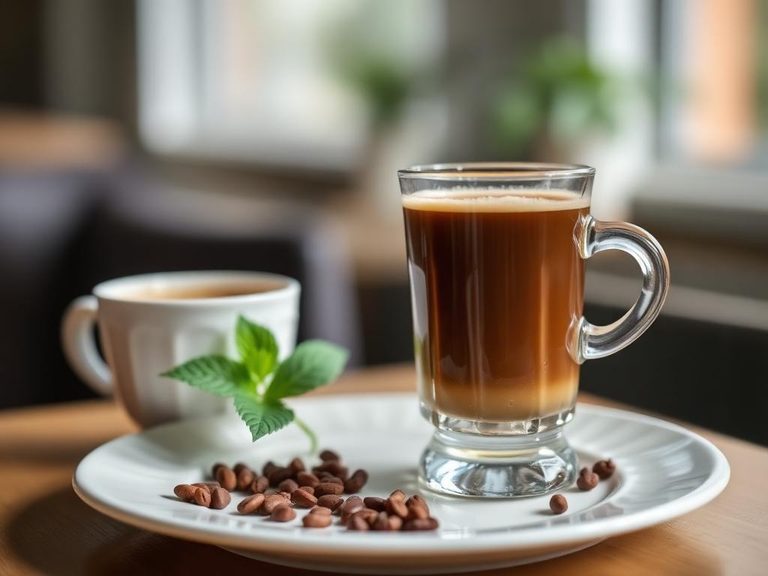
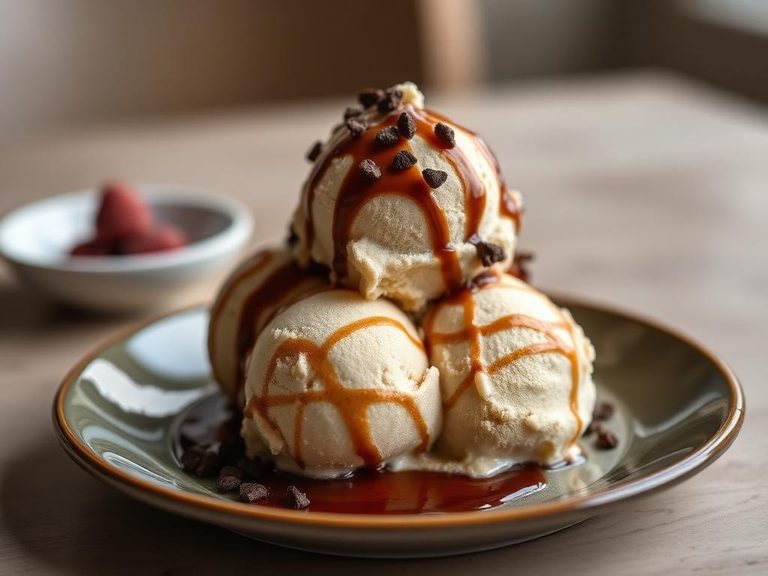
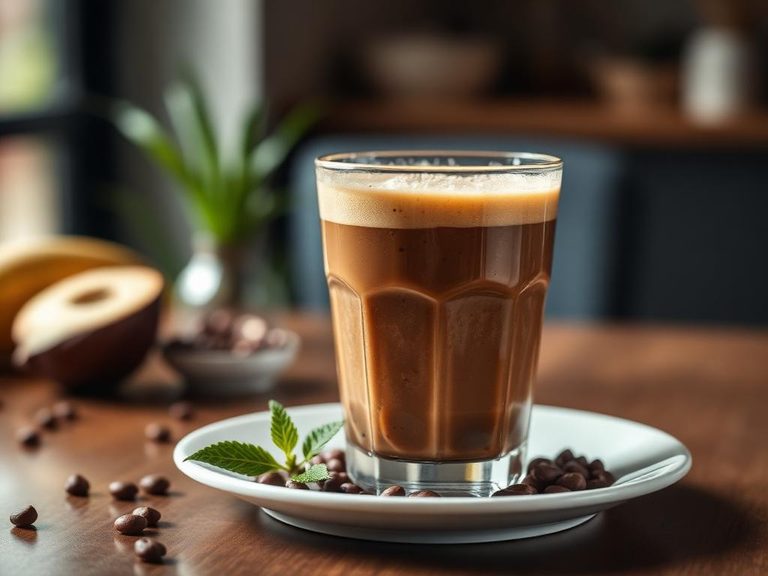
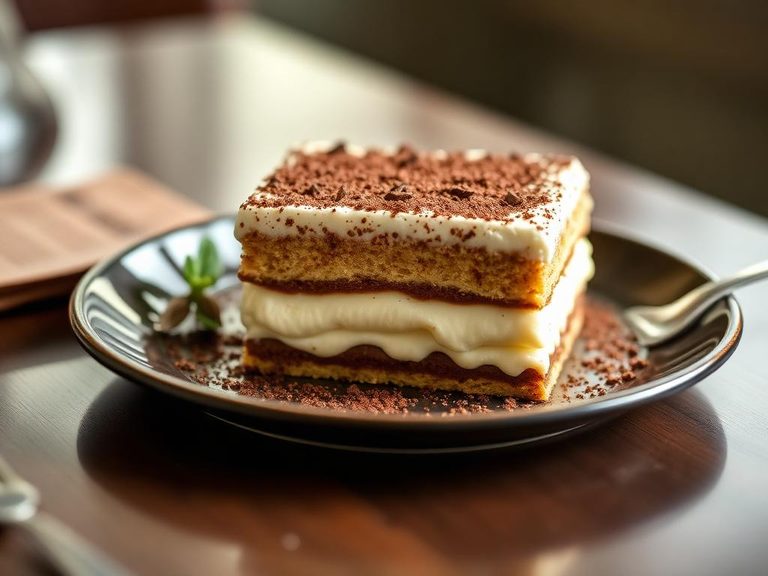

🌍 Where it's eaten
💡 Did you know?
Kurt Zosel, a German engineer, invented instant coffee in 1901 as a way to find a use for surplus coffee, and it later became a staple of U.S. military rations during both World Wars.
Full nutrition (USDA data · scales with serving)
| Water | 99.1 g |
| Energy | 3.0 kcal |
| Protein | 0.10 g |
| Total lipid (fat) | 0.00 g |
| Carbohydrate, by difference | 0.64 g |
| Fiber, total dietary | 0.00 g |
| Total Sugars | 0.00 g |
| Calcium, Ca | 4.0 mg |
| Iron, Fe | 0.03 mg |
| Magnesium, Mg | 4.0 mg |
| Phosphorus, P | 2.0 mg |
| Potassium, K | 29.0 mg |
| Sodium, Na | 4.0 mg |
| Zinc, Zn | 0.01 mg |
| Copper, Cu | 0.01 mg |
| Selenium, Se | 0.10 ug |
| Vitamin C, total ascorbic acid | 0.00 mg |
| Thiamin | 0.00 mg |
| Riboflavin | 0.01 mg |
| Niacin | 0.23 mg |
| Vitamin B-6 | 0.00 mg |
| Folate, total | 0.00 ug |
| Folic acid | 0.00 ug |
| Folate, food | 0.00 ug |
| Folate, DFE | 0.00 ug |
| Choline, total | 0.90 mg |
| Vitamin B-12 | 0.00 ug |
| Vitamin B-12, added | 0.00 ug |
| Vitamin A, RAE | 0.00 ug |
| Retinol | 0.00 ug |
| Carotene, beta | 0.00 ug |
| Carotene, alpha | 0.00 ug |
| Cryptoxanthin, beta | 0.00 ug |
| Lycopene | 0.00 ug |
| Lutein + zeaxanthin | 0.00 ug |
| Vitamin E (alpha-tocopherol) | 0.00 mg |
| Vitamin E, added | 0.00 mg |
| Vitamin D (D2 + D3) | 0.00 ug |
| Vitamin K (phylloquinone) | 0.00 ug |
| Alcohol, ethyl | 0.00 g |
| Caffeine | 1.0 mg |
| Theobromine | 0.00 mg |
Fat & fatty acid profile (per 100g)
| Fatty acids, total saturated | 0.00 g |
| SFA 4:0 | 0.00 g |
| SFA 6:0 | 0.00 g |
| SFA 8:0 | 0.00 g |
| SFA 10:0 | 0.00 g |
| SFA 12:0 | 0.00 g |
| SFA 14:0 | 0.00 g |
| SFA 16:0 | 0.00 g |
| SFA 18:0 | 0.00 g |
| Fatty acids, total monounsaturated | 0.00 g |
| MUFA 16:1 | 0.00 g |
| MUFA 18:1 | 0.00 g |
| MUFA 20:1 | 0.00 g |
| MUFA 22:1 | 0.00 g |
| Fatty acids, total polyunsaturated | 0.00 g |
| PUFA 18:2 | 0.00 g |
| PUFA 18:3 | 0.00 g |
| PUFA 18:4 | 0.00 g |
| PUFA 20:4 | 0.00 g |
| PUFA 20:5 n-3 (EPA) | 0.00 g |
| PUFA 22:5 n-3 (DPA) | 0.00 g |
| PUFA 22:6 n-3 (DHA) | 0.00 g |
| Cholesterol | 0.00 mg |
Amino acid profile (per 100g)
Estimated from Cream, fluid, light (coffee cream or table cream) — USDA does not publish this profile for Coffee.
| Tryptophan | 0.07 g |
| Threonine | 0.13 g |
| Isoleucine | 0.15 g |
| Leucine | 0.24 g |
| Lysine | 0.13 g |
| Methionine | 0.07 g |
| Cystine | 0.01 g |
| Phenylalanine | 0.14 g |
| Tyrosine | 0.14 g |
| Valine | 0.18 g |
| Arginine | 0.07 g |
| Histidine | 0.07 g |
| Alanine | 0.09 g |
| Aspartic acid | 0.22 g |
| Glutamic acid | 0.59 g |
| Glycine | 0.07 g |
| Proline | 0.31 g |
| Serine | 0.10 g |
FAQ
Does instant decaf coffee still contain caffeine?
Yes, most decaf coffees retain 2–15 mg of caffeine per cup, as complete removal is technically impossible; it’s still significantly less than regular coffee (80–100 mg per cup).
How does instant decaf coffee compare nutritionally to fresh brew?
Instant decaf is nearly identical in calories (about 3–5 kcal per cup) but may have slightly less chlorogenic acid due to processing; it also contains negligible sodium unless seasoned.
Why does decaf coffee sometimes tastes waterier than regular coffee?
The decaffeination process removes some flavor compounds along with caffeine; rehydration with too little coffee granules can also intensify the watery taste, so adjusting the ratio of powder to water is key.
Nutrient density (calculated · NRF9.3)
Nutrient Rich Foods index: beneficial nutrients (protein, fiber, vitamins, minerals) minus saturated fat, added sugar & sodium, per 100 kcal.
NRF9.3 index — Fulgoni, Keast & Drewnowski, 2009. Computed from USDA nutrients.
Weight-loss friendliness (composite index)
Energy density 0.03 kcal/g · 13% calories from protein · 0.0 g fiber · 0.0 g sugar per 100 g.
Composite of energy density (Rolls et al., 1999), protein & fiber satiety, minus sugar. A calculated heuristic — ranks satiety-per-calorie, not a clinical measure.
Dietary load (calculated from USDA values)
Potential renal acid load. Positive = acid-forming, negative = alkaline-forming.
Sodium-to-potassium ratio: 0.14 (lower is better — aim for ≤ 1)
Sodium:potassium per WHO potassium guidance. Computed from USDA nutrients.