

Coffee, instant, decaffeinated, not reconstituted
Common food

Photo: Wikipedia
Instant decaffeinated coffee is a soluble, granulated powder made from brewed coffee that has had most of its caffeine removed, offering a rich, dark, and slightly bitter flavor profile without the stimulant. Its texture is fine and dry, dissolving quickly into hot water to create a smooth, aromatic beverage. Nutritionally, it is notably high in carbohydrates and protein per 100g, though these values are concentrated in the dry powder and diluted significantly when reconstituted.
Calorie split: 13% protein · 86% carbs · 1% fat
↓ Full nutrition💚 Why it's loved
People love it for its unmatched convenience and the ability to enjoy a warm, comforting coffee experience at any time of day without the jitters. Its versatility makes it a staple for quick beverages, baking, and even savory dishes where a deep coffee flavor is desired.
⚠️ Watch-outs & how to enjoy it better
Some find its taste less complex and more bitter than freshly brewed coffee, and its high carbohydrate content per 100g can be misleading for those monitoring intake. To counteract potential blood sugar spikes from the concentrated carbs, pair it with a source of protein or healthy fat, like a handful of nuts or a splash of milk, and use portion control by sticking to a standard 1-2 teaspoon serving.
Key benefits
- Provides a coffee flavor without caffeine, ideal for evening consumption or caffeine-sensitive individuals.
- Extremely convenient and quick to prepare, requiring only hot water.
- Low in fat and contains no sugar in its pure form.
- Offers a source of antioxidants like chlorogenic acids, which are retained during processing.
- High in protein and carbohydrates per 100g of dry powder, though these are minimal in a typical serving.
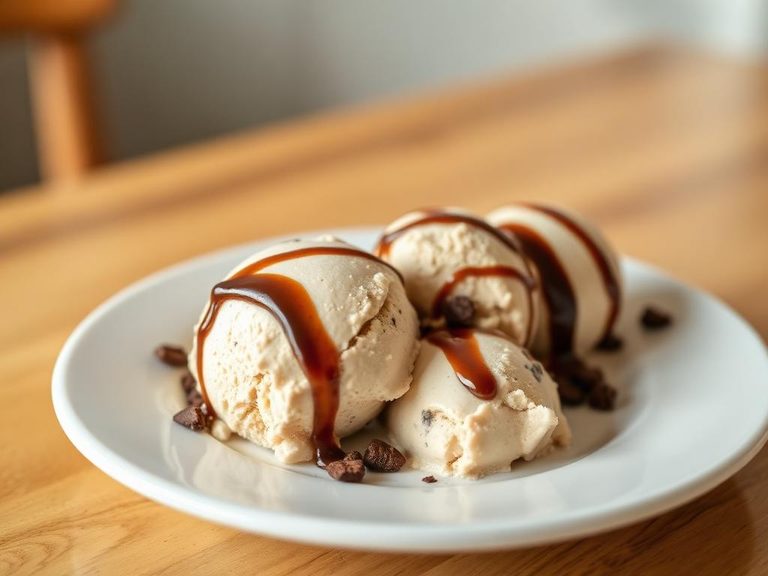
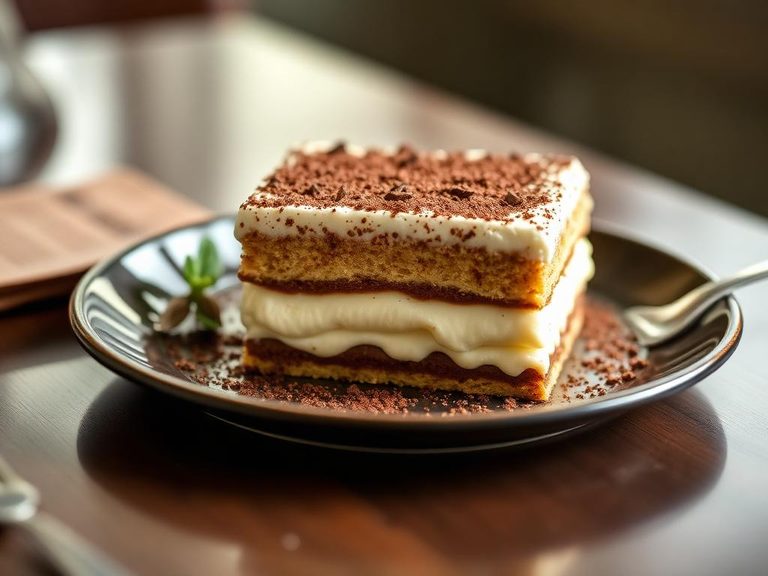
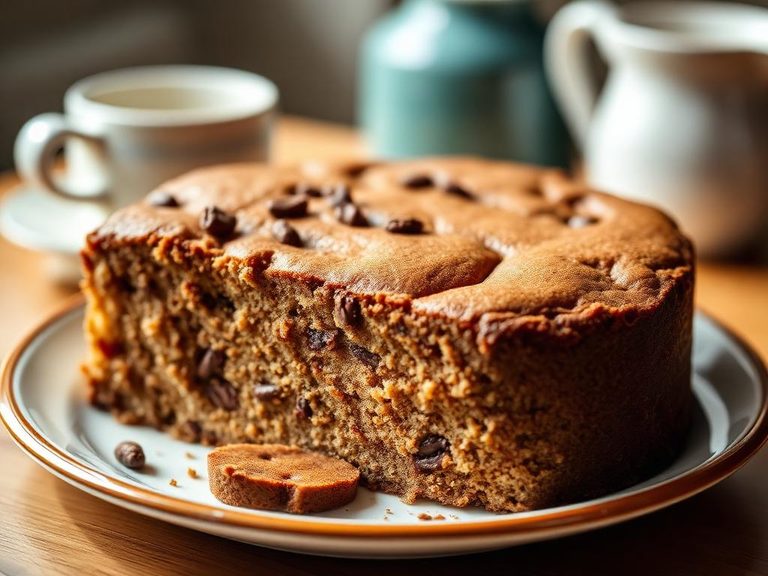
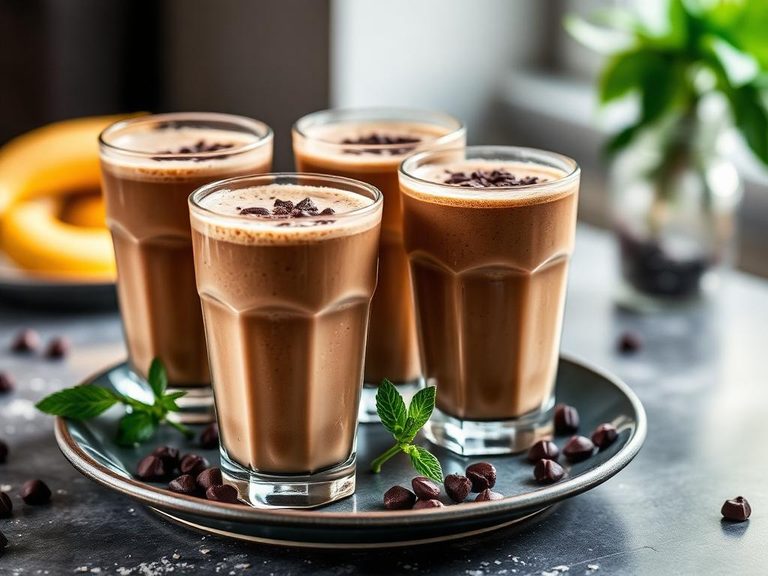
🍽️ Popular dishes
🌍 Where it's eaten
💡 Did you know?
Instant coffee was first patented in 1901 by Japanese-American chemist Satori Kato, but it gained widespread popularity during World War II when it was included in U.S. military rations for its portability and long shelf life.
Full nutrition (USDA data · scales with serving)
| Water | 3.2 g |
| Energy | 351 kcal |
| Protein | 11.6 g |
| Total lipid (fat) | 0.20 g |
| Carbohydrate, by difference | 76.0 g |
| Fiber, total dietary | 0.00 g |
| Total Sugars | 0.00 g |
| Calcium, Ca | 140 mg |
| Iron, Fe | 3.8 mg |
| Magnesium, Mg | 311 mg |
| Phosphorus, P | 286 mg |
| Potassium, K | 3501 mg |
| Sodium, Na | 23.0 mg |
| Zinc, Zn | 0.11 mg |
| Copper, Cu | 0.07 mg |
| Selenium, Se | 17.3 ug |
| Vitamin C, total ascorbic acid | 0.00 mg |
| Thiamin | 0.00 mg |
| Riboflavin | 1.4 mg |
| Niacin | 28.1 mg |
| Vitamin B-6 | 0.00 mg |
| Folate, total | 0.00 ug |
| Folic acid | 0.00 ug |
| Folate, food | 0.00 ug |
| Folate, DFE | 0.00 ug |
| Choline, total | 102 mg |
| Vitamin B-12 | 0.00 ug |
| Vitamin B-12, added | 0.00 ug |
| Vitamin A, RAE | 0.00 ug |
| Retinol | 0.00 ug |
| Carotene, beta | 0.00 ug |
| Carotene, alpha | 0.00 ug |
| Cryptoxanthin, beta | 0.00 ug |
| Lycopene | 0.00 ug |
| Lutein + zeaxanthin | 0.00 ug |
| Vitamin E (alpha-tocopherol) | 0.00 mg |
| Vitamin E, added | 0.00 mg |
| Vitamin D (D2 + D3) | 0.00 ug |
| Vitamin K (phylloquinone) | 1.9 ug |
| Alcohol, ethyl | 0.00 g |
| Caffeine | 122 mg |
| Theobromine | 0.00 mg |
Fat & fatty acid profile (per 100g)
| Fatty acids, total saturated | 0.10 g |
| SFA 4:0 | 0.00 g |
| SFA 6:0 | 0.00 g |
| SFA 8:0 | 0.00 g |
| SFA 10:0 | 0.00 g |
| SFA 12:0 | 0.00 g |
| SFA 14:0 | 0.00 g |
| SFA 16:0 | 0.07 g |
| SFA 18:0 | 0.02 g |
| Fatty acids, total monounsaturated | 0.02 g |
| MUFA 16:1 | 0.00 g |
| MUFA 18:1 | 0.02 g |
| MUFA 20:1 | 0.00 g |
| MUFA 22:1 | 0.00 g |
| Fatty acids, total polyunsaturated | 0.10 g |
| PUFA 18:2 | 0.09 g |
| PUFA 18:3 | 0.01 g |
| PUFA 18:4 | 0.00 g |
| PUFA 20:4 | 0.00 g |
| PUFA 20:5 n-3 (EPA) | 0.00 g |
| PUFA 22:5 n-3 (DPA) | 0.00 g |
| PUFA 22:6 n-3 (DHA) | 0.00 g |
| Cholesterol | 0.00 mg |
Amino acid profile (per 100g)
Estimated from Cream, fluid, light (coffee cream or table cream) — USDA does not publish this profile for Coffee.
| Tryptophan | 0.07 g |
| Threonine | 0.13 g |
| Isoleucine | 0.15 g |
| Leucine | 0.24 g |
| Lysine | 0.13 g |
| Methionine | 0.07 g |
| Cystine | 0.01 g |
| Phenylalanine | 0.14 g |
| Tyrosine | 0.14 g |
| Valine | 0.18 g |
| Arginine | 0.07 g |
| Histidine | 0.07 g |
| Alanine | 0.09 g |
| Aspartic acid | 0.22 g |
| Glutamic acid | 0.59 g |
| Glycine | 0.07 g |
| Proline | 0.31 g |
| Serine | 0.10 g |
FAQ
How much caffeine is in decaffeinated instant coffee?
Decaffeinated instant coffee typically contains 2-15 mg of caffeine per serving, compared to 80-100 mg in regular coffee, depending on the brand and decaffeination method.
Can I use instant decaf coffee in baking?
Yes, it's excellent for adding coffee flavor to cakes, brownies, and frostings. Dissolve it in a small amount of hot water before adding to the batter for even distribution.
Is instant decaf coffee as healthy as regular coffee?
It retains many of the antioxidants found in regular coffee but with minimal caffeine. However, it may have slightly lower levels of certain beneficial compounds due to the processing involved.
Nutrient density (calculated · NRF9.3)
Nutrient Rich Foods index: beneficial nutrients (protein, fiber, vitamins, minerals) minus saturated fat, added sugar & sodium, per 100 kcal.
NRF9.3 index — Fulgoni, Keast & Drewnowski, 2009. Computed from USDA nutrients.
Weight-loss friendliness (composite index)
Energy density 3.51 kcal/g · 13% calories from protein · 0.0 g fiber · 0.0 g sugar per 100 g.
Composite of energy density (Rolls et al., 1999), protein & fiber satiety, minus sugar. A calculated heuristic — ranks satiety-per-calorie, not a clinical measure.
Dietary load (calculated from USDA values)
Potential renal acid load. Positive = acid-forming, negative = alkaline-forming.
Sodium-to-potassium ratio: 0.01 (lower is better — aim for ≤ 1)
Sodium:potassium per WHO potassium guidance. Computed from USDA nutrients.