

Chili, white
Common food
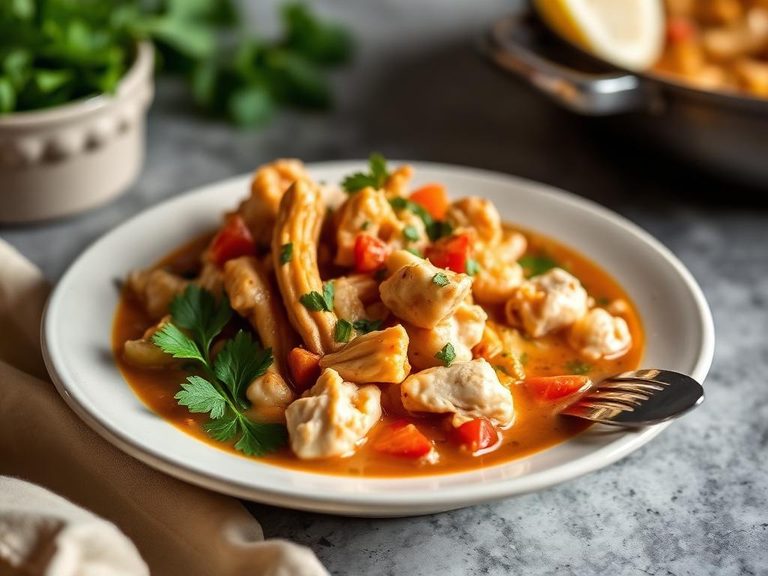
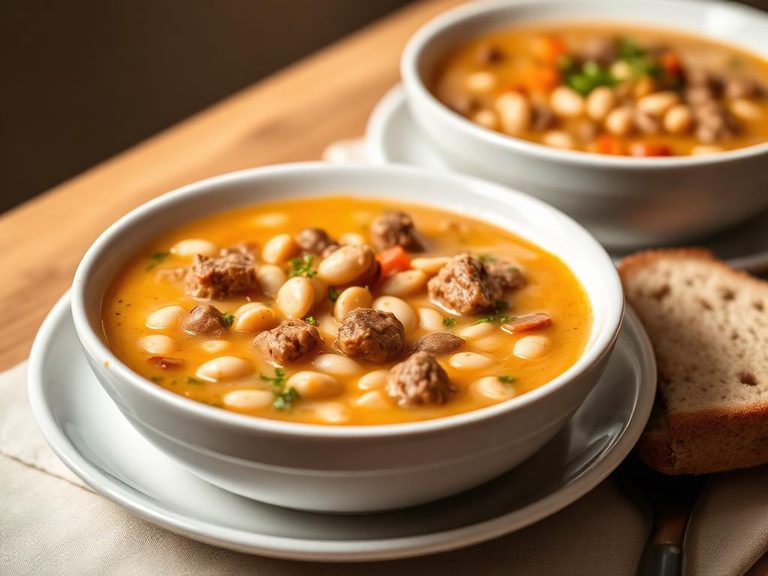
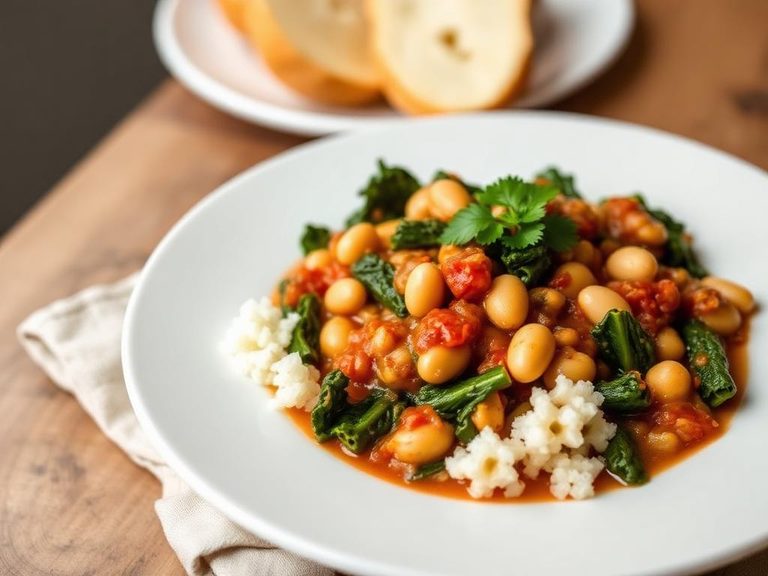
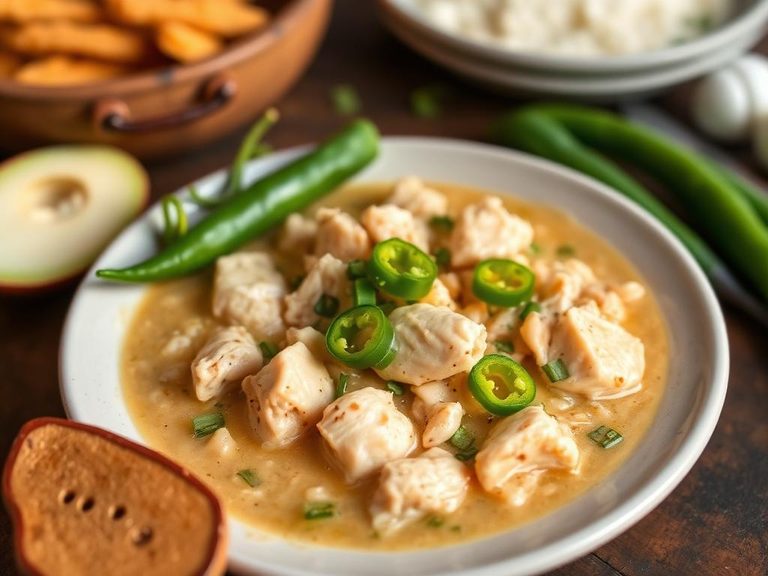
White chili is a hearty, savory stew built on tender white beans, shredded chicken, and a warm, earthy blend of spices. Its flavor profile is milder and more nuanced than its red counterpart, often featuring cumin, oregano, and a touch of heat from green chiles. Nutritionally, it's a protein-packed powerhouse, offering nearly 10 grams of protein per 100 grams with a balanced mix of complex carbohydrates and fiber.
Calorie split: 42% protein · 41% carbs · 18% fat
↓ Full nutrition💚 Why it's loved
People love white chili for its comforting, layered flavor that balances warmth with a creamy, hearty texture. It's a versatile crowd-pleaser, perfect for everything from casual weeknight dinners to festive gatherings, and it's a beloved staple in Southwestern and Tex-Mex cuisine.
⚠️ Watch-outs & how to enjoy it better
The primary concern is the high sodium content from canned beans, broth, and seasonings, which can be problematic for those monitoring blood pressure. To counteract this, use low-sodium broth, rinse canned beans thoroughly, and balance the meal with fresh, low-sodium sides like a green salad or steamed vegetables. Also, the beans' fiber and protein can cause digestive discomfort in some; start with smaller portions and increase gradually.
Key benefits
- Excellent source of lean protein for muscle maintenance and satiety.
- High in dietary fiber to support digestive health and steady energy levels.
- Low in fat, making it a heart-healthy, nutrient-dense meal option.
- Rich in complex carbohydrates for sustained fuel without a sugar crash.
- Provides essential minerals like iron and magnesium from white beans.
🍽️ Popular dishes
🌍 Where it's eaten
💡 Did you know?
White chili often uses Great Northern beans or cannellini beans, which are actually the same plant (Phaseolus vulgaris) but with different names based on size and region, and they were first domesticated in Mesoamerica over 7,000 years ago.
Full nutrition (USDA data · scales with serving)
| Water | 77.1 g |
| Energy | 95.0 kcal |
| Protein | 9.9 g |
| Total lipid (fat) | 1.9 g |
| Carbohydrate, by difference | 9.7 g |
| Fiber, total dietary | 2.4 g |
| Total Sugars | 0.97 g |
| Calcium, Ca | 36.0 mg |
| Iron, Fe | 1.5 mg |
| Magnesium, Mg | 29.0 mg |
| Phosphorus, P | 95.0 mg |
| Potassium, K | 280 mg |
| Sodium, Na | 324 mg |
| Zinc, Zn | 0.82 mg |
| Copper, Cu | 0.12 mg |
| Selenium, Se | 7.4 ug |
| Vitamin C, total ascorbic acid | 4.6 mg |
| Thiamin | 0.07 mg |
| Riboflavin | 0.07 mg |
| Niacin | 1.9 mg |
| Vitamin B-6 | 0.22 mg |
| Folate, total | 30.0 ug |
| Folic acid | 0.00 ug |
| Folate, food | 30.0 ug |
| Folate, DFE | 30.0 ug |
| Choline, total | 34.3 mg |
| Vitamin B-12 | 0.07 ug |
| Vitamin B-12, added | 0.00 ug |
| Vitamin A, RAE | 10.0 ug |
| Retinol | 3.0 ug |
| Carotene, beta | 80.0 ug |
| Carotene, alpha | 11.0 ug |
| Cryptoxanthin, beta | 17.0 ug |
| Lycopene | 0.00 ug |
| Lutein + zeaxanthin | 19.0 ug |
| Vitamin E (alpha-tocopherol) | 0.57 mg |
| Vitamin E, added | 0.00 mg |
| Vitamin D (D2 + D3) | 0.00 ug |
| Vitamin K (phylloquinone) | 3.0 ug |
| Alcohol, ethyl | 0.00 g |
| Caffeine | 0.00 mg |
| Theobromine | 0.00 mg |
Fat & fatty acid profile (per 100g)
| Fatty acids, total saturated | 0.54 g |
| SFA 4:0 | 0.00 g |
| SFA 6:0 | 0.00 g |
| SFA 8:0 | 0.00 g |
| SFA 10:0 | 0.00 g |
| SFA 12:0 | 0.00 g |
| SFA 14:0 | 0.01 g |
| SFA 16:0 | 0.42 g |
| SFA 18:0 | 0.10 g |
| Fatty acids, total monounsaturated | 0.74 g |
| MUFA 16:1 | 0.10 g |
| MUFA 18:1 | 0.62 g |
| MUFA 20:1 | 0.01 g |
| MUFA 22:1 | 0.00 g |
| Fatty acids, total polyunsaturated | 0.46 g |
| PUFA 18:2 | 0.38 g |
| PUFA 18:3 | 0.04 g |
| PUFA 18:4 | 0.00 g |
| PUFA 20:4 | 0.02 g |
| PUFA 20:5 n-3 (EPA) | 0.00 g |
| PUFA 22:5 n-3 (DPA) | 0.00 g |
| PUFA 22:6 n-3 (DHA) | 0.00 g |
| Cholesterol | 29.0 mg |
Amino acid profile (per 100g)
Estimated from APPLEBEE'S, chili — USDA does not publish this profile for Chili.
| Tryptophan | 0.14 g |
| Threonine | 0.40 g |
| Isoleucine | 0.56 g |
| Leucine | 0.93 g |
| Lysine | 0.84 g |
| Methionine | 0.28 g |
| Cystine | 0.12 g |
| Phenylalanine | 0.47 g |
| Tyrosine | 0.34 g |
| Valine | 0.64 g |
| Arginine | 0.77 g |
| Histidine | 0.37 g |
| Alanine | 0.79 g |
| Aspartic acid | 1.2 g |
| Glutamic acid | 2.1 g |
| Glycine | 0.83 g |
| Proline | 0.85 g |
| Serine | 0.37 g |
| Hydroxyproline | 0.24 g |
FAQ
Is white chili healthier than red chili?
White chili is generally lower in fat and calories than traditional red chili, which often includes beef and more oil. It's also typically higher in fiber and protein from white beans, making it a lighter, more balanced option.
Can I make white chili without chicken?
Absolutely. You can substitute chicken with turkey, pork, or even tofu for a vegetarian version. For extra heartiness, add more beans or vegetables like corn and bell peppers.
How do I reduce the sodium in white chili?
Use low-sodium broth, rinse canned beans before adding them, and season with herbs and spices like cumin, oregano, and garlic instead of salt. You can also add a squeeze of lime or a dollop of Greek yogurt for flavor without extra sodium.
Nutrient density (calculated · NRF9.3)
Nutrient Rich Foods index: beneficial nutrients (protein, fiber, vitamins, minerals) minus saturated fat, added sugar & sodium, per 100 kcal.
NRF9.3 index — Fulgoni, Keast & Drewnowski, 2009. Computed from USDA nutrients.
Weight-loss friendliness (composite index)
Energy density 0.95 kcal/g · 42% calories from protein · 2.4 g fiber · 1.0 g sugar per 100 g.
Composite of energy density (Rolls et al., 1999), protein & fiber satiety, minus sugar. A calculated heuristic — ranks satiety-per-calorie, not a clinical measure.
Dietary load (calculated from USDA values)
Potential renal acid load. Positive = acid-forming, negative = alkaline-forming.
Sodium-to-potassium ratio: 1.16 (lower is better — aim for ≤ 1)
Sodium:potassium per WHO potassium guidance. Computed from USDA nutrients.