

Chicken thigh, NS as to cooking method, skin not eaten
Common food

Photo: Wikipedia
Chicken thigh, skin removed, is a lean, dark meat cut known for its rich, savory flavor and tender, juicy texture. With 24g of protein and zero carbs per 100g, it's a powerhouse for muscle maintenance and low-carb diets. The absence of skin significantly reduces its fat content compared to skin-on versions, making it a leaner protein choice.
Calorie split: 50% protein · 0% carbs · 50% fat
↓ Full nutrition💚 Why it's loved
People love it for its deep, meaty flavor and forgiving texture that stays moist with almost any cooking method. Its versatility makes it a staple in cuisines worldwide, from stews and curries to grilled dishes.
⚠️ Watch-outs & how to enjoy it better
While leaner than skin-on, it's still higher in fat than chicken breast, which some may note for strict calorie counting. To maximize nutrition, pair with high-fiber vegetables to balance the meal and use herbs, spices, or citrus in marinades to reduce the need for added salt.
Key benefits
- Excellent source of complete protein for muscle repair and satiety.
- Naturally zero carbohydrates, ideal for ketogenic and low-carb diets.
- Rich in essential minerals like selenium and phosphorus.
- Contains B vitamins, particularly niacin (B3) and B6, for energy metabolism.
- Leaner than skin-on thigh, offering a good balance of flavor and reduced fat.
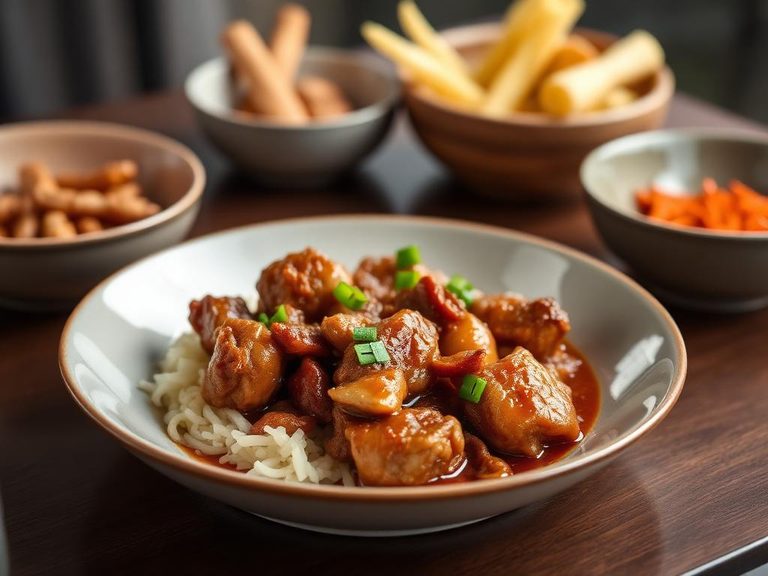
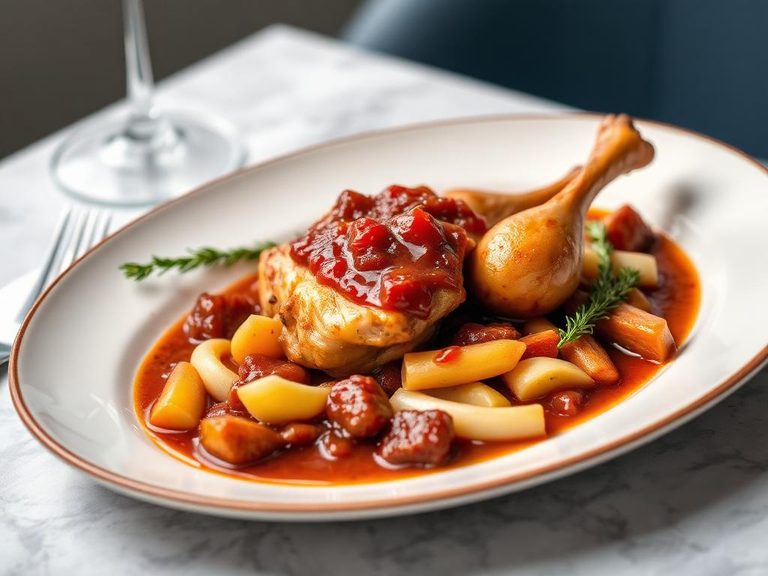
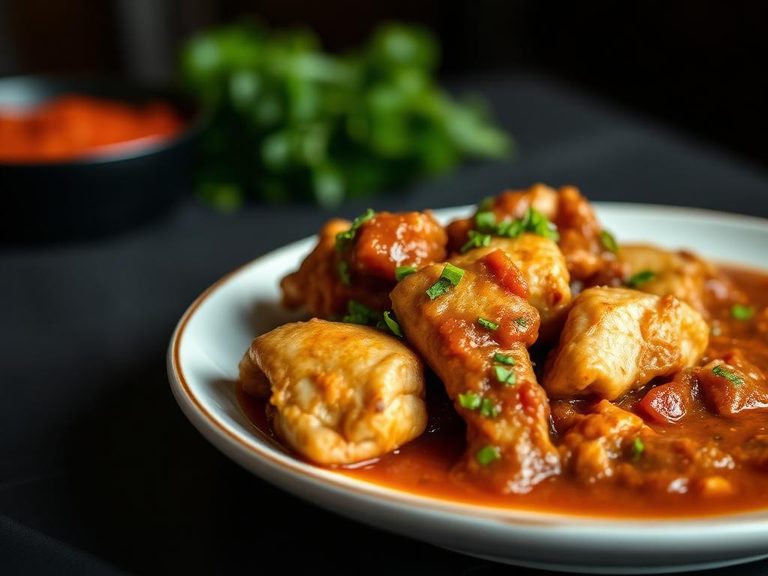
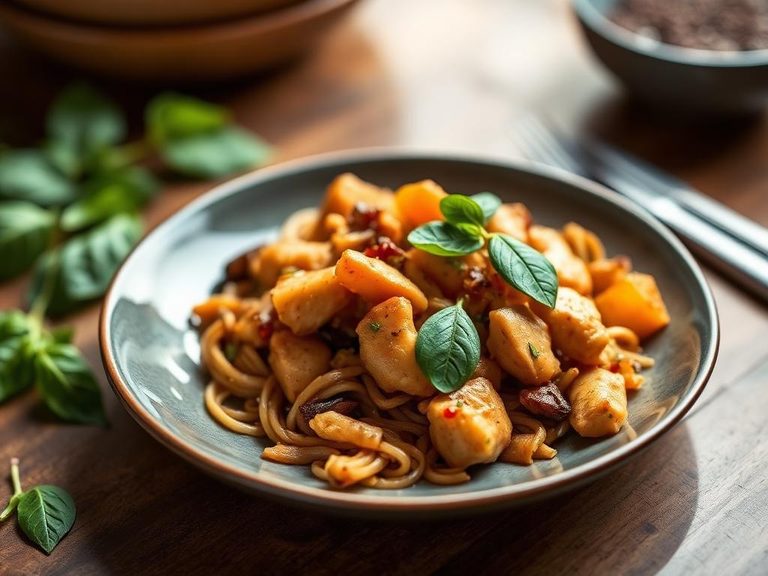
🍽️ Popular dishes

🌍 Where it's eaten
💡 Did you know?
Chicken thigh meat has about twice the iron and three times the zinc of chicken breast, contributing to its darker color and richer nutritional profile.
Full nutrition (USDA data · scales with serving)
| Water | 64.3 g |
| Energy | 193 kcal |
| Protein | 24.1 g |
| Total lipid (fat) | 10.7 g |
| Carbohydrate, by difference | 0.00 g |
| Fiber, total dietary | 0.00 g |
| Total Sugars | 0.00 g |
| Calcium, Ca | 13.0 mg |
| Iron, Fe | 0.97 mg |
| Magnesium, Mg | 21.0 mg |
| Phosphorus, P | 216 mg |
| Potassium, K | 262 mg |
| Sodium, Na | 335 mg |
| Zinc, Zn | 2.0 mg |
| Copper, Cu | 0.08 mg |
| Selenium, Se | 23.1 ug |
| Vitamin C, total ascorbic acid | 0.00 mg |
| Thiamin | 0.06 mg |
| Riboflavin | 0.23 mg |
| Niacin | 5.4 mg |
| Vitamin B-6 | 0.18 mg |
| Folate, total | 8.0 ug |
| Folic acid | 0.00 ug |
| Folate, food | 8.0 ug |
| Folate, DFE | 8.0 ug |
| Choline, total | 68.0 mg |
| Vitamin B-12 | 0.45 ug |
| Vitamin B-12, added | 0.00 ug |
| Vitamin A, RAE | 13.0 ug |
| Retinol | 13.0 ug |
| Carotene, beta | 0.00 ug |
| Carotene, alpha | 0.00 ug |
| Cryptoxanthin, beta | 0.00 ug |
| Lycopene | 0.00 ug |
| Lutein + zeaxanthin | 0.00 ug |
| Vitamin E (alpha-tocopherol) | 0.48 mg |
| Vitamin E, added | 0.00 mg |
| Vitamin D (D2 + D3) | 0.00 ug |
| Vitamin K (phylloquinone) | 0.00 ug |
| Alcohol, ethyl | 0.00 g |
| Caffeine | 0.00 mg |
| Theobromine | 0.00 mg |
Fat & fatty acid profile (per 100g)
| Fatty acids, total saturated | 2.8 g |
| SFA 4:0 | 0.00 g |
| SFA 6:0 | 0.00 g |
| SFA 8:0 | 0.00 g |
| SFA 10:0 | 0.00 g |
| SFA 12:0 | 0.00 g |
| SFA 14:0 | 0.06 g |
| SFA 16:0 | 2.2 g |
| SFA 18:0 | 0.48 g |
| Fatty acids, total monounsaturated | 4.7 g |
| MUFA 16:1 | 0.78 g |
| MUFA 18:1 | 3.9 g |
| MUFA 20:1 | 0.03 g |
| MUFA 22:1 | 0.00 g |
| Fatty acids, total polyunsaturated | 1.6 g |
| PUFA 18:2 | 1.5 g |
| PUFA 18:3 | 0.09 g |
| PUFA 18:4 | 0.00 g |
| PUFA 20:4 | 0.03 g |
| PUFA 20:5 n-3 (EPA) | 0.00 g |
| PUFA 22:5 n-3 (DPA) | 0.00 g |
| PUFA 22:6 n-3 (DHA) | 0.00 g |
| Cholesterol | 128 mg |
Amino acid profile (per 100g)
Estimated from Chicken, broilers or fryers, dark meat, thigh, meat only, raw — USDA does not publish this profile for Chicken thigh.
| Tryptophan | 0.22 g |
| Threonine | 0.93 g |
| Isoleucine | 0.94 g |
| Leucine | 1.7 g |
| Lysine | 1.9 g |
| Methionine | 0.56 g |
| Cystine | 0.23 g |
| Phenylalanine | 0.79 g |
| Tyrosine | 0.74 g |
| Valine | 0.96 g |
| Arginine | 1.4 g |
| Histidine | 0.59 g |
| Alanine | 1.2 g |
| Aspartic acid | 1.9 g |
| Glutamic acid | 3.2 g |
| Glycine | 0.90 g |
| Proline | 0.79 g |
| Serine | 0.82 g |
FAQ
Is skinless chicken thigh as healthy as breast?
It's very healthy but slightly higher in fat and calories. It offers more iron and zinc, making it a nutrient-dense choice, especially for active individuals.
How do I keep it juicy without the skin?
Marinate it, avoid overcooking (use a meat thermometer to check for 165°F/74°C), and let it rest briefly after cooking. Methods like braising or stewing are particularly forgiving.
Can I eat this on a low-fat diet?
Yes, but be mindful of portion size. Removing the skin cuts the fat by roughly half compared to skin-on thigh, making it a reasonable choice within a balanced, lower-fat eating pattern.
Nutrient density (calculated · NRF9.3)
Nutrient Rich Foods index: beneficial nutrients (protein, fiber, vitamins, minerals) minus saturated fat, added sugar & sodium, per 100 kcal.
NRF9.3 index — Fulgoni, Keast & Drewnowski, 2009. Computed from USDA nutrients.
Weight-loss friendliness (composite index)
Energy density 1.93 kcal/g · 50% calories from protein · 0.0 g fiber · 0.0 g sugar per 100 g.
Composite of energy density (Rolls et al., 1999), protein & fiber satiety, minus sugar. A calculated heuristic — ranks satiety-per-calorie, not a clinical measure.
Dietary load (calculated from USDA values)
Potential renal acid load. Positive = acid-forming, negative = alkaline-forming.
Sodium-to-potassium ratio: 1.28 (lower is better — aim for ≤ 1)
Sodium:potassium per WHO potassium guidance. Computed from USDA nutrients.