

Chicken thigh, NS as to cooking method, skin eaten
Common food

Photo: Wikipedia
Chicken thigh with skin is a rich, succulent cut of poultry known for its robust flavor and juicy, tender texture. It is a powerhouse of protein and healthy fats, offering a satisfying and flavorful eating experience. The skin adds a delightful crispness and extra richness, making it a favorite for many.
Calorie split: 40% protein · 0% carbs · 60% fat
↓ Full nutrition💚 Why it's loved
People love chicken thighs for their deep, savory flavor and forgiving nature—they stay moist and tender even when slightly overcooked. The skin, when crisped, adds a satisfying textural contrast and a boost of umami that makes them a staple in comfort food and home cooking.
⚠️ Watch-outs & how to enjoy it better
The skin significantly increases the fat and calorie content, which may be a concern for those monitoring saturated fat intake or managing cardiovascular health. To counteract this, you can remove the skin before eating or opt for grilling or roasting methods that allow excess fat to render off. Pairing with fiber-rich vegetables can also help balance the meal.
Key benefits
- High in protein for muscle maintenance and satiety
- Rich in iron and zinc, supporting immune function
- Contains B vitamins like niacin and B6 for energy metabolism
- Provides healthy monounsaturated fats, especially when skin is eaten
- More flavorful and forgiving to cook than leaner cuts
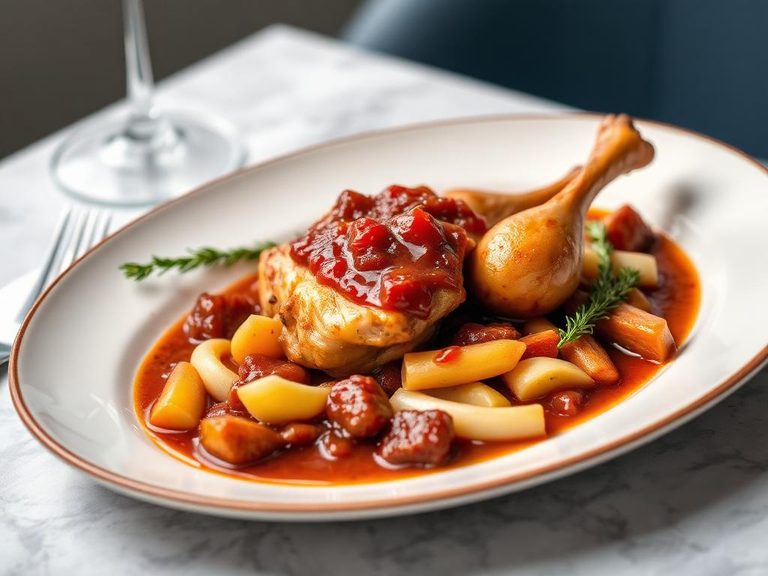
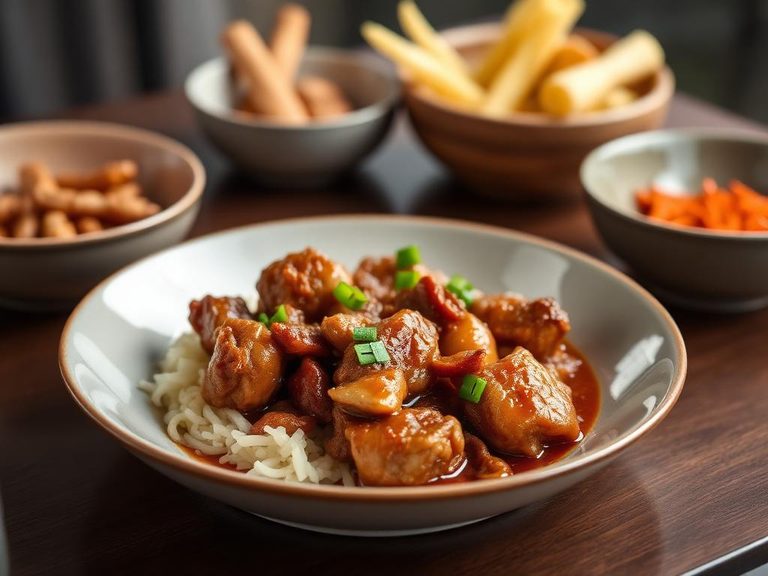
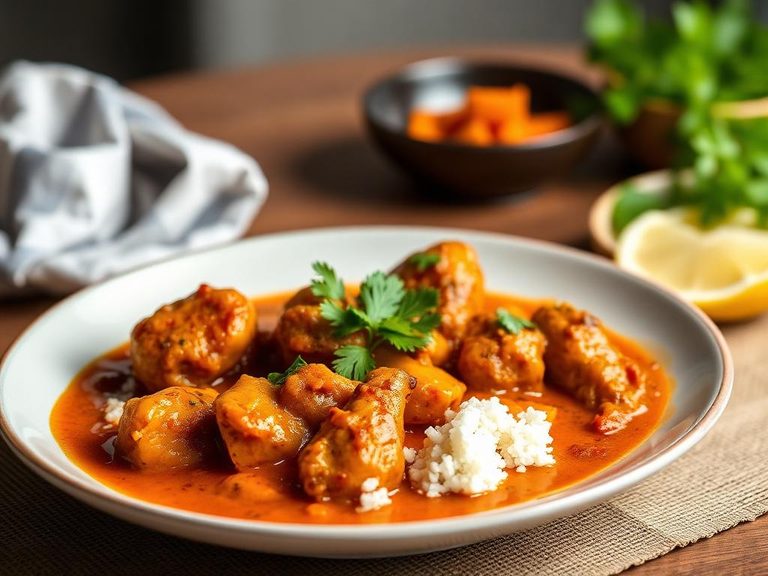
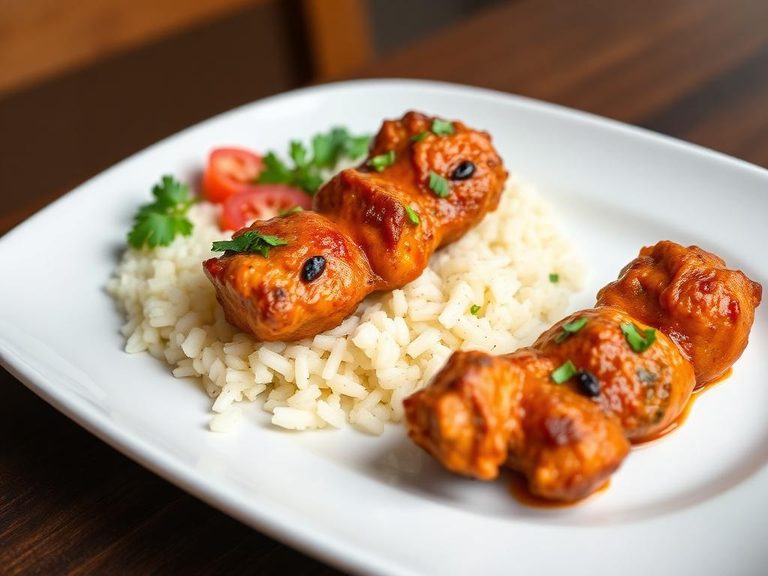
🍽️ Popular dishes


🌍 Where it's eaten
💡 Did you know?
Chicken thighs contain more myoglobin than breast meat, which is why they are darker in color and have a richer, more 'meaty' flavor.
Full nutrition (USDA data · scales with serving)
| Water | 61.4 g |
| Energy | 226 kcal |
| Protein | 22.5 g |
| Total lipid (fat) | 15.1 g |
| Carbohydrate, by difference | 0.12 g |
| Fiber, total dietary | 0.00 g |
| Total Sugars | 0.12 g |
| Calcium, Ca | 16.0 mg |
| Iron, Fe | 0.95 mg |
| Magnesium, Mg | 21.0 mg |
| Phosphorus, P | 218 mg |
| Potassium, K | 255 mg |
| Sodium, Na | 335 mg |
| Zinc, Zn | 1.8 mg |
| Copper, Cu | 0.08 mg |
| Selenium, Se | 22.0 ug |
| Vitamin C, total ascorbic acid | 0.00 mg |
| Thiamin | 0.06 mg |
| Riboflavin | 0.23 mg |
| Niacin | 5.7 mg |
| Vitamin B-6 | 0.19 mg |
| Folate, total | 8.0 ug |
| Folic acid | 0.00 ug |
| Folate, food | 8.0 ug |
| Folate, DFE | 8.0 ug |
| Choline, total | 62.9 mg |
| Vitamin B-12 | 0.47 ug |
| Vitamin B-12, added | 0.00 ug |
| Vitamin A, RAE | 20.0 ug |
| Retinol | 20.0 ug |
| Carotene, beta | 0.00 ug |
| Carotene, alpha | 0.00 ug |
| Cryptoxanthin, beta | 0.00 ug |
| Lycopene | 0.00 ug |
| Lutein + zeaxanthin | 0.00 ug |
| Vitamin E (alpha-tocopherol) | 0.46 mg |
| Vitamin E, added | 0.00 mg |
| Vitamin D (D2 + D3) | 0.00 ug |
| Vitamin K (phylloquinone) | 0.00 ug |
| Alcohol, ethyl | 0.00 g |
| Caffeine | 0.00 mg |
| Theobromine | 0.00 mg |
Fat & fatty acid profile (per 100g)
| Fatty acids, total saturated | 3.9 g |
| SFA 4:0 | 0.00 g |
| SFA 6:0 | 0.00 g |
| SFA 8:0 | 0.00 g |
| SFA 10:0 | 0.00 g |
| SFA 12:0 | 0.00 g |
| SFA 14:0 | 0.08 g |
| SFA 16:0 | 3.2 g |
| SFA 18:0 | 0.69 g |
| Fatty acids, total monounsaturated | 6.4 g |
| MUFA 16:1 | 1.1 g |
| MUFA 18:1 | 5.3 g |
| MUFA 20:1 | 0.04 g |
| MUFA 22:1 | 0.00 g |
| Fatty acids, total polyunsaturated | 2.0 g |
| PUFA 18:2 | 1.9 g |
| PUFA 18:3 | 0.10 g |
| PUFA 18:4 | 0.00 g |
| PUFA 20:4 | 0.03 g |
| PUFA 20:5 n-3 (EPA) | 0.00 g |
| PUFA 22:5 n-3 (DPA) | 0.00 g |
| PUFA 22:6 n-3 (DHA) | 0.00 g |
| Cholesterol | 127 mg |
Amino acid profile (per 100g)
Estimated from Chicken, broilers or fryers, dark meat, thigh, meat only, raw — USDA does not publish this profile for Chicken thigh.
| Tryptophan | 0.22 g |
| Threonine | 0.93 g |
| Isoleucine | 0.94 g |
| Leucine | 1.7 g |
| Lysine | 1.9 g |
| Methionine | 0.56 g |
| Cystine | 0.23 g |
| Phenylalanine | 0.79 g |
| Tyrosine | 0.74 g |
| Valine | 0.96 g |
| Arginine | 1.4 g |
| Histidine | 0.59 g |
| Alanine | 1.2 g |
| Aspartic acid | 1.9 g |
| Glutamic acid | 3.2 g |
| Glycine | 0.90 g |
| Proline | 0.79 g |
| Serine | 0.82 g |
FAQ
Is chicken thigh healthier than chicken breast?
Chicken breast is leaner and lower in calories and fat, making it better for low-fat diets. However, chicken thighs offer more iron, zinc, and B vitamins, and their higher fat content can contribute to satiety and flavor.
How should I store cooked chicken thighs?
Cooked chicken thighs should be refrigerated within two hours and consumed within 3-4 days. For longer storage, freeze them in airtight containers for up to 3 months.
Can I eat the skin if I'm watching my fat intake?
While the skin adds flavor and texture, it also increases the fat and calorie content. You can remove the skin after cooking to reduce fat intake while still enjoying the flavorful meat.
Nutrient density (calculated · NRF9.3)
Nutrient Rich Foods index: beneficial nutrients (protein, fiber, vitamins, minerals) minus saturated fat, added sugar & sodium, per 100 kcal.
NRF9.3 index — Fulgoni, Keast & Drewnowski, 2009. Computed from USDA nutrients.
Weight-loss friendliness (composite index)
Energy density 2.26 kcal/g · 40% calories from protein · 0.0 g fiber · 0.1 g sugar per 100 g.
Composite of energy density (Rolls et al., 1999), protein & fiber satiety, minus sugar. A calculated heuristic — ranks satiety-per-calorie, not a clinical measure.
Dietary load (calculated from USDA values)
Potential renal acid load. Positive = acid-forming, negative = alkaline-forming.
Sodium-to-potassium ratio: 1.31 (lower is better — aim for ≤ 1)
Sodium:potassium per WHO potassium guidance. Computed from USDA nutrients.