

Chicken or turkey and rice, no sauce
Common food

Photo: Wikipedia
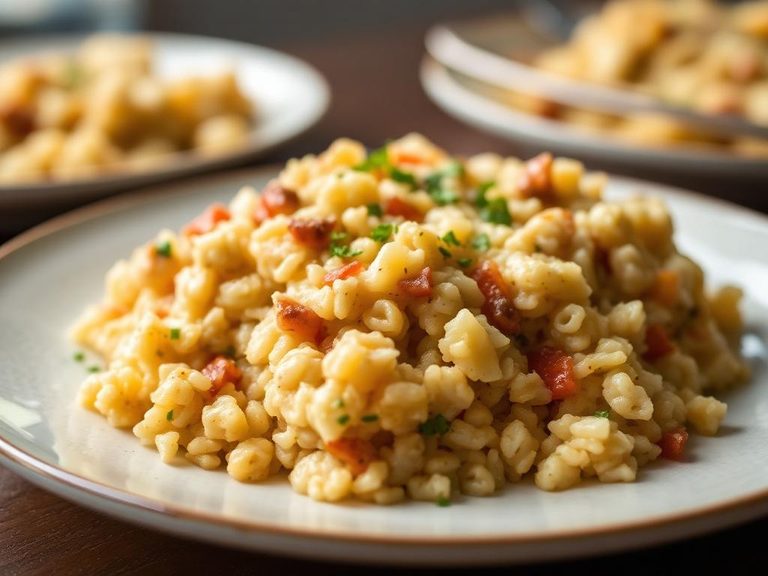
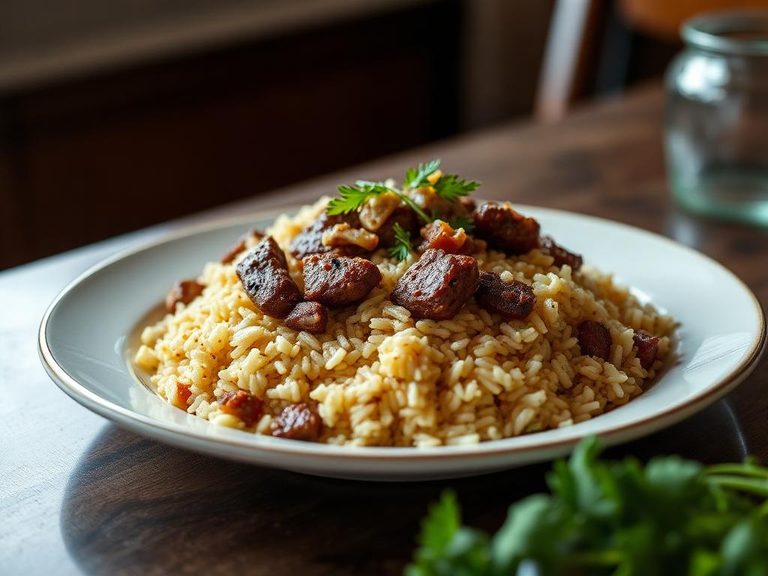
A simple, savory base of tender chicken or turkey breast simmered with white rice, offering a clean, mild flavor and a soft, comforting texture. This dish is a lean protein source with a moderate carbohydrate content, making it a balanced, low-fat staple. Its neutral profile makes it a blank canvas for countless global seasonings and preparations.
Calorie split: 18% protein · 46% carbs · 36% fat
↓ Full nutrition💚 Why it's loved
People love it for its comforting simplicity and adaptability—it’s a familiar, mild-flavored foundation that can be dressed up with herbs, spices, or sauces to fit any cuisine. It's a go-to for quick weeknight meals, meal prep, and soothing meals when feeling under the weather.
⚠️ Watch-outs & how to enjoy it better
On its own, it can be bland and lack dietary fiber, which may lead to quicker hunger and less stable blood sugar levels. To counteract this, pair it with non-starchy vegetables (like steamed broccoli or a side salad) and a healthy fat (like avocado or olive oil) to boost satiety and nutrient absorption.
Key benefits
- High-quality lean protein for muscle maintenance
- Low in fat and sugar
- Gentle on digestion
- Versatile base for adding vegetables and flavors
- Quick and economical to prepare
🍽️ Popular dishes
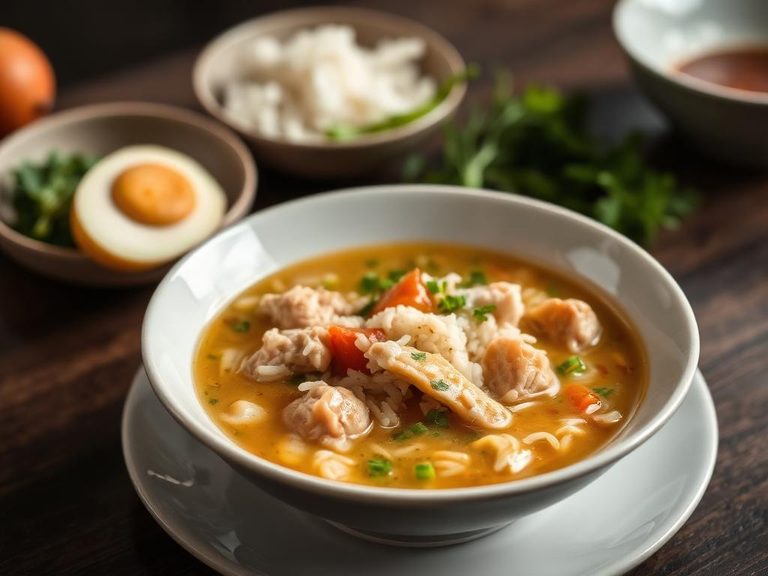
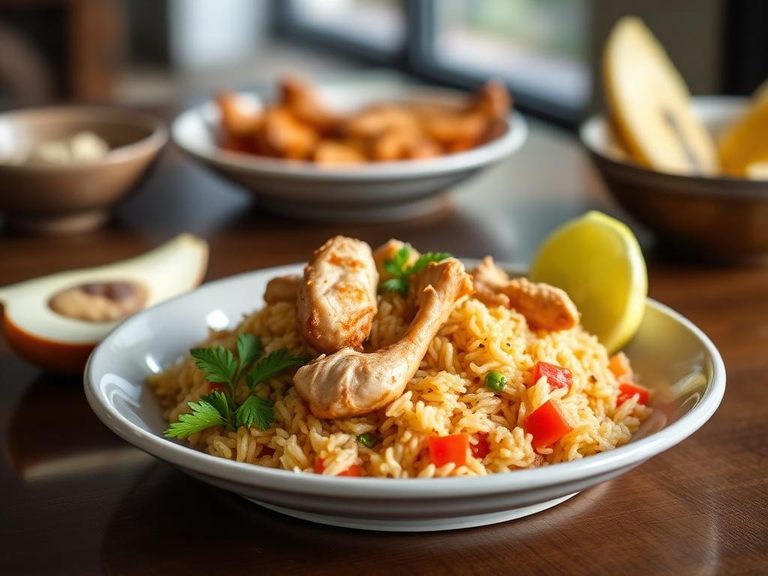
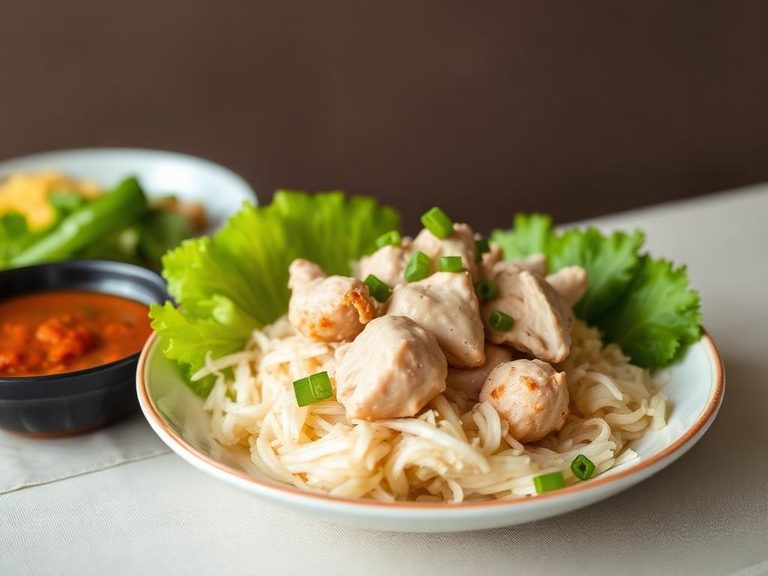
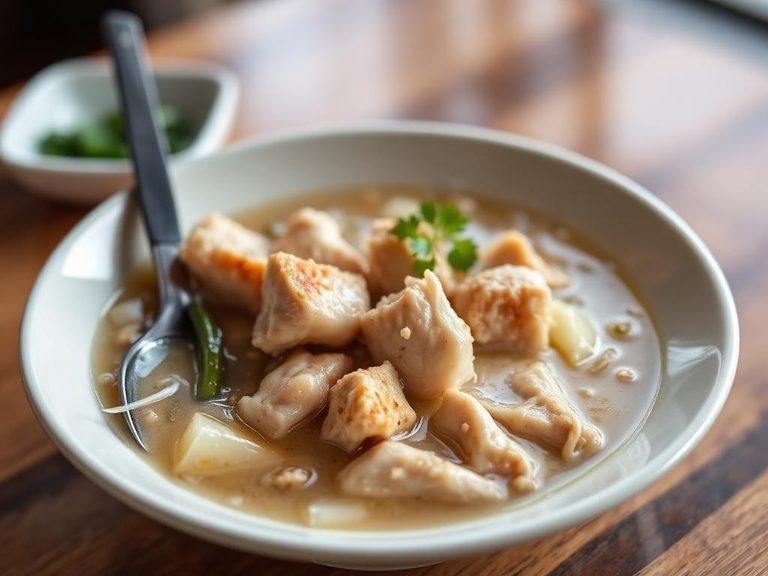
🌍 Where it's eaten
💡 Did you know?
The classic 'chicken and rice' soup is often called 'Jewish penicillin' for its reputation as a comforting, healing food during illness, though its soothing properties are more about hydration and easy digestion than actual antibiotics.
Full nutrition (USDA data · scales with serving)
| Water | 69.6 g |
| Energy | 149 kcal |
| Protein | 6.5 g |
| Total lipid (fat) | 5.8 g |
| Carbohydrate, by difference | 17.0 g |
| Fiber, total dietary | 0.20 g |
| Total Sugars | 0.03 g |
| Calcium, Ca | 10.0 mg |
| Iron, Fe | 0.86 mg |
| Magnesium, Mg | 12.0 mg |
| Phosphorus, P | 69.0 mg |
| Potassium, K | 71.0 mg |
| Sodium, Na | 353 mg |
| Zinc, Zn | 0.59 mg |
| Copper, Cu | 0.06 mg |
| Selenium, Se | 8.8 ug |
| Vitamin C, total ascorbic acid | 0.00 mg |
| Thiamin | 0.11 mg |
| Riboflavin | 0.04 mg |
| Niacin | 2.3 mg |
| Vitamin B-6 | 0.10 mg |
| Folate, total | 37.0 ug |
| Folic acid | 33.0 ug |
| Folate, food | 3.0 ug |
| Folate, DFE | 60.0 ug |
| Choline, total | 13.3 mg |
| Vitamin B-12 | 0.07 ug |
| Vitamin B-12, added | 0.00 ug |
| Vitamin A, RAE | 2.0 ug |
| Retinol | 2.0 ug |
| Carotene, beta | 0.00 ug |
| Carotene, alpha | 0.00 ug |
| Cryptoxanthin, beta | 0.00 ug |
| Lycopene | 0.00 ug |
| Lutein + zeaxanthin | 0.00 ug |
| Vitamin E (alpha-tocopherol) | 0.96 mg |
| Vitamin E, added | 0.00 mg |
| Vitamin D (D2 + D3) | 0.00 ug |
| Vitamin K (phylloquinone) | 4.5 ug |
| Alcohol, ethyl | 0.00 g |
| Caffeine | 0.00 mg |
| Theobromine | 0.00 mg |
Fat & fatty acid profile (per 100g)
| Fatty acids, total saturated | 0.94 g |
| SFA 4:0 | 0.00 g |
| SFA 6:0 | 0.00 g |
| SFA 8:0 | 0.00 g |
| SFA 10:0 | 0.00 g |
| SFA 12:0 | 0.00 g |
| SFA 14:0 | 0.01 g |
| SFA 16:0 | 0.70 g |
| SFA 18:0 | 0.18 g |
| Fatty acids, total monounsaturated | 2.5 g |
| MUFA 16:1 | 0.10 g |
| MUFA 18:1 | 2.3 g |
| MUFA 20:1 | 0.03 g |
| MUFA 22:1 | 0.00 g |
| Fatty acids, total polyunsaturated | 1.9 g |
| PUFA 18:2 | 1.7 g |
| PUFA 18:3 | 0.21 g |
| PUFA 18:4 | 0.00 g |
| PUFA 20:4 | 0.00 g |
| PUFA 20:5 n-3 (EPA) | 0.00 g |
| PUFA 22:5 n-3 (DPA) | 0.00 g |
| PUFA 22:6 n-3 (DHA) | 0.00 g |
| Cholesterol | 20.0 mg |
Amino acid profile (per 100g)
Estimated from Turnover, chicken- or turkey-, and vegetable-filled, reduced fat, frozen — USDA does not publish this profile for Chicken or turkey and rice.
| Tryptophan | 0.16 g |
| Threonine | 0.41 g |
| Isoleucine | 0.47 g |
| Leucine | 0.80 g |
| Lysine | 0.61 g |
| Methionine | 0.23 g |
| Cystine | 0.13 g |
| Phenylalanine | 0.47 g |
| Tyrosine | 0.37 g |
| Valine | 0.53 g |
| Arginine | 0.51 g |
| Histidine | 0.30 g |
| Alanine | 0.45 g |
| Aspartic acid | 0.80 g |
| Glutamic acid | 2.2 g |
| Glycine | 0.38 g |
| Proline | 0.87 g |
| Serine | 0.42 g |
| Hydroxyproline | 0.00 g |
FAQ
Is this a complete meal?
It provides protein and carbs but is low in fiber, vitamins, and minerals. For a complete meal, add a variety of colorful vegetables and a source of healthy fat.
How can I add more flavor without adding sauce?
Use aromatic herbs and spices during cooking (like garlic, ginger, turmeric, or bay leaf), or stir in fresh herbs like cilantro or parsley before serving. A squeeze of lemon or lime juice also brightens the flavor.
Is it suitable for a low-carb diet?
Not as served, since rice is a significant source of carbohydrates. For a lower-carb version, you could substitute cauliflower rice or a mix of half rice and half riced vegetables.
Nutrient density (calculated · NRF9.3)
Nutrient Rich Foods index: beneficial nutrients (protein, fiber, vitamins, minerals) minus saturated fat, added sugar & sodium, per 100 kcal.
NRF9.3 index — Fulgoni, Keast & Drewnowski, 2009. Computed from USDA nutrients.
Weight-loss friendliness (composite index)
Energy density 1.49 kcal/g · 17% calories from protein · 0.2 g fiber · 0.0 g sugar per 100 g.
Composite of energy density (Rolls et al., 1999), protein & fiber satiety, minus sugar. A calculated heuristic — ranks satiety-per-calorie, not a clinical measure.
Dietary load (calculated from USDA values)
Potential renal acid load. Positive = acid-forming, negative = alkaline-forming.
Sodium-to-potassium ratio: 4.97 (lower is better — aim for ≤ 1)
Sodium:potassium per WHO potassium guidance. Computed from USDA nutrients.