

Chicken, broilers or fryers, dark meat, meat and skin, raw
Whole food · Poultry Products
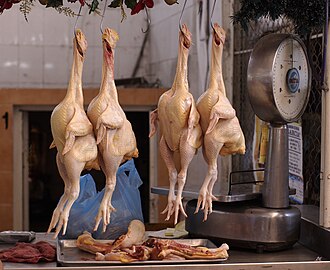
Photo: Wikipedia
This is raw, dark-meat chicken (like thighs and drumsticks) with the skin left on, offering a richer, more succulent bite than white meat. Its higher fat content gives it a deep, savory flavor and a tender, juicy texture that holds up beautifully to high-heat cooking. Nutritionally, it's a powerhouse of protein and essential fats, with virtually no carbohydrates.
Calorie split: 29% protein · 0% carbs · 71% fat
↓ Full nutrition💚 Why it's loved
People adore it for its forgiving nature and deep, savory flavor that doesn't dry out easily, making it ideal for everything from crispy roasted thighs to slow-braised stews. It's the flavorful, juicy foundation for countless beloved comfort foods across global cuisines.
⚠️ Watch-outs & how to enjoy it better
The skin significantly increases the saturated fat and calorie content, which may be a concern for those monitoring heart health or calorie intake. To enjoy it mindfully, opt for cooking methods like roasting or grilling where excess fat can render off, or simply remove the skin before eating to cut down on fat while retaining the meat's juiciness.
Key benefits
- Excellent source of complete protein for muscle maintenance.
- Rich in iron and zinc, crucial for immune function.
- Contains B vitamins, especially niacin and B6, for energy metabolism.
- Skin-on cut provides dietary fat for satiety and nutrient absorption.
🍽️ Popular dishes
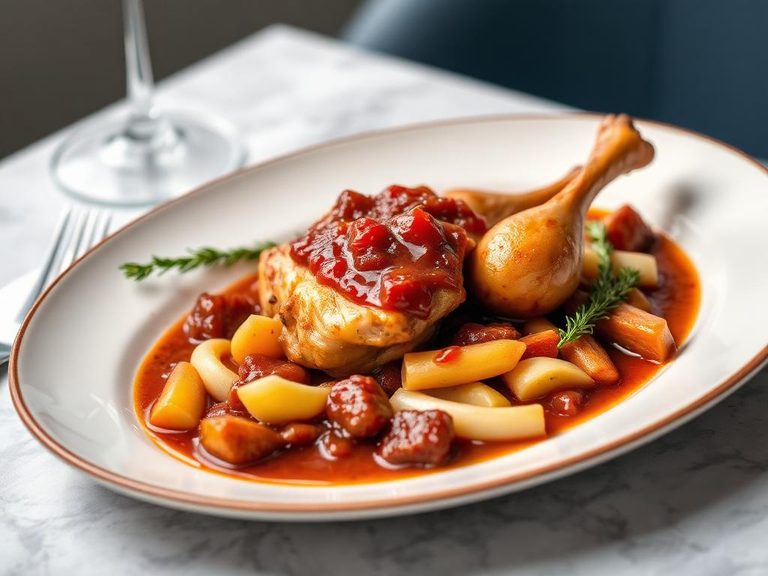
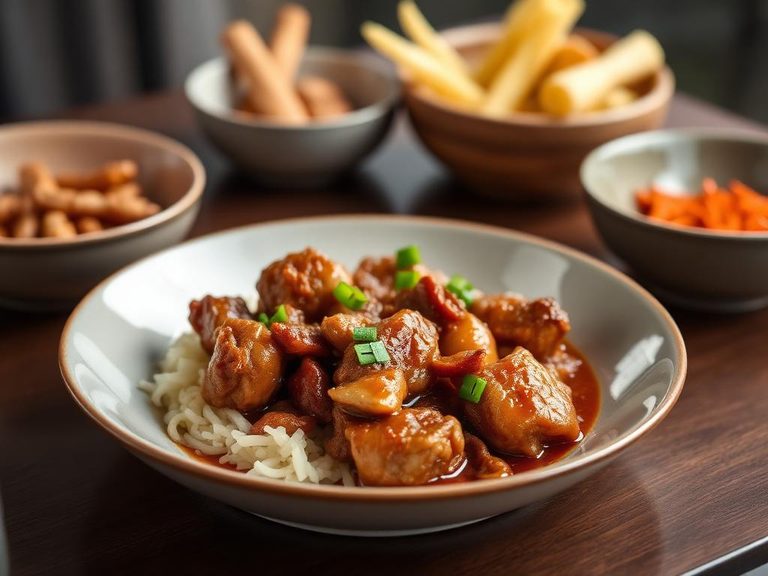
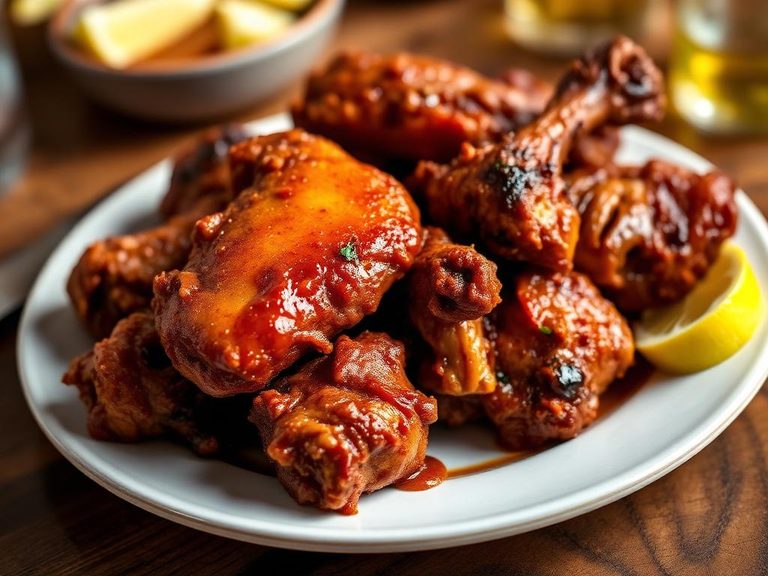

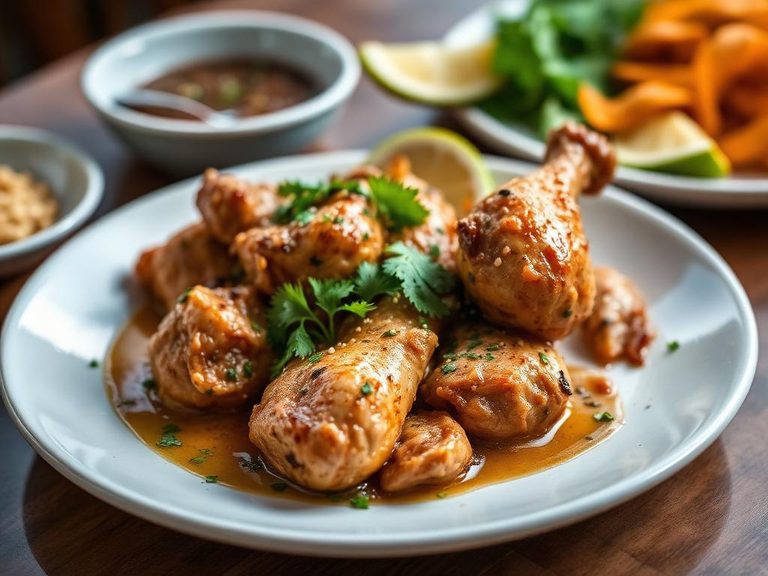
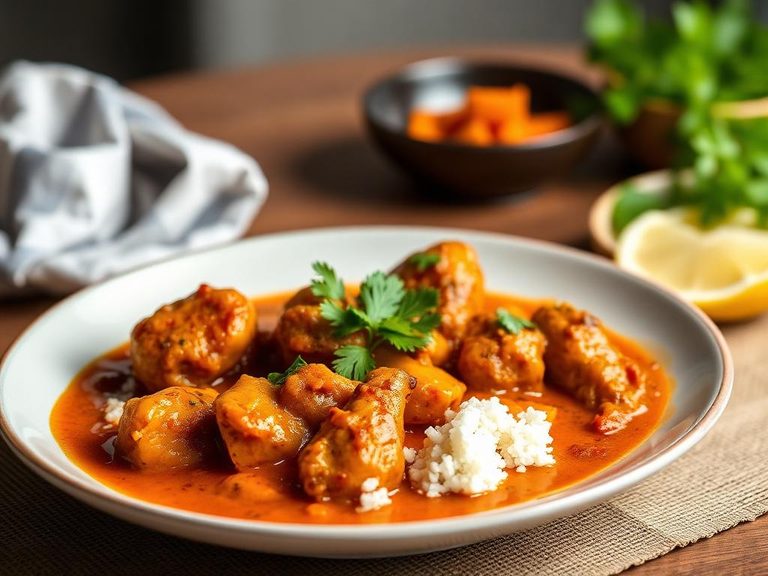
🌍 Where it's eaten
💡 Did you know?
Dark meat chicken contains about twice the amount of myoglobin (an oxygen-storing protein) as white meat, which is what gives it its darker color and richer, more 'meaty' flavor.
Full nutrition (USDA data · scales with serving)
| Water | 65.4 g |
| Energy | 237 kcal |
| Energy | 992 kj |
| Protein | 16.7 g |
| Total lipid (fat) | 18.3 g |
| Ash | 0.76 g |
| Carbohydrate, by difference | 0.00 g |
| Fiber, total dietary | 0.00 g |
| Total Sugars | 0.00 g |
| Calcium, Ca | 11.0 mg |
| Iron, Fe | 0.98 mg |
| Magnesium, Mg | 19.0 mg |
| Phosphorus, P | 136 mg |
| Potassium, K | 178 mg |
| Sodium, Na | 73.0 mg |
| Zinc, Zn | 1.6 mg |
| Copper, Cu | 0.05 mg |
| Manganese, Mn | 0.02 mg |
| Selenium, Se | 12.7 ug |
| Vitamin C, total ascorbic acid | 0.00 mg |
| Thiamin | 0.06 mg |
| Riboflavin | 0.15 mg |
| Niacin | 5.2 mg |
| Pantothenic acid | 0.99 mg |
| Vitamin B-6 | 0.25 mg |
| Folate, total | 7.0 ug |
| Folic acid | 0.00 ug |
| Folate, food | 7.0 ug |
| Folate, DFE | 7.0 ug |
| Vitamin B-12 | 0.29 ug |
| Vitamin A, RAE | 49.0 ug |
| Retinol | 49.0 ug |
| Carotene, beta | 0.00 ug |
| Carotene, alpha | 0.00 ug |
| Cryptoxanthin, beta | 0.00 ug |
| Vitamin A, IU | 163 iu |
| Lycopene | 0.00 ug |
| Lutein + zeaxanthin | 0.00 ug |
| Vitamin E (alpha-tocopherol) | 0.30 mg |
| Vitamin K (phylloquinone) | 2.4 ug |
| Alcohol, ethyl | 0.00 g |
| Caffeine | 0.00 mg |
| Theobromine | 0.00 mg |
Fat & fatty acid profile (per 100g)
| Fatty acids, total saturated | 5.3 g |
| SFA 4:0 | 0.00 g |
| SFA 6:0 | 0.00 g |
| SFA 8:0 | 0.00 g |
| SFA 10:0 | 0.00 g |
| SFA 12:0 | 0.02 g |
| SFA 14:0 | 0.15 g |
| SFA 16:0 | 3.8 g |
| SFA 18:0 | 1.1 g |
| Fatty acids, total monounsaturated | 7.7 g |
| MUFA 16:1 | 1.0 g |
| MUFA 18:1 | 6.3 g |
| MUFA 20:1 | 0.18 g |
| MUFA 22:1 | 0.00 g |
| Fatty acids, total polyunsaturated | 4.0 g |
| PUFA 18:2 | 3.5 g |
| PUFA 18:3 | 0.17 g |
| PUFA 18:4 | 0.00 g |
| PUFA 20:4 | 0.09 g |
| PUFA 20:5 n-3 (EPA) | 0.01 g |
| PUFA 22:5 n-3 (DPA) | 0.02 g |
| PUFA 22:6 n-3 (DHA) | 0.03 g |
| Cholesterol | 81.0 mg |
Amino acid profile (per 100g)
| Tryptophan | 0.18 g |
| Threonine | 0.69 g |
| Isoleucine | 0.82 g |
| Leucine | 1.2 g |
| Lysine | 1.3 g |
| Methionine | 0.44 g |
| Cystine | 0.22 g |
| Phenylalanine | 0.65 g |
| Tyrosine | 0.53 g |
| Valine | 0.81 g |
| Arginine | 1.1 g |
| Histidine | 0.48 g |
| Alanine | 0.98 g |
| Aspartic acid | 1.5 g |
| Glutamic acid | 2.4 g |
| Glycine | 1.1 g |
| Proline | 0.83 g |
| Serine | 0.59 g |
FAQ
Why is dark meat more flavorful than white meat?
Dark meat comes from muscles used more frequently for activity (like walking), which contain more myoglobin and fat. This results in a richer, more robust flavor and a juicier texture compared to the leaner breast meat.
Is the skin on chicken dark meat healthy?
The skin is high in saturated fat and calories. While it adds flavor and helps keep meat moist during cooking, removing it before eating is a simple way to reduce fat intake. You can also cook with the skin on for flavor, then discard it before serving.
What's the best way to cook dark meat to keep it juicy?
Dark meat is very forgiving. High-heat methods like roasting, grilling, or pan-searing are excellent, as the fat renders and bastes the meat. Braising or stewing also works perfectly, as the connective tissue breaks down into gelatin, making it incredibly tender.
Nutrient density (calculated · NRF9.3)
Nutrient Rich Foods index: beneficial nutrients (protein, fiber, vitamins, minerals) minus saturated fat, added sugar & sodium, per 100 kcal.
NRF9.3 index — Fulgoni, Keast & Drewnowski, 2009. Computed from USDA nutrients.
Weight-loss friendliness (composite index)
Energy density 2.37 kcal/g · 28% calories from protein · 0.0 g fiber · 0.0 g sugar per 100 g.
Composite of energy density (Rolls et al., 1999), protein & fiber satiety, minus sugar. A calculated heuristic — ranks satiety-per-calorie, not a clinical measure.
Dietary load (calculated from USDA values)
Potential renal acid load. Positive = acid-forming, negative = alkaline-forming.
Sodium-to-potassium ratio: 0.41 (lower is better — aim for ≤ 1)
Sodium:potassium per WHO potassium guidance. Computed from USDA nutrients.