

Chicken, broilers or fryers, back, meat and skin, raw
Whole food · Poultry Products

Photo: Wikipedia
This cut is the bony, skin-on back portion of a young broiler chicken, prized for its rich, dark meat and high fat content. When raw, it has a moist, slightly slippery texture with a deep, savory poultry aroma. Nutritionally, it's a powerhouse of energy and fat, offering almost no carbohydrates.
Calorie split: 18% protein · 0% carbs · 82% fat
↓ Full nutrition💚 Why it's loved
People love it for its deep, robust chicken flavor and the succulent, tender texture the fat and skin provide, making it ideal for slow-cooking. It's a budget-friendly cut that adds incredible depth to stocks, soups, and stews.
⚠️ Watch-outs & how to enjoy it better
Its high fat and calorie density may not suit low-fat diets. The bony structure can be less convenient for quick meals. To counteract, use it primarily in simmered dishes where excess fat can be skimmed, and pair the meat with high-fiber vegetables to balance the meal.
Key benefits
- Excellent source of dietary fat for energy and satiety.
- Provides a good amount of complete protein.
- Rich in B vitamins like niacin and B6 for metabolism.
- Contains minerals like selenium and phosphorus.
- The skin and fat add significant flavor to dishes.
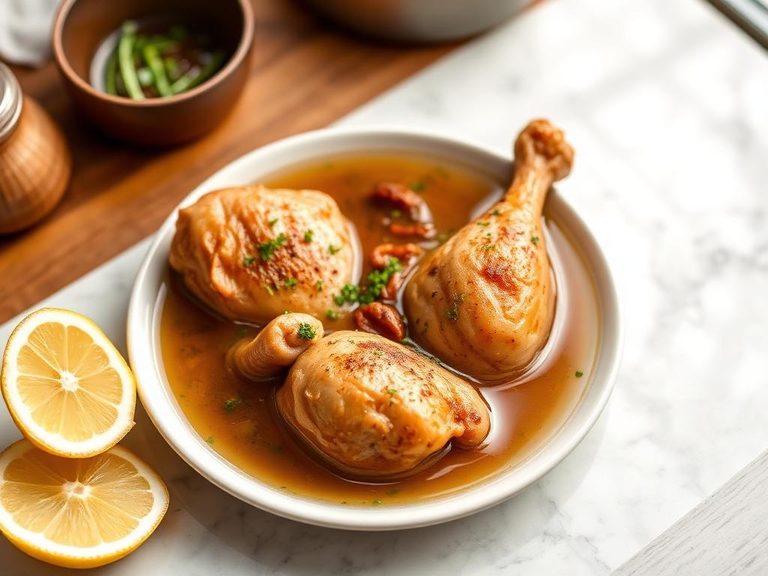
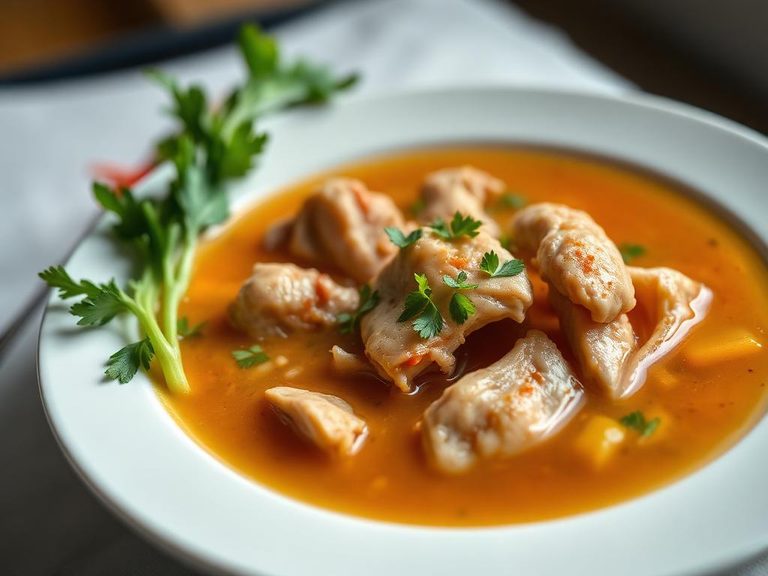
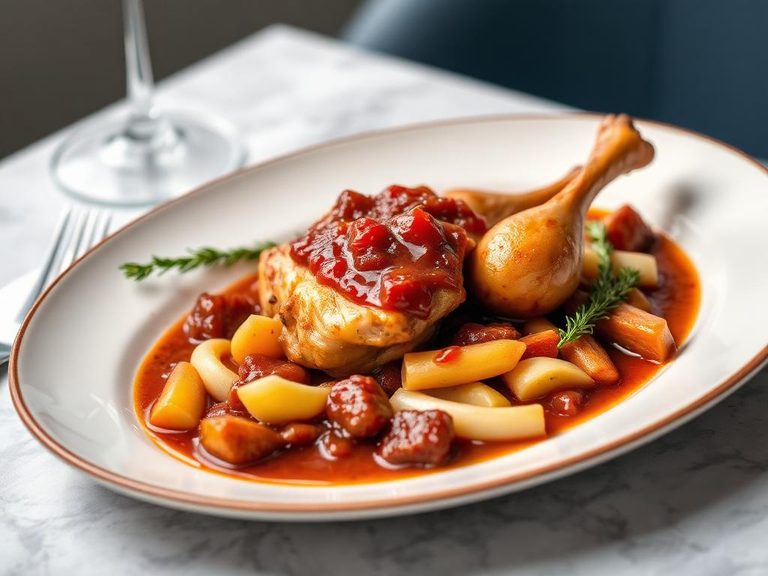
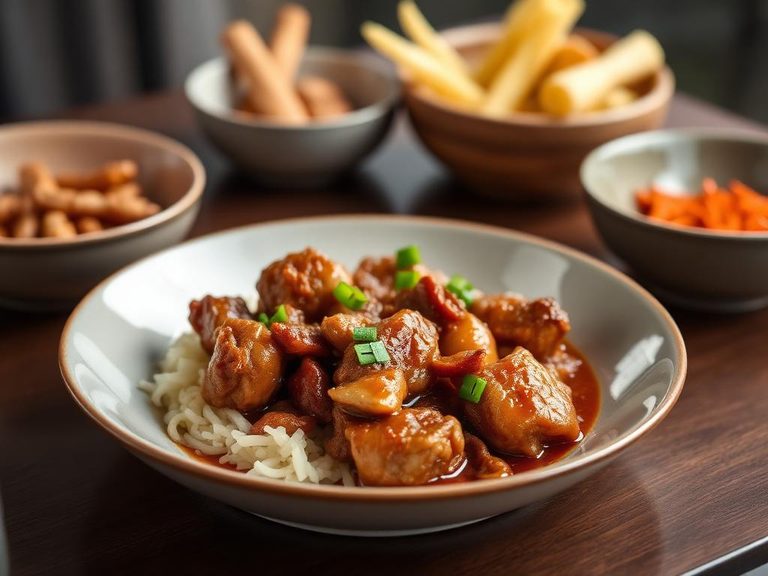
🍽️ Popular dishes

🌍 Where it's eaten
💡 Did you know?
The back is considered a 'chef's cut' because its high ratio of bone, connective tissue, and fat makes it the single best part for creating a rich, gelatinous homemade chicken stock.
Full nutrition (USDA data · scales with serving)
| Water | 58.1 g |
| Energy | 319 kcal |
| Energy | 1335 kj |
| Protein | 14.1 g |
| Total lipid (fat) | 28.7 g |
| Ash | 0.64 g |
| Carbohydrate, by difference | 0.00 g |
| Fiber, total dietary | 0.00 g |
| Total Sugars | 0.00 g |
| Calcium, Ca | 13.0 mg |
| Iron, Fe | 0.94 mg |
| Magnesium, Mg | 15.0 mg |
| Phosphorus, P | 113 mg |
| Potassium, K | 144 mg |
| Sodium, Na | 64.0 mg |
| Zinc, Zn | 1.3 mg |
| Copper, Cu | 0.05 mg |
| Manganese, Mn | 0.02 mg |
| Selenium, Se | 12.1 ug |
| Vitamin C, total ascorbic acid | 1.6 mg |
| Thiamin | 0.05 mg |
| Riboflavin | 0.12 mg |
| Niacin | 4.8 mg |
| Pantothenic acid | 0.82 mg |
| Vitamin B-6 | 0.19 mg |
| Folate, total | 6.0 ug |
| Folic acid | 0.00 ug |
| Folate, food | 6.0 ug |
| Folate, DFE | 6.0 ug |
| Vitamin B-12 | 0.25 ug |
| Vitamin B-12, added | 0.00 ug |
| Vitamin A, RAE | 75.0 ug |
| Retinol | 75.0 ug |
| Carotene, beta | 0.00 ug |
| Carotene, alpha | 0.00 ug |
| Cryptoxanthin, beta | 0.00 ug |
| Vitamin A, IU | 251 iu |
| Lycopene | 0.00 ug |
| Lutein + zeaxanthin | 0.00 ug |
| Vitamin E (alpha-tocopherol) | 0.37 mg |
| Vitamin E, added | 0.00 mg |
| Vitamin K (phylloquinone) | 2.4 ug |
| Alcohol, ethyl | 0.00 g |
| Caffeine | 0.00 mg |
| Theobromine | 0.00 mg |
Fat & fatty acid profile (per 100g)
| Fatty acids, total saturated | 8.3 g |
| SFA 4:0 | 0.00 g |
| SFA 6:0 | 0.00 g |
| SFA 8:0 | 0.00 g |
| SFA 10:0 | 0.00 g |
| SFA 12:0 | 0.03 g |
| SFA 14:0 | 0.24 g |
| SFA 16:0 | 6.1 g |
| SFA 18:0 | 1.7 g |
| Fatty acids, total monounsaturated | 12.3 g |
| MUFA 16:1 | 1.6 g |
| MUFA 18:1 | 10.2 g |
| MUFA 20:1 | 0.29 g |
| MUFA 22:1 | 0.00 g |
| Fatty acids, total polyunsaturated | 6.1 g |
| PUFA 18:2 | 5.6 g |
| PUFA 18:3 | 0.28 g |
| PUFA 18:4 | 0.00 g |
| PUFA 20:4 | 0.10 g |
| PUFA 20:5 n-3 (EPA) | 0.01 g |
| PUFA 22:5 n-3 (DPA) | 0.02 g |
| PUFA 22:6 n-3 (DHA) | 0.03 g |
| Cholesterol | 79.0 mg |
Amino acid profile (per 100g)
| Tryptophan | 0.15 g |
| Threonine | 0.57 g |
| Isoleucine | 0.67 g |
| Leucine | 0.99 g |
| Lysine | 1.1 g |
| Methionine | 0.36 g |
| Cystine | 0.19 g |
| Phenylalanine | 0.54 g |
| Tyrosine | 0.43 g |
| Valine | 0.67 g |
| Arginine | 0.91 g |
| Histidine | 0.39 g |
| Alanine | 0.86 g |
| Aspartic acid | 1.3 g |
| Glutamic acid | 2.0 g |
| Glycine | 1.1 g |
| Proline | 0.77 g |
| Serine | 0.51 g |
FAQ
What's the difference between broiler and fryer chicken?
The terms are often used interchangeably today, but traditionally 'broiler' refers to a young chicken (6-8 weeks) raised for meat, while 'fryer' is slightly older (7-10 weeks) with a bit more fat, suitable for both frying and roasting.
Is it healthy to eat the skin?
The skin contains most of the fat and calories. It's a source of flavor and some nutrients, but for lower-fat intake, you can remove it after cooking or choose skinless cuts.
How do I use this cut for stock?
Simply simmer the raw back pieces with water, onions, carrots, celery, and herbs for 2-4 hours. Strain the liquid, and you'll have a flavorful, gelatinous base for soups and sauces.
Nutrient density (calculated · NRF9.3)
Nutrient Rich Foods index: beneficial nutrients (protein, fiber, vitamins, minerals) minus saturated fat, added sugar & sodium, per 100 kcal.
NRF9.3 index — Fulgoni, Keast & Drewnowski, 2009. Computed from USDA nutrients.
Weight-loss friendliness (composite index)
Energy density 3.19 kcal/g · 18% calories from protein · 0.0 g fiber · 0.0 g sugar per 100 g.
Composite of energy density (Rolls et al., 1999), protein & fiber satiety, minus sugar. A calculated heuristic — ranks satiety-per-calorie, not a clinical measure.
Dietary load (calculated from USDA values)
Potential renal acid load. Positive = acid-forming, negative = alkaline-forming.
Sodium-to-potassium ratio: 0.44 (lower is better — aim for ≤ 1)
Sodium:potassium per WHO potassium guidance. Computed from USDA nutrients.