

Chicken breast, grilled with sauce, skin eaten
Common food

Photo: Wikipedia
Grilled chicken breast with skin is a succulent, lean protein powerhouse, offering a satisfying contrast between the juicy, tender meat and the crispy, flavorful skin. At just 202 calories per 100g, it delivers a robust 21.15g of high-quality protein, making it a cornerstone of muscle-building and weight-management diets. The grilling process imparts a smoky char that elevates its natural savoriness, especially when paired with a complementary sauce.
Calorie split: 43% protein · 15% carbs · 42% fat
↓ Full nutrition💚 Why it's loved
People adore it for its incredible versatility and the deep, savory satisfaction it provides. The combination of lean, juicy meat and crispy, seasoned skin delivers a perfect textural contrast that feels both indulgent and wholesome, fitting seamlessly into everything from quick weeknight meals to celebratory feasts.
⚠️ Watch-outs & how to enjoy it better
The skin significantly increases the fat and calorie content, which may not align with strict low-fat dietary goals. Additionally, grilling at high temperatures can create heterocyclic amines (HCAs), compounds formed when meat is charred. To mitigate this, avoid overcooking, marinate the chicken beforehand (acidic marinades can reduce HCA formation), and consider removing the skin after cooking if you want to reduce fat intake while still enjoying the grilled flavor.
Key benefits
- Excellent source of complete, high-quality protein for muscle repair and growth.
- Low in carbohydrates, making it suitable for low-carb and ketogenic diets.
- Contains B vitamins like niacin and B6, essential for energy metabolism.
- Provides minerals such as selenium and phosphorus for immune and bone health.
- The skin adds flavorful fats and can increase satiety.
🍽️ Popular dishes

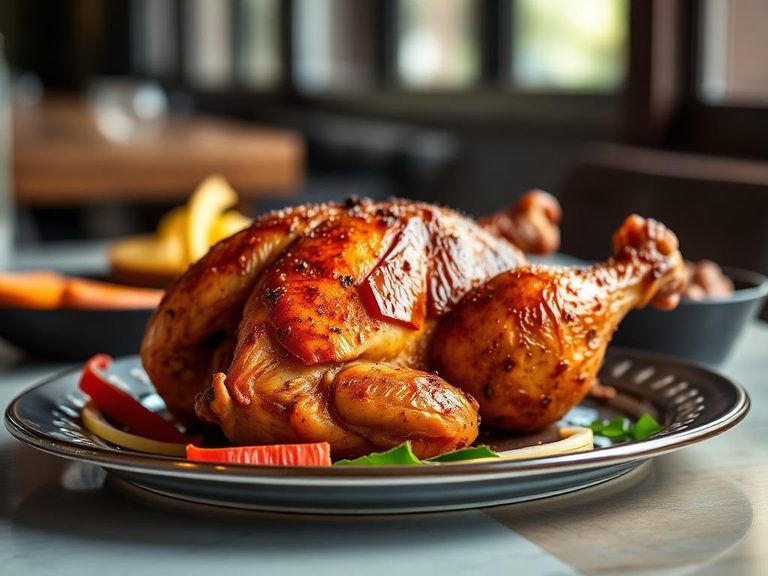
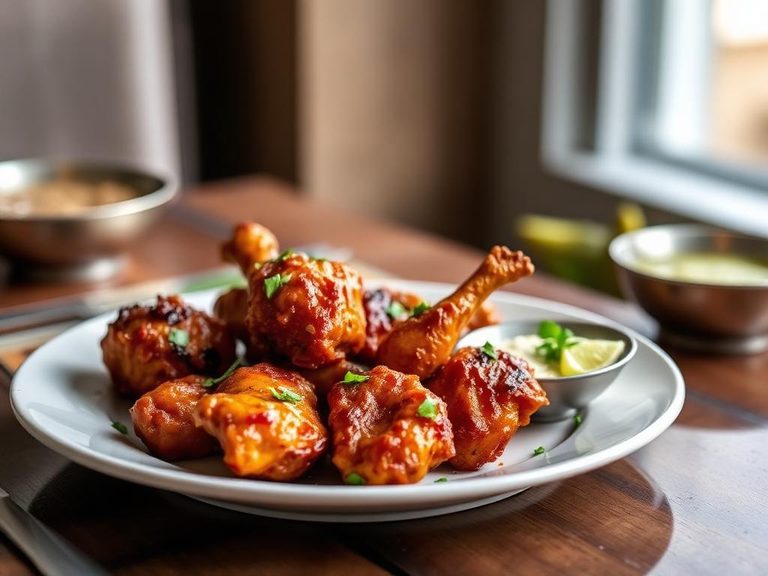
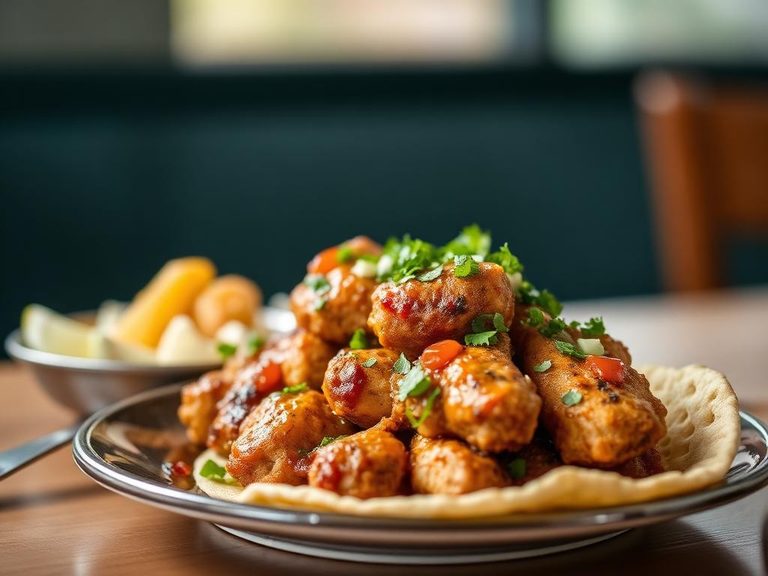
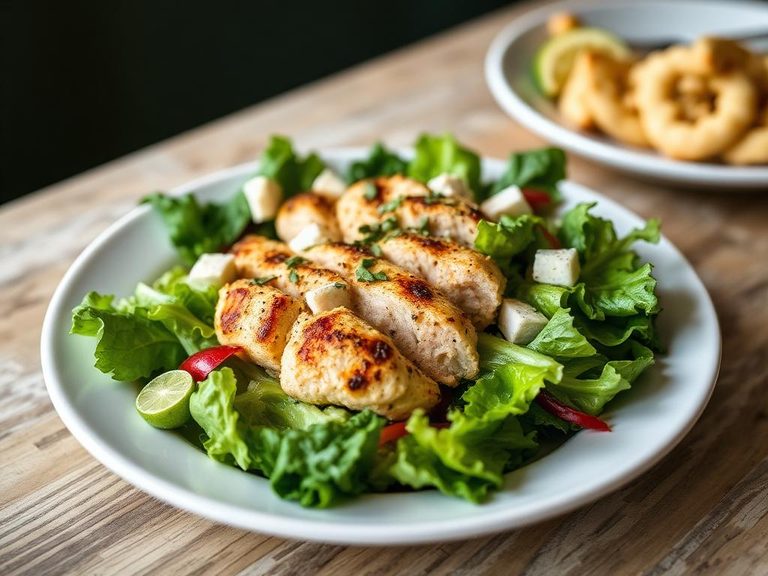
🌍 Where it's eaten
💡 Did you know?
The Maillard reaction, which creates the delicious browned crust on grilled chicken, requires temperatures above 300°F (150°C) and involves a complex chemical reaction between amino acids and reducing sugars.
Full nutrition (USDA data · scales with serving)
| Water | 60.4 g |
| Energy | 202 kcal |
| Protein | 21.1 g |
| Total lipid (fat) | 9.2 g |
| Carbohydrate, by difference | 7.3 g |
| Fiber, total dietary | 0.20 g |
| Total Sugars | 6.0 g |
| Calcium, Ca | 12.0 mg |
| Iron, Fe | 0.55 mg |
| Magnesium, Mg | 22.0 mg |
| Phosphorus, P | 160 mg |
| Potassium, K | 280 mg |
| Sodium, Na | 454 mg |
| Zinc, Zn | 0.74 mg |
| Copper, Cu | 0.05 mg |
| Selenium, Se | 21.3 ug |
| Vitamin C, total ascorbic acid | 0.10 mg |
| Thiamin | 0.06 mg |
| Riboflavin | 0.15 mg |
| Niacin | 7.1 mg |
| Vitamin B-6 | 0.57 mg |
| Folate, total | 5.0 ug |
| Folic acid | 0.00 ug |
| Folate, food | 5.0 ug |
| Folate, DFE | 5.0 ug |
| Choline, total | 52.9 mg |
| Vitamin B-12 | 0.14 ug |
| Vitamin B-12, added | 0.00 ug |
| Vitamin A, RAE | 16.0 ug |
| Retinol | 14.0 ug |
| Carotene, beta | 25.0 ug |
| Carotene, alpha | 0.00 ug |
| Cryptoxanthin, beta | 0.00 ug |
| Lycopene | 819 ug |
| Lutein + zeaxanthin | 16.0 ug |
| Vitamin E (alpha-tocopherol) | 1.0 mg |
| Vitamin E, added | 0.00 mg |
| Vitamin D (D2 + D3) | 0.10 ug |
| Vitamin K (phylloquinone) | 2.8 ug |
| Alcohol, ethyl | 0.00 g |
| Caffeine | 0.00 mg |
| Theobromine | 0.00 mg |
Fat & fatty acid profile (per 100g)
| Fatty acids, total saturated | 2.1 g |
| SFA 4:0 | 0.00 g |
| SFA 6:0 | 0.00 g |
| SFA 8:0 | 0.00 g |
| SFA 10:0 | 0.01 g |
| SFA 12:0 | 0.01 g |
| SFA 14:0 | 0.05 g |
| SFA 16:0 | 1.6 g |
| SFA 18:0 | 0.41 g |
| Fatty acids, total monounsaturated | 3.5 g |
| MUFA 16:1 | 0.36 g |
| MUFA 18:1 | 3.0 g |
| MUFA 20:1 | 0.09 g |
| MUFA 22:1 | 0.00 g |
| Fatty acids, total polyunsaturated | 2.2 g |
| PUFA 18:2 | 1.9 g |
| PUFA 18:3 | 0.14 g |
| PUFA 18:4 | 0.00 g |
| PUFA 20:4 | 0.05 g |
| PUFA 20:5 n-3 (EPA) | 0.01 g |
| PUFA 22:5 n-3 (DPA) | 0.01 g |
| PUFA 22:6 n-3 (DHA) | 0.01 g |
| Cholesterol | 78.0 mg |
Amino acid profile (per 100g)
Estimated from Chicken, broiler or fryers, breast, skinless, boneless, meat only, cooked, grilled — USDA does not publish this profile for Chicken breast.
| Tryptophan | 0.39 g |
| Threonine | 1.4 g |
| Isoleucine | 1.5 g |
| Leucine | 2.5 g |
| Lysine | 2.9 g |
| Methionine | 0.79 g |
| Cystine | 0.32 g |
| Phenylalanine | 1.2 g |
| Tyrosine | 1.1 g |
| Valine | 1.6 g |
| Arginine | 2.1 g |
| Histidine | 1.1 g |
| Alanine | 1.8 g |
| Aspartic acid | 2.9 g |
| Glutamic acid | 4.5 g |
| Glycine | 1.4 g |
| Proline | 0.97 g |
| Serine | 1.2 g |
FAQ
Is grilled chicken breast with skin healthy?
It can be a very healthy part of a balanced diet. It's an excellent source of lean protein. The skin adds fat and calories, so moderation is key depending on your dietary goals. Grilling is a lower-fat cooking method compared to frying.
How do I prevent grilled chicken breast from drying out?
Brining the chicken in a saltwater solution before cooking helps it retain moisture. You can also pound it to an even thickness, grill over medium heat (not too high), and use a meat thermometer to pull it off at 160°F (71°C), as it will continue to cook while resting.
What's the best sauce to pair with it?
This depends on the cuisine. For a fresh, herbal note, try chimichurri. For a smoky-sweet kick, a barbecue sauce works well. A simple lemon-herb yogurt sauce can add creaminess and tang without overwhelming the chicken's flavor.
Nutrient density (calculated · NRF9.3)
Nutrient Rich Foods index: beneficial nutrients (protein, fiber, vitamins, minerals) minus saturated fat, added sugar & sodium, per 100 kcal.
NRF9.3 index — Fulgoni, Keast & Drewnowski, 2009. Computed from USDA nutrients.
Weight-loss friendliness (composite index)
Energy density 2.02 kcal/g · 42% calories from protein · 0.2 g fiber · 6.0 g sugar per 100 g.
Composite of energy density (Rolls et al., 1999), protein & fiber satiety, minus sugar. A calculated heuristic — ranks satiety-per-calorie, not a clinical measure.
Dietary load (calculated from USDA values)
Potential renal acid load. Positive = acid-forming, negative = alkaline-forming.
Sodium-to-potassium ratio: 1.62 (lower is better — aim for ≤ 1)
Sodium:potassium per WHO potassium guidance. Computed from USDA nutrients.