

Chicken breast, baked or broiled, skin eaten, from pre-cooked
Common food

Photo: Wikipedia
This is lean, protein-dense chicken breast, cooked without its skin but with the skin eaten alongside for added flavor and fat. The meat is tender and mild, while the skin provides a crispy, savory contrast. With 26.37g of protein per 100g and virtually no carbs, it's a powerhouse for muscle maintenance and satiety.
Calorie split: 60% protein · 0% carbs · 39% fat
↓ Full nutrition💚 Why it's loved
People love it for its incredible versatility and clean, savory flavor that acts as a perfect canvas for countless seasonings and sauces. It's a staple in home cooking and fitness diets worldwide because it delivers satisfying, high-quality protein without excess calories.
⚠️ Watch-outs & how to enjoy it better
Without careful cooking, it can become dry and bland. Those monitoring sodium intake should be cautious, as pre-cooked versions often contain added salt. To counteract dryness, brine before cooking or pair with a flavorful sauce or salsa. To manage sodium, rinse pre-cooked pieces and choose low-sodium seasonings.
Key benefits
- Excellent source of high-quality, complete protein
- Very low in carbohydrates and sugar
- Provides essential nutrients like niacin and selenium
- Skin adds flavor and fat-soluble vitamins
- Highly satiating, aiding in appetite control
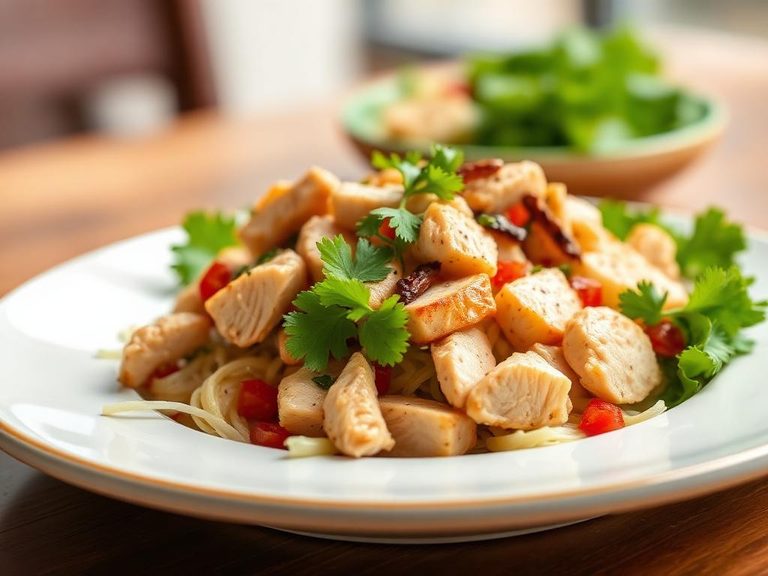
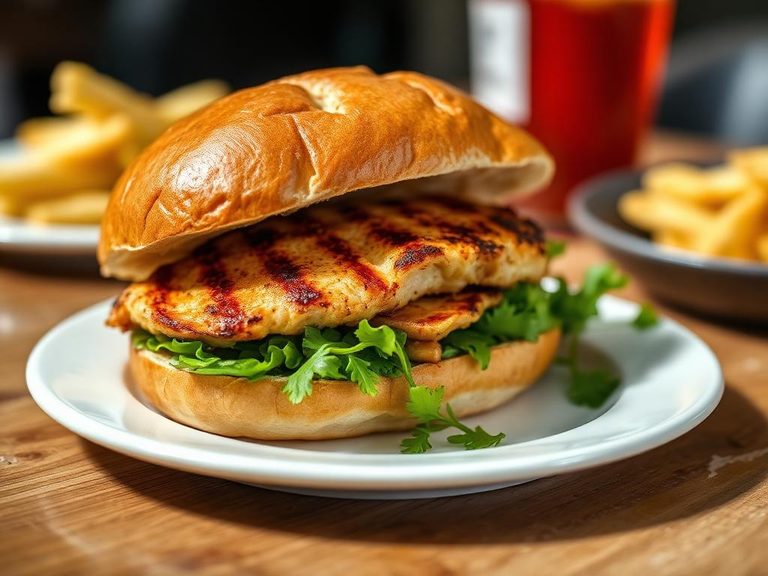
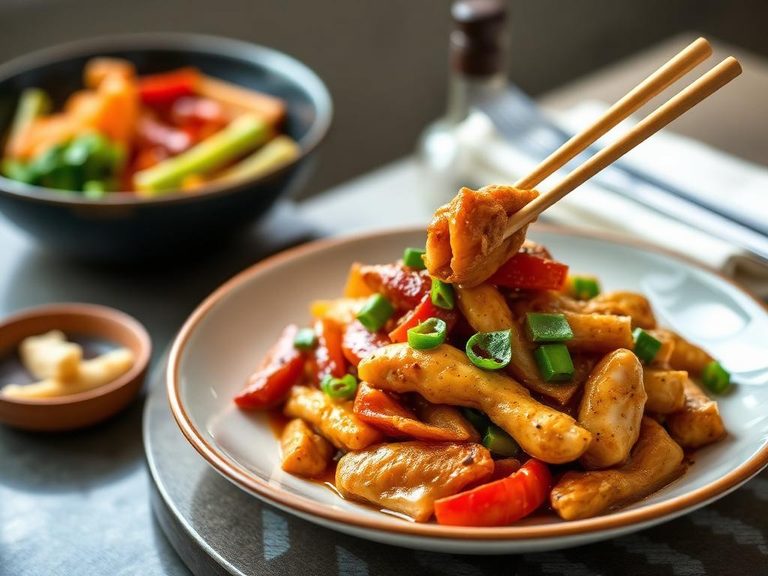
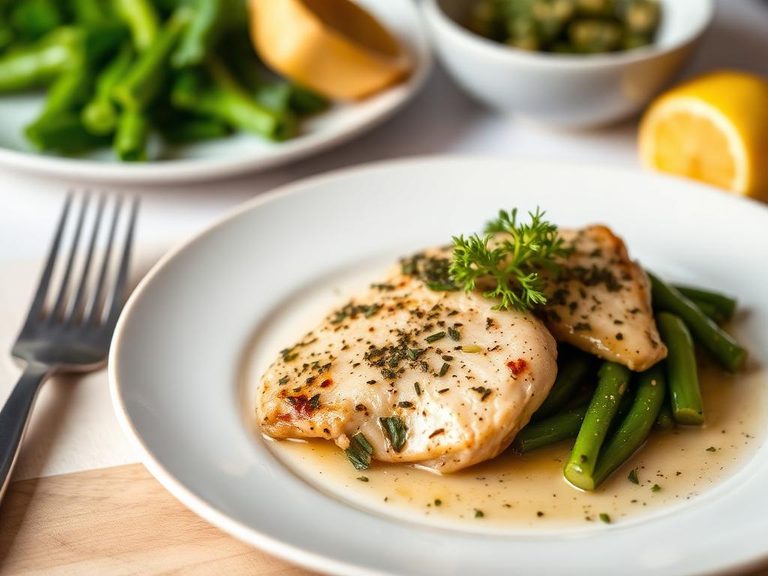
🍽️ Popular dishes
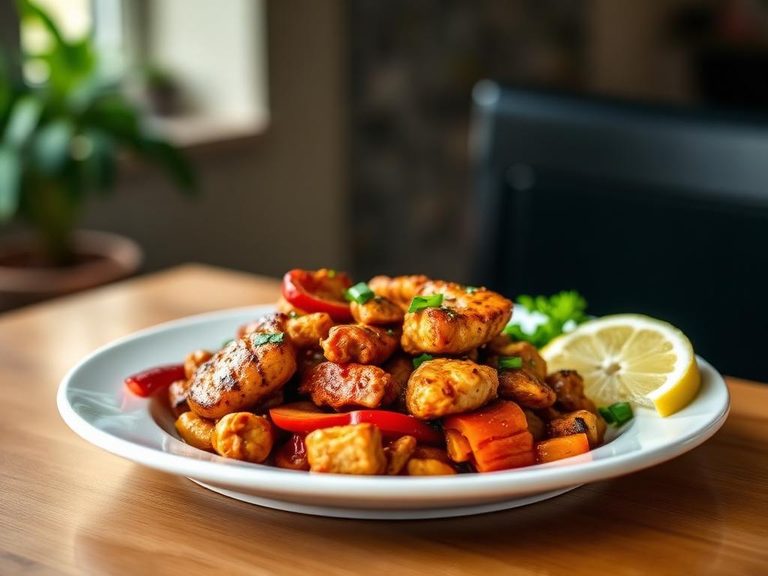
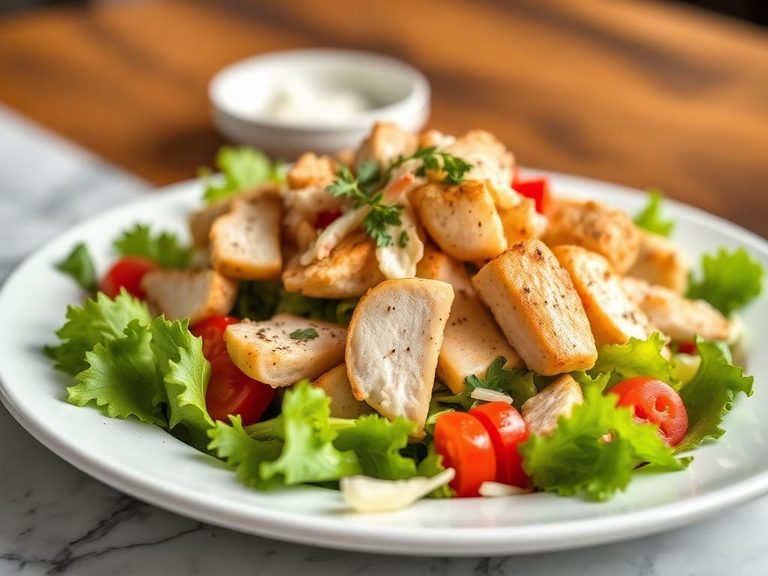
🌍 Where it's eaten
💡 Did you know?
Chicken breast is so lean that if you remove the skin and any visible fat, it has a protein-to-fat ratio comparable to some fish, like cod.
Full nutrition (USDA data · scales with serving)
| Water | 65.2 g |
| Energy | 175 kcal |
| Protein | 26.4 g |
| Total lipid (fat) | 7.7 g |
| Carbohydrate, by difference | 0.09 g |
| Fiber, total dietary | 0.00 g |
| Total Sugars | 0.09 g |
| Calcium, Ca | 16.0 mg |
| Iron, Fe | 0.51 mg |
| Magnesium, Mg | 25.0 mg |
| Phosphorus, P | 244 mg |
| Potassium, K | 276 mg |
| Sodium, Na | 329 mg |
| Zinc, Zn | 0.86 mg |
| Copper, Cu | 0.04 mg |
| Selenium, Se | 22.3 ug |
| Vitamin C, total ascorbic acid | 0.00 mg |
| Thiamin | 0.08 mg |
| Riboflavin | 0.14 mg |
| Niacin | 9.3 mg |
| Vitamin B-6 | 0.31 mg |
| Folate, total | 11.0 ug |
| Folic acid | 0.00 ug |
| Folate, food | 8.0 ug |
| Folate, DFE | 8.0 ug |
| Choline, total | 57.1 mg |
| Vitamin B-12 | 0.30 ug |
| Vitamin B-12, added | 0.00 ug |
| Vitamin A, RAE | 11.0 ug |
| Retinol | 11.0 ug |
| Carotene, beta | 0.00 ug |
| Carotene, alpha | 0.00 ug |
| Cryptoxanthin, beta | 0.00 ug |
| Lycopene | 0.00 ug |
| Lutein + zeaxanthin | 0.00 ug |
| Vitamin E (alpha-tocopherol) | 0.33 mg |
| Vitamin E, added | 0.00 mg |
| Vitamin D (D2 + D3) | 0.00 ug |
| Vitamin K (phylloquinone) | 0.00 ug |
| Alcohol, ethyl | 0.00 g |
| Caffeine | 0.00 mg |
| Theobromine | 0.00 mg |
Fat & fatty acid profile (per 100g)
| Fatty acids, total saturated | 2.0 g |
| SFA 4:0 | 0.00 g |
| SFA 6:0 | 0.00 g |
| SFA 8:0 | 0.00 g |
| SFA 10:0 | 0.00 g |
| SFA 12:0 | 0.00 g |
| SFA 14:0 | 0.04 g |
| SFA 16:0 | 1.6 g |
| SFA 18:0 | 0.34 g |
| Fatty acids, total monounsaturated | 3.1 g |
| MUFA 16:1 | 0.50 g |
| MUFA 18:1 | 2.6 g |
| MUFA 20:1 | 0.02 g |
| MUFA 22:1 | 0.00 g |
| Fatty acids, total polyunsaturated | 0.94 g |
| PUFA 18:2 | 0.88 g |
| PUFA 18:3 | 0.05 g |
| PUFA 18:4 | 0.00 g |
| PUFA 20:4 | 0.01 g |
| PUFA 20:5 n-3 (EPA) | 0.00 g |
| PUFA 22:5 n-3 (DPA) | 0.00 g |
| PUFA 22:6 n-3 (DHA) | 0.00 g |
| Cholesterol | 90.0 mg |
Amino acid profile (per 100g)
Estimated from Chicken, broiler or fryers, breast, skinless, boneless, meat only, cooked, grilled — USDA does not publish this profile for Chicken breast.
| Tryptophan | 0.39 g |
| Threonine | 1.4 g |
| Isoleucine | 1.5 g |
| Leucine | 2.5 g |
| Lysine | 2.9 g |
| Methionine | 0.79 g |
| Cystine | 0.32 g |
| Phenylalanine | 1.2 g |
| Tyrosine | 1.1 g |
| Valine | 1.6 g |
| Arginine | 2.1 g |
| Histidine | 1.1 g |
| Alanine | 1.8 g |
| Aspartic acid | 2.9 g |
| Glutamic acid | 4.5 g |
| Glycine | 1.4 g |
| Proline | 0.97 g |
| Serine | 1.2 g |
FAQ
Why is my baked chicken breast often dry?
Chicken breast has very little intramuscular fat. To prevent dryness, avoid overcooking (use a meat thermometer to pull it at 165°F/74°C), consider brining it in a saltwater solution beforehand, or pound it to an even thickness for uniform cooking.
Is eating the skin healthy?
The skin adds calories, fat, and flavor. It contains some nutrients like collagen and vitamin B12, but also more saturated fat. Enjoying it occasionally or in moderation is fine for most people; you can also crisp it separately and use it as a flavorful garnish.
How does pre-cooked chicken compare to raw?
Pre-cooked chicken is convenient but often has added sodium and preservatives for shelf stability. Its texture can be slightly firmer. For the freshest taste and control over ingredients, cooking from raw is ideal, but pre-cooked is a practical time-saver.
Nutrient density (calculated · NRF9.3)
Nutrient Rich Foods index: beneficial nutrients (protein, fiber, vitamins, minerals) minus saturated fat, added sugar & sodium, per 100 kcal.
NRF9.3 index — Fulgoni, Keast & Drewnowski, 2009. Computed from USDA nutrients.
Weight-loss friendliness (composite index)
Energy density 1.75 kcal/g · 60% calories from protein · 0.0 g fiber · 0.1 g sugar per 100 g.
Composite of energy density (Rolls et al., 1999), protein & fiber satiety, minus sugar. A calculated heuristic — ranks satiety-per-calorie, not a clinical measure.
Dietary load (calculated from USDA values)
Potential renal acid load. Positive = acid-forming, negative = alkaline-forming.
Sodium-to-potassium ratio: 1.19 (lower is better — aim for ≤ 1)
Sodium:potassium per WHO potassium guidance. Computed from USDA nutrients.