

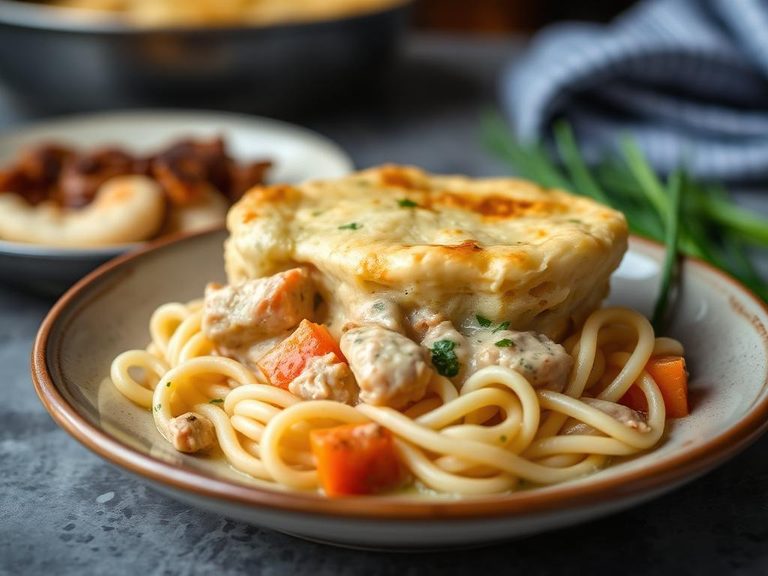
Chicken and vegetable entree with noodles and cream sauce, frozen meal
Common food

Photo: Wikipedia
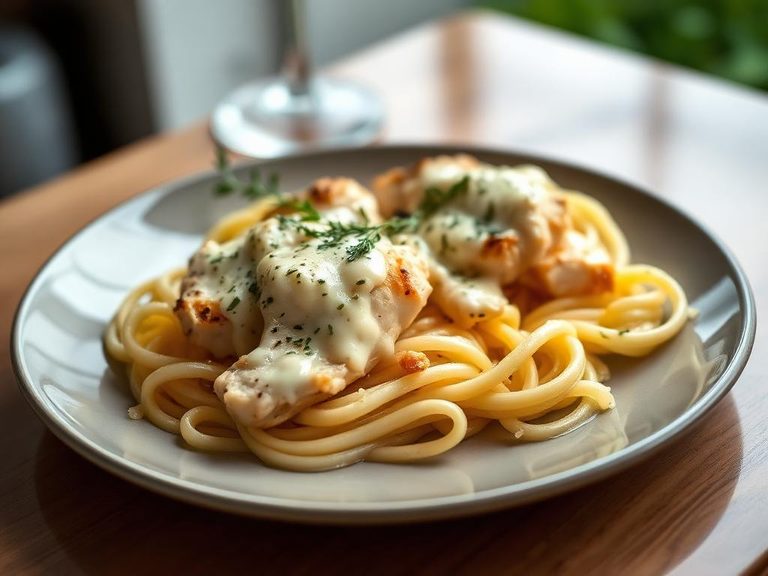
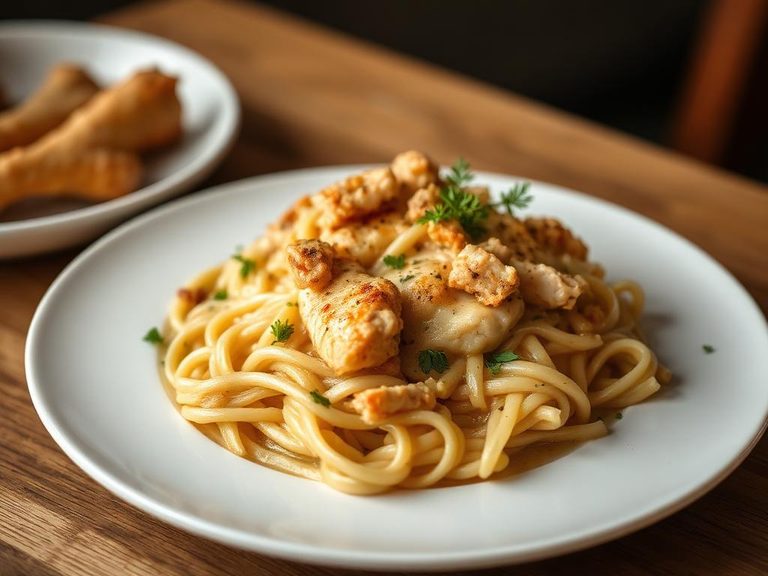
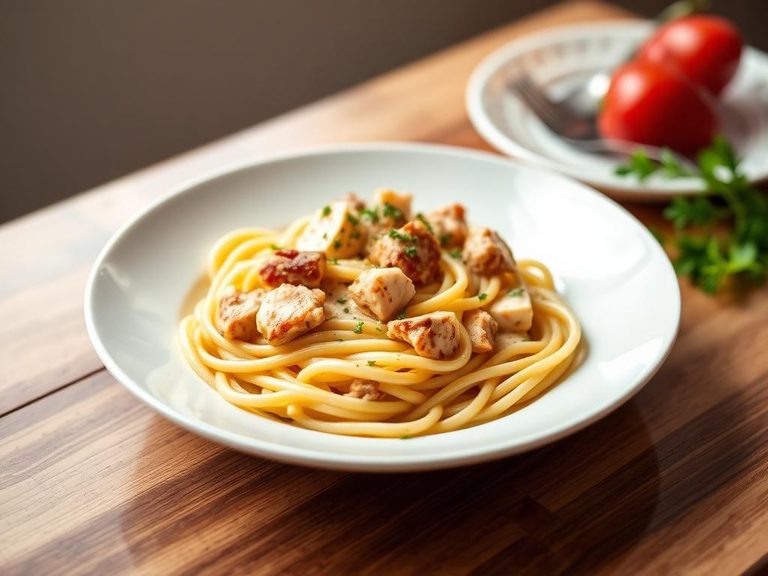
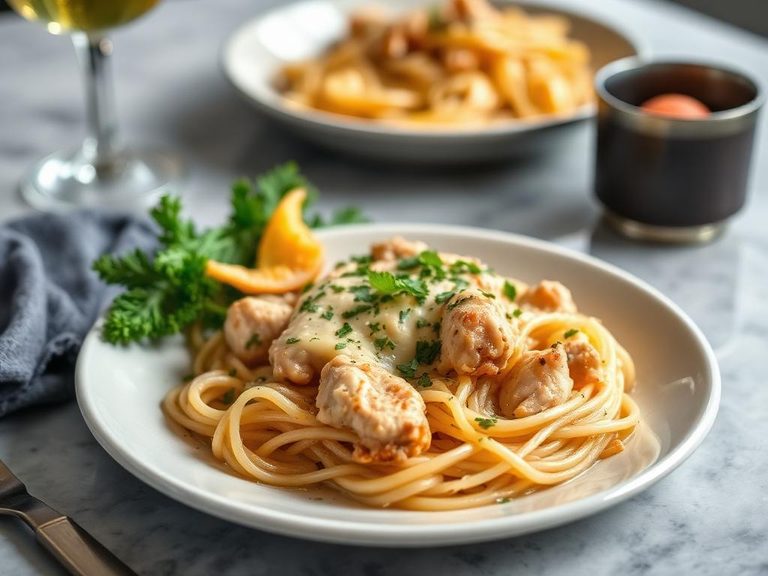
This frozen entree is a convenient, portion-controlled meal featuring tender chicken pieces and vegetables tossed in a creamy sauce over noodles. It delivers a comforting, savory flavor profile with a smooth, rich texture, though it is relatively low in calories for a full meal. With a moderate protein-to-carb ratio, it offers a quick energy boost while keeping fat content in check.
Calorie split: 27% protein · 35% carbs · 38% fat
↓ Full nutrition💚 Why it's loved
People love this meal for its comforting, familiar flavors that evoke a sense of home-cooked warmth without the effort. The creamy sauce and tender noodles make it a satisfying choice for those seeking a quick, hearty meal.
⚠️ Watch-outs & how to enjoy it better
The meal may be high in sodium, which can contribute to water retention and blood pressure concerns for sensitive individuals. To counteract this, pair it with a side of fresh, low-sodium vegetables or a small salad to add fiber and nutrients while balancing the sodium intake.
Key benefits
- Provides a balanced mix of protein, carbs, and fats in one serving
- Quick and easy to prepare, saving time on meal prep
- Offers a convenient way to include vegetables in the diet
- Portion-controlled to help manage calorie intake
- Suitable for a light lunch or dinner option
🍽️ Popular dishes
🌍 Where it's eaten
💡 Did you know?
Frozen meals like this one were popularized in the 1950s as a symbol of modern convenience, with companies like Swanson pioneering the 'TV dinner' concept that revolutionized home dining.
Full nutrition (USDA data · scales with serving)
| Water | 74.2 g |
| Energy | 124 kcal |
| Protein | 8.5 g |
| Total lipid (fat) | 5.2 g |
| Carbohydrate, by difference | 10.7 g |
| Fiber, total dietary | 0.90 g |
| Total Sugars | 1.6 g |
| Calcium, Ca | 55.0 mg |
| Iron, Fe | 0.77 mg |
| Magnesium, Mg | 19.0 mg |
| Phosphorus, P | 114 mg |
| Potassium, K | 165 mg |
| Sodium, Na | 379 mg |
| Zinc, Zn | 0.77 mg |
| Copper, Cu | 0.07 mg |
| Selenium, Se | 14.2 ug |
| Vitamin C, total ascorbic acid | 15.7 mg |
| Thiamin | 0.13 mg |
| Riboflavin | 0.15 mg |
| Niacin | 2.3 mg |
| Vitamin B-6 | 0.11 mg |
| Folate, total | 41.0 ug |
| Folic acid | 24.0 ug |
| Folate, food | 17.0 ug |
| Folate, DFE | 58.0 ug |
| Choline, total | 28.6 mg |
| Vitamin B-12 | 0.16 ug |
| Vitamin B-12, added | 0.00 ug |
| Vitamin A, RAE | 31.0 ug |
| Retinol | 29.0 ug |
| Carotene, beta | 22.0 ug |
| Carotene, alpha | 0.00 ug |
| Cryptoxanthin, beta | 0.00 ug |
| Lycopene | 0.00 ug |
| Lutein + zeaxanthin | 154 ug |
| Vitamin E (alpha-tocopherol) | 0.29 mg |
| Vitamin E, added | 0.00 mg |
| Vitamin D (D2 + D3) | 0.10 ug |
| Vitamin K (phylloquinone) | 20.7 ug |
| Alcohol, ethyl | 0.00 g |
| Caffeine | 0.00 mg |
| Theobromine | 0.00 mg |
Fat & fatty acid profile (per 100g)
| Fatty acids, total saturated | 2.0 g |
| SFA 4:0 | 0.05 g |
| SFA 6:0 | 0.04 g |
| SFA 8:0 | 0.03 g |
| SFA 10:0 | 0.06 g |
| SFA 12:0 | 0.07 g |
| SFA 14:0 | 0.24 g |
| SFA 16:0 | 1.1 g |
| SFA 18:0 | 0.35 g |
| Fatty acids, total monounsaturated | 1.5 g |
| MUFA 16:1 | 0.15 g |
| MUFA 18:1 | 1.4 g |
| MUFA 20:1 | 0.01 g |
| MUFA 22:1 | 0.00 g |
| Fatty acids, total polyunsaturated | 0.73 g |
| PUFA 18:2 | 0.67 g |
| PUFA 18:3 | 0.05 g |
| PUFA 18:4 | 0.00 g |
| PUFA 20:4 | 0.01 g |
| PUFA 20:5 n-3 (EPA) | 0.00 g |
| PUFA 22:5 n-3 (DPA) | 0.00 g |
| PUFA 22:6 n-3 (DHA) | 0.00 g |
| Cholesterol | 39.0 mg |
Amino acid profile (per 100g)
Estimated from Restaurant, Chinese, chicken and vegetables — USDA does not publish this profile for Chicken and vegetable entree with noodles and cream sauce.
| Tryptophan | 0.07 g |
| Threonine | 0.31 g |
| Isoleucine | 0.31 g |
| Leucine | 0.52 g |
| Lysine | 0.45 g |
| Methionine | 0.16 g |
| Cystine | 0.10 g |
| Phenylalanine | 0.26 g |
| Tyrosine | 0.20 g |
| Valine | 0.32 g |
| Arginine | 0.42 g |
| Histidine | 0.18 g |
| Alanine | 0.37 g |
| Aspartic acid | 0.70 g |
| Glutamic acid | 1.6 g |
| Glycine | 0.26 g |
| Proline | 0.26 g |
| Serine | 0.29 g |
| Hydroxyproline | 0.01 g |
FAQ
Is this frozen meal suitable for a low-carb diet?
No, it contains a significant amount of carbohydrates from the noodles and sauce, making it less ideal for strict low-carb diets.
Can I add extra vegetables to this meal?
Yes, adding steamed or fresh vegetables like broccoli or spinach can enhance the nutritional value and fiber content.
How does the protein content compare to other frozen meals?
With 8.48g of protein per 100g, it offers a moderate protein level, which is suitable for a balanced meal but may not be sufficient for high-protein needs.
Nutrient density (calculated · NRF9.3)
Nutrient Rich Foods index: beneficial nutrients (protein, fiber, vitamins, minerals) minus saturated fat, added sugar & sodium, per 100 kcal.
NRF9.3 index — Fulgoni, Keast & Drewnowski, 2009. Computed from USDA nutrients.
Weight-loss friendliness (composite index)
Energy density 1.24 kcal/g · 27% calories from protein · 0.9 g fiber · 1.6 g sugar per 100 g.
Composite of energy density (Rolls et al., 1999), protein & fiber satiety, minus sugar. A calculated heuristic — ranks satiety-per-calorie, not a clinical measure.
Dietary load (calculated from USDA values)
Potential renal acid load. Positive = acid-forming, negative = alkaline-forming.
Sodium-to-potassium ratio: 2.30 (lower is better — aim for ≤ 1)
Sodium:potassium per WHO potassium guidance. Computed from USDA nutrients.