

Chicken and vegetable entree with rice, diet frozen meal
Common food

Photo: Wikipedia
This is a light, diet-friendly frozen entree featuring tender chicken pieces and a medley of vegetables, all served over a bed of fluffy white rice. The texture is soft and uniform, with the vegetables providing a slight, pleasant bite against the tender chicken and rice. Nutritionally, it's a low-calorie, high-protein option that provides a balanced mix of carbohydrates for energy.
Calorie split: 25% protein · 46% carbs · 29% fat
↓ Full nutrition💚 Why it's loved
People love it for its straightforward, comforting flavors and the convenience of a complete, balanced meal ready in minutes. It's a reliable staple for those managing their weight or seeking a no-fuss, protein-rich option.
⚠️ Watch-outs & how to enjoy it better
The texture can be uniformly soft, which some find less satisfying than freshly cooked meals. The sugar content, while moderate, comes from added sources, which may be a concern for those monitoring blood sugar. To counteract, pair it with a side of fresh, crunchy vegetables or a small handful of nuts to add fiber and healthy fats, which can help blunt any glycemic response.
Key benefits
- High protein-to-calorie ratio supports muscle maintenance.
- Low in fat, making it suitable for calorie-controlled diets.
- Provides a balanced macronutrient profile for a complete meal.
- Convenient, pre-portioned meal for busy schedules.
- Contains a mix of vegetables for micronutrients.
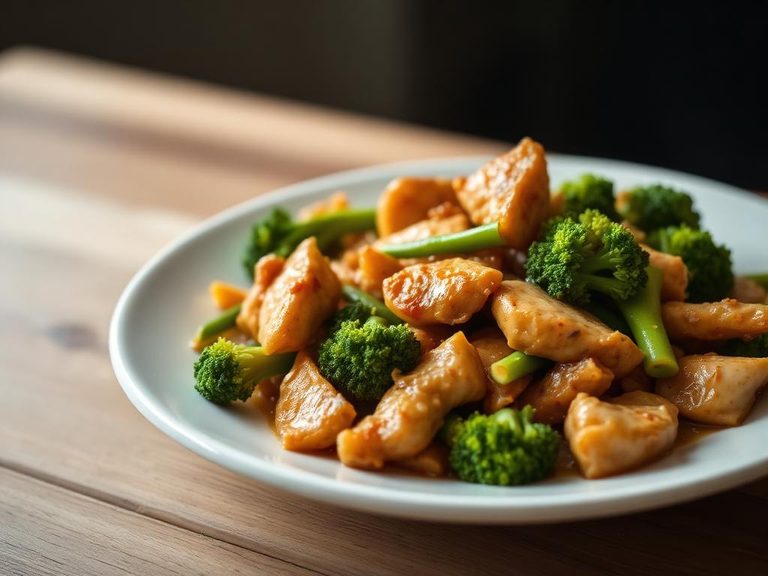
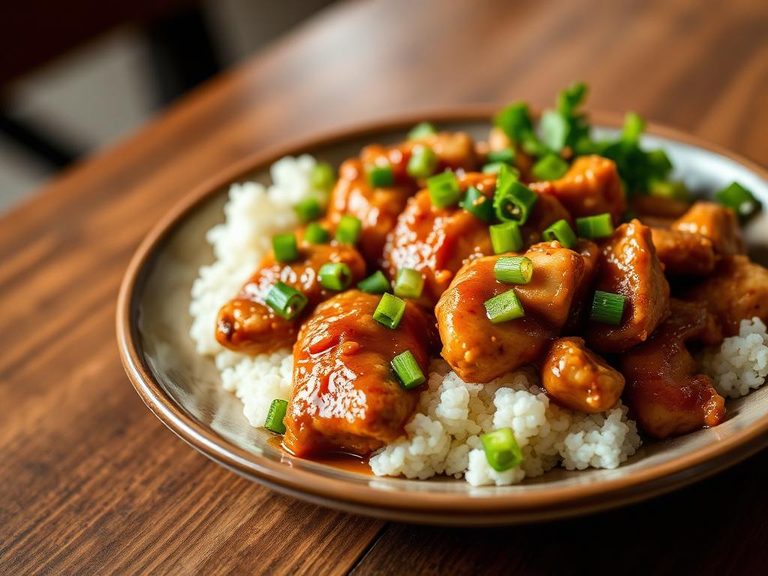
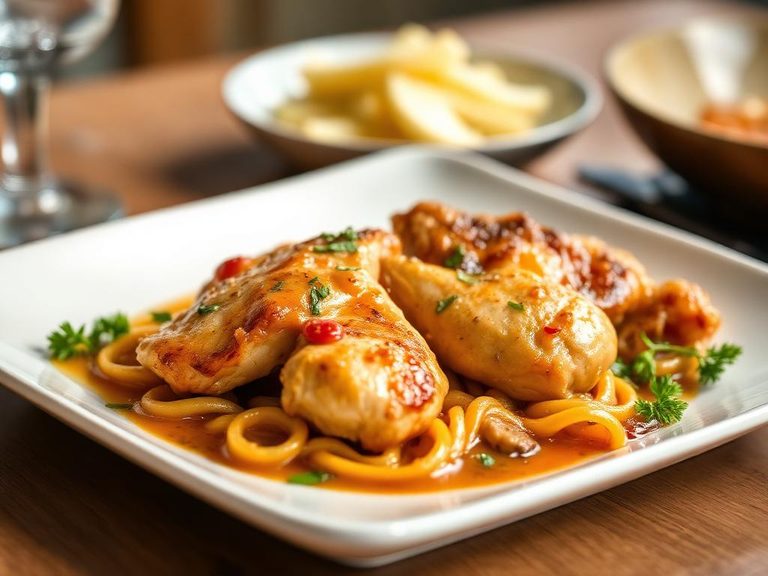
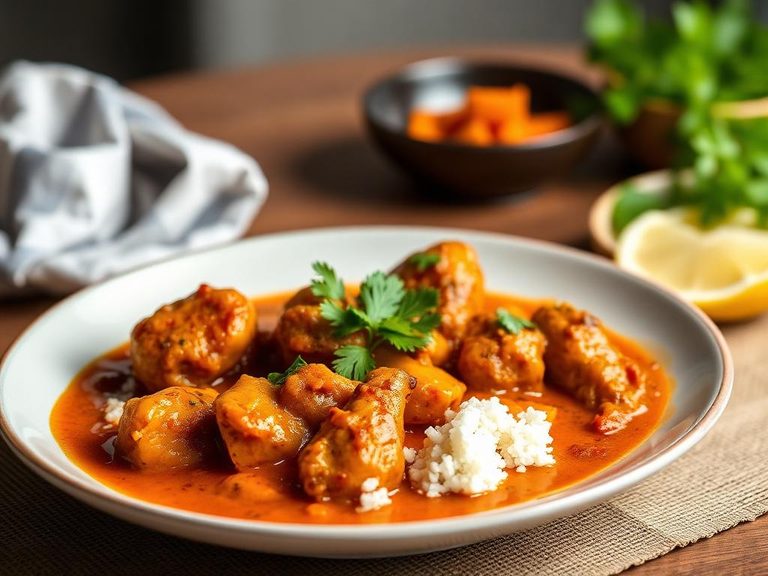
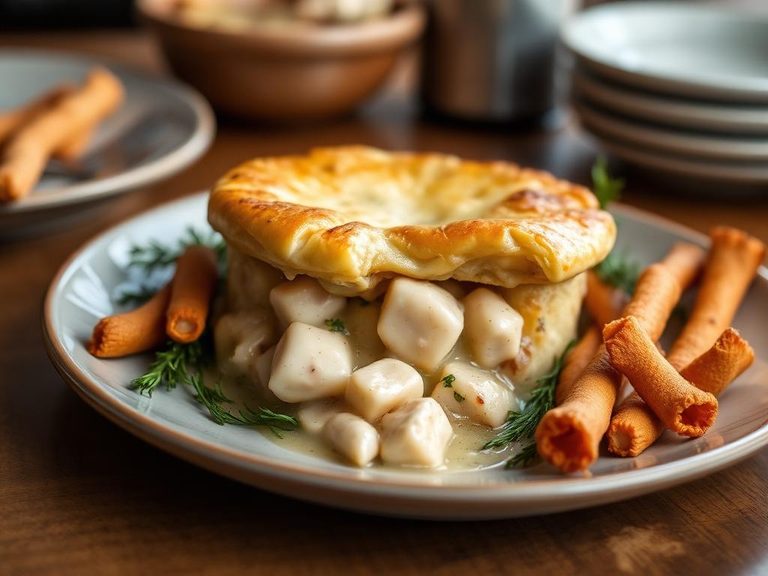
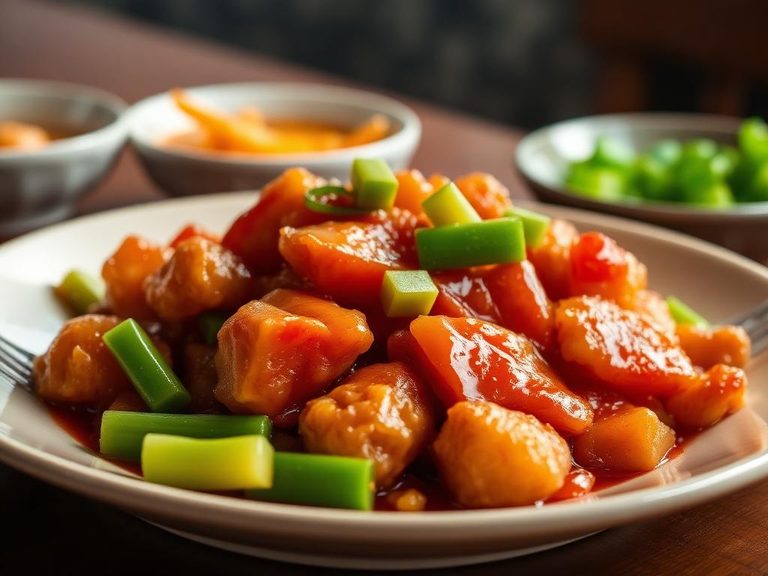
🍽️ Popular dishes
🌍 Where it's eaten
💡 Did you know?
The 'diet' frozen meal industry was pioneered in the 1950s by a company called Swanson, which adapted military food technology for the consumer market.
Full nutrition (USDA data · scales with serving)
| Water | 63.0 g |
| Energy | 171 kcal |
| Protein | 10.4 g |
| Total lipid (fat) | 5.6 g |
| Carbohydrate, by difference | 19.6 g |
| Fiber, total dietary | 0.70 g |
| Total Sugars | 6.4 g |
| Calcium, Ca | 18.0 mg |
| Iron, Fe | 0.95 mg |
| Magnesium, Mg | 18.0 mg |
| Phosphorus, P | 111 mg |
| Potassium, K | 178 mg |
| Sodium, Na | 359 mg |
| Zinc, Zn | 0.81 mg |
| Copper, Cu | 0.07 mg |
| Selenium, Se | 10.9 ug |
| Vitamin C, total ascorbic acid | 4.4 mg |
| Thiamin | 0.09 mg |
| Riboflavin | 0.08 mg |
| Niacin | 3.2 mg |
| Vitamin B-6 | 0.17 mg |
| Folate, total | 27.0 ug |
| Folic acid | 18.0 ug |
| Folate, food | 9.0 ug |
| Folate, DFE | 40.0 ug |
| Choline, total | 26.3 mg |
| Vitamin B-12 | 0.12 ug |
| Vitamin B-12, added | 0.00 ug |
| Vitamin A, RAE | 29.0 ug |
| Retinol | 3.0 ug |
| Carotene, beta | 263 ug |
| Carotene, alpha | 99.0 ug |
| Cryptoxanthin, beta | 0.00 ug |
| Lycopene | 214 ug |
| Lutein + zeaxanthin | 57.0 ug |
| Vitamin E (alpha-tocopherol) | 0.58 mg |
| Vitamin E, added | 0.00 mg |
| Vitamin D (D2 + D3) | 0.00 ug |
| Vitamin K (phylloquinone) | 6.3 ug |
| Alcohol, ethyl | 0.00 g |
| Caffeine | 0.00 mg |
| Theobromine | 0.00 mg |
Fat & fatty acid profile (per 100g)
| Fatty acids, total saturated | 1.0 g |
| SFA 4:0 | 0.00 g |
| SFA 6:0 | 0.00 g |
| SFA 8:0 | 0.00 g |
| SFA 10:0 | 0.00 g |
| SFA 12:0 | 0.00 g |
| SFA 14:0 | 0.01 g |
| SFA 16:0 | 0.75 g |
| SFA 18:0 | 0.22 g |
| Fatty acids, total monounsaturated | 2.3 g |
| MUFA 16:1 | 0.16 g |
| MUFA 18:1 | 2.1 g |
| MUFA 20:1 | 0.02 g |
| MUFA 22:1 | 0.00 g |
| Fatty acids, total polyunsaturated | 1.7 g |
| PUFA 18:2 | 1.6 g |
| PUFA 18:3 | 0.10 g |
| PUFA 18:4 | 0.00 g |
| PUFA 20:4 | 0.01 g |
| PUFA 20:5 n-3 (EPA) | 0.00 g |
| PUFA 22:5 n-3 (DPA) | 0.00 g |
| PUFA 22:6 n-3 (DHA) | 0.00 g |
| Cholesterol | 37.0 mg |
Amino acid profile (per 100g)
Estimated from Restaurant, Chinese, chicken and vegetables — USDA does not publish this profile for Chicken and vegetable entree with rice.
| Tryptophan | 0.07 g |
| Threonine | 0.31 g |
| Isoleucine | 0.31 g |
| Leucine | 0.52 g |
| Lysine | 0.45 g |
| Methionine | 0.16 g |
| Cystine | 0.10 g |
| Phenylalanine | 0.26 g |
| Tyrosine | 0.20 g |
| Valine | 0.32 g |
| Arginine | 0.42 g |
| Histidine | 0.18 g |
| Alanine | 0.37 g |
| Aspartic acid | 0.70 g |
| Glutamic acid | 1.6 g |
| Glycine | 0.26 g |
| Proline | 0.26 g |
| Serine | 0.29 g |
| Hydroxyproline | 0.01 g |
FAQ
Is this meal suitable for a low-carb diet?
Not typically. With nearly 20g of carbohydrates per 100g, primarily from rice and sugar, it's more aligned with a balanced or moderate-carb diet.
How does the protein content compare to a fresh chicken breast?
The protein density is good for a complete meal, but fresh, lean chicken breast has a higher protein-to-weight ratio, as it contains no carbohydrates or added sugars.
What are the main sources of sugar in this entree?
The sugar likely comes from added ingredients in the sauce or seasoning, such as corn syrup, honey, or fruit concentrates, which are common in many frozen meal sauces.
Nutrient density (calculated · NRF9.3)
Nutrient Rich Foods index: beneficial nutrients (protein, fiber, vitamins, minerals) minus saturated fat, added sugar & sodium, per 100 kcal.
NRF9.3 index — Fulgoni, Keast & Drewnowski, 2009. Computed from USDA nutrients.
Weight-loss friendliness (composite index)
Energy density 1.71 kcal/g · 24% calories from protein · 0.7 g fiber · 6.4 g sugar per 100 g.
Composite of energy density (Rolls et al., 1999), protein & fiber satiety, minus sugar. A calculated heuristic — ranks satiety-per-calorie, not a clinical measure.
Dietary load (calculated from USDA values)
Potential renal acid load. Positive = acid-forming, negative = alkaline-forming.
Sodium-to-potassium ratio: 2.02 (lower is better — aim for ≤ 1)
Sodium:potassium per WHO potassium guidance. Computed from USDA nutrients.