

Chicken and vegetable entree with noodles, diet frozen meal
Common food
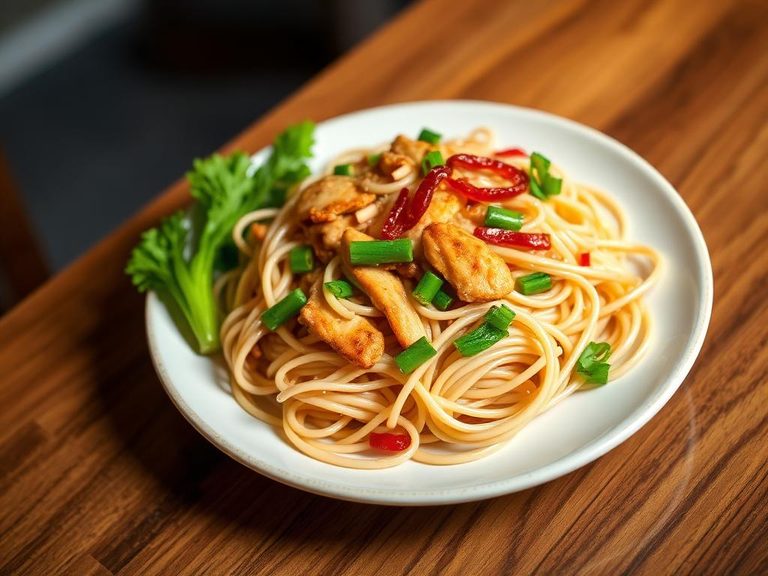
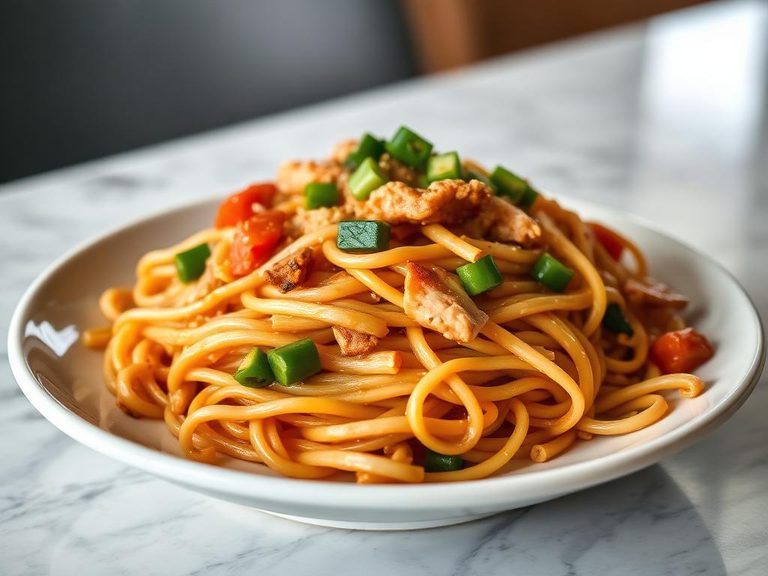
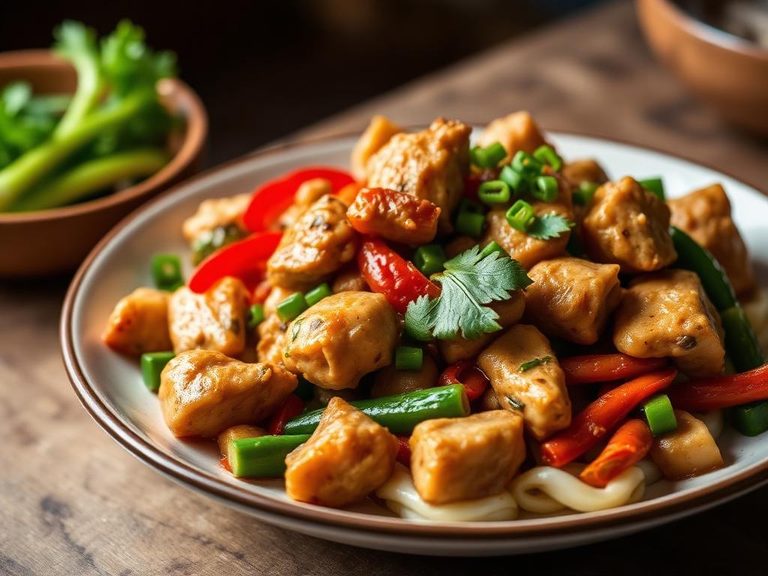
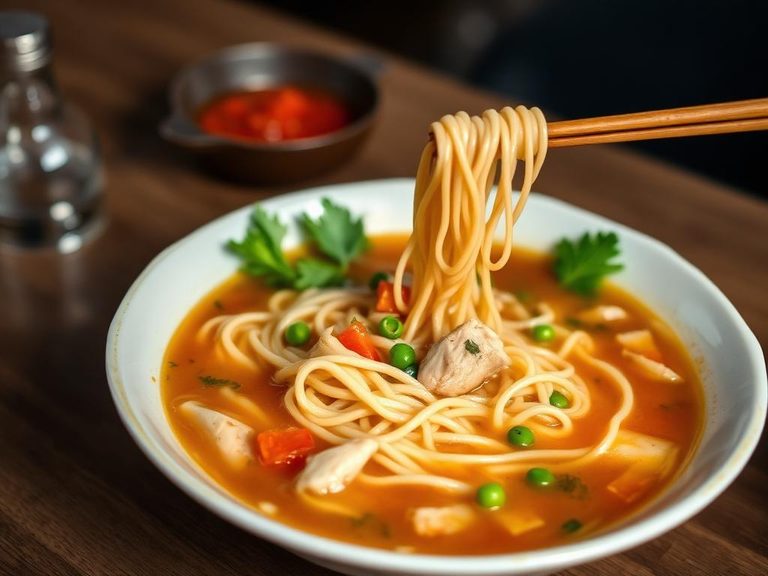
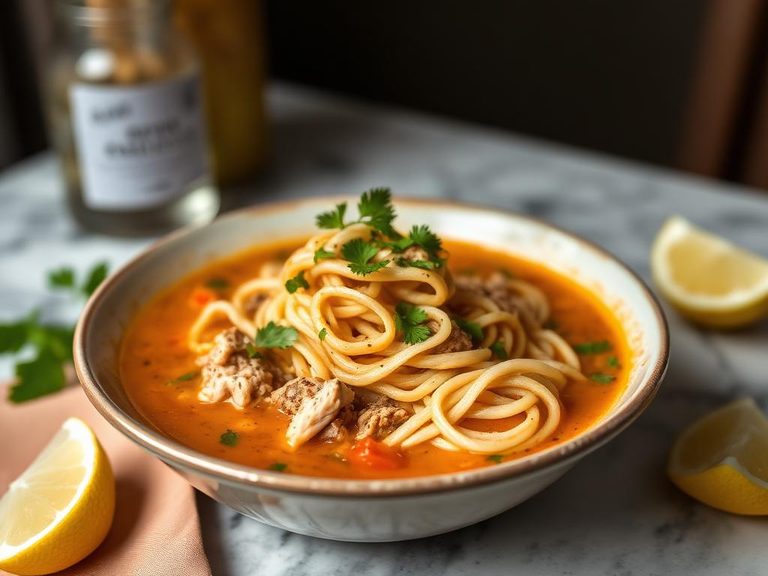
This is a lean, diet-friendly frozen meal featuring tender chicken pieces and a medley of vegetables—likely carrots, peas, and green beans—served over a modest bed of soft noodles. The taste is typically mild and savory, with a light sauce, and the texture offers a contrast between the soft noodles and the firmer vegetables. Nutritionally, it's a low-calorie, high-protein option, with over 7.5g of protein per 100g while keeping fat very low.
Calorie split: 35% protein · 45% carbs · 20% fat
↓ Full nutrition💚 Why it's loved
People appreciate it as a no-fuss, guilt-free meal that delivers savory satisfaction without derailing dietary goals. Its familiar, comforting flavor profile makes it an easy choice for a quick lunch or light dinner.
⚠️ Watch-outs & how to enjoy it better
The primary downside is the potential for high sodium, common in frozen meals for preservation and flavor, which can be a concern for those monitoring blood pressure. To counteract this, drink a full glass of water with the meal and ensure your other daily meals are low-sodium, focusing on fresh, whole foods. The noodles, while modest, are refined carbs which can cause a quicker blood sugar rise; pairing this meal with a side of fresh, leafy greens or a small handful of nuts can add fiber and healthy fat to slow digestion.
Key benefits
- Very low calorie density (85 kcal/100g)
- High protein-to-calorie ratio supports muscle maintenance
- Low fat content (under 2g/100g)
- Provides dietary fiber from vegetables
- Convenient, pre-portioned meal for calorie control
🍽️ Popular dishes
🌍 Where it's eaten
💡 Did you know?
The term 'entrée' in American English refers to the main course, but in classic French cuisine, it was historically the course served before the main dish (the 'roast').
Full nutrition (USDA data · scales with serving)
| Water | 79.6 g |
| Energy | 85.0 kcal |
| Protein | 7.6 g |
| Total lipid (fat) | 1.9 g |
| Carbohydrate, by difference | 9.8 g |
| Fiber, total dietary | 1.6 g |
| Total Sugars | 2.3 g |
| Calcium, Ca | 21.0 mg |
| Iron, Fe | 0.64 mg |
| Magnesium, Mg | 18.0 mg |
| Phosphorus, P | 91.0 mg |
| Potassium, K | 245 mg |
| Sodium, Na | 283 mg |
| Zinc, Zn | 0.63 mg |
| Copper, Cu | 0.10 mg |
| Selenium, Se | 10.8 ug |
| Vitamin C, total ascorbic acid | 13.8 mg |
| Thiamin | 0.10 mg |
| Riboflavin | 0.13 mg |
| Niacin | 2.5 mg |
| Vitamin B-6 | 0.14 mg |
| Folate, total | 32.0 ug |
| Folic acid | 10.0 ug |
| Folate, food | 22.0 ug |
| Folate, DFE | 39.0 ug |
| Choline, total | 24.0 mg |
| Vitamin B-12 | 0.08 ug |
| Vitamin B-12, added | 0.00 ug |
| Vitamin A, RAE | 61.0 ug |
| Retinol | 3.0 ug |
| Carotene, beta | 594 ug |
| Carotene, alpha | 197 ug |
| Cryptoxanthin, beta | 0.00 ug |
| Lycopene | 612 ug |
| Lutein + zeaxanthin | 310 ug |
| Vitamin E (alpha-tocopherol) | 0.32 mg |
| Vitamin E, added | 0.00 mg |
| Vitamin D (D2 + D3) | 0.00 ug |
| Vitamin K (phylloquinone) | 12.5 ug |
| Alcohol, ethyl | 0.00 g |
| Caffeine | 0.00 mg |
| Theobromine | 0.00 mg |
Fat & fatty acid profile (per 100g)
| Fatty acids, total saturated | 0.49 g |
| SFA 4:0 | 0.00 g |
| SFA 6:0 | 0.00 g |
| SFA 8:0 | 0.00 g |
| SFA 10:0 | 0.01 g |
| SFA 12:0 | 0.01 g |
| SFA 14:0 | 0.02 g |
| SFA 16:0 | 0.36 g |
| SFA 18:0 | 0.08 g |
| Fatty acids, total monounsaturated | 0.65 g |
| MUFA 16:1 | 0.09 g |
| MUFA 18:1 | 0.55 g |
| MUFA 20:1 | 0.00 g |
| MUFA 22:1 | 0.00 g |
| Fatty acids, total polyunsaturated | 0.36 g |
| PUFA 18:2 | 0.33 g |
| PUFA 18:3 | 0.03 g |
| PUFA 18:4 | 0.00 g |
| PUFA 20:4 | 0.00 g |
| PUFA 20:5 n-3 (EPA) | 0.00 g |
| PUFA 22:5 n-3 (DPA) | 0.00 g |
| PUFA 22:6 n-3 (DHA) | 0.00 g |
| Cholesterol | 23.0 mg |
Amino acid profile (per 100g)
Estimated from Restaurant, Chinese, chicken and vegetables — USDA does not publish this profile for Chicken and vegetable entree with noodles.
| Tryptophan | 0.07 g |
| Threonine | 0.31 g |
| Isoleucine | 0.31 g |
| Leucine | 0.52 g |
| Lysine | 0.45 g |
| Methionine | 0.16 g |
| Cystine | 0.10 g |
| Phenylalanine | 0.26 g |
| Tyrosine | 0.20 g |
| Valine | 0.32 g |
| Arginine | 0.42 g |
| Histidine | 0.18 g |
| Alanine | 0.37 g |
| Aspartic acid | 0.70 g |
| Glutamic acid | 1.6 g |
| Glycine | 0.26 g |
| Proline | 0.26 g |
| Serine | 0.29 g |
| Hydroxyproline | 0.01 g |
FAQ
Is this a good meal for weight loss?
Yes, its very low calorie count and high protein content make it highly satiating for the calories, which can help with portion control and maintaining a calorie deficit.
What vegetables are typically in this dish?
Common frozen meal mixes include diced carrots, green peas, cut green beans, and sometimes corn or water chestnuts for texture.
How does the nutrition compare to a homemade version?
A homemade version would likely have lower sodium, as you control the sauce, and could use whole-wheat noodles or more vegetables, but the frozen meal offers comparable protein with exceptional convenience.
Nutrient density (calculated · NRF9.3)
Nutrient Rich Foods index: beneficial nutrients (protein, fiber, vitamins, minerals) minus saturated fat, added sugar & sodium, per 100 kcal.
NRF9.3 index — Fulgoni, Keast & Drewnowski, 2009. Computed from USDA nutrients.
Weight-loss friendliness (composite index)
Energy density 0.85 kcal/g · 36% calories from protein · 1.6 g fiber · 2.3 g sugar per 100 g.
Composite of energy density (Rolls et al., 1999), protein & fiber satiety, minus sugar. A calculated heuristic — ranks satiety-per-calorie, not a clinical measure.
Dietary load (calculated from USDA values)
Potential renal acid load. Positive = acid-forming, negative = alkaline-forming.
Sodium-to-potassium ratio: 1.16 (lower is better — aim for ≤ 1)
Sodium:potassium per WHO potassium guidance. Computed from USDA nutrients.