

Cereals ready-to-eat, UNCLE SAM CEREAL
Whole food · Breakfast Cereals
Uncle Sam Cereal is a hearty, whole-wheat flake cereal known for its distinctively chewy, crunchy texture and a wholesome, nutty flavor. It stands out for its exceptional fiber content and high protein, making it a nutritionally dense breakfast choice. Unlike many sweetened cereals, it delivers a satisfying, less-sugary start to the day.
Calorie split: 15% protein · 61% carbs · 24% fat
↓ Full nutrition💚 Why it's loved
People love it for its robust, chewy texture that doesn't get soggy in milk and its genuinely wholesome, nutty taste. It's a trusted staple for those seeking a no-nonsense, high-fiber cereal that supports digestive health and lasting fullness.
⚠️ Watch-outs & how to enjoy it better
Its dense, chewy texture can be too tough for some palates, and its high fiber content may cause digestive discomfort if not accustomed to it. To counteract this, start with a small portion, ensure adequate water intake, and consider pairing it with a source of fat like nuts or yogurt to aid digestion and improve palatability.
Key benefits
- Excellent source of dietary fiber (20.3g per 100g)
- High in plant-based protein (15.98g per 100g)
- Very low in added sugar (1.56g per 100g)
- Provides sustained energy due to complex carbs and fiber
- Contains whole wheat as a primary ingredient
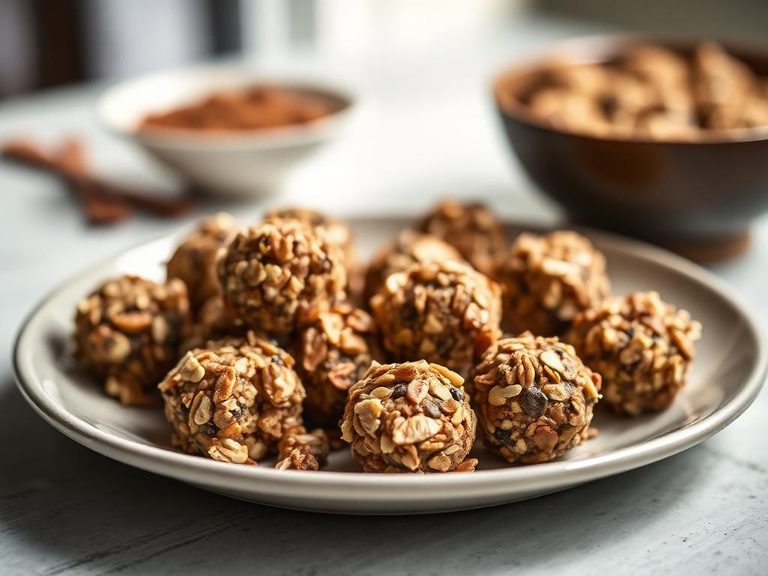
🍽️ Popular dishes
🌍 Where it's eaten
💡 Did you know?
Uncle Sam Cereal was first produced in 1908 by the Hecker H.O. Company and was one of the earliest ready-to-eat cereals marketed with a strong health focus.
Full nutrition (USDA data · scales with serving)
| Water | 4.4 g |
| Energy | 346 kcal |
| Energy | 1449 kj |
| Protein | 16.0 g |
| Total lipid (fat) | 11.6 g |
| Ash | 2.2 g |
| Carbohydrate, by difference | 65.8 g |
| Fiber, total dietary | 20.3 g |
| Total Sugars | 1.6 g |
| Sucrose | 0.94 g |
| Glucose | 0.41 g |
| Fructose | 0.21 g |
| Lactose | 0.00 g |
| Maltose | 0.00 g |
| Galactose | 0.00 g |
| Calcium, Ca | 95.0 mg |
| Iron, Fe | 4.0 mg |
| Magnesium, Mg | 206 mg |
| Phosphorus, P | 374 mg |
| Potassium, K | 446 mg |
| Sodium, Na | 206 mg |
| Zinc, Zn | 3.9 mg |
| Copper, Cu | 0.75 mg |
| Manganese, Mn | 3.6 mg |
| Selenium, Se | 88.3 ug |
| Vitamin C, total ascorbic acid | 2.4 mg |
| Thiamin | 0.68 mg |
| Riboflavin | 0.13 mg |
| Niacin | 4.8 mg |
| Pantothenic acid | 0.62 mg |
| Vitamin B-6 | 0.96 mg |
| Folate, total | 53.0 ug |
| Folic acid | 0.00 ug |
| Folate, food | 53.0 ug |
| Folate, DFE | 53.0 ug |
| Choline, total | 49.5 mg |
| Betaine | 248 mg |
| Vitamin B-12 | 0.00 ug |
| Vitamin B-12, added | 0.00 ug |
| Vitamin A, RAE | 0.00 ug |
| Retinol | 0.00 ug |
| Carotene, beta | 0.00 ug |
| Carotene, alpha | 0.00 ug |
| Cryptoxanthin, beta | 0.00 ug |
| Vitamin A, IU | 0.00 iu |
| Lycopene | 0.00 ug |
| Lutein + zeaxanthin | 331 ug |
| Vitamin E (alpha-tocopherol) | 0.90 mg |
| Vitamin E, added | 0.00 mg |
| Vitamin D (D2 + D3), International Units | 0.00 iu |
| Vitamin D (D2 + D3) | 0.00 ug |
| Vitamin K (phylloquinone) | 1.8 ug |
| Vitamin K (Dihydrophylloquinone) | 0.00 ug |
| Alcohol, ethyl | 0.00 g |
| Caffeine | 0.00 mg |
| Theobromine | 0.00 mg |
Fat & fatty acid profile (per 100g)
| Fatty acids, total saturated | 0.95 g |
| SFA 4:0 | 0.00 g |
| SFA 6:0 | 0.00 g |
| SFA 8:0 | 0.00 g |
| SFA 10:0 | 0.00 g |
| SFA 12:0 | 0.00 g |
| SFA 14:0 | 0.00 g |
| SFA 15:0 | 0.00 g |
| SFA 16:0 | 0.68 g |
| SFA 17:0 | 0.00 g |
| SFA 18:0 | 0.23 g |
| SFA 20:0 | 0.01 g |
| SFA 22:0 | 0.01 g |
| SFA 24:0 | 0.01 g |
| Fatty acids, total monounsaturated | 1.4 g |
| MUFA 14:1 | 0.00 g |
| MUFA 15:1 | 0.00 g |
| MUFA 16:1 | 0.01 g |
| MUFA 17:1 | 0.00 g |
| MUFA 18:1 | 1.4 g |
| MUFA 20:1 | 0.01 g |
| MUFA 22:1 | 0.00 g |
| Fatty acids, total polyunsaturated | 6.0 g |
| PUFA 18:2 | 1.7 g |
| PUFA 18:3 | 4.3 g |
| PUFA 18:4 | 0.00 g |
| PUFA 20:2 n-6 c,c | 0.00 g |
| PUFA 20:3 | 0.00 g |
| PUFA 20:4 | 0.00 g |
| PUFA 20:5 n-3 (EPA) | 0.00 g |
| PUFA 22:5 n-3 (DPA) | 0.00 g |
| PUFA 22:6 n-3 (DHA) | 0.00 g |
| Cholesterol | 0.00 mg |
FAQ
Is Uncle Sam Cereal gluten-free?
No, it is made from whole wheat and contains gluten. It is not suitable for individuals with celiac disease or gluten sensitivity.
How does it compare to other high-fiber cereals?
It typically has more protein and less sugar than many commercial high-fiber cereals, but its texture is notably chewier and denser.
Can it be eaten without milk?
Yes, it can be eaten dry as a snack, though its chewy texture is best softened with a liquid like milk, yogurt, or a plant-based alternative.
Nutrient density (calculated · NRF9.3)
Nutrient Rich Foods index: beneficial nutrients (protein, fiber, vitamins, minerals) minus saturated fat, added sugar & sodium, per 100 kcal.
NRF9.3 index — Fulgoni, Keast & Drewnowski, 2009. Computed from USDA nutrients.
Weight-loss friendliness (composite index)
Energy density 3.46 kcal/g · 18% calories from protein · 20.3 g fiber · 1.6 g sugar per 100 g.
Composite of energy density (Rolls et al., 1999), protein & fiber satiety, minus sugar. A calculated heuristic — ranks satiety-per-calorie, not a clinical measure.
Dietary load (calculated from USDA values)
Potential renal acid load. Positive = acid-forming, negative = alkaline-forming.
Sodium-to-potassium ratio: 0.46 (lower is better — aim for ≤ 1)
Sodium:potassium per WHO potassium guidance. Computed from USDA nutrients.