

Carrots, frozen, cooked with oil
Common food

Photo: Wikipedia
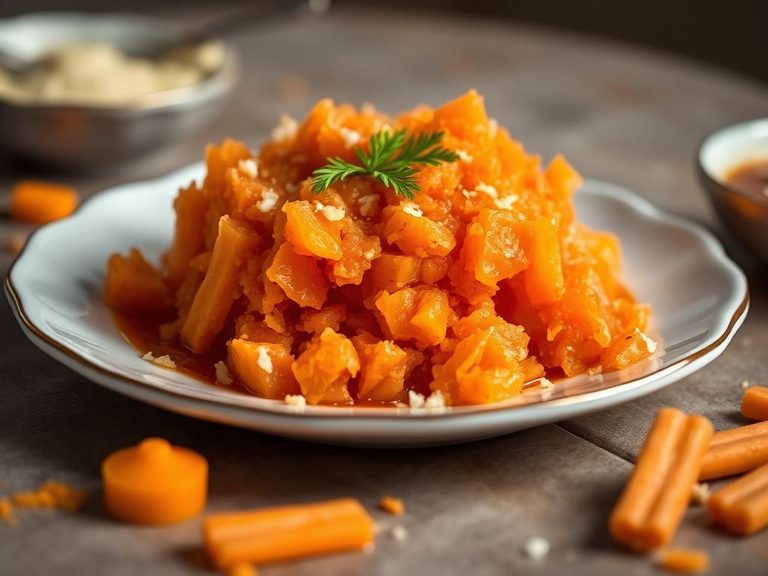
Frozen carrots cooked with oil transform humble, sweet roots into a tender, slightly caramelized side dish with a glossy, rich mouthfeel. The cooking oil amplifies the carrots' natural sweetness while the freezing process locks in a soft, uniform texture that holds up beautifully to heat. Nutritionally, they offer a solid fiber boost (3.1g) and a notable dose of fat-soluble vitamins, with the added oil enhancing the absorption of beta-carotene.
Calorie split: 5% protein · 48% carbs · 47% fat
↓ Full nutrition💚 Why it's loved
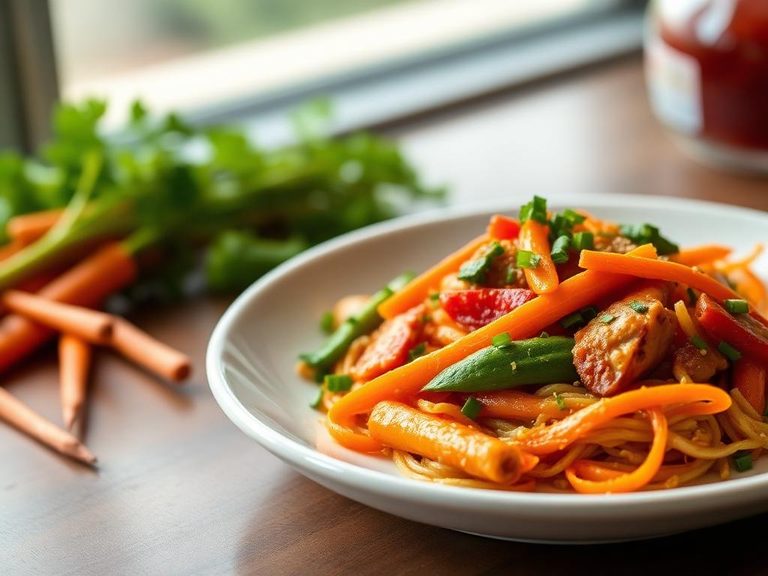
People love them for their sweet, earthy flavor and the way the oil creates a satisfying, almost buttery richness that elevates a simple vegetable. They are incredibly versatile, working equally well as a standalone side, a base for soups, or a sweet-savory component in stir-fries.
⚠️ Watch-outs & how to enjoy it better
The added oil increases the fat and calorie content compared to plain boiled carrots, which may concern those on strict low-fat diets. To counteract, use minimal oil (e.g., a light spray) or choose heart-healthy oils like olive or avocado oil, and pair with a lean protein to balance the meal's macronutrients.
Key benefits
- Rich in beta-carotene, which the body converts to vitamin A.
- The added fat (oil) significantly boosts absorption of fat-soluble vitamins A and K.
- Good source of dietary fiber (3.1g) for digestive health.
- Convenient and consistent texture from freezing, reducing cooking time.
- Moderate calorie count (64 kcal/100g) for a flavorful, satisfying side.
🍽️ Popular dishes
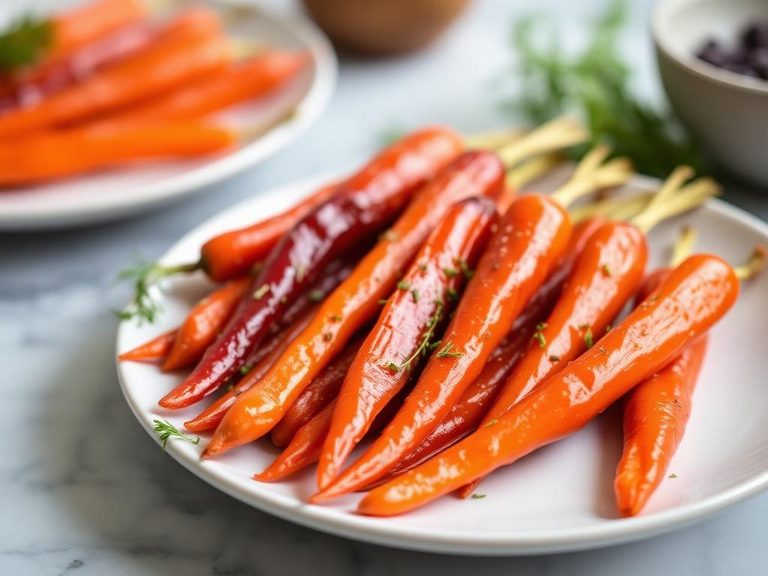
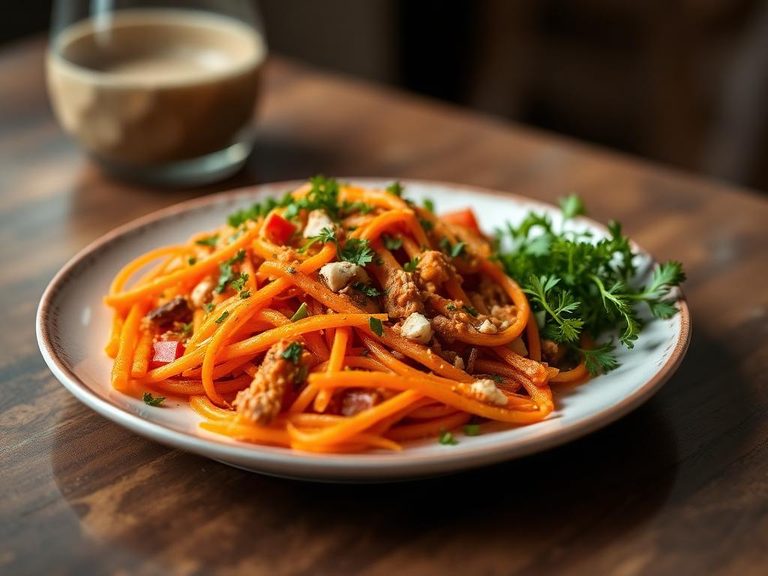
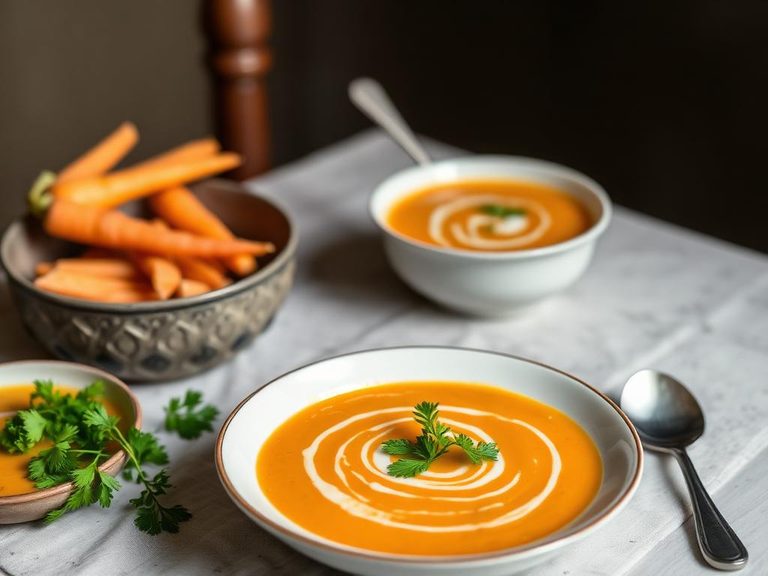
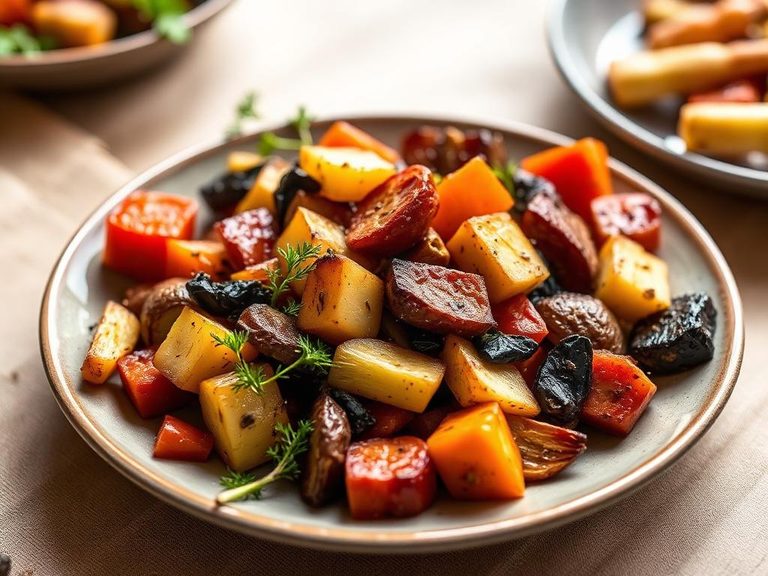
🌍 Where it's eaten
💡 Did you know?
Freezing carrots actually breaks down their cell walls, which can make them softer and even sweeter when cooked, as the starches convert to sugars more readily than in fresh carrots.
Full nutrition (USDA data · scales with serving)
| Water | 87.2 g |
| Energy | 64.0 kcal |
| Protein | 0.78 g |
| Total lipid (fat) | 3.4 g |
| Carbohydrate, by difference | 7.7 g |
| Fiber, total dietary | 3.1 g |
| Total Sugars | 4.1 g |
| Calcium, Ca | 32.0 mg |
| Iron, Fe | 0.42 mg |
| Magnesium, Mg | 11.0 mg |
| Phosphorus, P | 30.0 mg |
| Potassium, K | 203 mg |
| Sodium, Na | 176 mg |
| Zinc, Zn | 0.27 mg |
| Copper, Cu | 0.08 mg |
| Selenium, Se | 0.60 ug |
| Vitamin C, total ascorbic acid | 2.1 mg |
| Thiamin | 0.04 mg |
| Riboflavin | 0.04 mg |
| Niacin | 0.45 mg |
| Vitamin B-6 | 0.09 mg |
| Folate, total | 7.0 ug |
| Folic acid | 0.00 ug |
| Folate, food | 7.0 ug |
| Folate, DFE | 7.0 ug |
| Choline, total | 8.3 mg |
| Vitamin B-12 | 0.00 ug |
| Vitamin B-12, added | 0.00 ug |
| Vitamin A, RAE | 819 ug |
| Retinol | 0.00 ug |
| Carotene, beta | 7937 ug |
| Carotene, alpha | 3597 ug |
| Cryptoxanthin, beta | 0.00 ug |
| Lycopene | 0.00 ug |
| Lutein + zeaxanthin | 654 ug |
| Vitamin E (alpha-tocopherol) | 1.2 mg |
| Vitamin E, added | 0.00 mg |
| Vitamin D (D2 + D3) | 0.00 ug |
| Vitamin K (phylloquinone) | 17.4 ug |
| Alcohol, ethyl | 0.00 g |
| Caffeine | 0.00 mg |
| Theobromine | 0.00 mg |
Fat & fatty acid profile (per 100g)
| Fatty acids, total saturated | 0.39 g |
| SFA 4:0 | 0.00 g |
| SFA 6:0 | 0.00 g |
| SFA 8:0 | 0.00 g |
| SFA 10:0 | 0.00 g |
| SFA 12:0 | 0.00 g |
| SFA 14:0 | 0.00 g |
| SFA 16:0 | 0.28 g |
| SFA 18:0 | 0.08 g |
| Fatty acids, total monounsaturated | 1.2 g |
| MUFA 16:1 | 0.01 g |
| MUFA 18:1 | 1.2 g |
| MUFA 20:1 | 0.02 g |
| MUFA 22:1 | 0.00 g |
| Fatty acids, total polyunsaturated | 1.3 g |
| PUFA 18:2 | 1.1 g |
| PUFA 18:3 | 0.13 g |
| PUFA 18:4 | 0.00 g |
| PUFA 20:4 | 0.00 g |
| PUFA 20:5 n-3 (EPA) | 0.00 g |
| PUFA 22:5 n-3 (DPA) | 0.00 g |
| PUFA 22:6 n-3 (DHA) | 0.00 g |
| Cholesterol | 0.00 mg |
Amino acid profile (per 100g)
Estimated from Carrots, canned, no salt added, drained solids — USDA does not publish this profile for Carrots.
| Tryptophan | 0.01 g |
| Threonine | 0.02 g |
| Isoleucine | 0.03 g |
| Leucine | 0.03 g |
| Lysine | 0.03 g |
| Methionine | 0.00 g |
| Cystine | 0.01 g |
| Phenylalanine | 0.02 g |
| Tyrosine | 0.01 g |
| Valine | 0.03 g |
| Arginine | 0.03 g |
| Histidine | 0.01 g |
| Alanine | 0.04 g |
| Aspartic acid | 0.08 g |
| Glutamic acid | 0.12 g |
| Glycine | 0.02 g |
| Proline | 0.02 g |
| Serine | 0.02 g |
FAQ
Are frozen carrots as nutritious as fresh ones?
Yes, often more so. They are typically frozen at peak ripeness, which locks in nutrients. The freezing process can slightly reduce some heat-sensitive vitamins, but the difference is minimal, and they retain excellent levels of fiber, beta-carotene, and minerals.
Does cooking with oil make carrots less healthy?
Not necessarily. While oil adds calories and fat, it also dramatically increases the body's ability to absorb fat-soluble vitamins like A and K from the carrots. Using a small amount of a healthy oil (like olive oil) can make the dish more nutritious overall.
Why do my frozen cooked carrots sometimes turn mushy?
This is often due to overcooking or thawing them improperly. To maintain texture, cook them from frozen (don't thaw first) and use a quick cooking method like sautéing or steaming. Avoid boiling them for long periods, as this breaks down the cell structure.
Nutrient density (calculated · NRF9.3)
Nutrient Rich Foods index: beneficial nutrients (protein, fiber, vitamins, minerals) minus saturated fat, added sugar & sodium, per 100 kcal.
NRF9.3 index — Fulgoni, Keast & Drewnowski, 2009. Computed from USDA nutrients.
Weight-loss friendliness (composite index)
Energy density 0.64 kcal/g · 5% calories from protein · 3.1 g fiber · 4.1 g sugar per 100 g.
Composite of energy density (Rolls et al., 1999), protein & fiber satiety, minus sugar. A calculated heuristic — ranks satiety-per-calorie, not a clinical measure.
Dietary load (calculated from USDA values)
Potential renal acid load. Positive = acid-forming, negative = alkaline-forming.
Sodium-to-potassium ratio: 0.87 (lower is better — aim for ≤ 1)
Sodium:potassium per WHO potassium guidance. Computed from USDA nutrients.