

Butter, stick
Common food
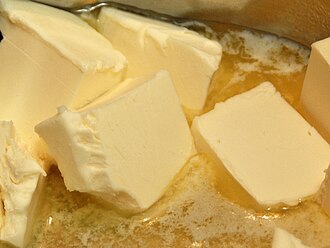
Photo: Wikipedia
Butter is a rich, creamy dairy product made by churning cream, resulting in a smooth, solid fat with a pale yellow hue and a distinct, savory flavor. Nutritionally, it is almost pure fat, providing a dense source of energy with minimal protein or carbohydrates. Its high fat content gives it a luxurious mouthfeel and makes it a foundational ingredient in both cooking and baking.
Calorie split: 0% protein · 0% carbs · 100% fat
↓ Full nutrition💚 Why it's loved
People love butter for its unparalleled ability to add richness, depth, and a comforting, savory flavor to food. Its versatility is legendary, transforming everything from a simple piece of toast to complex sauces and pastries.
⚠️ Watch-outs & how to enjoy it better
Due to its high saturated fat and calorie density, excessive consumption can contribute to elevated cholesterol levels and weight gain. For those monitoring saturated fat intake, using it sparingly or opting for alternatives like olive oil can be beneficial. A concrete tip is to use it as a flavor enhancer rather than the primary cooking fat, and to pair it with fiber-rich foods like whole grains or vegetables to balance the meal.
Key benefits
- Excellent source of fat-soluble vitamins A, D, E, and K.
- Provides conjugated linoleic acid (CLA), a naturally occurring fatty acid.
- Enhances the absorption of fat-soluble nutrients from other foods.
- Adds rich flavor and texture to a wide variety of dishes.
- Contains butyrate, a short-chain fatty acid that may support gut health.
🍽️ Popular dishes
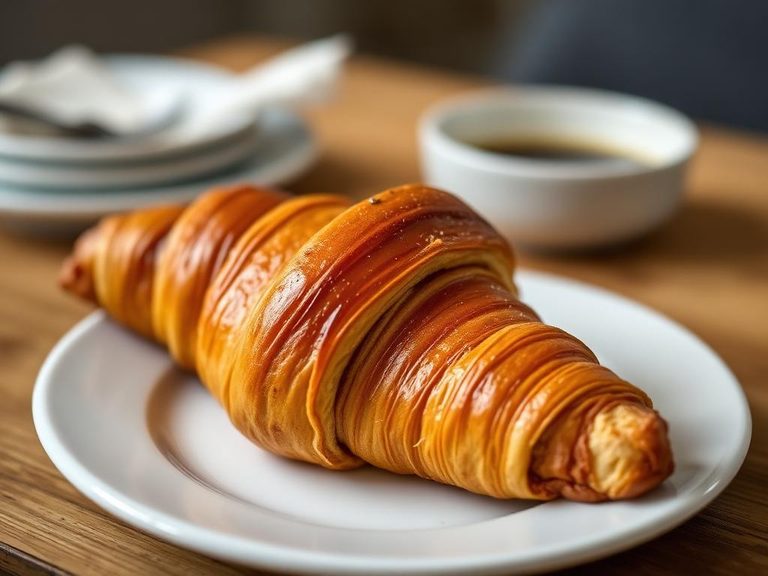
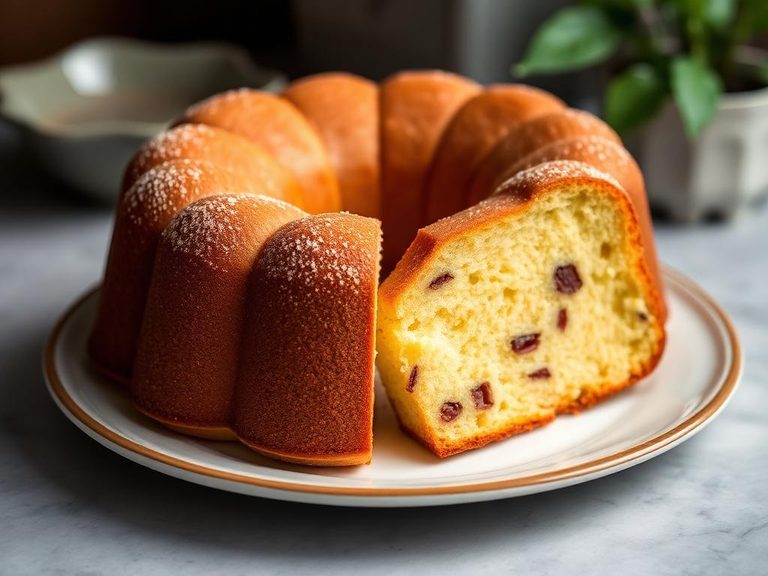
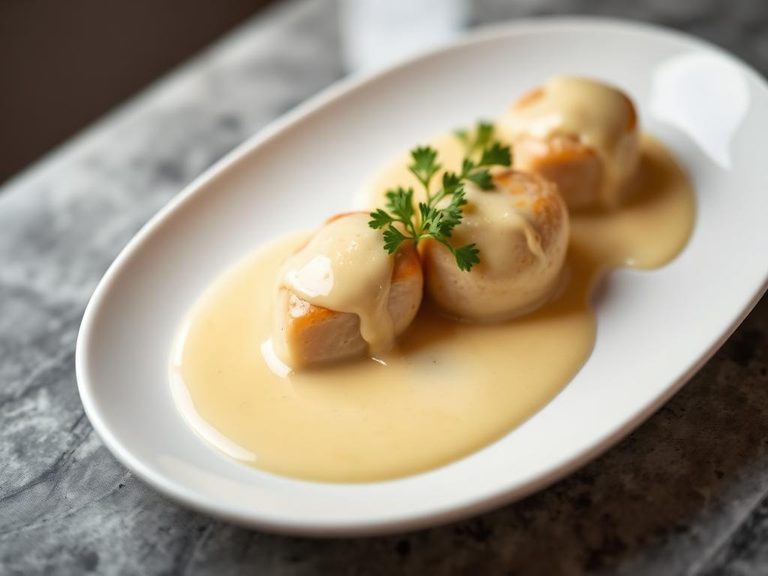
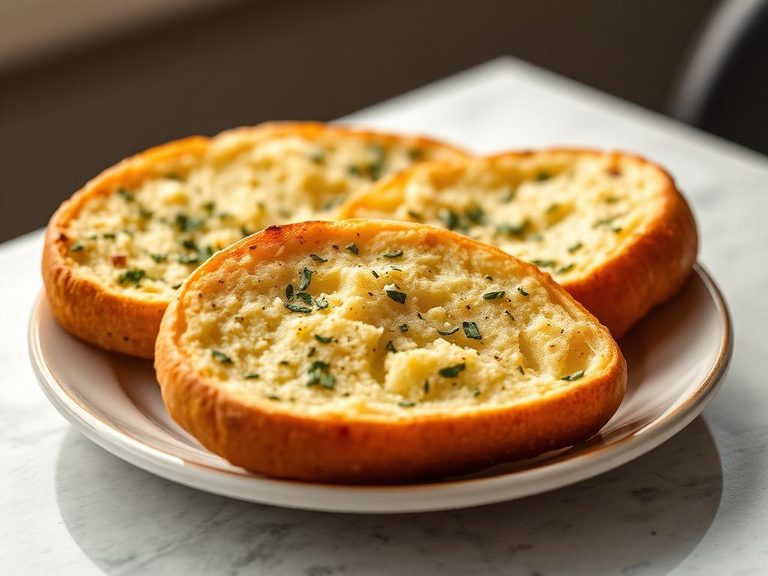
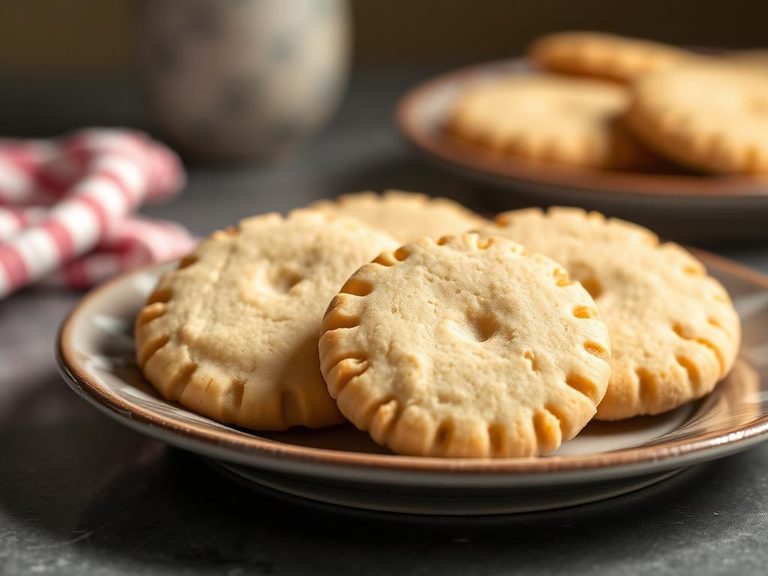
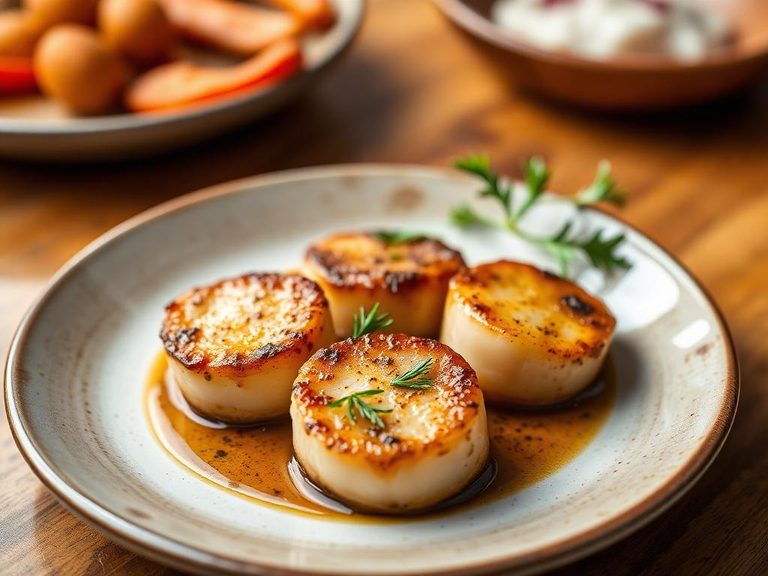
🌍 Where it's eaten
💡 Did you know?
The yellow color of butter comes from beta-carotene, a pigment found in the grass and feed that cows eat; butter from grass-fed cows is often a deeper yellow.
Full nutrition (USDA data · scales with serving)
| Water | 15.8 g |
| Energy | 743 kcal |
| Protein | 0.85 g |
| Total lipid (fat) | 82.2 g |
| Carbohydrate, by difference | 0.06 g |
| Fiber, total dietary | 0.00 g |
| Total Sugars | 0.58 g |
| Calcium, Ca | 21.0 mg |
| Iron, Fe | 0.06 mg |
| Magnesium, Mg | 2.0 mg |
| Phosphorus, P | 22.0 mg |
| Potassium, K | 23.0 mg |
| Sodium, Na | 524 mg |
| Zinc, Zn | 0.07 mg |
| Copper, Cu | 0.01 mg |
| Selenium, Se | 0.00 ug |
| Vitamin C, total ascorbic acid | 0.00 mg |
| Thiamin | 0.01 mg |
| Riboflavin | 0.00 mg |
| Niacin | 0.00 mg |
| Vitamin B-6 | 0.00 mg |
| Folate, total | 5.0 ug |
| Folic acid | 0.00 ug |
| Folate, food | 5.0 ug |
| Folate, DFE | 5.0 ug |
| Choline, total | 18.8 mg |
| Vitamin B-12 | 0.00 ug |
| Vitamin B-12, added | 0.00 ug |
| Vitamin A, RAE | 758 ug |
| Retinol | 744 ug |
| Carotene, beta | 168 ug |
| Carotene, alpha | 2.0 ug |
| Cryptoxanthin, beta | 8.0 ug |
| Lycopene | 0.00 ug |
| Lutein + zeaxanthin | 0.00 ug |
| Vitamin E (alpha-tocopherol) | 0.00 mg |
| Vitamin E, added | 0.00 mg |
| Vitamin D (D2 + D3) | 0.40 ug |
| Vitamin K (phylloquinone) | 7.0 ug |
| Alcohol, ethyl | 0.00 g |
| Caffeine | 0.00 mg |
| Theobromine | 0.00 mg |
Fat & fatty acid profile (per 100g)
| Fatty acids, total saturated | 45.6 g |
| SFA 4:0 | 2.0 g |
| SFA 6:0 | 1.4 g |
| SFA 8:0 | 0.84 g |
| SFA 10:0 | 1.9 g |
| SFA 12:0 | 2.2 g |
| SFA 14:0 | 7.2 g |
| SFA 16:0 | 21.2 g |
| SFA 18:0 | 7.4 g |
| Fatty acids, total monounsaturated | 16.9 g |
| MUFA 16:1 | 1.00 g |
| MUFA 18:1 | 15.0 g |
| MUFA 20:1 | 0.12 g |
| MUFA 22:1 | 0.00 g |
| Fatty acids, total polyunsaturated | 2.5 g |
| PUFA 18:2 | 2.3 g |
| PUFA 18:3 | 0.33 g |
| PUFA 18:4 | 0.01 g |
| PUFA 20:4 | 0.10 g |
| PUFA 20:5 n-3 (EPA) | 0.02 g |
| PUFA 22:5 n-3 (DPA) | 0.04 g |
| PUFA 22:6 n-3 (DHA) | 0.00 g |
| Cholesterol | 235 mg |
Amino acid profile (per 100g)
Estimated from Waffles, buttermilk, frozen, ready-to-heat — USDA does not publish this profile for Butter.
| Tryptophan | 0.07 g |
| Threonine | 0.23 g |
| Isoleucine | 0.28 g |
| Leucine | 0.49 g |
| Lysine | 0.30 g |
| Methionine | 0.13 g |
| Cystine | 0.15 g |
| Phenylalanine | 0.30 g |
| Tyrosine | 0.15 g |
| Valine | 0.33 g |
| Arginine | 0.28 g |
| Histidine | 0.14 g |
| Alanine | 0.25 g |
| Aspartic acid | 0.41 g |
| Glutamic acid | 1.6 g |
| Glycine | 0.21 g |
| Proline | 0.56 g |
| Serine | 0.35 g |
FAQ
What is the difference between salted and unsalted butter?
Unsalted butter contains only cream and has a fresh, pure dairy flavor, making it ideal for baking where precise salt control is needed. Salted butter includes added salt for flavor and preservation, which can vary by brand.
Can butter be used for high-heat cooking?
Regular butter has a relatively low smoke point (around 350°F/175°C) due to milk solids that burn easily. Clarified butter or ghee, where the milk solids are removed, has a much higher smoke point (around 450°F/230°C) and is better suited for high-heat sautéing and frying.
How should butter be stored?
For short-term use, butter can be kept at cool room temperature in a butter dish for a week or two. For longer storage, it should be refrigerated (up to a few months) or frozen (up to a year), wrapped tightly to prevent it from absorbing odors.
Nutrient density (calculated · NRF9.3)
Nutrient Rich Foods index: beneficial nutrients (protein, fiber, vitamins, minerals) minus saturated fat, added sugar & sodium, per 100 kcal.
NRF9.3 index — Fulgoni, Keast & Drewnowski, 2009. Computed from USDA nutrients.
Weight-loss friendliness (composite index)
Energy density 7.43 kcal/g · 0% calories from protein · 0.0 g fiber · 0.6 g sugar per 100 g.
Composite of energy density (Rolls et al., 1999), protein & fiber satiety, minus sugar. A calculated heuristic — ranks satiety-per-calorie, not a clinical measure.
Dietary load (calculated from USDA values)
Potential renal acid load. Positive = acid-forming, negative = alkaline-forming.
Sodium-to-potassium ratio: 22.78 (lower is better — aim for ≤ 1)
Sodium:potassium per WHO potassium guidance. Computed from USDA nutrients.