

Croissant
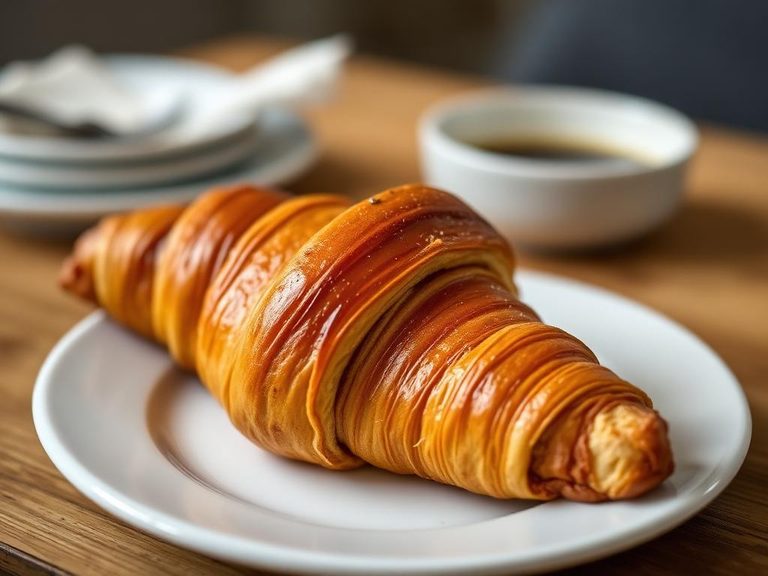
The croissant is a buttery, flaky, viennoiserie pastry originating from France, though inspired by the Austrian kipferl. It is made from a layered yeast-leavened dough, which is repeatedly folded and rolled with cold butter to create its signature airy, honeycomb texture.
🍳 View the full Croissant recipe →
🍽️ Nutrition at a glance
A standard croissant is high in both fat and carbohydrates, providing a quick energy source. One medium croissant (about 57g) typically contains around 230-280 calories, with most of its nutrients coming from refined flour and butter.
Nutrition breakdown
| Calories | 237 kcal |
| Protein | 5 g |
| Carbs | 26 g |
| Fat | 12 g |
| Fiber | 1.6 g |
| Sugar | 6 g |
| Sodium | 230 mg |
| Calcium | 28 mg |
| Iron | 1.5 mg |
| Potassium | 70 mg |
| Vitamin A | 110 IU |
| Vitamin B1 (Thiamine) | 0.2 mg |
| Vitamin B2 (Riboflavin) | 0.15 mg |
| Folate | 50 µg |
| Phosphorus | 55 mg |
Per 1 croissant (57 g) · estimated, varies by recipe
💡 What's interesting
The croissant's iconic layered structure is a result of a precise baking technique called lamination, where butter is encased in dough and folded multiple times. Culturally, it is a staple of French breakfast and a symbol of artisanal baking skill.
🍽️ Related dishes







AI estimate may be inaccurate · Terms