

Bread, whole wheat, with raisins, toasted
Common food

Photo: Wikipedia
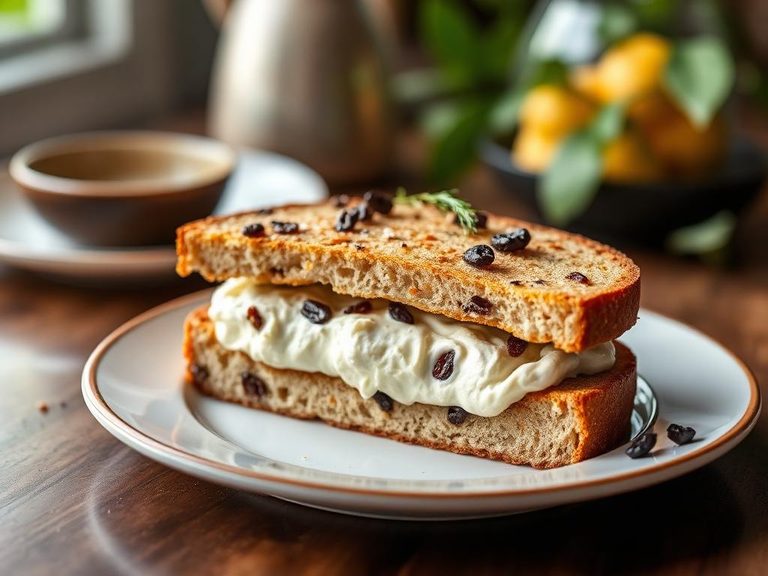
A hearty, chewy slice of whole wheat bread studded with sweet, plump raisins, offering a delightful contrast between the nutty, fibrous crumb and the bursts of fruity sweetness. When toasted, its crust crisps up beautifully while the interior softens, releasing a warm, comforting aroma. Each 100g provides a substantial 7.2g of fiber and a notable 21.41g of natural sugar from the raisins.
Calorie split: 12% protein · 76% carbs · 13% fat
↓ Full nutrition💚 Why it's loved
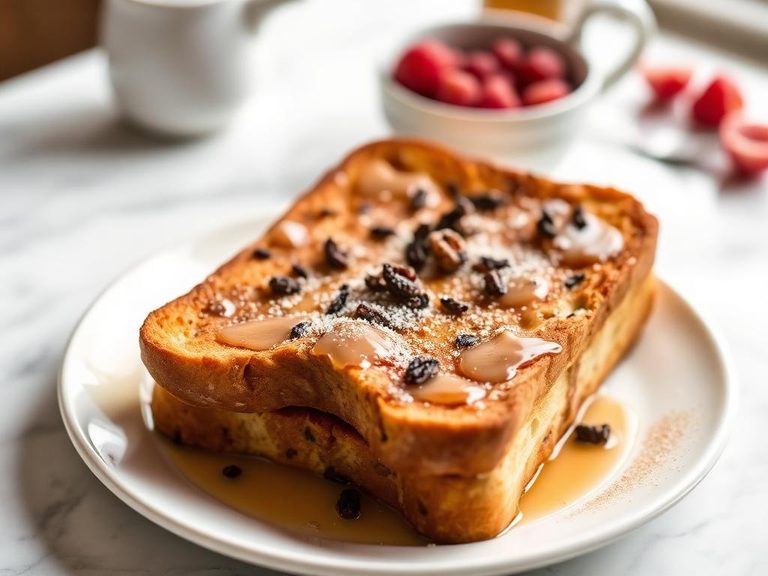
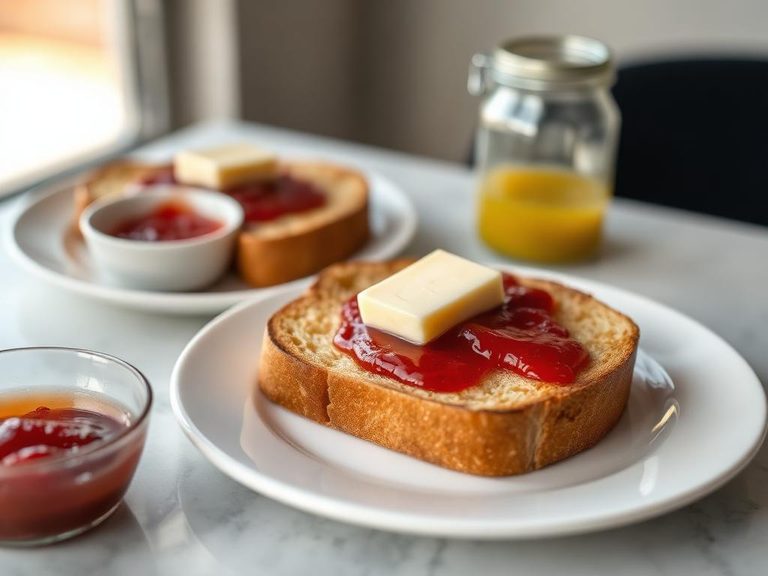
It's beloved for its perfect balance of wholesome, earthy whole wheat and the nostalgic, jammy sweetness of raisins, making it a comforting breakfast or snack staple. Its versatility shines from a simple buttered toast to the base for a decadent French toast.
⚠️ Watch-outs & how to enjoy it better
The high sugar content (21.41g per 100g) can cause a rapid blood-sugar spike, especially when eaten alone. To counteract this, always pair it with a source of protein or healthy fat—like nut butter, Greek yogurt, or a slice of cheese—to slow sugar absorption and promote satiety.
Key benefits
- High in dietary fiber (7.2g per 100g) for digestive health.
- Provides plant-based protein (9.48g per 100g).
- Whole wheat offers B vitamins and minerals like iron and magnesium.
- Raisins add antioxidants and quick natural energy.
- A convenient, no-cook source of complex carbohydrates.
🍽️ Popular dishes
🌍 Where it's eaten
💡 Did you know?
The practice of adding raisins to bread dates back to ancient Rome, where they were a prized luxury ingredient.
Full nutrition (USDA data · scales with serving)
| Water | 21.4 g |
| Energy | 319 kcal |
| Protein | 9.5 g |
| Total lipid (fat) | 4.5 g |
| Carbohydrate, by difference | 61.9 g |
| Fiber, total dietary | 7.2 g |
| Total Sugars | 21.4 g |
| Calcium, Ca | 65.0 mg |
| Iron, Fe | 2.4 mg |
| Magnesium, Mg | 80.0 mg |
| Phosphorus, P | 226 mg |
| Potassium, K | 354 mg |
| Sodium, Na | 528 mg |
| Zinc, Zn | 1.9 mg |
| Copper, Cu | 0.29 mg |
| Selenium, Se | 12.9 ug |
| Vitamin C, total ascorbic acid | 0.30 mg |
| Thiamin | 0.28 mg |
| Riboflavin | 0.15 mg |
| Niacin | 3.2 mg |
| Vitamin B-6 | 0.18 mg |
| Folate, total | 33.0 ug |
| Folic acid | 0.00 ug |
| Folate, food | 33.0 ug |
| Folate, DFE | 33.0 ug |
| Choline, total | 20.5 mg |
| Vitamin B-12 | 0.06 ug |
| Vitamin B-12, added | 0.00 ug |
| Vitamin A, RAE | 24.0 ug |
| Retinol | 24.0 ug |
| Carotene, beta | 7.0 ug |
| Carotene, alpha | 0.00 ug |
| Cryptoxanthin, beta | 2.0 ug |
| Lycopene | 0.00 ug |
| Lutein + zeaxanthin | 100 ug |
| Vitamin E (alpha-tocopherol) | 0.48 mg |
| Vitamin E, added | 0.00 mg |
| Vitamin D (D2 + D3) | 0.20 ug |
| Vitamin K (phylloquinone) | 2.6 ug |
| Alcohol, ethyl | 0.00 g |
| Caffeine | 0.00 mg |
| Theobromine | 0.00 mg |
Fat & fatty acid profile (per 100g)
| Fatty acids, total saturated | 1.6 g |
| SFA 4:0 | 0.05 g |
| SFA 6:0 | 0.04 g |
| SFA 8:0 | 0.02 g |
| SFA 10:0 | 0.05 g |
| SFA 12:0 | 0.06 g |
| SFA 14:0 | 0.18 g |
| SFA 16:0 | 0.88 g |
| SFA 18:0 | 0.31 g |
| Fatty acids, total monounsaturated | 1.0 g |
| MUFA 16:1 | 0.05 g |
| MUFA 18:1 | 0.93 g |
| MUFA 20:1 | 0.01 g |
| MUFA 22:1 | 0.00 g |
| Fatty acids, total polyunsaturated | 0.94 g |
| PUFA 18:2 | 0.88 g |
| PUFA 18:3 | 0.07 g |
| PUFA 18:4 | 0.00 g |
| PUFA 20:4 | 0.00 g |
| PUFA 20:5 n-3 (EPA) | 0.00 g |
| PUFA 22:5 n-3 (DPA) | 0.00 g |
| PUFA 22:6 n-3 (DHA) | 0.00 g |
| Cholesterol | 6.0 mg |
Amino acid profile (per 100g)
Estimated from Bread, salvadoran sweet cheese (quesadilla salvadorena) — USDA does not publish this profile for Bread.
| Tryptophan | 0.07 g |
| Threonine | 0.21 g |
| Isoleucine | 0.30 g |
| Leucine | 0.65 g |
| Lysine | 0.50 g |
| Methionine | 0.28 g |
| Cystine | 0.06 g |
| Phenylalanine | 0.37 g |
| Tyrosine | 0.23 g |
| Valine | 0.43 g |
| Arginine | 0.25 g |
| Histidine | 0.15 g |
| Alanine | 0.36 g |
| Aspartic acid | 0.59 g |
| Glutamic acid | 1.3 g |
| Glycine | 0.20 g |
| Proline | 0.83 g |
| Serine | 0.45 g |
| Hydroxyproline | 0.00 g |
FAQ
Is the sugar in raisin bread added sugar?
The sugar content comes primarily from the natural sugars in the raisins themselves, though some commercial brands may also add extra sugar or sweeteners to the dough.
How does toasting affect the nutrition?
Toasting primarily changes texture and flavor through the Maillard reaction; it does not significantly alter the calorie, macronutrient, or fiber content.
Is it a good post-workout food?
It can be, as the carbohydrates from the bread and raisins help replenish glycogen stores. Pairing it with protein (like a hard-boiled egg) makes it more effective for recovery.
Nutrient density (calculated · NRF9.3)
Nutrient Rich Foods index: beneficial nutrients (protein, fiber, vitamins, minerals) minus saturated fat, added sugar & sodium, per 100 kcal.
NRF9.3 index — Fulgoni, Keast & Drewnowski, 2009. Computed from USDA nutrients.
Weight-loss friendliness (composite index)
Energy density 3.19 kcal/g · 12% calories from protein · 7.2 g fiber · 21.4 g sugar per 100 g.
Composite of energy density (Rolls et al., 1999), protein & fiber satiety, minus sugar. A calculated heuristic — ranks satiety-per-calorie, not a clinical measure.
Dietary load (calculated from USDA values)
Potential renal acid load. Positive = acid-forming, negative = alkaline-forming.
Sodium-to-potassium ratio: 1.49 (lower is better — aim for ≤ 1)
Sodium:potassium per WHO potassium guidance. Computed from USDA nutrients.