

Bread, whole grain white
Common food
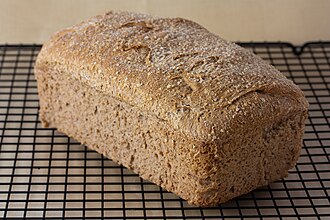
Photo: Wikipedia
Whole grain white bread is a modern hybrid that delivers the soft, mild taste and fine crumb of white bread while retaining the nutrient-rich bran and germ of the whole wheat kernel. Its texture is tender yet sturdy, with a subtle, nutty sweetness that lacks the bitterness of some darker whole grains. Nutritionally, it's a standout for its high fiber content (9.2g per 100g), which is significantly more than standard white bread.
Calorie split: 18% protein · 74% carbs · 8% fat
↓ Full nutrition💚 Why it's loved
People love it for its 'best of both worlds' appeal: the familiar, soft, and mild flavor profile of white bread with the added nutritional benefits of whole grains. It's incredibly versatile, serving as a neutral canvas for both savory sandwiches and sweet toppings without the sometimes overpowering taste of 100% whole wheat.
⚠️ Watch-outs & how to enjoy it better
Despite its benefits, it is still a processed grain product and can cause blood sugar spikes in sensitive individuals, especially when eaten alone. As a common wheat product, it contains gluten, making it unsuitable for those with celiac disease or gluten intolerance. To mitigate blood sugar impact, always pair it with a source of protein (like eggs, cheese, or lean meat) or healthy fat (like avocado or nut butter) to slow digestion.
Key benefits
- Excellent source of dietary fiber for digestive health.
- Provides sustained energy release due to complex carbohydrates.
- Higher in protein than typical white bread.
- Contains more micronutrients like B vitamins and minerals than refined white bread.
- The fiber helps promote a feeling of fullness.
🍽️ Popular dishes
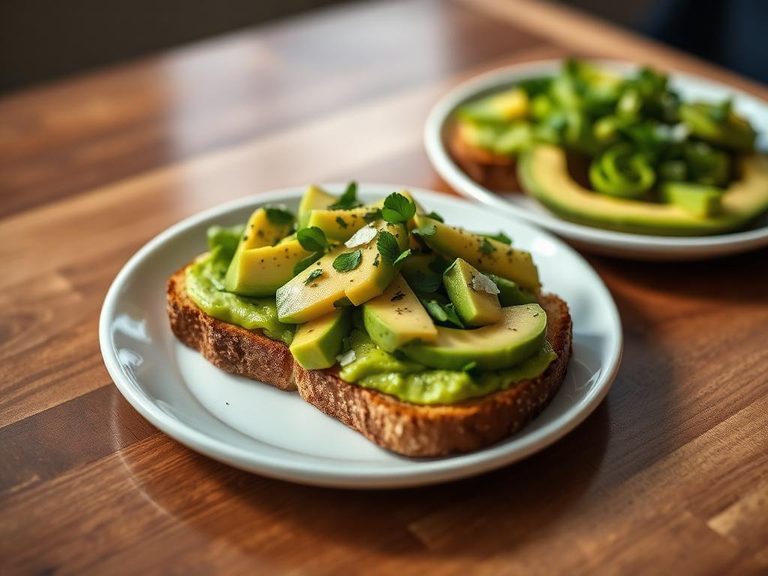


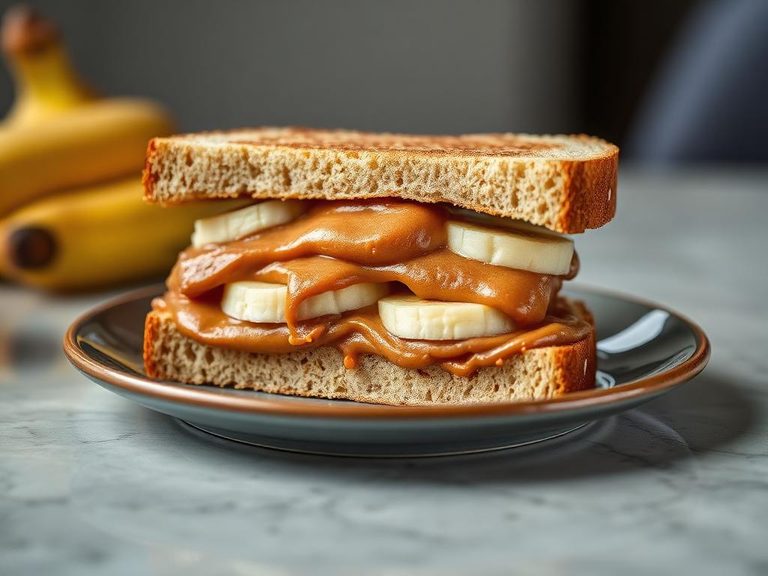
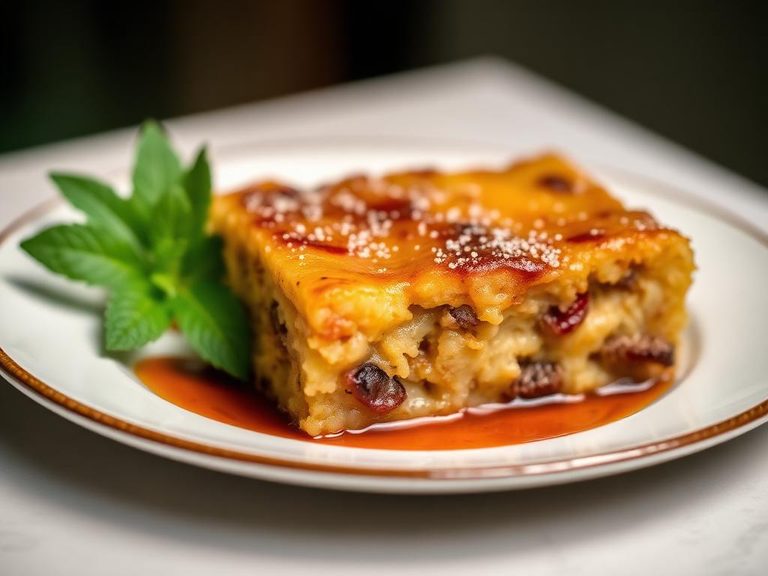

🌍 Where it's eaten
💡 Did you know?
The term 'whole grain white' is a bit of a marketing and milling triumph; it's achieved by meticulously separating the bran and germ from the white endosperm, then recombining them after the milling process to create a flour that bakes into a lighter loaf than traditional whole wheat.
Full nutrition (USDA data · scales with serving)
| Water | 39.6 g |
| Energy | 238 kcal |
| Protein | 10.7 g |
| Total lipid (fat) | 2.1 g |
| Carbohydrate, by difference | 43.9 g |
| Fiber, total dietary | 9.2 g |
| Total Sugars | 5.0 g |
| Calcium, Ca | 684 mg |
| Iron, Fe | 4.9 mg |
| Magnesium, Mg | 26.0 mg |
| Phosphorus, P | 103 mg |
| Potassium, K | 127 mg |
| Sodium, Na | 450 mg |
| Zinc, Zn | 0.95 mg |
| Copper, Cu | 0.15 mg |
| Selenium, Se | 16.1 ug |
| Vitamin C, total ascorbic acid | 0.00 mg |
| Thiamin | 0.51 mg |
| Riboflavin | 0.26 mg |
| Niacin | 4.5 mg |
| Vitamin B-6 | 0.08 mg |
| Folate, total | 127 ug |
| Folic acid | 49.0 ug |
| Folate, food | 78.0 ug |
| Folate, DFE | 162 ug |
| Choline, total | 8.1 mg |
| Vitamin B-12 | 0.00 ug |
| Vitamin B-12, added | 0.00 ug |
| Vitamin A, RAE | 0.00 ug |
| Retinol | 0.00 ug |
| Carotene, beta | 2.0 ug |
| Carotene, alpha | 0.00 ug |
| Cryptoxanthin, beta | 0.00 ug |
| Lycopene | 0.00 ug |
| Lutein + zeaxanthin | 25.0 ug |
| Vitamin E (alpha-tocopherol) | 0.38 mg |
| Vitamin E, added | 0.00 mg |
| Vitamin D (D2 + D3) | 0.00 ug |
| Vitamin K (phylloquinone) | 7.7 ug |
| Alcohol, ethyl | 0.00 g |
| Caffeine | 0.00 mg |
| Theobromine | 0.00 mg |
Fat & fatty acid profile (per 100g)
| Fatty acids, total saturated | 0.63 g |
| SFA 4:0 | 0.00 g |
| SFA 6:0 | 0.00 g |
| SFA 8:0 | 0.01 g |
| SFA 10:0 | 0.00 g |
| SFA 12:0 | 0.01 g |
| SFA 14:0 | 0.01 g |
| SFA 16:0 | 0.32 g |
| SFA 18:0 | 0.25 g |
| Fatty acids, total monounsaturated | 0.39 g |
| MUFA 16:1 | 0.02 g |
| MUFA 18:1 | 0.37 g |
| MUFA 20:1 | 0.01 g |
| MUFA 22:1 | 0.00 g |
| Fatty acids, total polyunsaturated | 0.97 g |
| PUFA 18:2 | 0.88 g |
| PUFA 18:3 | 0.08 g |
| PUFA 18:4 | 0.00 g |
| PUFA 20:4 | 0.00 g |
| PUFA 20:5 n-3 (EPA) | 0.00 g |
| PUFA 22:5 n-3 (DPA) | 0.00 g |
| PUFA 22:6 n-3 (DHA) | 0.00 g |
| Cholesterol | 0.00 mg |
Amino acid profile (per 100g)
Estimated from Bread, salvadoran sweet cheese (quesadilla salvadorena) — USDA does not publish this profile for Bread.
| Tryptophan | 0.07 g |
| Threonine | 0.21 g |
| Isoleucine | 0.30 g |
| Leucine | 0.65 g |
| Lysine | 0.50 g |
| Methionine | 0.28 g |
| Cystine | 0.06 g |
| Phenylalanine | 0.37 g |
| Tyrosine | 0.23 g |
| Valine | 0.43 g |
| Arginine | 0.25 g |
| Histidine | 0.15 g |
| Alanine | 0.36 g |
| Aspartic acid | 0.59 g |
| Glutamic acid | 1.3 g |
| Glycine | 0.20 g |
| Proline | 0.83 g |
| Serine | 0.45 g |
| Hydroxyproline | 0.00 g |
FAQ
Is whole grain white bread actually healthy?
Yes, it's a healthier choice than standard refined white bread. It retains the fiber, vitamins, and minerals from the whole wheat kernel, offering better digestive benefits and a more sustained energy release. However, it's still a carbohydrate-rich food, so mindful portioning is key.
How does it differ from regular whole wheat bread?
Whole grain white bread is milled to have a finer texture and milder flavor, closer to white bread. Regular whole wheat bread uses the entire kernel ground together, resulting in a denser, chewier texture and a stronger, nuttier flavor.
Can I use it for any recipe that calls for white bread?
Generally, yes. It works well for sandwiches, toast, and French toast. For recipes where bread is the main structural component, like a delicate bread pudding or stuffing, the slightly denser texture might yield a heartier final product.
Nutrient density (calculated · NRF9.3)
Nutrient Rich Foods index: beneficial nutrients (protein, fiber, vitamins, minerals) minus saturated fat, added sugar & sodium, per 100 kcal.
NRF9.3 index — Fulgoni, Keast & Drewnowski, 2009. Computed from USDA nutrients.
Weight-loss friendliness (composite index)
Energy density 2.38 kcal/g · 18% calories from protein · 9.2 g fiber · 5.0 g sugar per 100 g.
Composite of energy density (Rolls et al., 1999), protein & fiber satiety, minus sugar. A calculated heuristic — ranks satiety-per-calorie, not a clinical measure.
Dietary load (calculated from USDA values)
Potential renal acid load. Positive = acid-forming, negative = alkaline-forming.
Sodium-to-potassium ratio: 3.54 (lower is better — aim for ≤ 1)
Sodium:potassium per WHO potassium guidance. Computed from USDA nutrients.