

Black beans, from dried, no added fat
Common food
Black beans, cooked from dried, are small, oval legumes with a dense, creamy texture and a deep, earthy, slightly sweet flavor. They are a nutritional powerhouse, offering an impressive 8.81g of protein and 8.6g of fiber per 100g while being virtually fat-free. Their rich, dark color comes from anthocyanins, powerful antioxidants that also contribute to their distinctive taste.
Calorie split: 26% protein · 70% carbs · 4% fat
↓ Full nutrition💚 Why it's loved
People love black beans for their hearty, satisfying texture and deep, savory flavor that anchors countless dishes. Their incredible versatility allows them to absorb spices and seasonings, making them a beloved staple in everything from soups to tacos.
⚠️ Watch-outs & how to enjoy it better
The high fiber content can cause digestive discomfort (gas, bloating) for some, especially if not accustomed to legumes. To counteract this, start with small portions, soak dried beans thoroughly before cooking, and consider adding a pinch of baking soda to the cooking water to soften the skins. They also contain lectins, which are neutralized by proper, thorough cooking.
Key benefits
- Excellent source of plant-based protein and dietary fiber
- Naturally fat-free and very low in sugar
- Rich in antioxidants from anthocyanin pigments
- High in folate, iron, and magnesium
- Supports digestive health and satiety
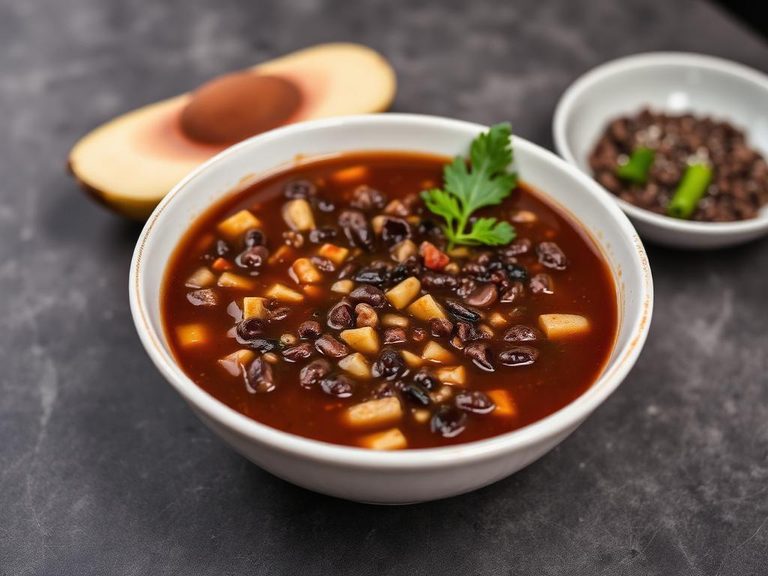
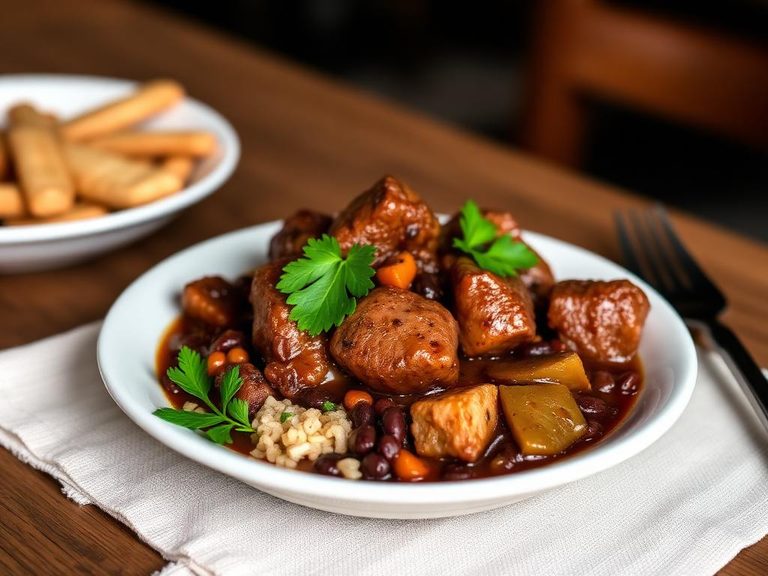
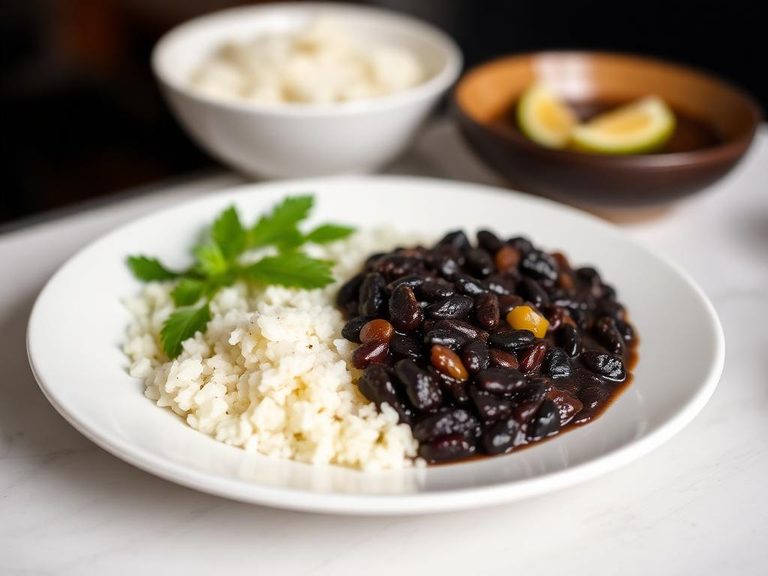
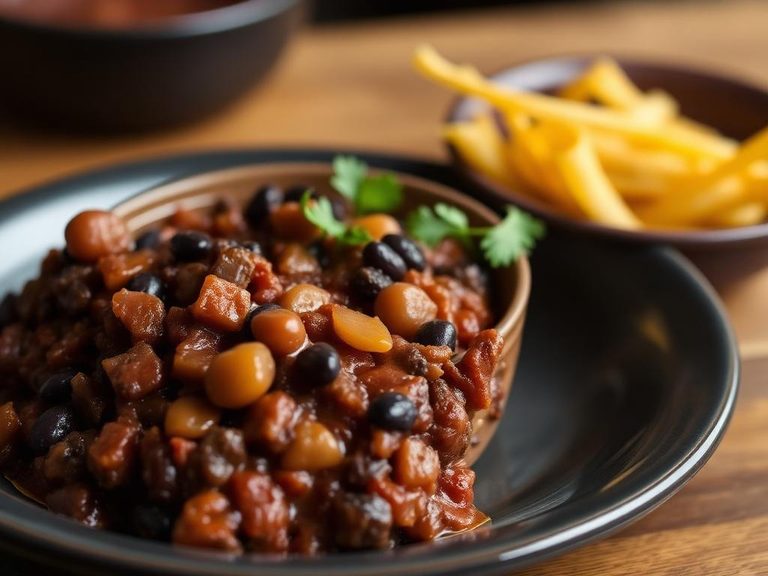
🍽️ Popular dishes

🌍 Where it's eaten
💡 Did you know?
The liquid from cooking black beans, called 'bean liquor' or 'black bean broth,' is often saved and used as a natural, rich food coloring and flavor enhancer in sauces and stews.
Full nutrition (USDA data · scales with serving)
| Water | 65.3 g |
| Energy | 131 kcal |
| Protein | 8.8 g |
| Total lipid (fat) | 0.54 g |
| Carbohydrate, by difference | 23.6 g |
| Fiber, total dietary | 8.6 g |
| Total Sugars | 0.32 g |
| Calcium, Ca | 27.0 mg |
| Iron, Fe | 2.1 mg |
| Magnesium, Mg | 70.0 mg |
| Phosphorus, P | 139 mg |
| Potassium, K | 353 mg |
| Sodium, Na | 232 mg |
| Zinc, Zn | 1.1 mg |
| Copper, Cu | 0.21 mg |
| Selenium, Se | 1.2 ug |
| Vitamin C, total ascorbic acid | 0.00 mg |
| Thiamin | 0.23 mg |
| Riboflavin | 0.06 mg |
| Niacin | 0.48 mg |
| Vitamin B-6 | 0.07 mg |
| Folate, total | 141 ug |
| Folic acid | 0.00 ug |
| Folate, food | 141 ug |
| Folate, DFE | 141 ug |
| Choline, total | 32.4 mg |
| Vitamin B-12 | 0.00 ug |
| Vitamin B-12, added | 0.00 ug |
| Vitamin A, RAE | 0.00 ug |
| Retinol | 0.00 ug |
| Carotene, beta | 0.00 ug |
| Carotene, alpha | 0.00 ug |
| Cryptoxanthin, beta | 0.00 ug |
| Lycopene | 0.00 ug |
| Lutein + zeaxanthin | 0.00 ug |
| Vitamin E (alpha-tocopherol) | 0.86 mg |
| Vitamin E, added | 0.00 mg |
| Vitamin D (D2 + D3) | 0.00 ug |
| Vitamin K (phylloquinone) | 3.3 ug |
| Alcohol, ethyl | 0.00 g |
| Caffeine | 0.00 mg |
| Theobromine | 0.00 mg |
Fat & fatty acid profile (per 100g)
| Fatty acids, total saturated | 0.14 g |
| SFA 4:0 | 0.00 g |
| SFA 6:0 | 0.00 g |
| SFA 8:0 | 0.00 g |
| SFA 10:0 | 0.00 g |
| SFA 12:0 | 0.00 g |
| SFA 14:0 | 0.00 g |
| SFA 16:0 | 0.13 g |
| SFA 18:0 | 0.01 g |
| Fatty acids, total monounsaturated | 0.05 g |
| MUFA 16:1 | 0.00 g |
| MUFA 18:1 | 0.05 g |
| MUFA 20:1 | 0.00 g |
| MUFA 22:1 | 0.00 g |
| Fatty acids, total polyunsaturated | 0.23 g |
| PUFA 18:2 | 0.13 g |
| PUFA 18:3 | 0.10 g |
| PUFA 18:4 | 0.00 g |
| PUFA 20:4 | 0.00 g |
| PUFA 20:5 n-3 (EPA) | 0.00 g |
| PUFA 22:5 n-3 (DPA) | 0.00 g |
| PUFA 22:6 n-3 (DHA) | 0.00 g |
| Cholesterol | 0.00 mg |
Amino acid profile (per 100g)
Estimated from Beans, black, mature seeds, raw — USDA does not publish this profile for Black beans.
| Tryptophan | 0.26 g |
| Threonine | 0.91 g |
| Isoleucine | 0.95 g |
| Leucine | 1.7 g |
| Lysine | 1.5 g |
| Methionine | 0.33 g |
| Cystine | 0.23 g |
| Phenylalanine | 1.2 g |
| Tyrosine | 0.61 g |
| Valine | 1.1 g |
| Arginine | 1.3 g |
| Histidine | 0.60 g |
| Alanine | 0.91 g |
| Aspartic acid | 2.6 g |
| Glutamic acid | 3.3 g |
| Glycine | 0.84 g |
| Proline | 0.92 g |
| Serine | 1.2 g |
FAQ
Are canned black beans as nutritious as dried?
Yes, canned black beans are just as nutritious as home-cooked dried beans. The main difference is that canned beans often contain added sodium, so rinsing them under water can reduce sodium content by up to 40%.
How long should I soak dried black beans?
Soak dried black beans in cold water for at least 8 hours or overnight. This reduces cooking time, improves digestibility, and helps remove some of the compounds that cause gas.
Do black beans cause blood sugar spikes?
Black beans have a low glycemic index and their high fiber and protein content helps slow digestion, making them a good choice for blood sugar management when eaten in appropriate portions.
Nutrient density (calculated · NRF9.3)
Nutrient Rich Foods index: beneficial nutrients (protein, fiber, vitamins, minerals) minus saturated fat, added sugar & sodium, per 100 kcal.
NRF9.3 index — Fulgoni, Keast & Drewnowski, 2009. Computed from USDA nutrients.
Weight-loss friendliness (composite index)
Energy density 1.31 kcal/g · 27% calories from protein · 8.6 g fiber · 0.3 g sugar per 100 g.
Composite of energy density (Rolls et al., 1999), protein & fiber satiety, minus sugar. A calculated heuristic — ranks satiety-per-calorie, not a clinical measure.
Dietary load (calculated from USDA values)
Potential renal acid load. Positive = acid-forming, negative = alkaline-forming.
Sodium-to-potassium ratio: 0.66 (lower is better — aim for ≤ 1)
Sodium:potassium per WHO potassium guidance. Computed from USDA nutrients.