

Black beans, from dried, fat added
Common food
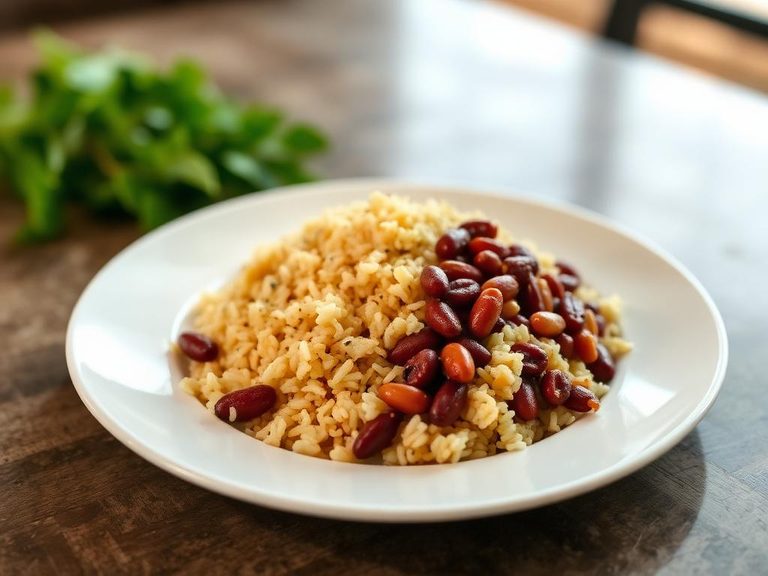
Black beans, cooked from dried with a touch of added fat, are a staple with a deep, earthy flavor and a creamy-yet-firm texture that holds its shape beautifully. They are a powerhouse of plant-based protein and fiber, making them a satisfying and nutritionally dense addition to any meal. Their rich, dark color comes from anthocyanins, potent antioxidants found in the bean's skin.
Calorie split: 18% protein · 48% carbs · 34% fat
↓ Full nutrition💚 Why it's loved
People love black beans for their deeply satisfying, meaty texture and ability to absorb a wide range of flavors, from smoky and spicy to bright and acidic. They are a cornerstone of countless comfort foods and celebratory dishes across many cultures.
⚠️ Watch-outs & how to enjoy it better
The high fiber and oligosaccharide content can cause digestive gas or bloating in some individuals, especially if not accustomed to legumes. To mitigate this, start with smaller portions, ensure they are thoroughly cooked, and consider soaking dried beans thoroughly and discarding the soak water before cooking.
Key benefits
- Excellent source of plant-based protein and dietary fiber.
- Rich in antioxidants like anthocyanins from their dark skin.
- Provides essential minerals including iron, magnesium, and folate.
- Low in sugar and a good source of complex carbohydrates.
🍽️ Popular dishes
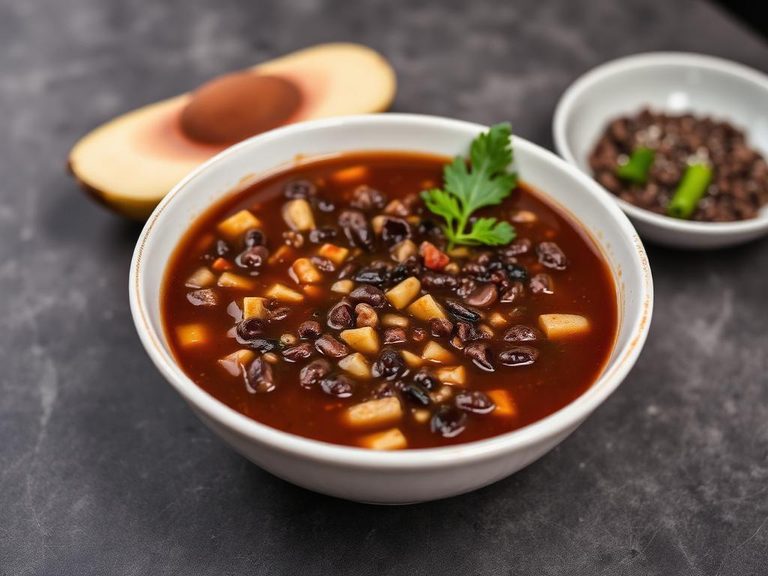
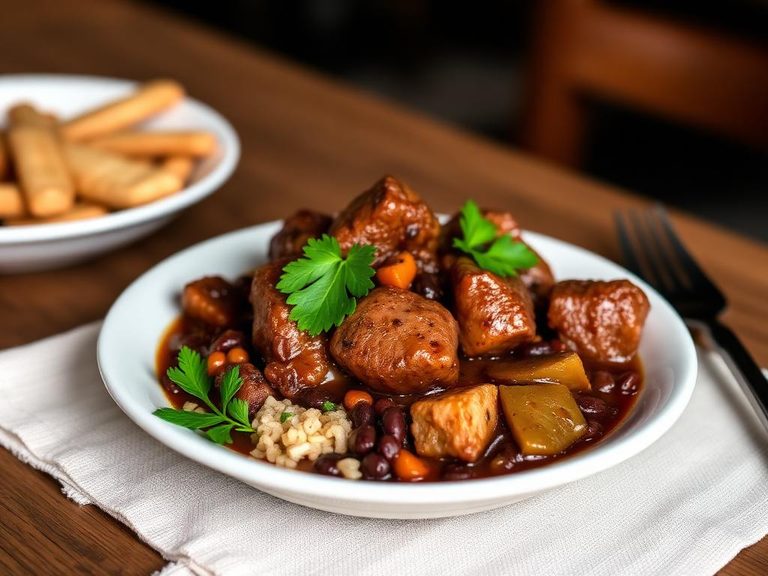
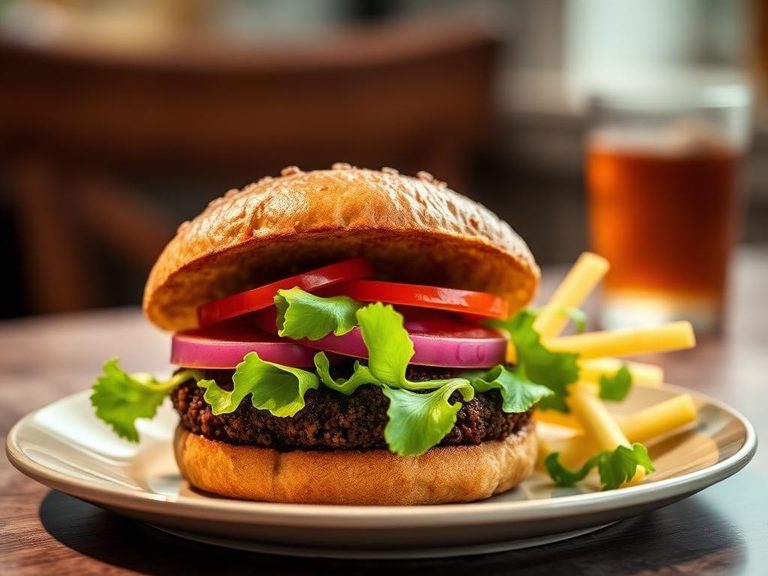
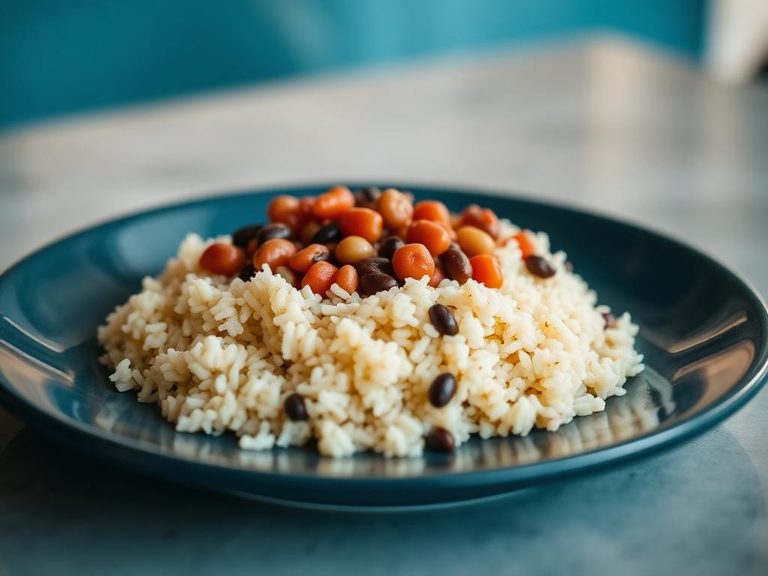
🌍 Where it's eaten
💡 Did you know?
The liquid from cooked black beans, called 'pot liquor,' is packed with nutrients and flavor and is often used as a base for soups and sauces.
Full nutrition (USDA data · scales with serving)
| Water | 61.1 g |
| Energy | 181 kcal |
| Protein | 8.2 g |
| Total lipid (fat) | 7.0 g |
| Carbohydrate, by difference | 22.0 g |
| Fiber, total dietary | 8.1 g |
| Total Sugars | 0.30 g |
| Calcium, Ca | 25.0 mg |
| Iron, Fe | 2.0 mg |
| Magnesium, Mg | 65.0 mg |
| Phosphorus, P | 130 mg |
| Potassium, K | 330 mg |
| Sodium, Na | 217 mg |
| Zinc, Zn | 1.0 mg |
| Copper, Cu | 0.19 mg |
| Selenium, Se | 1.1 ug |
| Vitamin C, total ascorbic acid | 0.00 mg |
| Thiamin | 0.21 mg |
| Riboflavin | 0.05 mg |
| Niacin | 0.45 mg |
| Vitamin B-6 | 0.06 mg |
| Folate, total | 132 ug |
| Folic acid | 0.00 ug |
| Folate, food | 132 ug |
| Folate, DFE | 132 ug |
| Choline, total | 30.3 mg |
| Vitamin B-12 | 0.00 ug |
| Vitamin B-12, added | 0.00 ug |
| Vitamin A, RAE | 0.00 ug |
| Retinol | 0.00 ug |
| Carotene, beta | 0.00 ug |
| Carotene, alpha | 0.00 ug |
| Cryptoxanthin, beta | 0.00 ug |
| Lycopene | 0.00 ug |
| Lutein + zeaxanthin | 0.00 ug |
| Vitamin E (alpha-tocopherol) | 2.0 mg |
| Vitamin E, added | 0.00 mg |
| Vitamin D (D2 + D3) | 0.00 ug |
| Vitamin K (phylloquinone) | 9.6 ug |
| Alcohol, ethyl | 0.00 g |
| Caffeine | 0.00 mg |
| Theobromine | 0.00 mg |
Fat & fatty acid profile (per 100g)
| Fatty acids, total saturated | 1.00 g |
| SFA 4:0 | 0.00 g |
| SFA 6:0 | 0.00 g |
| SFA 8:0 | 0.00 g |
| SFA 10:0 | 0.00 g |
| SFA 12:0 | 0.00 g |
| SFA 14:0 | 0.00 g |
| SFA 16:0 | 0.74 g |
| SFA 18:0 | 0.20 g |
| Fatty acids, total monounsaturated | 2.8 g |
| MUFA 16:1 | 0.02 g |
| MUFA 18:1 | 2.7 g |
| MUFA 20:1 | 0.04 g |
| MUFA 22:1 | 0.00 g |
| Fatty acids, total polyunsaturated | 2.7 g |
| PUFA 18:2 | 2.3 g |
| PUFA 18:3 | 0.38 g |
| PUFA 18:4 | 0.00 g |
| PUFA 20:4 | 0.00 g |
| PUFA 20:5 n-3 (EPA) | 0.00 g |
| PUFA 22:5 n-3 (DPA) | 0.00 g |
| PUFA 22:6 n-3 (DHA) | 0.00 g |
| Cholesterol | 0.00 mg |
Amino acid profile (per 100g)
Estimated from Beans, black, mature seeds, raw — USDA does not publish this profile for Black beans.
| Tryptophan | 0.26 g |
| Threonine | 0.91 g |
| Isoleucine | 0.95 g |
| Leucine | 1.7 g |
| Lysine | 1.5 g |
| Methionine | 0.33 g |
| Cystine | 0.23 g |
| Phenylalanine | 1.2 g |
| Tyrosine | 0.61 g |
| Valine | 1.1 g |
| Arginine | 1.3 g |
| Histidine | 0.60 g |
| Alanine | 0.91 g |
| Aspartic acid | 2.6 g |
| Glutamic acid | 3.3 g |
| Glycine | 0.84 g |
| Proline | 0.92 g |
| Serine | 1.2 g |
FAQ
How do I reduce the gas-causing compounds in black beans?
Soak dried beans for at least 8 hours (or overnight), discard the soaking water, and cook them thoroughly in fresh water. Using a pressure cooker can also help break down the problematic oligosaccharides.
Are canned black beans as nutritious as home-cooked?
Yes, canned black beans are a nutritious and convenient option. They retain most of their protein, fiber, and minerals. Look for low-sodium versions and rinse them before use to reduce excess salt.
Why are my black beans tough even after cooking?
Tough beans are often caused by old beans, hard water, or the presence of acidic ingredients (like tomatoes or vinegar) added too early in the cooking process. Add acidic ingredients only after the beans are tender, and ensure you are using fresh beans and soft water if possible.
Nutrient density (calculated · NRF9.3)
Nutrient Rich Foods index: beneficial nutrients (protein, fiber, vitamins, minerals) minus saturated fat, added sugar & sodium, per 100 kcal.
NRF9.3 index — Fulgoni, Keast & Drewnowski, 2009. Computed from USDA nutrients.
Weight-loss friendliness (composite index)
Energy density 1.81 kcal/g · 18% calories from protein · 8.1 g fiber · 0.3 g sugar per 100 g.
Composite of energy density (Rolls et al., 1999), protein & fiber satiety, minus sugar. A calculated heuristic — ranks satiety-per-calorie, not a clinical measure.
Dietary load (calculated from USDA values)
Potential renal acid load. Positive = acid-forming, negative = alkaline-forming.
Sodium-to-potassium ratio: 0.66 (lower is better — aim for ≤ 1)
Sodium:potassium per WHO potassium guidance. Computed from USDA nutrients.