

Black beans, from canned, no added fat
Common food
Canned black beans are a pantry staple, offering a deep, earthy flavor and a creamy, slightly starchy texture that holds its shape well. They are a nutritional powerhouse, packed with plant-based protein and an impressive amount of dietary fiber, all while being virtually fat-free.
Calorie split: 26% protein · 71% carbs · 3% fat
↓ Full nutrition💚 Why it's loved
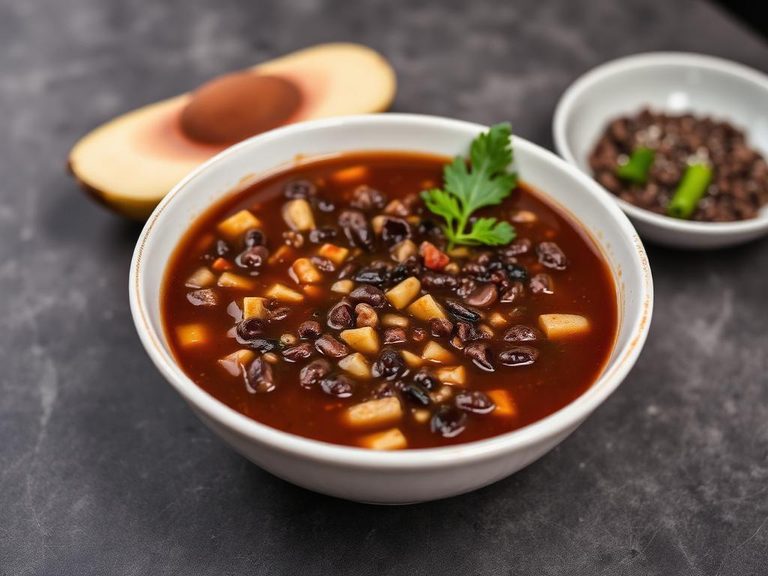
People love black beans for their robust, savory flavor that acts as a perfect canvas for spices like cumin and chili. Their incredible versatility makes them the hearty backbone of countless dishes, from comforting soups to vibrant salads, deeply rooted in Latin American and Caribbean cuisines.
⚠️ Watch-outs & how to enjoy it better
Canned black beans can be high in sodium, which is a concern for those monitoring blood pressure. The high fiber content may cause temporary digestive discomfort (gas, bloating) in some individuals. **Tip:** Choose 'low-sodium' or 'no salt added' versions and rinse them thoroughly under water to reduce sodium by up to 40%. To ease digestion, introduce them gradually into your diet and ensure you drink plenty of water.
Key benefits
- Excellent source of plant-based protein.
- Very high in dietary fiber for digestive health.
- Naturally low in fat and contains no added sugar.
- Rich in essential minerals like iron, magnesium, and folate.
- Convenient, pre-cooked, and shelf-stable.
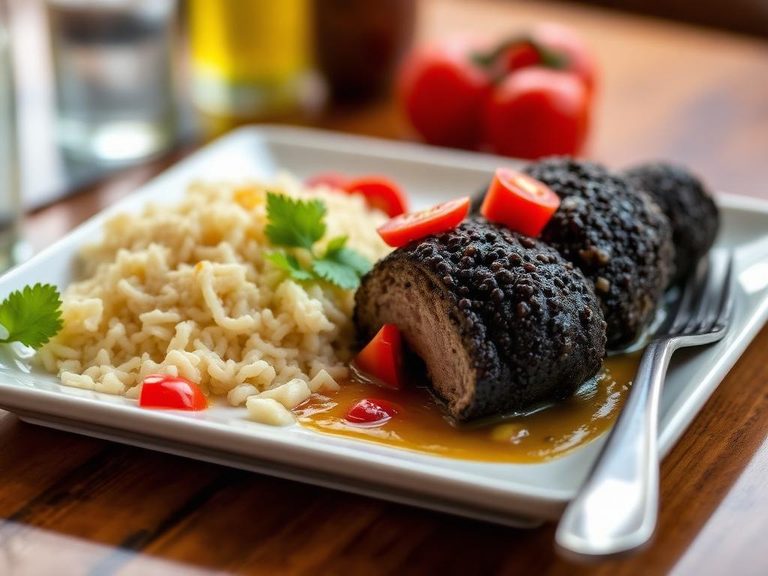
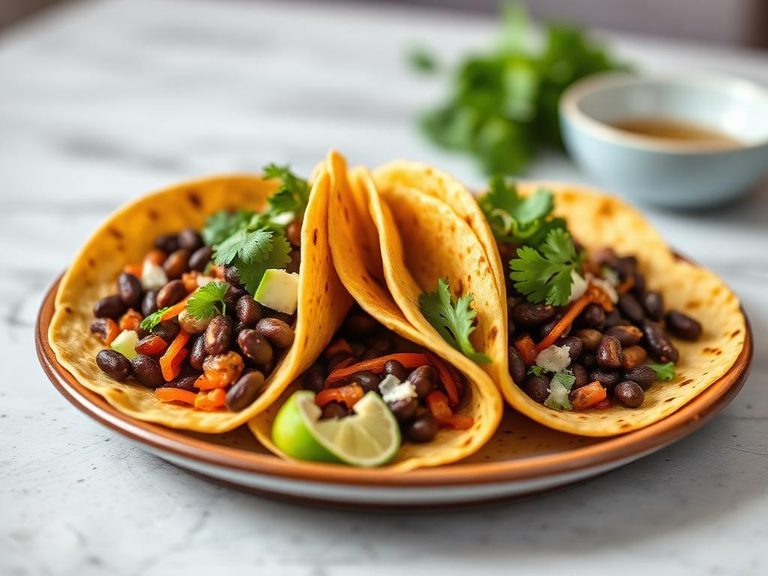
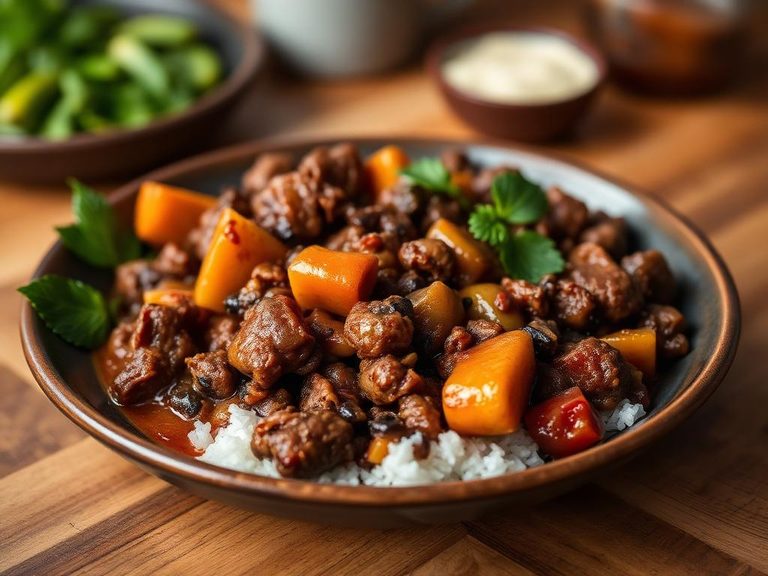
🍽️ Popular dishes
🌍 Where it's eaten
💡 Did you know?
The dark, inky color of black beans comes from anthocyanins, the same powerful antioxidants found in blueberries and red wine.
Full nutrition (USDA data · scales with serving)
| Water | 64.2 g |
| Energy | 134 kcal |
| Protein | 8.9 g |
| Total lipid (fat) | 0.43 g |
| Carbohydrate, by difference | 24.3 g |
| Fiber, total dietary | 10.1 g |
| Total Sugars | 0.34 g |
| Calcium, Ca | 51.0 mg |
| Iron, Fe | 2.8 mg |
| Magnesium, Mg | 51.0 mg |
| Phosphorus, P | 159 mg |
| Potassium, K | 453 mg |
| Sodium, Na | 348 mg |
| Zinc, Zn | 0.79 mg |
| Copper, Cu | 0.28 mg |
| Selenium, Se | 1.9 ug |
| Vitamin C, total ascorbic acid | 3.8 mg |
| Thiamin | 0.20 mg |
| Riboflavin | 0.17 mg |
| Niacin | 0.87 mg |
| Vitamin B-6 | 0.08 mg |
| Folate, total | 85.0 ug |
| Folic acid | 0.00 ug |
| Folate, food | 85.0 ug |
| Folate, DFE | 85.0 ug |
| Choline, total | 34.1 mg |
| Vitamin B-12 | 0.00 ug |
| Vitamin B-12, added | 0.00 ug |
| Vitamin A, RAE | 0.00 ug |
| Retinol | 0.00 ug |
| Carotene, beta | 0.00 ug |
| Carotene, alpha | 0.00 ug |
| Cryptoxanthin, beta | 0.00 ug |
| Lycopene | 0.00 ug |
| Lutein + zeaxanthin | 0.00 ug |
| Vitamin E (alpha-tocopherol) | 0.91 mg |
| Vitamin E, added | 0.00 mg |
| Vitamin D (D2 + D3) | 0.00 ug |
| Vitamin K (phylloquinone) | 3.4 ug |
| Alcohol, ethyl | 0.00 g |
| Caffeine | 0.00 mg |
| Theobromine | 0.00 mg |
Fat & fatty acid profile (per 100g)
| Fatty acids, total saturated | 0.11 g |
| SFA 4:0 | 0.00 g |
| SFA 6:0 | 0.00 g |
| SFA 8:0 | 0.00 g |
| SFA 10:0 | 0.00 g |
| SFA 12:0 | 0.00 g |
| SFA 14:0 | 0.00 g |
| SFA 16:0 | 0.10 g |
| SFA 18:0 | 0.01 g |
| Fatty acids, total monounsaturated | 0.04 g |
| MUFA 16:1 | 0.00 g |
| MUFA 18:1 | 0.04 g |
| MUFA 20:1 | 0.00 g |
| MUFA 22:1 | 0.00 g |
| Fatty acids, total polyunsaturated | 0.18 g |
| PUFA 18:2 | 0.10 g |
| PUFA 18:3 | 0.08 g |
| PUFA 18:4 | 0.00 g |
| PUFA 20:4 | 0.00 g |
| PUFA 20:5 n-3 (EPA) | 0.00 g |
| PUFA 22:5 n-3 (DPA) | 0.00 g |
| PUFA 22:6 n-3 (DHA) | 0.00 g |
| Cholesterol | 0.00 mg |
Amino acid profile (per 100g)
Estimated from Beans, black, mature seeds, raw — USDA does not publish this profile for Black beans.
| Tryptophan | 0.26 g |
| Threonine | 0.91 g |
| Isoleucine | 0.95 g |
| Leucine | 1.7 g |
| Lysine | 1.5 g |
| Methionine | 0.33 g |
| Cystine | 0.23 g |
| Phenylalanine | 1.2 g |
| Tyrosine | 0.61 g |
| Valine | 1.1 g |
| Arginine | 1.3 g |
| Histidine | 0.60 g |
| Alanine | 0.91 g |
| Aspartic acid | 2.6 g |
| Glutamic acid | 3.3 g |
| Glycine | 0.84 g |
| Proline | 0.92 g |
| Serine | 1.2 g |
FAQ
Do I need to cook canned black beans before eating them?
No. Canned black beans are fully cooked and safe to eat straight from the can after rinsing. Heating them is a matter of preference and recipe requirement.
How can I reduce the sodium in canned black beans?
The most effective method is to pour the beans into a colander and rinse them under cold running water for about a minute. This can remove a significant portion of the surface sodium.
What's the difference between black beans and turtle beans?
They are the same thing. 'Turtle beans' is another common name for black beans, likely referring to their hard, shell-like appearance when dry.
Nutrient density (calculated · NRF9.3)
Nutrient Rich Foods index: beneficial nutrients (protein, fiber, vitamins, minerals) minus saturated fat, added sugar & sodium, per 100 kcal.
NRF9.3 index — Fulgoni, Keast & Drewnowski, 2009. Computed from USDA nutrients.
Weight-loss friendliness (composite index)
Energy density 1.34 kcal/g · 26% calories from protein · 10.1 g fiber · 0.3 g sugar per 100 g.
Composite of energy density (Rolls et al., 1999), protein & fiber satiety, minus sugar. A calculated heuristic — ranks satiety-per-calorie, not a clinical measure.
Dietary load (calculated from USDA values)
Potential renal acid load. Positive = acid-forming, negative = alkaline-forming.
Sodium-to-potassium ratio: 0.77 (lower is better — aim for ≤ 1)
Sodium:potassium per WHO potassium guidance. Computed from USDA nutrients.