

Beverages, tea, green, brewed, decaffeinated
Whole food · Beverages

Photo: Wikipedia
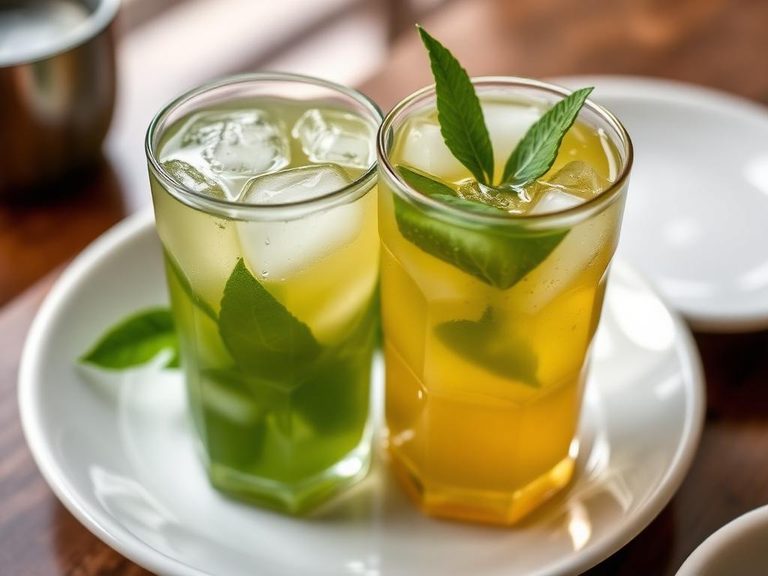
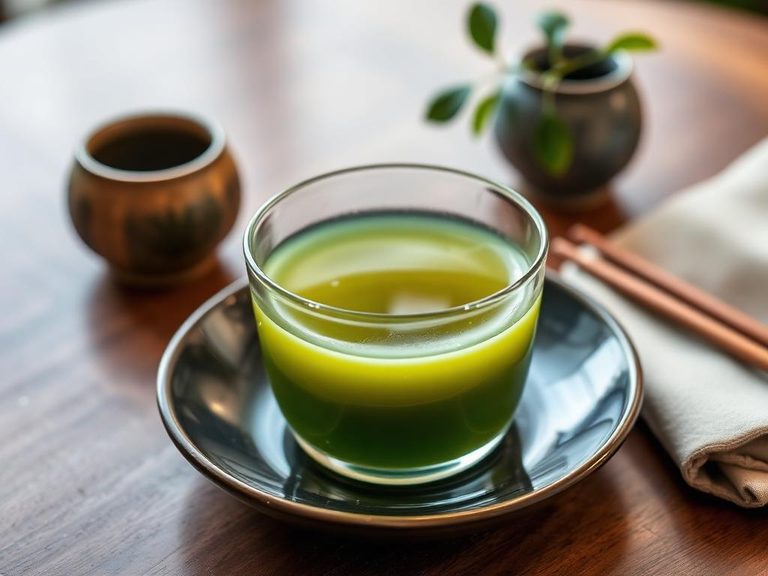
Decaffeinated green tea is a milder, caffeine-free version of the classic brew, offering a smooth, slightly grassy flavor with a delicate, sometimes sweet finish. It retains the pale green-yellow color and light body of regular green tea but without the stimulating kick. Nutritionally, it's virtually a zero-calorie beverage, providing trace minerals and antioxidants without any macronutrients.
💚 Why it's loved
People love it for its gentle, soothing flavor that can be enjoyed any time of day, especially by those sensitive to caffeine. It's a versatile base for both hot and iced preparations, and it holds a cherished place in many cultures as a symbol of calm and mindfulness.
⚠️ Watch-outs & how to enjoy it better
Some find its flavor too subtle or 'flat' compared to regular green tea, and the decaffeination process can slightly alter its delicate taste profile. Those with iron-deficiency anemia should be aware that tannins in tea can inhibit iron absorption; counteract this by drinking it between meals and pairing iron-rich foods with vitamin C sources.
Key benefits
- Rich in antioxidants like catechins
- Hydrating without caffeine
- May support relaxation and sleep
- Contains trace minerals like fluoride
- Zero calories, sugar, and fat
🍽️ Popular dishes
🌍 Where it's eaten
💡 Did you know?
The decaffeination process typically removes 95-99% of the caffeine, but the method (like using ethyl acetate or CO2) can subtly influence the final flavor, sometimes leaving a faint fruity note.
Full nutrition (USDA data · scales with serving)
| Water | 99.9 g |
| Energy | 0.00 kcal |
| Energy | 0.00 kj |
| Protein | 0.00 g |
| Total lipid (fat) | 0.00 g |
| Ash | 0.00 g |
| Carbohydrate, by difference | 0.00 g |
| Fiber, total dietary | 0.00 g |
| Total Sugars | 0.00 g |
| Calcium, Ca | 0.00 mg |
| Iron, Fe | 0.00 mg |
| Magnesium, Mg | 1.0 mg |
| Phosphorus, P | 0.00 mg |
| Potassium, K | 15.0 mg |
| Sodium, Na | 0.00 mg |
| Zinc, Zn | 0.01 mg |
| Copper, Cu | 0.01 mg |
| Selenium, Se | 0.00 ug |
| Vitamin C, total ascorbic acid | 0.00 mg |
| Thiamin | 0.01 mg |
| Riboflavin | 0.06 mg |
| Niacin | 0.03 mg |
| Vitamin B-6 | 0.01 mg |
| Folate, total | 0.00 ug |
| Folic acid | 0.00 ug |
| Folate, food | 0.00 ug |
| Folate, DFE | 0.00 ug |
| Choline, total | 0.00 mg |
| Vitamin B-12 | 0.00 ug |
| Vitamin B-12, added | 0.00 ug |
| Vitamin A, RAE | 0.00 ug |
| Retinol | 0.00 ug |
| Carotene, beta | 0.00 ug |
| Carotene, alpha | 0.00 ug |
| Cryptoxanthin, beta | 0.00 ug |
| Vitamin A, IU | 0.00 iu |
| Lycopene | 0.00 ug |
| Lutein + zeaxanthin | 0.00 ug |
| Vitamin E (alpha-tocopherol) | 0.00 mg |
| Vitamin E, added | 0.00 mg |
| Vitamin D (D2 + D3), International Units | 0.00 iu |
| Vitamin D (D2 + D3) | 0.00 ug |
| Vitamin K (phylloquinone) | 0.00 ug |
| Alcohol, ethyl | 0.00 g |
| Caffeine | 0.00 mg |
| Theobromine | 0.00 mg |
Fat & fatty acid profile (per 100g)
| Fatty acids, total saturated | 0.00 g |
| SFA 4:0 | 0.00 g |
| SFA 6:0 | 0.00 g |
| SFA 8:0 | 0.00 g |
| SFA 10:0 | 0.00 g |
| SFA 12:0 | 0.00 g |
| SFA 14:0 | 0.00 g |
| SFA 16:0 | 0.00 g |
| SFA 18:0 | 0.00 g |
| Fatty acids, total monounsaturated | 0.00 g |
| MUFA 16:1 | 0.00 g |
| MUFA 18:1 | 0.00 g |
| MUFA 20:1 | 0.00 g |
| MUFA 22:1 | 0.00 g |
| Fatty acids, total polyunsaturated | 0.00 g |
| PUFA 18:2 | 0.00 g |
| PUFA 18:3 | 0.00 g |
| PUFA 18:4 | 0.00 g |
| PUFA 20:4 | 0.00 g |
| PUFA 20:5 n-3 (EPA) | 0.00 g |
| PUFA 22:5 n-3 (DPA) | 0.00 g |
| PUFA 22:6 n-3 (DHA) | 0.00 g |
| Cholesterol | 0.00 mg |
Amino acid profile (per 100g)
Estimated from Beverages, carbonated, tonic water — USDA does not publish this profile for Beverages.
| Tryptophan | 0.00 g |
| Threonine | 0.00 g |
| Isoleucine | 0.00 g |
| Leucine | 0.00 g |
| Lysine | 0.00 g |
| Methionine | 0.00 g |
| Cystine | 0.00 g |
| Phenylalanine | 0.00 g |
| Tyrosine | 0.00 g |
| Valine | 0.00 g |
| Arginine | 0.00 g |
| Histidine | 0.00 g |
| Alanine | 0.00 g |
| Aspartic acid | 0.00 g |
| Glutamic acid | 0.00 g |
| Glycine | 0.00 g |
| Proline | 0.00 g |
| Serine | 0.00 g |
FAQ
Does decaffeinated green tea have any health benefits?
Yes, it retains many of the antioxidants, like EGCG, found in regular green tea, which are linked to cellular health, but without the caffeine. It's an excellent choice for hydration and relaxation.
How does the taste differ from regular green tea?
Decaffeinated green tea often has a slightly smoother, less astringent taste. The decaffeination process can mellow the grassy notes, sometimes making it taste a bit softer or sweeter.
Can I drink it before bed?
Absolutely. Being virtually caffeine-free, it's an ideal evening beverage that won't disrupt sleep. Many enjoy it as a calming ritual to wind down.
Dietary load (calculated from USDA values)
Potential renal acid load. Positive = acid-forming, negative = alkaline-forming.
Sodium-to-potassium ratio: 0.00 (lower is better — aim for ≤ 1)
Sodium:potassium per WHO potassium guidance. Computed from USDA nutrients.