

Beverages, cocoa mix, with aspartame, powder, prepared with water
Whole food · Beverages

Photo: Wikipedia
A light, comforting beverage made from a cocoa-based powder sweetened with aspartame, prepared by simply stirring into hot or cold water. It delivers a familiar, mild chocolate flavor with a thin, watery texture, distinct from richer, milk-based hot chocolates. Its standout feature is a very low calorie count (29 kcal per 100g) with minimal fat and sugar, making it a guilt-free treat.
Calorie split: 16% protein · 76% carbs · 7% fat
↓ Full nutrition💚 Why it's loved
People love it for the instant, warm chocolate comfort it provides with virtually no caloric cost. It's a versatile base that can be easily customized with a dash of cinnamon, a splash of vanilla, or a frothy milk alternative.
⚠️ Watch-outs & how to enjoy it better
The artificial sweetener (aspartame) may leave a slightly metallic aftertaste for some and is avoided by those preferring natural sugars. The thin, water-based texture lacks the creamy richness of traditional hot cocoa. To counteract this, try using a small amount of warm milk or a plant-based milk instead of all water, or whisk in a teaspoon of real cocoa powder and a pinch of salt to deepen the flavor.
Key benefits
- Very low in calories (29 kcal per 100g prepared)
- Negligible fat content (0.23g per 100g)
- Provides a small amount of plant-based protein (1.21g per 100g)
- Contains dietary fiber (0.6g per 100g)
- Quick and easy to prepare with just water
🍽️ Popular dishes

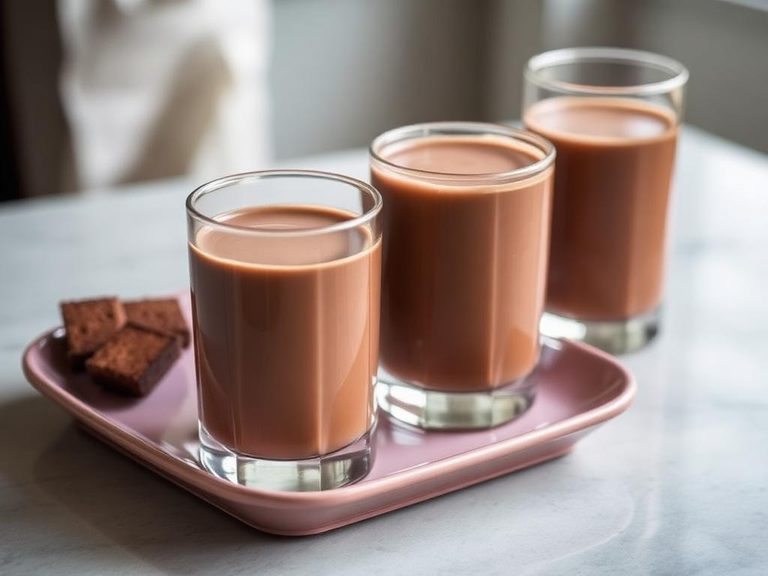
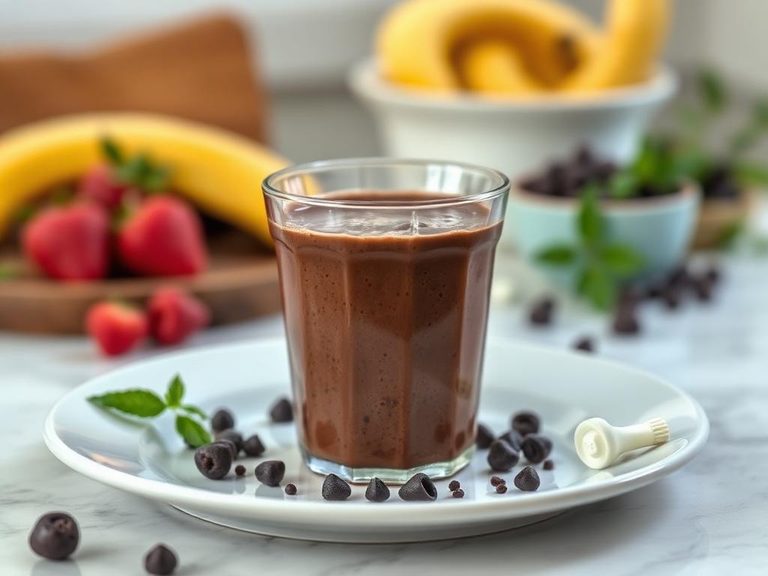
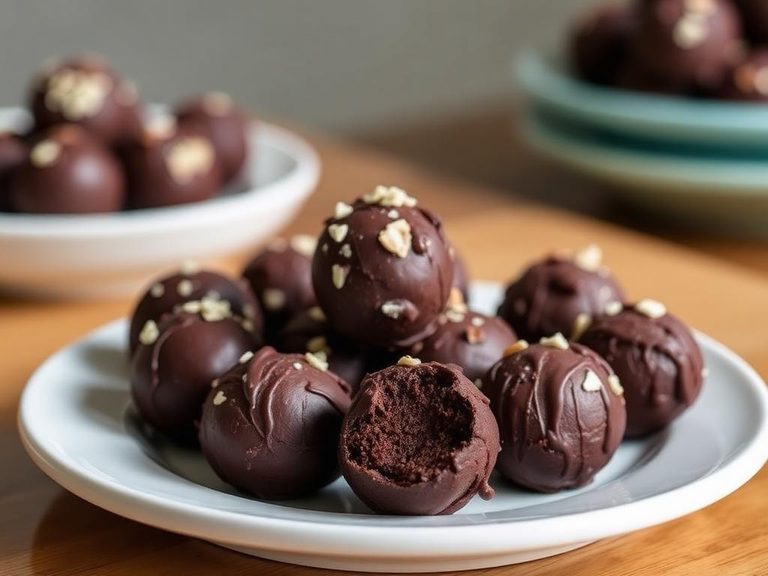
🌍 Where it's eaten
💡 Did you know?
The development of stable cocoa powders in the 19th century, particularly by Dutch and Swiss manufacturers, was the key innovation that made instant cocoa mixes like this possible.
Full nutrition (USDA data · scales with serving)
| Water | 92.4 g |
| Energy | 29.0 kcal |
| Energy | 123 kj |
| Protein | 1.2 g |
| Total lipid (fat) | 0.23 g |
| Ash | 0.57 g |
| Carbohydrate, by difference | 5.6 g |
| Fiber, total dietary | 0.60 g |
| Total Sugars | 2.9 g |
| Calcium, Ca | 48.0 mg |
| Iron, Fe | 0.39 mg |
| Magnesium, Mg | 17.0 mg |
| Phosphorus, P | 70.0 mg |
| Potassium, K | 211 mg |
| Sodium, Na | 72.0 mg |
| Zinc, Zn | 0.27 mg |
| Copper, Cu | 0.07 mg |
| Manganese, Mn | 0.05 mg |
| Selenium, Se | 1.3 ug |
| Fluoride, F | 65.7 ug |
| Vitamin C, total ascorbic acid | 0.00 mg |
| Thiamin | 0.02 mg |
| Riboflavin | 0.11 mg |
| Niacin | 0.09 mg |
| Pantothenic acid | 0.30 mg |
| Vitamin B-6 | 0.03 mg |
| Folate, total | 1.0 ug |
| Folic acid | 0.00 ug |
| Folate, food | 1.0 ug |
| Folate, DFE | 1.0 ug |
| Vitamin B-12 | 0.09 ug |
| Vitamin B-12, added | 0.00 ug |
| Vitamin A, RAE | 0.00 ug |
| Retinol | 0.00 ug |
| Carotene, beta | 0.00 ug |
| Carotene, alpha | 0.00 ug |
| Cryptoxanthin, beta | 0.00 ug |
| Vitamin A, IU | 1.0 iu |
| Lycopene | 0.00 ug |
| Lutein + zeaxanthin | 1.0 ug |
| Vitamin E (alpha-tocopherol) | 0.00 mg |
| Vitamin E, added | 0.00 mg |
| Vitamin K (phylloquinone) | 0.10 ug |
| Alcohol, ethyl | 0.00 g |
| Caffeine | 2.0 mg |
| Theobromine | 51.0 mg |
Fat & fatty acid profile (per 100g)
| Fatty acids, total saturated | 0.14 g |
| SFA 4:0 | 0.00 g |
| SFA 6:0 | 0.00 g |
| SFA 8:0 | 0.00 g |
| SFA 10:0 | 0.00 g |
| SFA 12:0 | 0.00 g |
| SFA 14:0 | 0.00 g |
| SFA 16:0 | 0.06 g |
| SFA 18:0 | 0.07 g |
| Fatty acids, total monounsaturated | 0.08 g |
| MUFA 16:1 | 0.00 g |
| MUFA 18:1 | 0.07 g |
| MUFA 20:1 | 0.00 g |
| MUFA 22:1 | 0.00 g |
| Fatty acids, total polyunsaturated | 0.01 g |
| PUFA 18:2 | 0.01 g |
| PUFA 18:3 | 0.00 g |
| PUFA 18:4 | 0.00 g |
| PUFA 20:4 | 0.00 g |
| PUFA 20:5 n-3 (EPA) | 0.00 g |
| PUFA 22:5 n-3 (DPA) | 0.00 g |
| PUFA 22:6 n-3 (DHA) | 0.00 g |
| Fatty acids, total trans | 0.00 g |
| Cholesterol | 0.00 mg |
Amino acid profile (per 100g)
Estimated from Beverages, carbonated, tonic water — USDA does not publish this profile for Beverages.
| Tryptophan | 0.00 g |
| Threonine | 0.00 g |
| Isoleucine | 0.00 g |
| Leucine | 0.00 g |
| Lysine | 0.00 g |
| Methionine | 0.00 g |
| Cystine | 0.00 g |
| Phenylalanine | 0.00 g |
| Tyrosine | 0.00 g |
| Valine | 0.00 g |
| Arginine | 0.00 g |
| Histidine | 0.00 g |
| Alanine | 0.00 g |
| Aspartic acid | 0.00 g |
| Glutamic acid | 0.00 g |
| Glycine | 0.00 g |
| Proline | 0.00 g |
| Serine | 0.00 g |
FAQ
Is this the same as regular hot chocolate mix?
Not exactly. Regular mixes often contain sugar, powdered milk, and more fat. This version is specifically formulated with aspartame for a low-calorie, sugar-free profile and is typically prepared with water rather than milk.
Can I use this in baking?
Yes, but with adjustments. It can add chocolate flavor to cakes, muffins, or pancakes, but since it's designed for liquid, you may need to reduce other liquids in the recipe. It won't provide the same richness as cocoa powder or melted chocolate.
Why does it have fiber?
The small amount of fiber comes from the cocoa powder itself, which is a plant-derived ingredient containing insoluble fiber.
Nutrient density (calculated · NRF9.3)
Nutrient Rich Foods index: beneficial nutrients (protein, fiber, vitamins, minerals) minus saturated fat, added sugar & sodium, per 100 kcal.
NRF9.3 index — Fulgoni, Keast & Drewnowski, 2009. Computed from USDA nutrients.
Weight-loss friendliness (composite index)
Energy density 0.29 kcal/g · 17% calories from protein · 0.6 g fiber · 2.9 g sugar per 100 g.
Composite of energy density (Rolls et al., 1999), protein & fiber satiety, minus sugar. A calculated heuristic — ranks satiety-per-calorie, not a clinical measure.
Dietary load (calculated from USDA values)
Potential renal acid load. Positive = acid-forming, negative = alkaline-forming.
Sodium-to-potassium ratio: 0.34 (lower is better — aim for ≤ 1)
Sodium:potassium per WHO potassium guidance. Computed from USDA nutrients.