

Beverage, instant breakfast powder, chocolate, sugar-free, not reconstituted
Whole food · Dairy and Egg Products
This is a concentrated, dry powder blend designed to be mixed with water or milk for a quick, nutrient-dense chocolate beverage. It delivers a rich, sweet chocolate flavor with a smooth, slightly gritty texture that dissolves easily. Nutritionally, it's a powerhouse, packing over 35g of protein per 100g while being sugar-free.
Calorie split: 41% protein · 46% carbs · 13% fat
↓ Full nutrition💚 Why it's loved
People love it for delivering a decadent chocolate fix without the sugar guilt, making it a go-to for fitness enthusiasts and busy professionals. Its versatility allows it to be mixed into oatmeal, smoothies, or baked goods for a protein boost.
⚠️ Watch-outs & how to enjoy it better
The artificial sweeteners used can leave a lingering aftertaste for some, and the high protein concentration may cause digestive discomfort if consumed too quickly. To mitigate this, start with a half-serving mixed with plenty of liquid, and consider pairing it with a source of healthy fat (like a handful of nuts) to slow absorption and improve satiety.
Key benefits
- High protein content supports muscle maintenance and satiety.
- Sugar-free formulation avoids added sugars.
- Convenient, shelf-stable, and requires no refrigeration.
- Provides a quick, calorie-controlled meal or snack option.
- Often fortified with essential vitamins and minerals.
🍽️ Popular dishes
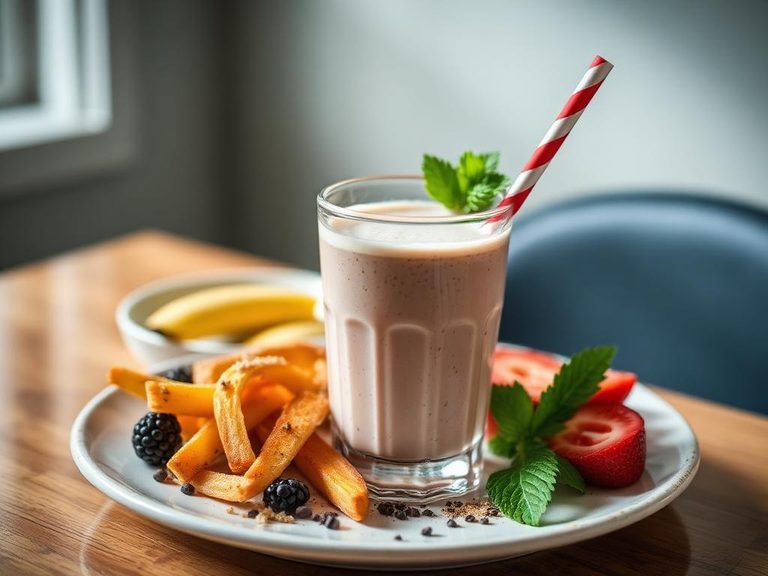
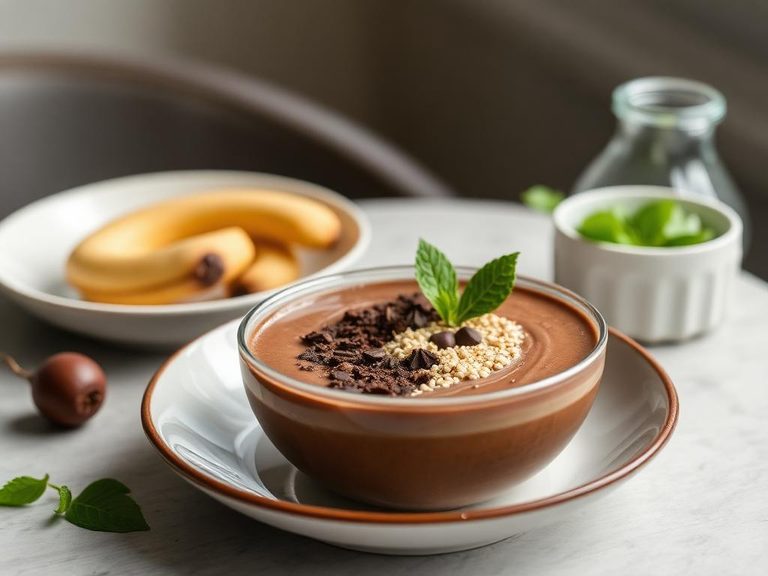
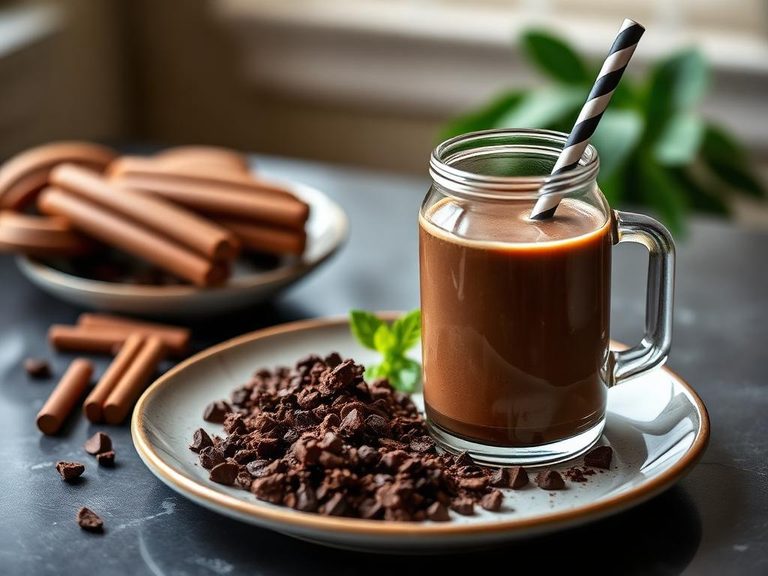
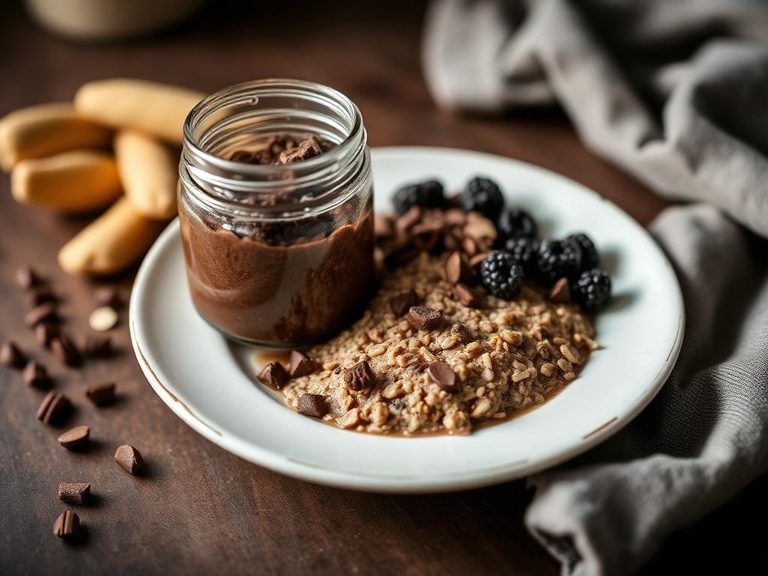
🌍 Where it's eaten
💡 Did you know?
The technology for instant breakfast powders was pioneered in the 1950s and 60s, originally marketed as a complete meal replacement for astronauts and busy families.
Full nutrition (USDA data · scales with serving)
| Water | 7.4 g |
| Energy | 358 kcal |
| Energy | 1498 kj |
| Protein | 35.8 g |
| Total lipid (fat) | 5.1 g |
| Ash | 10.7 g |
| Carbohydrate, by difference | 41.0 g |
| Fiber, total dietary | 2.0 g |
| Total Sugars | 39.0 g |
| Calcium, Ca | 500 mg |
| Iron, Fe | 2.3 mg |
| Magnesium, Mg | 410 mg |
| Phosphorus, P | 500 mg |
| Potassium, K | 1705 mg |
| Sodium, Na | 717 mg |
| Zinc, Zn | 15.4 mg |
| Copper, Cu | 2.6 mg |
| Selenium, Se | 21.8 ug |
| Vitamin C, total ascorbic acid | 138 mg |
| Thiamin | 1.5 mg |
| Riboflavin | 0.35 mg |
| Niacin | 25.6 mg |
| Vitamin B-6 | 2.0 mg |
| Folate, total | 500 ug |
| Folic acid | 500 ug |
| Folate, food | 0.00 ug |
| Folate, DFE | 850 ug |
| Choline, total | 267 mg |
| Vitamin B-12 | 3.1 ug |
| Vitamin B-12, added | 2.0 ug |
| Vitamin A, RAE | 2686 ug |
| Retinol | 2686 ug |
| Carotene, beta | 5.0 ug |
| Carotene, alpha | 0.00 ug |
| Cryptoxanthin, beta | 0.00 ug |
| Vitamin A, IU | 8962 iu |
| Lycopene | 0.00 ug |
| Lutein + zeaxanthin | 0.00 ug |
| Vitamin E (alpha-tocopherol) | 16.9 mg |
| Vitamin E, added | 16.9 mg |
| Vitamin D (D2 + D3), International Units | 0.00 iu |
| Vitamin D (D2 + D3) | 0.00 ug |
| Vitamin D3 (cholecalciferol) | 0.00 ug |
| Vitamin K (phylloquinone) | 120 ug |
| Alcohol, ethyl | 0.00 g |
| Caffeine | 52.0 mg |
| Theobromine | 608 mg |
Fat & fatty acid profile (per 100g)
| Fatty acids, total saturated | 2.2 g |
| SFA 4:0 | 0.04 g |
| SFA 6:0 | 0.01 g |
| SFA 8:0 | 0.01 g |
| SFA 10:0 | 0.02 g |
| SFA 12:0 | 0.01 g |
| SFA 14:0 | 0.09 g |
| SFA 16:0 | 1.1 g |
| SFA 18:0 | 0.84 g |
| Fatty acids, total monounsaturated | 1.2 g |
| MUFA 16:1 | 0.03 g |
| MUFA 18:1 | 1.1 g |
| MUFA 20:1 | 0.00 g |
| MUFA 22:1 | 0.00 g |
| Fatty acids, total polyunsaturated | 1.0 g |
| PUFA 18:2 | 0.91 g |
| PUFA 18:3 | 0.11 g |
| PUFA 18:4 | 0.00 g |
| PUFA 20:4 | 0.00 g |
| PUFA 20:5 n-3 (EPA) | 0.00 g |
| PUFA 22:5 n-3 (DPA) | 0.00 g |
| PUFA 22:6 n-3 (DHA) | 0.00 g |
| Cholesterol | 44.0 mg |
Amino acid profile (per 100g)
Estimated from Milk, chocolate beverage, hot cocoa, homemade — USDA does not publish this profile for Beverage.
| Tryptophan | 0.04 g |
| Threonine | 0.10 g |
| Isoleucine | 0.17 g |
| Leucine | 0.30 g |
| Lysine | 0.21 g |
| Methionine | 0.08 g |
| Cystine | 0.10 g |
| Phenylalanine | 0.15 g |
| Tyrosine | 0.14 g |
| Valine | 0.20 g |
| Arginine | 0.10 g |
| Histidine | 0.07 g |
| Alanine | 0.10 g |
| Aspartic acid | 0.28 g |
| Glutamic acid | 0.72 g |
| Glycine | 0.06 g |
| Proline | 0.34 g |
| Serine | 0.18 g |
FAQ
How is this different from regular chocolate milk mix?
This is a nutritionally engineered product focused on high protein (35g/100g) and zero sugar, whereas traditional chocolate milk mix is primarily sugar and cocoa for flavor with minimal protein.
Can I use it in baking?
Yes, it's excellent for adding protein to muffins, pancakes, and brownies. Note that it will absorb more liquid than regular flour, so you may need to adjust the recipe's wet ingredients.
Is it suitable for a low-carb diet?
While sugar-free, it contains 41g of carbohydrates per 100g, which come from the protein source (like milk or soy) and any bulking agents. It's not a zero-carb product.
Nutrient density (calculated · NRF9.3)
Nutrient Rich Foods index: beneficial nutrients (protein, fiber, vitamins, minerals) minus saturated fat, added sugar & sodium, per 100 kcal.
NRF9.3 index — Fulgoni, Keast & Drewnowski, 2009. Computed from USDA nutrients.
Weight-loss friendliness (composite index)
Energy density 3.58 kcal/g · 40% calories from protein · 2.0 g fiber · 39.0 g sugar per 100 g.
Composite of energy density (Rolls et al., 1999), protein & fiber satiety, minus sugar. A calculated heuristic — ranks satiety-per-calorie, not a clinical measure.
Dietary load (calculated from USDA values)
Potential renal acid load. Positive = acid-forming, negative = alkaline-forming.
Sodium-to-potassium ratio: 0.42 (lower is better — aim for ≤ 1)
Sodium:potassium per WHO potassium guidance. Computed from USDA nutrients.