

Beets, NS as to form, cooked
Common food

Photo: Wikipedia
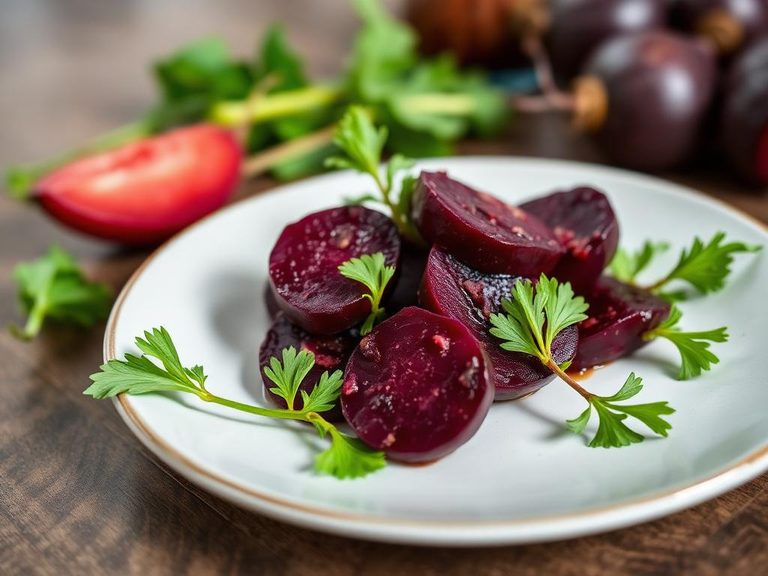
Cooked beets are tender, earthy root vegetables with a deep magenta hue and a subtly sweet, mineral-rich flavor. Their soft, yielding texture makes them ideal for roasting, boiling, or pureeing, while their vibrant color adds visual drama to any plate. Nutritionally, they are low in calories yet provide a notable source of fiber and natural sugars, along with trace minerals like manganese and potassium.
Calorie split: 6% protein · 50% carbs · 43% fat
↓ Full nutrition💚 Why it's loved
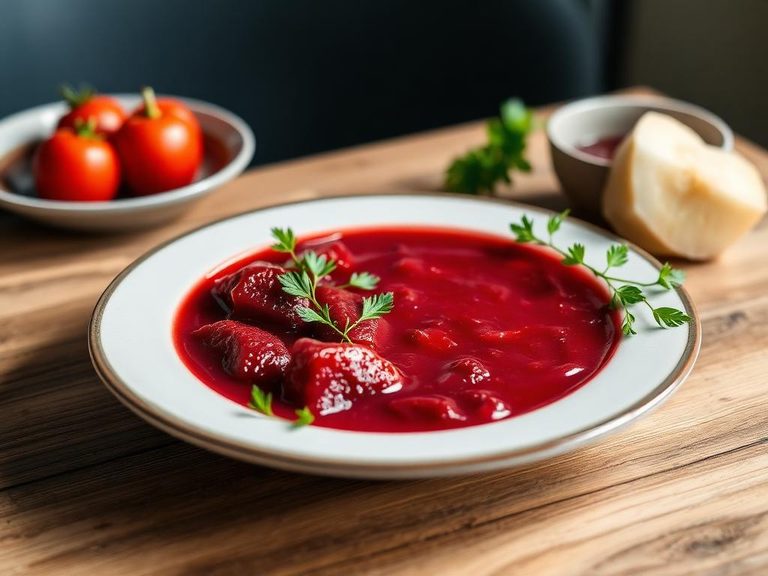
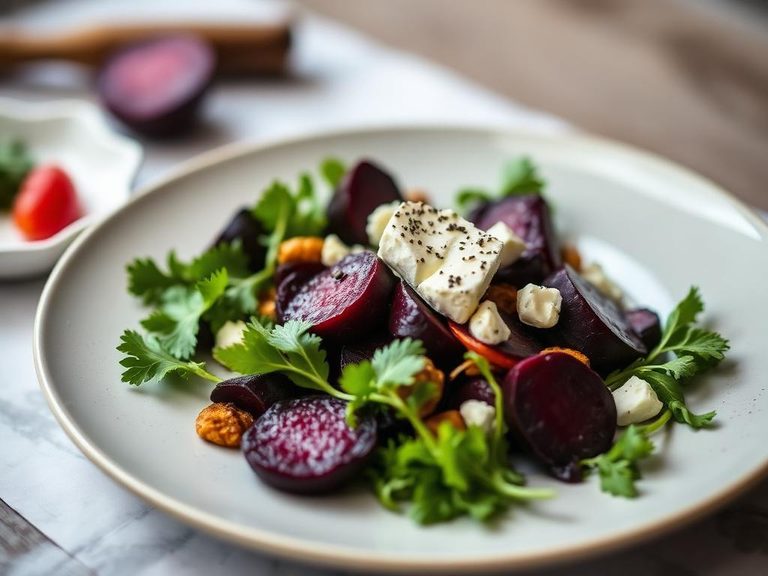
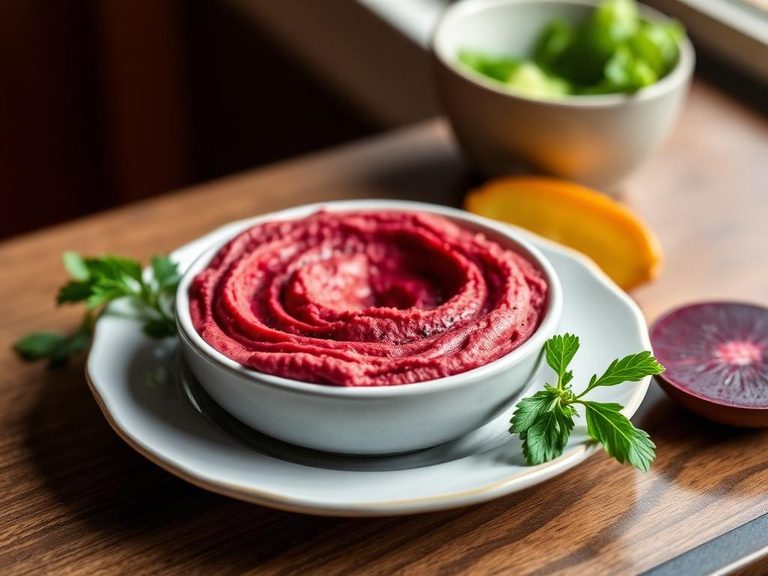
People adore beets for their earthy sweetness and versatility—they can be roasted to caramelized perfection, pickled for tangy crunch, or blended into vibrant soups and salads. Their deep color and unique flavor also make them a staple in many cultural cuisines, from Eastern European borscht to Mediterranean mezze.
⚠️ Watch-outs & how to enjoy it better
Some find the earthy taste too strong or the texture too soft, and the natural sugars can cause blood-sugar spikes if eaten in large amounts. To counteract this, pair beets with protein or healthy fats (like goat cheese or nuts) to slow sugar absorption, and stick to moderate portions (about 100g) to avoid overwhelming sweetness.
Key benefits
- Rich in nitrates that may support healthy blood pressure levels
- Good source of dietary fiber for digestive health
- Contains antioxidants like betalains that combat oxidative stress
- Provides essential minerals such as potassium and manganese
- Low in calories while offering natural sweetness
🍽️ Popular dishes
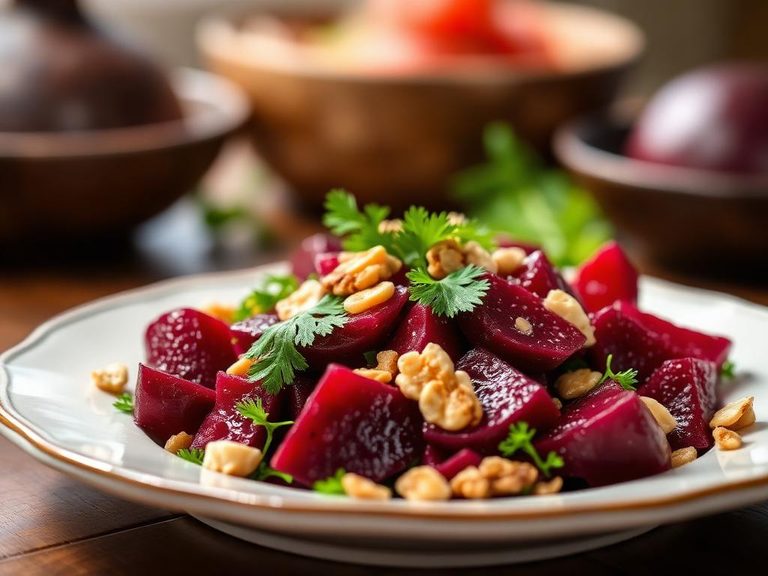
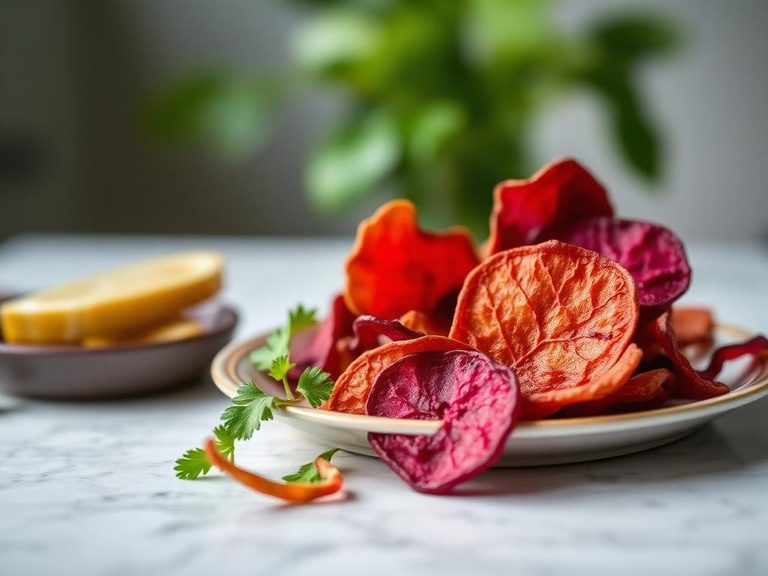
🌍 Where it's eaten
💡 Did you know?
The vibrant red pigment in beets, called betalain, was historically used as a natural dye for textiles and even as a blush substitute in 19th-century cosmetics.
Full nutrition (USDA data · scales with serving)
| Water | 88.6 g |
| Energy | 53.0 kcal |
| Protein | 0.89 g |
| Total lipid (fat) | 2.7 g |
| Carbohydrate, by difference | 7.0 g |
| Fiber, total dietary | 1.7 g |
| Total Sugars | 5.4 g |
| Calcium, Ca | 15.0 mg |
| Iron, Fe | 1.8 mg |
| Magnesium, Mg | 17.0 mg |
| Phosphorus, P | 17.0 mg |
| Potassium, K | 144 mg |
| Sodium, Na | 197 mg |
| Zinc, Zn | 0.20 mg |
| Copper, Cu | 0.06 mg |
| Selenium, Se | 0.50 ug |
| Vitamin C, total ascorbic acid | 3.6 mg |
| Thiamin | 0.01 mg |
| Riboflavin | 0.04 mg |
| Niacin | 0.15 mg |
| Vitamin B-6 | 0.07 mg |
| Folate, total | 28.0 ug |
| Folic acid | 0.00 ug |
| Folate, food | 28.0 ug |
| Folate, DFE | 28.0 ug |
| Choline, total | 7.5 mg |
| Vitamin B-12 | 0.00 ug |
| Vitamin B-12, added | 0.00 ug |
| Vitamin A, RAE | 12.0 ug |
| Retinol | 11.0 ug |
| Carotene, beta | 20.0 ug |
| Carotene, alpha | 0.00 ug |
| Cryptoxanthin, beta | 0.00 ug |
| Lycopene | 0.00 ug |
| Lutein + zeaxanthin | 0.00 ug |
| Vitamin E (alpha-tocopherol) | 0.41 mg |
| Vitamin E, added | 0.00 mg |
| Vitamin D (D2 + D3) | 0.00 ug |
| Vitamin K (phylloquinone) | 2.3 ug |
| Alcohol, ethyl | 0.00 g |
| Caffeine | 0.00 mg |
| Theobromine | 0.00 mg |
Fat & fatty acid profile (per 100g)
| Fatty acids, total saturated | 0.69 g |
| SFA 4:0 | 0.02 g |
| SFA 6:0 | 0.01 g |
| SFA 8:0 | 0.01 g |
| SFA 10:0 | 0.02 g |
| SFA 12:0 | 0.02 g |
| SFA 14:0 | 0.06 g |
| SFA 16:0 | 0.39 g |
| SFA 18:0 | 0.14 g |
| Fatty acids, total monounsaturated | 0.93 g |
| MUFA 16:1 | 0.01 g |
| MUFA 18:1 | 0.90 g |
| MUFA 20:1 | 0.01 g |
| MUFA 22:1 | 0.00 g |
| Fatty acids, total polyunsaturated | 0.78 g |
| PUFA 18:2 | 0.69 g |
| PUFA 18:3 | 0.09 g |
| PUFA 18:4 | 0.00 g |
| PUFA 20:4 | 0.00 g |
| PUFA 20:5 n-3 (EPA) | 0.00 g |
| PUFA 22:5 n-3 (DPA) | 0.00 g |
| PUFA 22:6 n-3 (DHA) | 0.00 g |
| Cholesterol | 2.0 mg |
Amino acid profile (per 100g)
Estimated from Beets, cooked, boiled. drained, with salt — USDA does not publish this profile for Beets.
| Tryptophan | 0.02 g |
| Threonine | 0.05 g |
| Isoleucine | 0.05 g |
| Leucine | 0.07 g |
| Lysine | 0.06 g |
| Methionine | 0.02 g |
| Cystine | 0.02 g |
| Phenylalanine | 0.05 g |
| Tyrosine | 0.04 g |
| Valine | 0.06 g |
| Arginine | 0.04 g |
| Histidine | 0.02 g |
| Alanine | 0.06 g |
| Aspartic acid | 0.12 g |
| Glutamic acid | 0.45 g |
| Glycine | 0.03 g |
| Proline | 0.04 g |
| Serine | 0.06 g |
FAQ
Are cooked beets healthier than raw beets?
Cooking beets can increase the bioavailability of some nutrients like antioxidants, but raw beets retain more vitamin C. Both are nutritious, so choose based on your preference and recipe needs.
Can beets affect urine color?
Yes, beets contain pigments called betalains that can turn urine or stool pink or red, a harmless condition known as beeturia. It’s more common in people with low stomach acid or iron levels.
How do I reduce the earthy taste of beets?
Roasting or steaming beets with a bit of vinegar or citrus can mellow their earthiness. Pairing them with sweet or tangy ingredients like apples, oranges, or balsamic also balances the flavor.
Nutrient density (calculated · NRF9.3)
Nutrient Rich Foods index: beneficial nutrients (protein, fiber, vitamins, minerals) minus saturated fat, added sugar & sodium, per 100 kcal.
NRF9.3 index — Fulgoni, Keast & Drewnowski, 2009. Computed from USDA nutrients.
Weight-loss friendliness (composite index)
Energy density 0.53 kcal/g · 7% calories from protein · 1.7 g fiber · 5.4 g sugar per 100 g.
Composite of energy density (Rolls et al., 1999), protein & fiber satiety, minus sugar. A calculated heuristic — ranks satiety-per-calorie, not a clinical measure.
Dietary load (calculated from USDA values)
Potential renal acid load. Positive = acid-forming, negative = alkaline-forming.
Sodium-to-potassium ratio: 1.37 (lower is better — aim for ≤ 1)
Sodium:potassium per WHO potassium guidance. Computed from USDA nutrients.