

Beets, fresh, cooked, no added fat
Common food

Photo: Wikipedia
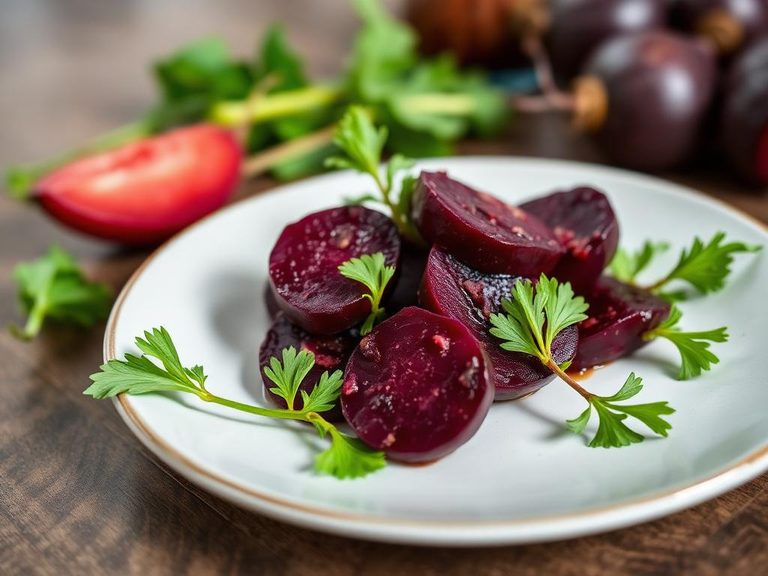
Cooked beets are tender, jewel-toned roots with a deep, earthy sweetness and a smooth, almost buttery texture. Their vibrant magenta color comes from betalain pigments, which are powerful antioxidants. Nutritionally, they are a low-calorie, high-fiber source of folate and manganese.
Calorie split: 14% protein · 83% carbs · 3% fat
↓ Full nutrition💚 Why it's loved
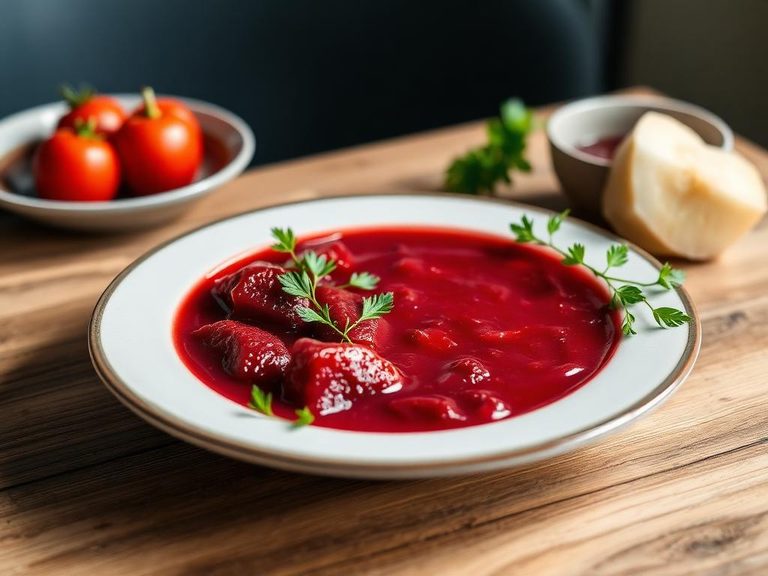
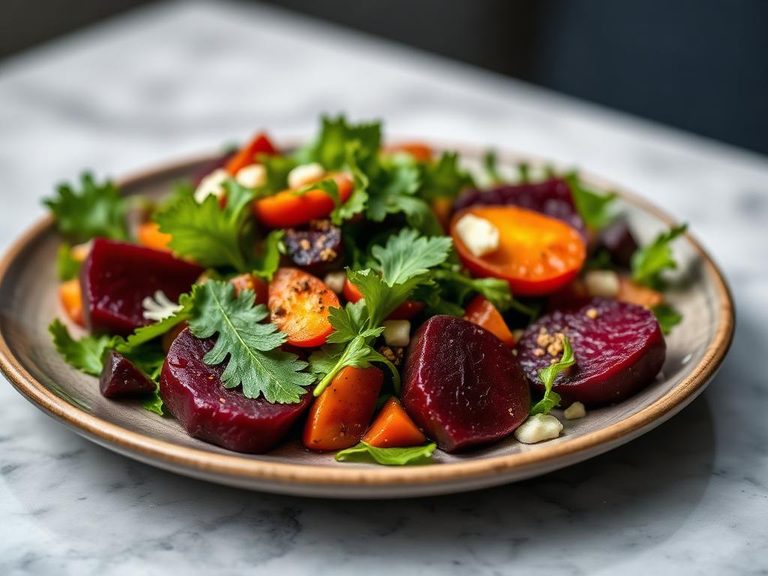
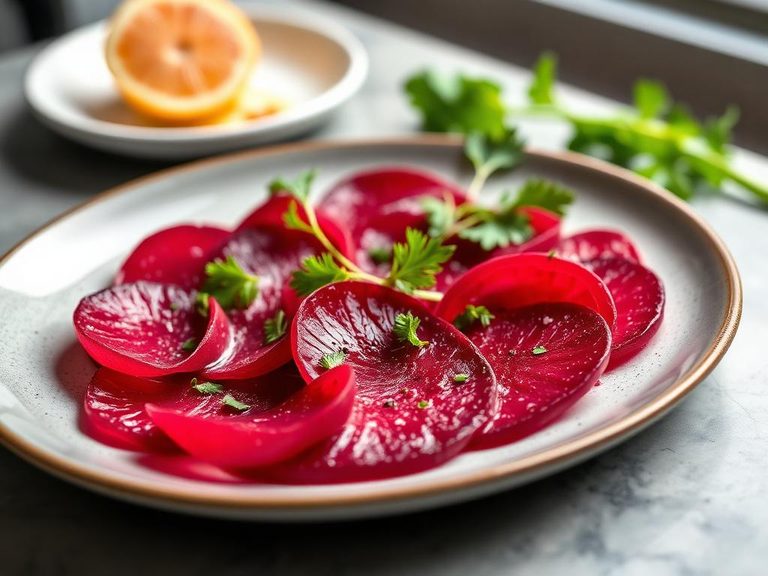
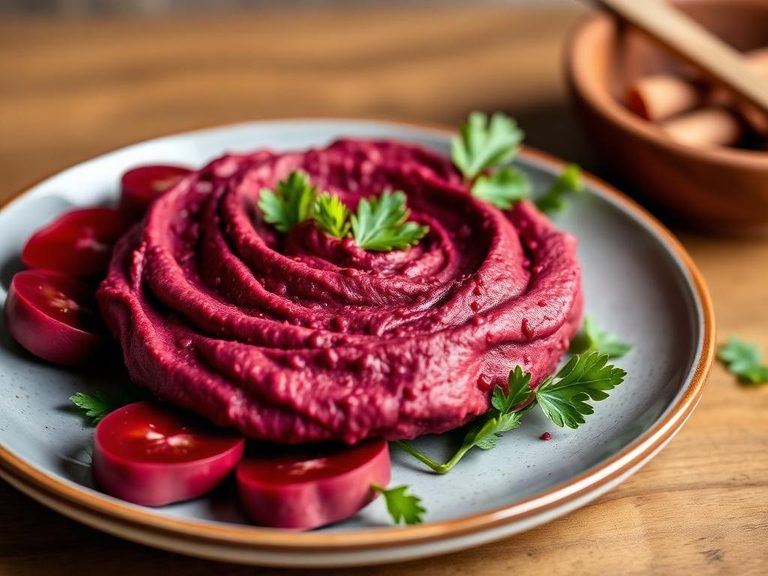
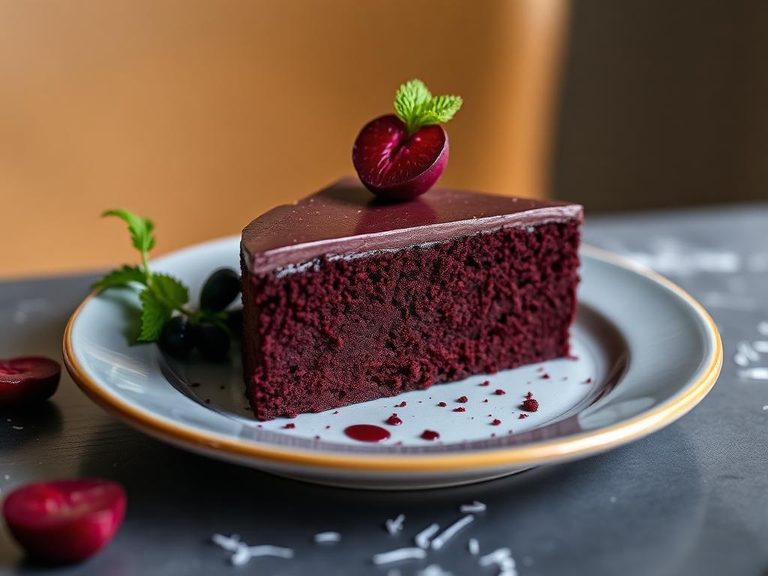
People adore beets for their unique, candy-like sweetness when roasted and their stunning color that elevates any plate. They are incredibly versatile, shining in everything from hearty soups to vibrant salads and even sweet desserts.
⚠️ Watch-outs & how to enjoy it better
Their distinct 'earthy' flavor (from geosmin) can be polarizing, and some find the texture mealy if overcooked. For those monitoring oxalate intake (e.g., with a history of certain kidney stones), portion control is key. Tip: Pairing beets with a source of fat (like olive oil or cheese) or acid (like lemon juice) can balance the earthiness and enhance nutrient absorption.
Key benefits
- Rich in dietary nitrates, which may support healthy blood flow and exercise performance.
- High in folate (vitamin B9), essential for cell growth and function.
- Contains betalains, unique antioxidants with anti-inflammatory properties.
- Good source of manganese, important for bone health and metabolism.
- Provides a significant amount of fiber for digestive health.
🍽️ Popular dishes
🌍 Where it's eaten
💡 Did you know?
The vibrant red pigment in beets, betanin, is so potent it was historically used as a natural food dye and is still used to color some commercial products like tomato paste and ice cream.
Full nutrition (USDA data · scales with serving)
| Water | 86.8 g |
| Energy | 45.0 kcal |
| Protein | 1.7 g |
| Total lipid (fat) | 0.18 g |
| Carbohydrate, by difference | 9.9 g |
| Fiber, total dietary | 2.9 g |
| Total Sugars | 7.0 g |
| Calcium, Ca | 17.0 mg |
| Iron, Fe | 0.83 mg |
| Magnesium, Mg | 24.0 mg |
| Phosphorus, P | 42.0 mg |
| Potassium, K | 338 mg |
| Sodium, Na | 202 mg |
| Zinc, Zn | 0.36 mg |
| Copper, Cu | 0.08 mg |
| Selenium, Se | 0.70 ug |
| Vitamin C, total ascorbic acid | 4.3 mg |
| Thiamin | 0.03 mg |
| Riboflavin | 0.04 mg |
| Niacin | 0.33 mg |
| Vitamin B-6 | 0.06 mg |
| Folate, total | 96.0 ug |
| Folic acid | 0.00 ug |
| Folate, food | 96.0 ug |
| Folate, DFE | 96.0 ug |
| Choline, total | 6.2 mg |
| Vitamin B-12 | 0.00 ug |
| Vitamin B-12, added | 0.00 ug |
| Vitamin A, RAE | 2.0 ug |
| Retinol | 0.00 ug |
| Carotene, beta | 20.0 ug |
| Carotene, alpha | 0.00 ug |
| Cryptoxanthin, beta | 0.00 ug |
| Lycopene | 0.00 ug |
| Lutein + zeaxanthin | 0.00 ug |
| Vitamin E (alpha-tocopherol) | 0.04 mg |
| Vitamin E, added | 0.00 mg |
| Vitamin D (D2 + D3) | 0.00 ug |
| Vitamin K (phylloquinone) | 0.20 ug |
| Alcohol, ethyl | 0.00 g |
| Caffeine | 0.00 mg |
| Theobromine | 0.00 mg |
Fat & fatty acid profile (per 100g)
| Fatty acids, total saturated | 0.03 g |
| SFA 4:0 | 0.00 g |
| SFA 6:0 | 0.00 g |
| SFA 8:0 | 0.00 g |
| SFA 10:0 | 0.00 g |
| SFA 12:0 | 0.00 g |
| SFA 14:0 | 0.00 g |
| SFA 16:0 | 0.03 g |
| SFA 18:0 | 0.00 g |
| Fatty acids, total monounsaturated | 0.03 g |
| MUFA 16:1 | 0.00 g |
| MUFA 18:1 | 0.03 g |
| MUFA 20:1 | 0.00 g |
| MUFA 22:1 | 0.00 g |
| Fatty acids, total polyunsaturated | 0.06 g |
| PUFA 18:2 | 0.06 g |
| PUFA 18:3 | 0.01 g |
| PUFA 18:4 | 0.00 g |
| PUFA 20:4 | 0.00 g |
| PUFA 20:5 n-3 (EPA) | 0.00 g |
| PUFA 22:5 n-3 (DPA) | 0.00 g |
| PUFA 22:6 n-3 (DHA) | 0.00 g |
| Cholesterol | 0.00 mg |
Amino acid profile (per 100g)
Estimated from Beets, cooked, boiled. drained, with salt — USDA does not publish this profile for Beets.
| Tryptophan | 0.02 g |
| Threonine | 0.05 g |
| Isoleucine | 0.05 g |
| Leucine | 0.07 g |
| Lysine | 0.06 g |
| Methionine | 0.02 g |
| Cystine | 0.02 g |
| Phenylalanine | 0.05 g |
| Tyrosine | 0.04 g |
| Valine | 0.06 g |
| Arginine | 0.04 g |
| Histidine | 0.02 g |
| Alanine | 0.06 g |
| Aspartic acid | 0.12 g |
| Glutamic acid | 0.45 g |
| Glycine | 0.03 g |
| Proline | 0.04 g |
| Serine | 0.06 g |
FAQ
Why do my cooked beets taste 'dirt-like'?
That flavor comes from a compound called geosmin, produced by soil microbes. To mellow it, you can roast beets (which concentrates sweetness) or pair them with acidic ingredients like vinegar, citrus, or yogurt.
Are the leaves and stems edible?
Yes! Beet greens are highly nutritious and can be sautéed or steamed like Swiss chard. They have a mild, sweet flavor similar to spinach but with a slightly more robust texture.
How can I prevent beets from bleeding their color onto other ingredients?
Cook and handle beets separately until serving. Adding a splash of vinegar or lemon juice to the cooking water can help set the color slightly. When combining in a salad, toss the beets with their dressing just before serving.
Nutrient density (calculated · NRF9.3)
Nutrient Rich Foods index: beneficial nutrients (protein, fiber, vitamins, minerals) minus saturated fat, added sugar & sodium, per 100 kcal.
NRF9.3 index — Fulgoni, Keast & Drewnowski, 2009. Computed from USDA nutrients.
Weight-loss friendliness (composite index)
Energy density 0.45 kcal/g · 15% calories from protein · 2.9 g fiber · 7.0 g sugar per 100 g.
Composite of energy density (Rolls et al., 1999), protein & fiber satiety, minus sugar. A calculated heuristic — ranks satiety-per-calorie, not a clinical measure.
Dietary load (calculated from USDA values)
Potential renal acid load. Positive = acid-forming, negative = alkaline-forming.
Sodium-to-potassium ratio: 0.60 (lower is better — aim for ≤ 1)
Sodium:potassium per WHO potassium guidance. Computed from USDA nutrients.