

Beets, fresh, cooked, fat added
Common food

Photo: Wikipedia
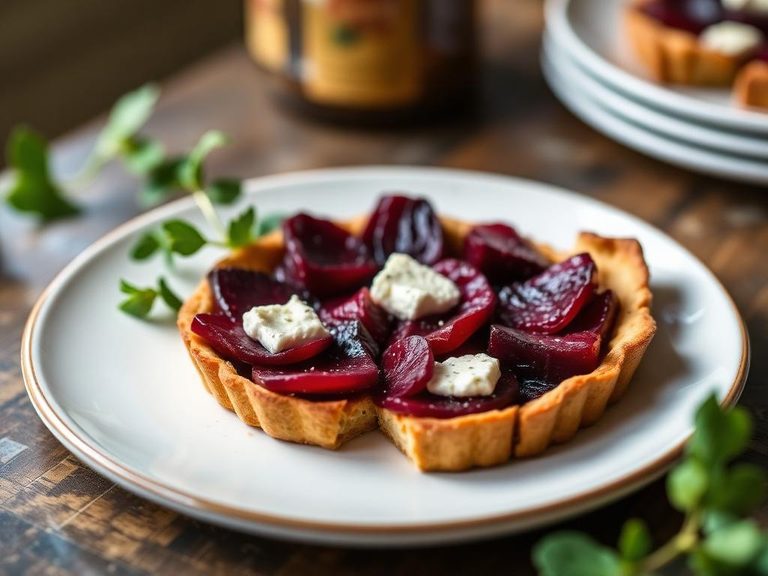
Cooked fresh beets are tender, earthy root vegetables with a deep ruby hue and a natural sweetness enhanced by a touch of added fat. Their texture is smooth and slightly firm, offering a satisfying bite. Nutritionally, they are a good source of fiber and provide a modest amount of sugar for quick energy.
Calorie split: 9% protein · 55% carbs · 36% fat
↓ Full nutrition💚 Why it's loved
People love beets for their unique, sweet-earthy flavor that pairs beautifully with tangy or creamy ingredients, and for their vibrant color that elevates any dish. They are incredibly versatile, fitting into salads, soups, sides, and even desserts across many cuisines.
⚠️ Watch-outs & how to enjoy it better
The high natural sugar content can cause blood sugar spikes, so those monitoring glucose levels should practice portion control. Beets are also high in oxalates, which may be a concern for individuals prone to certain kidney stones; pairing them with calcium-rich foods like cheese or yogurt can help mitigate this. Their strong color can stain hands and surfaces.
Key benefits
- Rich in dietary fiber for digestive health.
- Contains nitrates, which may support healthy blood flow.
- Provides folate, essential for cell growth and function.
- High in antioxidants like betalains, which give them their color.
🍽️ Popular dishes
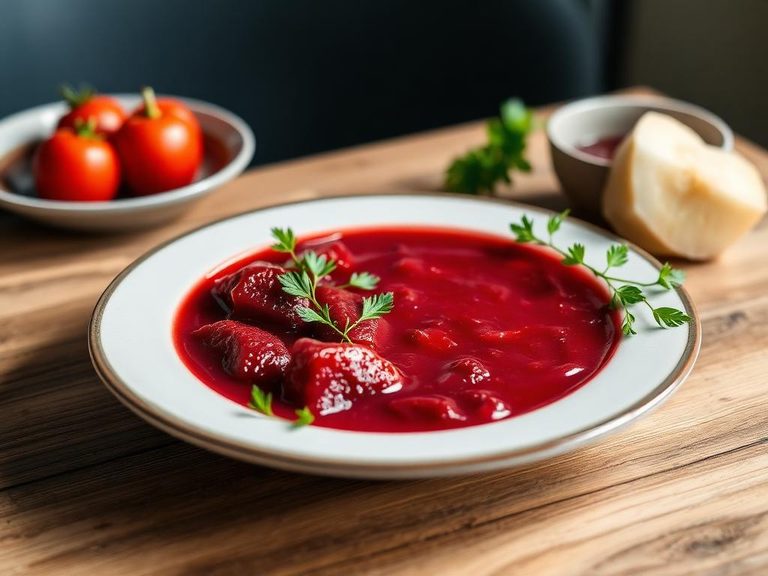
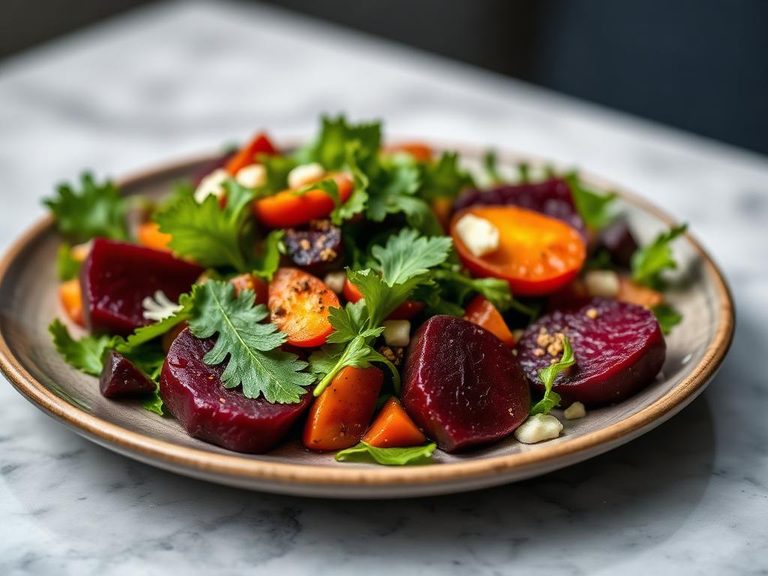
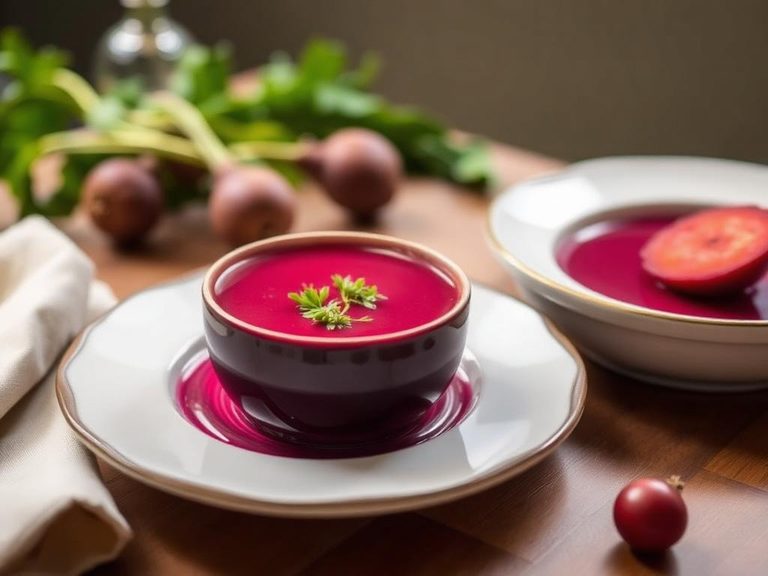
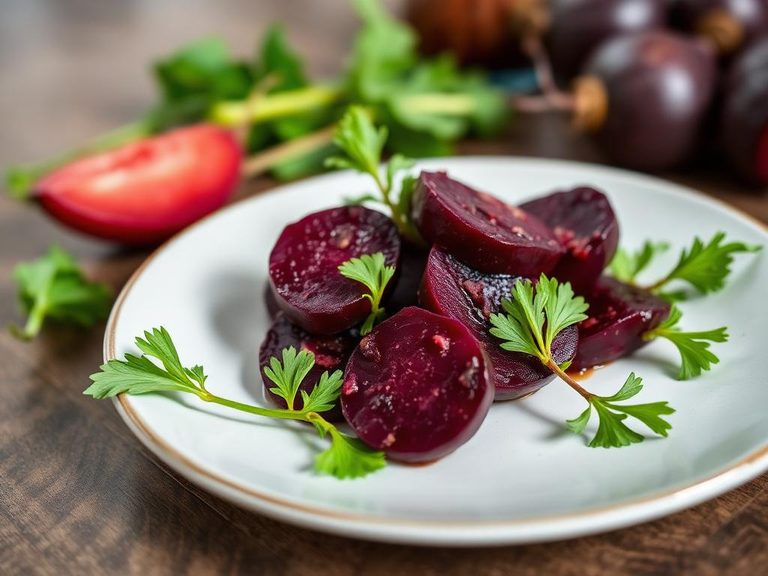
🌍 Where it's eaten
💡 Did you know?
The vibrant red pigment in beets, betalain, was once used as a natural food dye and is so potent it can tint urine pink after consumption.
Full nutrition (USDA data · scales with serving)
| Water | 84.5 g |
| Energy | 67.0 kcal |
| Protein | 1.6 g |
| Total lipid (fat) | 2.8 g |
| Carbohydrate, by difference | 9.7 g |
| Fiber, total dietary | 2.8 g |
| Total Sugars | 6.8 g |
| Calcium, Ca | 17.0 mg |
| Iron, Fe | 0.81 mg |
| Magnesium, Mg | 23.0 mg |
| Phosphorus, P | 41.0 mg |
| Potassium, K | 328 mg |
| Sodium, Na | 205 mg |
| Zinc, Zn | 0.35 mg |
| Copper, Cu | 0.08 mg |
| Selenium, Se | 0.70 ug |
| Vitamin C, total ascorbic acid | 4.2 mg |
| Thiamin | 0.03 mg |
| Riboflavin | 0.04 mg |
| Niacin | 0.32 mg |
| Vitamin B-6 | 0.08 mg |
| Folate, total | 93.0 ug |
| Folic acid | 0.00 ug |
| Folate, food | 93.0 ug |
| Folate, DFE | 93.0 ug |
| Choline, total | 6.3 mg |
| Vitamin B-12 | 0.00 ug |
| Vitamin B-12, added | 0.00 ug |
| Vitamin A, RAE | 14.0 ug |
| Retinol | 11.0 ug |
| Carotene, beta | 24.0 ug |
| Carotene, alpha | 0.00 ug |
| Cryptoxanthin, beta | 0.00 ug |
| Lycopene | 0.00 ug |
| Lutein + zeaxanthin | 0.00 ug |
| Vitamin E (alpha-tocopherol) | 0.44 mg |
| Vitamin E, added | 0.00 mg |
| Vitamin D (D2 + D3) | 0.00 ug |
| Vitamin K (phylloquinone) | 2.4 ug |
| Alcohol, ethyl | 0.00 g |
| Caffeine | 0.00 mg |
| Theobromine | 0.00 mg |
Fat & fatty acid profile (per 100g)
| Fatty acids, total saturated | 0.72 g |
| SFA 4:0 | 0.02 g |
| SFA 6:0 | 0.01 g |
| SFA 8:0 | 0.01 g |
| SFA 10:0 | 0.02 g |
| SFA 12:0 | 0.02 g |
| SFA 14:0 | 0.07 g |
| SFA 16:0 | 0.41 g |
| SFA 18:0 | 0.14 g |
| Fatty acids, total monounsaturated | 0.97 g |
| MUFA 16:1 | 0.01 g |
| MUFA 18:1 | 0.94 g |
| MUFA 20:1 | 0.01 g |
| MUFA 22:1 | 0.00 g |
| Fatty acids, total polyunsaturated | 0.82 g |
| PUFA 18:2 | 0.73 g |
| PUFA 18:3 | 0.09 g |
| PUFA 18:4 | 0.00 g |
| PUFA 20:4 | 0.00 g |
| PUFA 20:5 n-3 (EPA) | 0.00 g |
| PUFA 22:5 n-3 (DPA) | 0.00 g |
| PUFA 22:6 n-3 (DHA) | 0.00 g |
| Cholesterol | 2.0 mg |
Amino acid profile (per 100g)
Estimated from Beets, cooked, boiled. drained, with salt — USDA does not publish this profile for Beets.
| Tryptophan | 0.02 g |
| Threonine | 0.05 g |
| Isoleucine | 0.05 g |
| Leucine | 0.07 g |
| Lysine | 0.06 g |
| Methionine | 0.02 g |
| Cystine | 0.02 g |
| Phenylalanine | 0.05 g |
| Tyrosine | 0.04 g |
| Valine | 0.06 g |
| Arginine | 0.04 g |
| Histidine | 0.02 g |
| Alanine | 0.06 g |
| Aspartic acid | 0.12 g |
| Glutamic acid | 0.45 g |
| Glycine | 0.03 g |
| Proline | 0.04 g |
| Serine | 0.06 g |
FAQ
Why are my cooked beets not as sweet?
The sweetness of beets can vary by variety and growing conditions. Roasting them instead of boiling can concentrate their natural sugars for a sweeter flavor.
How can I prevent beet juice from staining everything?
Wear gloves when handling raw beets. For cooked beets, a splash of vinegar or lemon juice in the cooking water can help set the color and reduce staining.
Are canned beets as nutritious as fresh cooked?
Canned beets retain most of their nutrients but often have added sodium. Rinsing them before use can reduce sodium content. Fresh cooked beets generally have a better texture and flavor.
Nutrient density (calculated · NRF9.3)
Nutrient Rich Foods index: beneficial nutrients (protein, fiber, vitamins, minerals) minus saturated fat, added sugar & sodium, per 100 kcal.
NRF9.3 index — Fulgoni, Keast & Drewnowski, 2009. Computed from USDA nutrients.
Weight-loss friendliness (composite index)
Energy density 0.67 kcal/g · 10% calories from protein · 2.8 g fiber · 6.8 g sugar per 100 g.
Composite of energy density (Rolls et al., 1999), protein & fiber satiety, minus sugar. A calculated heuristic — ranks satiety-per-calorie, not a clinical measure.
Dietary load (calculated from USDA values)
Potential renal acid load. Positive = acid-forming, negative = alkaline-forming.
Sodium-to-potassium ratio: 0.63 (lower is better — aim for ≤ 1)
Sodium:potassium per WHO potassium guidance. Computed from USDA nutrients.