

Beets, canned, cooked, fat added
Common food

Photo: Wikipedia
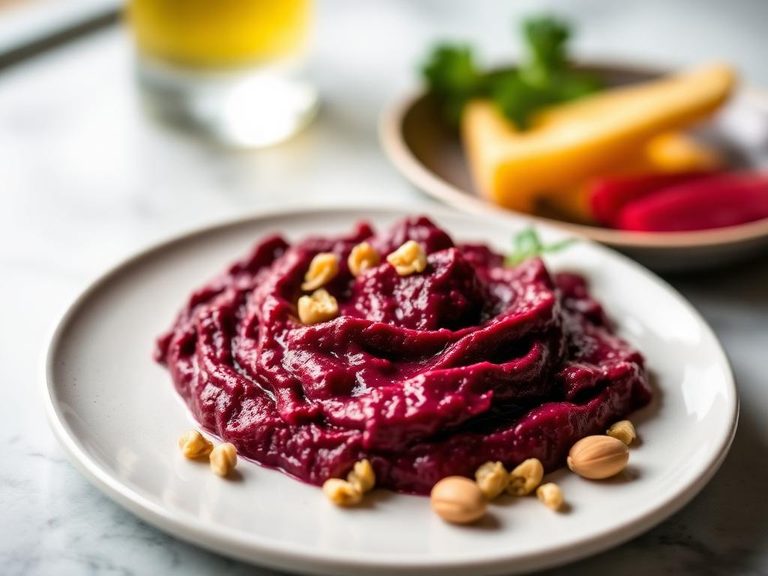
Canned, cooked beets with added fat offer a tender, earthy-sweet bite with a smooth, slightly slippery texture from the canning liquid. They're a convenient way to enjoy beetroot's vibrant color and distinct flavor without the long cooking time. Nutritionally, they provide a good source of fiber and natural sugars, with the added fat enhancing the absorption of fat-soluble vitamins.
Calorie split: 6% protein · 50% carbs · 43% fat
↓ Full nutrition💚 Why it's loved
People love canned beets for their deep, earthy sweetness and the way they effortlessly add a pop of color and nutrition to salads, sides, and grain bowls. Their soft, ready-to-eat texture makes them a beloved staple for quick, healthy meals.
⚠️ Watch-outs & how to enjoy it better
The canning process can lead to a softer, sometimes less vibrant texture and flavor compared to fresh beets, and the added fat increases calorie content. Those monitoring sodium intake should check labels, as some canned varieties are high in salt. To counteract, rinse the beets to reduce sodium, and balance the added fat by pairing with lean proteins like chicken or fish.
Key benefits
- Rich in dietary fiber for digestive health
- Source of natural nitrates, which may support blood flow
- Contains betalains, antioxidants responsible for its deep red color
- Provides folate (vitamin B9), important for cell function
- Convenient and shelf-stable for quick meal prep
🍽️ Popular dishes
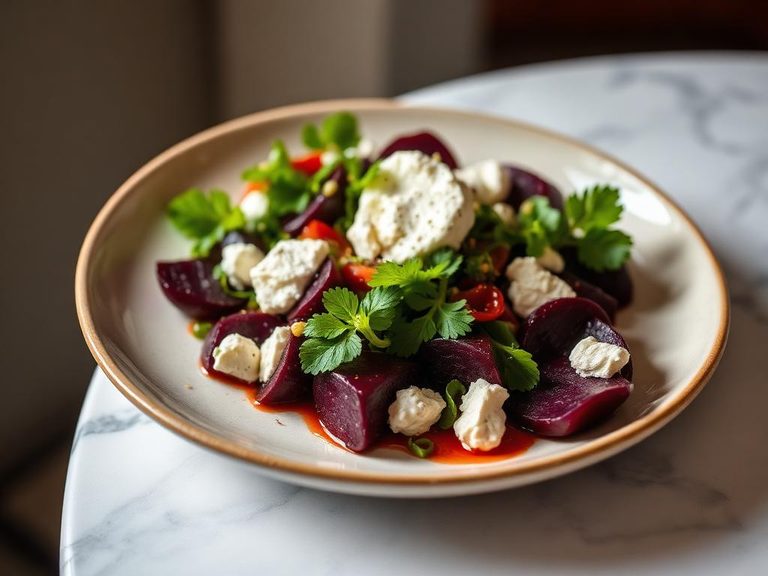
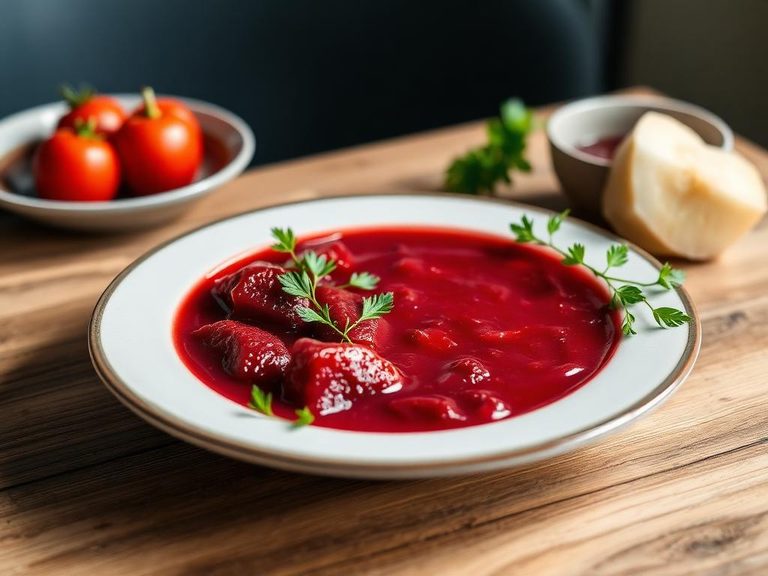
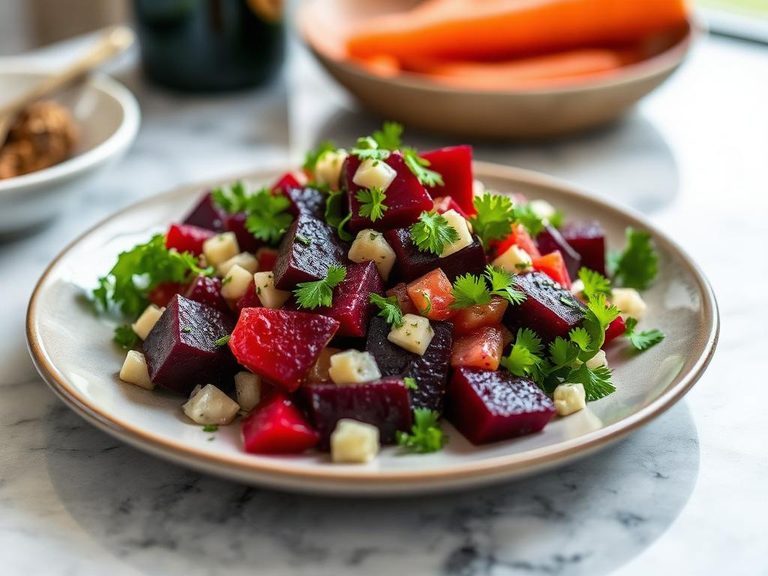
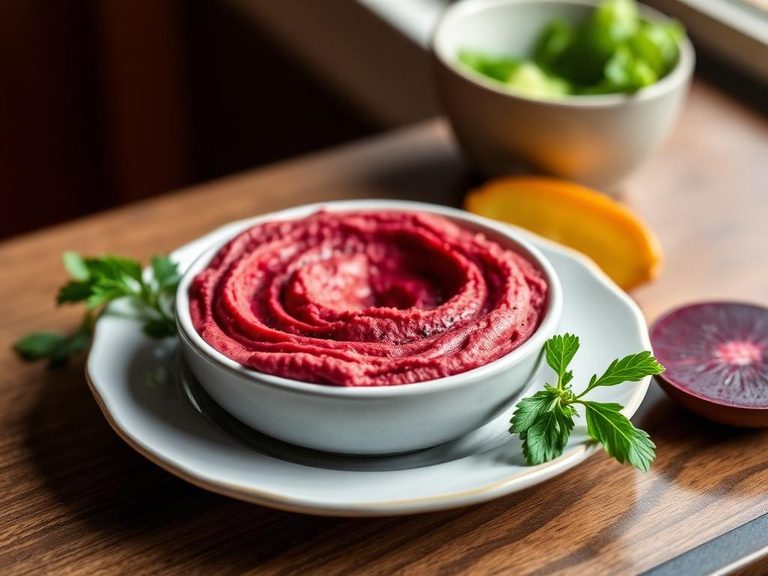
🌍 Where it's eaten
💡 Did you know?
The vibrant red pigment in beets, betalain, was historically used as a natural food dye and even as a cheek rouge in the 19th century.
Full nutrition (USDA data · scales with serving)
| Water | 88.6 g |
| Energy | 53.0 kcal |
| Protein | 0.89 g |
| Total lipid (fat) | 2.7 g |
| Carbohydrate, by difference | 7.0 g |
| Fiber, total dietary | 1.7 g |
| Total Sugars | 5.4 g |
| Calcium, Ca | 15.0 mg |
| Iron, Fe | 1.8 mg |
| Magnesium, Mg | 17.0 mg |
| Phosphorus, P | 17.0 mg |
| Potassium, K | 144 mg |
| Sodium, Na | 197 mg |
| Zinc, Zn | 0.20 mg |
| Copper, Cu | 0.06 mg |
| Selenium, Se | 0.50 ug |
| Vitamin C, total ascorbic acid | 3.6 mg |
| Thiamin | 0.01 mg |
| Riboflavin | 0.04 mg |
| Niacin | 0.15 mg |
| Vitamin B-6 | 0.07 mg |
| Folate, total | 28.0 ug |
| Folic acid | 0.00 ug |
| Folate, food | 28.0 ug |
| Folate, DFE | 28.0 ug |
| Choline, total | 7.5 mg |
| Vitamin B-12 | 0.00 ug |
| Vitamin B-12, added | 0.00 ug |
| Vitamin A, RAE | 12.0 ug |
| Retinol | 11.0 ug |
| Carotene, beta | 20.0 ug |
| Carotene, alpha | 0.00 ug |
| Cryptoxanthin, beta | 0.00 ug |
| Lycopene | 0.00 ug |
| Lutein + zeaxanthin | 0.00 ug |
| Vitamin E (alpha-tocopherol) | 0.41 mg |
| Vitamin E, added | 0.00 mg |
| Vitamin D (D2 + D3) | 0.00 ug |
| Vitamin K (phylloquinone) | 2.3 ug |
| Alcohol, ethyl | 0.00 g |
| Caffeine | 0.00 mg |
| Theobromine | 0.00 mg |
Fat & fatty acid profile (per 100g)
| Fatty acids, total saturated | 0.69 g |
| SFA 4:0 | 0.02 g |
| SFA 6:0 | 0.01 g |
| SFA 8:0 | 0.01 g |
| SFA 10:0 | 0.02 g |
| SFA 12:0 | 0.02 g |
| SFA 14:0 | 0.06 g |
| SFA 16:0 | 0.39 g |
| SFA 18:0 | 0.14 g |
| Fatty acids, total monounsaturated | 0.93 g |
| MUFA 16:1 | 0.01 g |
| MUFA 18:1 | 0.90 g |
| MUFA 20:1 | 0.01 g |
| MUFA 22:1 | 0.00 g |
| Fatty acids, total polyunsaturated | 0.78 g |
| PUFA 18:2 | 0.69 g |
| PUFA 18:3 | 0.09 g |
| PUFA 18:4 | 0.00 g |
| PUFA 20:4 | 0.00 g |
| PUFA 20:5 n-3 (EPA) | 0.00 g |
| PUFA 22:5 n-3 (DPA) | 0.00 g |
| PUFA 22:6 n-3 (DHA) | 0.00 g |
| Cholesterol | 2.0 mg |
Amino acid profile (per 100g)
Estimated from Beets, cooked, boiled. drained, with salt — USDA does not publish this profile for Beets.
| Tryptophan | 0.02 g |
| Threonine | 0.05 g |
| Isoleucine | 0.05 g |
| Leucine | 0.07 g |
| Lysine | 0.06 g |
| Methionine | 0.02 g |
| Cystine | 0.02 g |
| Phenylalanine | 0.05 g |
| Tyrosine | 0.04 g |
| Valine | 0.06 g |
| Arginine | 0.04 g |
| Histidine | 0.02 g |
| Alanine | 0.06 g |
| Aspartic acid | 0.12 g |
| Glutamic acid | 0.45 g |
| Glycine | 0.03 g |
| Proline | 0.04 g |
| Serine | 0.06 g |
FAQ
How do canned beets compare nutritionally to fresh beets?
Canned beets retain most of their vitamins and minerals, but the canning process can reduce some heat-sensitive nutrients like vitamin C. The main difference is often the added sodium or sugar in the canning liquid, and the addition of fat in this specific product increases calorie content.
What does 'fat added' mean for canned beets?
It means a small amount of fat, such as vegetable oil or sometimes animal fat, is added to the canning liquid. This is often done to improve mouthfeel, help preserve texture, or enhance the absorption of fat-soluble vitamins like vitamin K.
Can I use the liquid from the can?
Yes, the canning liquid contains some nutrients and flavor. It can be used in soups, stocks, or as a colorful base for vinaigrettes. However, if you're watching sodium or sugar intake, be aware that these can be concentrated in the liquid.
Nutrient density (calculated · NRF9.3)
Nutrient Rich Foods index: beneficial nutrients (protein, fiber, vitamins, minerals) minus saturated fat, added sugar & sodium, per 100 kcal.
NRF9.3 index — Fulgoni, Keast & Drewnowski, 2009. Computed from USDA nutrients.
Weight-loss friendliness (composite index)
Energy density 0.53 kcal/g · 7% calories from protein · 1.7 g fiber · 5.4 g sugar per 100 g.
Composite of energy density (Rolls et al., 1999), protein & fiber satiety, minus sugar. A calculated heuristic — ranks satiety-per-calorie, not a clinical measure.
Dietary load (calculated from USDA values)
Potential renal acid load. Positive = acid-forming, negative = alkaline-forming.
Sodium-to-potassium ratio: 1.37 (lower is better — aim for ≤ 1)
Sodium:potassium per WHO potassium guidance. Computed from USDA nutrients.