

Beerwurst, pork and beef
Whole food · Sausages and Luncheon Meats

Photo: Wikipedia
Beerwurst is a finely ground, emulsified German sausage, typically a blend of pork and beef, that's gently poached rather than grilled, giving it a uniquely smooth, spreadable texture and a mild, savory flavor. It's a staple of German butcher shops and delis, prized for its delicate, almost creamy bite. Nutritionally, it's a high-fat, moderate-protein processed meat, offering a substantial energy density.
Calorie split: 20% protein · 6% carbs · 74% fat
↓ Full nutrition💚 Why it's loved
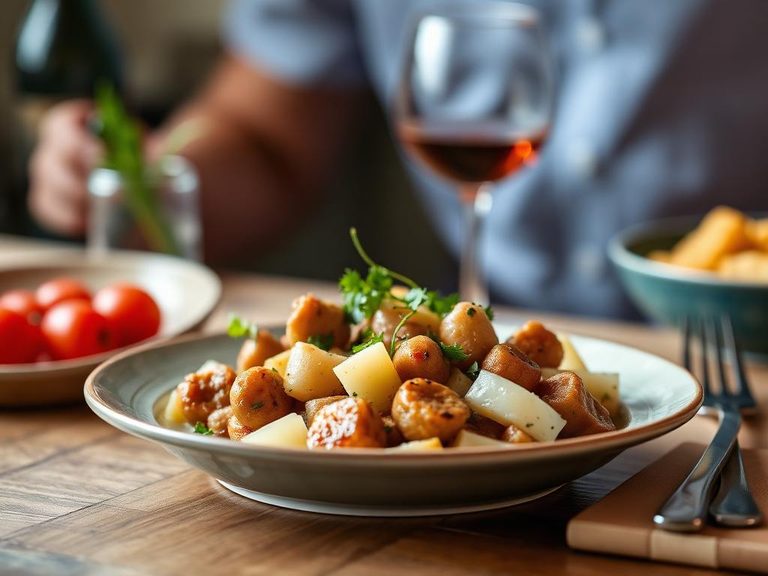
People love its luxuriously smooth, almost pâté-like texture and mild, garlicky flavor that's less aggressive than many other sausages. It's the quintessential, versatile base for a classic German sandwich (Brotzeit) or a comforting addition to a simple potato salad.
⚠️ Watch-outs & how to enjoy it better
Its high fat and sodium content makes it a poor choice for low-fat, heart-healthy, or low-sodium diets. The processed meat classification also warrants moderation. To counteract, enjoy it in thin slices as part of a larger meal rich in fiber (like a whole-grain rye bread with sauerkraut) and pair with potassium-rich foods like potatoes or leafy greens to help balance sodium.
Key benefits
- Excellent source of complete protein for muscle maintenance.
- Provides a dense source of dietary energy (calories).
- Contains B vitamins, particularly B12, from its meat content.
- Offers a quick, no-cook protein source for meals or snacks.
- Traditional preparation is gentle (poaching), avoiding high-heat charring.
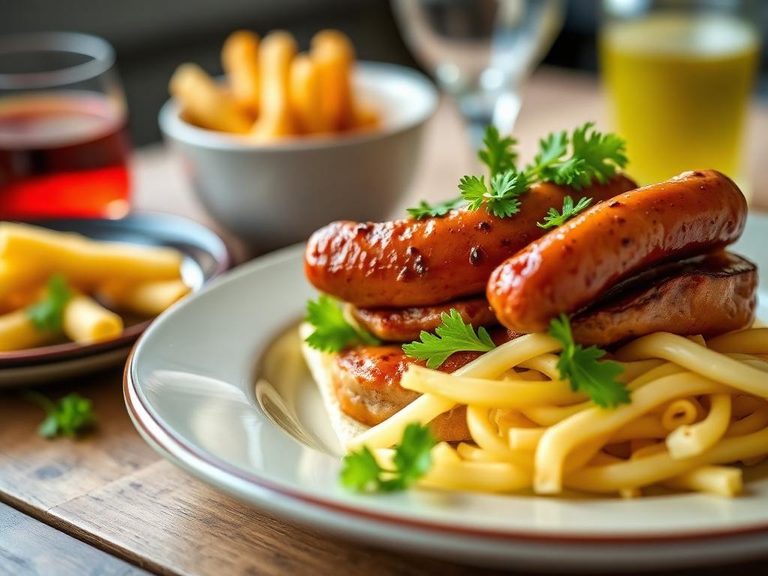
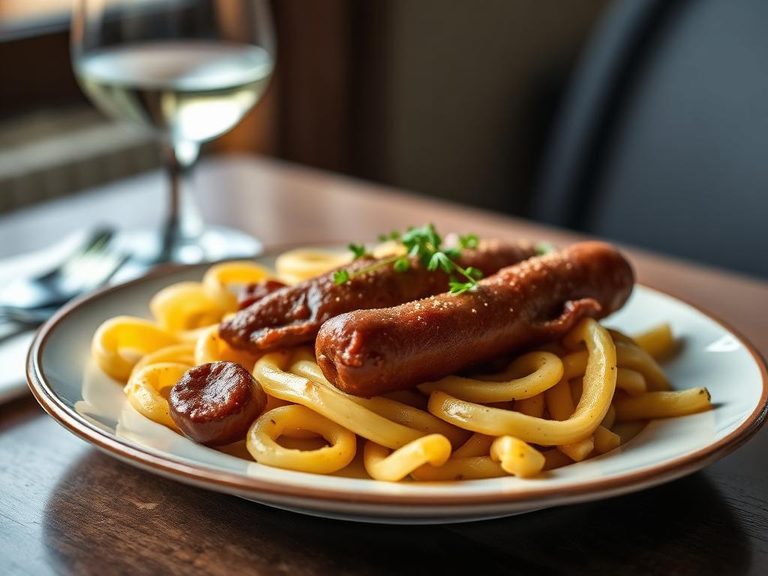
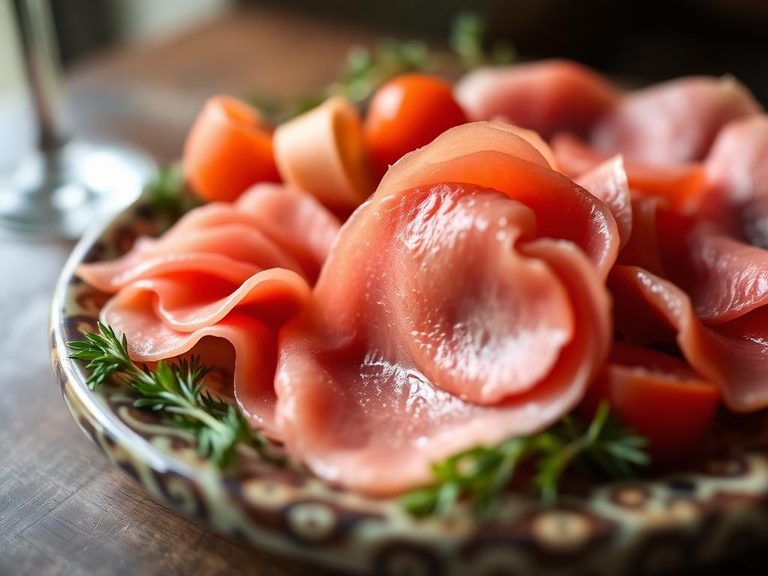
🍽️ Popular dishes
🌍 Where it's eaten
💡 Did you know?
Despite its name, traditional Beerwurst doesn't contain beer; the name likely refers to its classic pairing with a cold beer in a beer garden.
Full nutrition (USDA data · scales with serving)
| Water | 56.7 g |
| Energy | 276 kcal |
| Energy | 1154 kj |
| Protein | 14.0 g |
| Total lipid (fat) | 22.5 g |
| Ash | 2.5 g |
| Carbohydrate, by difference | 4.3 g |
| Fiber, total dietary | 0.90 g |
| Total Sugars | 0.00 g |
| Calcium, Ca | 27.0 mg |
| Iron, Fe | 1.7 mg |
| Magnesium, Mg | 19.0 mg |
| Phosphorus, P | 135 mg |
| Potassium, K | 244 mg |
| Sodium, Na | 732 mg |
| Zinc, Zn | 2.2 mg |
| Copper, Cu | 0.10 mg |
| Manganese, Mn | 0.15 mg |
| Selenium, Se | 17.4 ug |
| Vitamin C, total ascorbic acid | 0.60 mg |
| Thiamin | 0.25 mg |
| Riboflavin | 0.17 mg |
| Niacin | 3.0 mg |
| Pantothenic acid | 0.30 mg |
| Vitamin B-6 | 0.23 mg |
| Folate, total | 5.0 ug |
| Folic acid | 0.00 ug |
| Folate, food | 5.0 ug |
| Folate, DFE | 5.0 ug |
| Vitamin B-12 | 1.2 ug |
| Vitamin A, RAE | 3.0 ug |
| Retinol | 3.0 ug |
| Carotene, beta | 0.00 ug |
| Carotene, alpha | 0.00 ug |
| Cryptoxanthin, beta | 0.00 ug |
| Vitamin A, IU | 10.0 iu |
| Lycopene | 0.00 ug |
| Lutein + zeaxanthin | 0.00 ug |
| Vitamin K (phylloquinone) | 1.6 ug |
| Alcohol, ethyl | 0.00 g |
| Caffeine | 0.00 mg |
| Theobromine | 0.00 mg |
Fat & fatty acid profile (per 100g)
| Fatty acids, total saturated | 8.4 g |
| SFA 4:0 | 0.00 g |
| SFA 6:0 | 0.00 g |
| SFA 8:0 | 0.00 g |
| SFA 10:0 | 0.01 g |
| SFA 12:0 | 0.02 g |
| SFA 14:0 | 0.69 g |
| SFA 16:0 | 5.0 g |
| SFA 18:0 | 2.7 g |
| Fatty acids, total monounsaturated | 10.1 g |
| MUFA 16:1 | 0.68 g |
| MUFA 18:1 | 9.2 g |
| MUFA 20:1 | 0.17 g |
| MUFA 22:1 | 0.03 g |
| Fatty acids, total polyunsaturated | 2.1 g |
| PUFA 18:2 | 1.8 g |
| PUFA 18:3 | 0.15 g |
| PUFA 18:4 | 0.00 g |
| PUFA 20:4 | 0.07 g |
| PUFA 20:5 n-3 (EPA) | 0.00 g |
| PUFA 22:5 n-3 (DPA) | 0.00 g |
| PUFA 22:6 n-3 (DHA) | 0.00 g |
| Cholesterol | 62.0 mg |
| Phytosterols | 3.0 mg |
Amino acid profile (per 100g)
| Tryptophan | 0.17 g |
| Threonine | 0.67 g |
| Isoleucine | 0.68 g |
| Leucine | 1.2 g |
| Lysine | 1.3 g |
| Methionine | 0.39 g |
| Cystine | 0.18 g |
| Phenylalanine | 0.60 g |
| Tyrosine | 0.51 g |
| Valine | 0.77 g |
| Arginine | 0.98 g |
| Histidine | 0.54 g |
| Alanine | 0.92 g |
| Aspartic acid | 1.4 g |
| Glutamic acid | 2.3 g |
| Glycine | 0.88 g |
| Proline | 0.70 g |
| Serine | 0.60 g |
FAQ
What is the difference between Beerwurst and Bockwurst?
Beerwurst is typically a pork/beef blend with a finer, smoother texture and milder seasoning, while Bockwurst is primarily veal and pork, often with a slightly coarser grind and distinct seasoning like marjoram and lemon.
How should I store and prepare Beerwurst?
Keep it refrigerated and use by the sell-by date. It's pre-cooked and ready to eat; simply slice it cold for sandwiches. If served warm, gently poach in simmering water (not boiling) for 5-10 minutes to heat through without splitting the casing.
Is Beerwurst gluten-free?
It can be, but it's not guaranteed. Some commercial brands may use fillers or flavorings containing gluten. Always check the specific ingredient label for wheat, rye, or barley derivatives if you have celiac disease or gluten sensitivity.
Nutrient density (calculated · NRF9.3)
Nutrient Rich Foods index: beneficial nutrients (protein, fiber, vitamins, minerals) minus saturated fat, added sugar & sodium, per 100 kcal.
NRF9.3 index — Fulgoni, Keast & Drewnowski, 2009. Computed from USDA nutrients.
Weight-loss friendliness (composite index)
Energy density 2.76 kcal/g · 20% calories from protein · 0.9 g fiber · 0.0 g sugar per 100 g.
Composite of energy density (Rolls et al., 1999), protein & fiber satiety, minus sugar. A calculated heuristic — ranks satiety-per-calorie, not a clinical measure.
Dietary load (calculated from USDA values)
Potential renal acid load. Positive = acid-forming, negative = alkaline-forming.
Sodium-to-potassium ratio: 3.00 (lower is better — aim for ≤ 1)
Sodium:potassium per WHO potassium guidance. Computed from USDA nutrients.