

Beef, potatoes, and vegetables including carrots, broccoli, and/or dark-green leafy; soy-based sauce
Common food
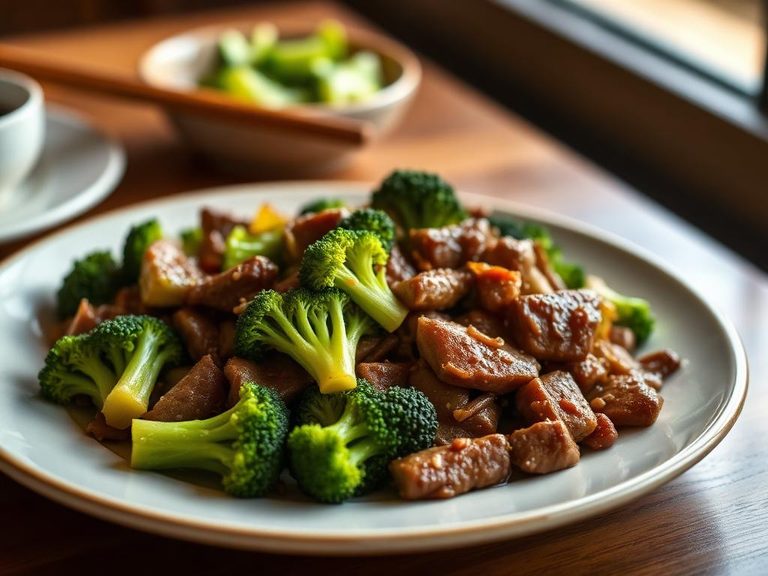
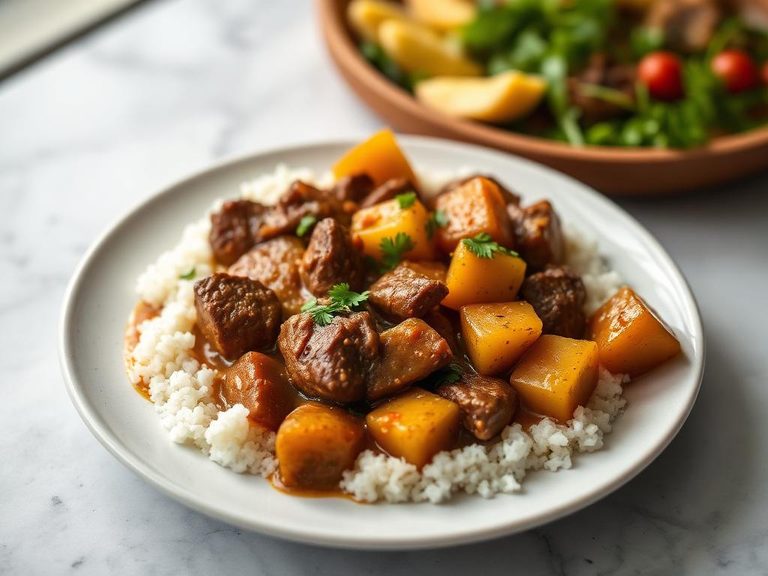
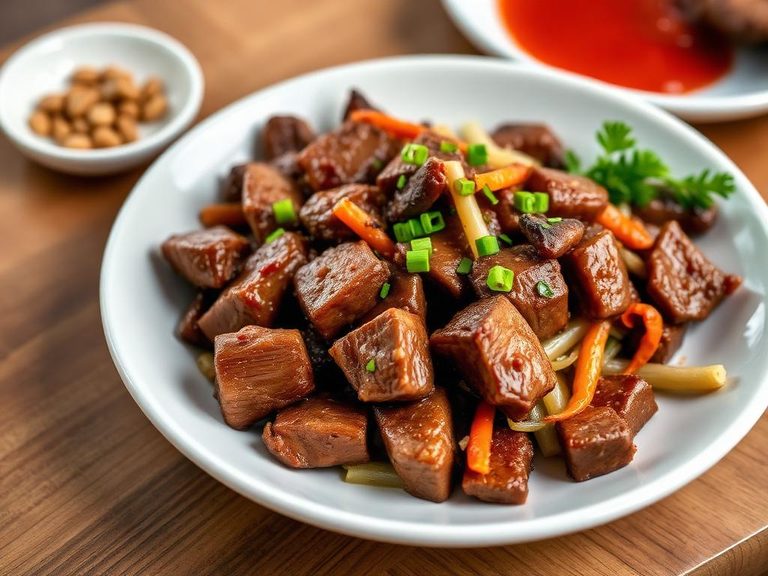
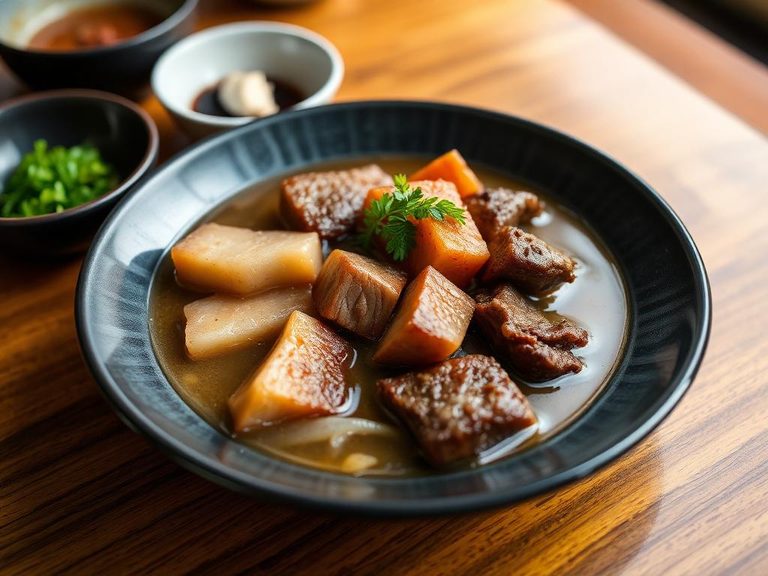
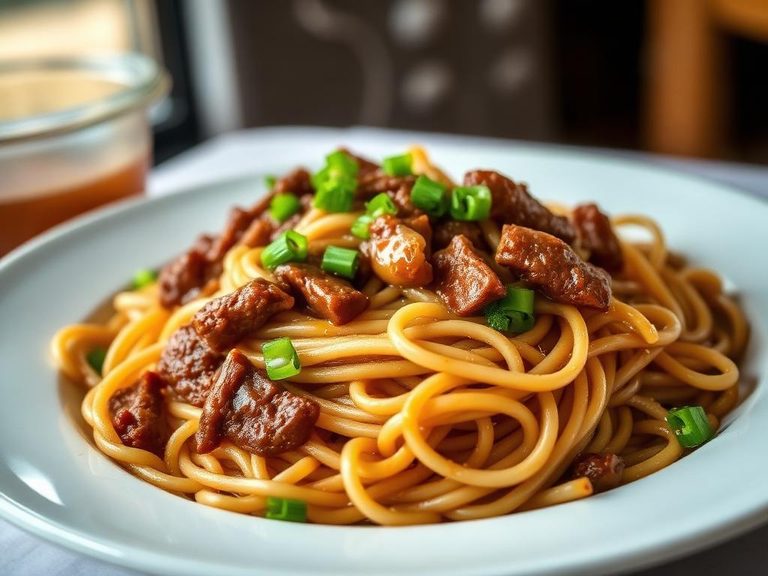
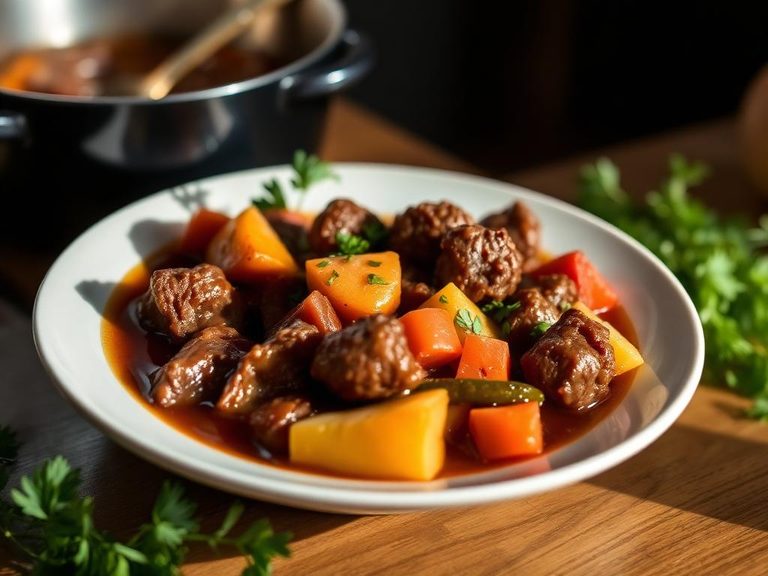
A savory, protein-rich stir-fry or bowl featuring tender beef, earthy potatoes, and a vibrant mix of carrots, broccoli, and dark greens, all coated in a savory soy-based sauce. The texture is a satisfying contrast of soft, starchy potato, crisp-tender vegetables, and chewy beef. With 11.75g of protein and only 5.96g of carbs per 100g, it's a balanced, low-carb meal option.
Calorie split: 31% protein · 16% carbs · 53% fat
↓ Full nutrition💚 Why it's loved
People adore this dish for its hearty, comforting simplicity and the deep umami flavor from the soy sauce that ties the beef and vegetables together. It's a versatile one-pan meal that feels both nourishing and satisfying.
⚠️ Watch-outs & how to enjoy it better
The sodium content from the soy sauce can be high, which may concern those monitoring blood pressure. Potatoes, while nutritious, can cause blood sugar spikes in some individuals. Tip: Use low-sodium soy sauce or tamari, and balance the meal by ensuring the protein and fat (from the beef) are prominent to slow carb absorption.
Key benefits
- Excellent source of complete protein for muscle maintenance.
- Rich in iron and B12 from the beef.
- Provides fiber and micronutrients like Vitamin A and K from the vegetables.
- Relatively low in carbohydrates compared to grain-based dishes.
- Soy sauce adds umami depth without significant calories.
🍽️ Popular dishes
🌍 Where it's eaten
💡 Did you know?
The classic 'Beef and Broccoli' stir-fry is a staple of American-Chinese cuisine, but broccoli is not traditionally used in most regional Chinese cooking—it was popularized in the U.S. in the early 20th century.
Full nutrition (USDA data · scales with serving)
| Water | 72.3 g |
| Energy | 149 kcal |
| Protein | 11.8 g |
| Total lipid (fat) | 8.8 g |
| Carbohydrate, by difference | 6.0 g |
| Fiber, total dietary | 1.1 g |
| Total Sugars | 1.3 g |
| Calcium, Ca | 22.0 mg |
| Iron, Fe | 1.2 mg |
| Magnesium, Mg | 18.0 mg |
| Phosphorus, P | 96.0 mg |
| Potassium, K | 240 mg |
| Sodium, Na | 246 mg |
| Zinc, Zn | 2.0 mg |
| Copper, Cu | 0.07 mg |
| Selenium, Se | 11.4 ug |
| Vitamin C, total ascorbic acid | 10.9 mg |
| Thiamin | 0.06 mg |
| Riboflavin | 0.09 mg |
| Niacin | 2.3 mg |
| Vitamin B-6 | 0.25 mg |
| Folate, total | 17.0 ug |
| Folic acid | 0.00 ug |
| Folate, food | 17.0 ug |
| Folate, DFE | 17.0 ug |
| Choline, total | 46.6 mg |
| Vitamin B-12 | 0.59 ug |
| Vitamin B-12, added | 0.00 ug |
| Vitamin A, RAE | 91.0 ug |
| Retinol | 0.00 ug |
| Carotene, beta | 899 ug |
| Carotene, alpha | 391 ug |
| Cryptoxanthin, beta | 0.00 ug |
| Lycopene | 0.00 ug |
| Lutein + zeaxanthin | 196 ug |
| Vitamin E (alpha-tocopherol) | 1.4 mg |
| Vitamin E, added | 0.00 mg |
| Vitamin D (D2 + D3) | 0.00 ug |
| Vitamin K (phylloquinone) | 28.5 ug |
| Alcohol, ethyl | 0.00 g |
| Caffeine | 0.00 mg |
| Theobromine | 0.00 mg |
Fat & fatty acid profile (per 100g)
| Fatty acids, total saturated | 1.9 g |
| SFA 4:0 | 0.00 g |
| SFA 6:0 | 0.00 g |
| SFA 8:0 | 0.00 g |
| SFA 10:0 | 0.01 g |
| SFA 12:0 | 0.01 g |
| SFA 14:0 | 0.10 g |
| SFA 16:0 | 1.3 g |
| SFA 18:0 | 0.50 g |
| Fatty acids, total monounsaturated | 3.7 g |
| MUFA 16:1 | 0.15 g |
| MUFA 18:1 | 3.5 g |
| MUFA 20:1 | 0.04 g |
| MUFA 22:1 | 0.00 g |
| Fatty acids, total polyunsaturated | 2.3 g |
| PUFA 18:2 | 2.0 g |
| PUFA 18:3 | 0.28 g |
| PUFA 18:4 | 0.00 g |
| PUFA 20:4 | 0.01 g |
| PUFA 20:5 n-3 (EPA) | 0.00 g |
| PUFA 22:5 n-3 (DPA) | 0.01 g |
| PUFA 22:6 n-3 (DHA) | 0.00 g |
| Cholesterol | 31.0 mg |
Amino acid profile (per 100g)
Estimated from Beef, variety meats and by-products, mechanically separated beef, raw — USDA does not publish this profile for Beef.
| Tryptophan | 0.17 g |
| Threonine | 0.47 g |
| Isoleucine | 0.58 g |
| Leucine | 1.2 g |
| Lysine | 1.2 g |
| Methionine | 0.43 g |
| Cystine | 0.23 g |
| Phenylalanine | 0.64 g |
| Tyrosine | 0.38 g |
| Valine | 0.92 g |
| Arginine | 1.2 g |
| Histidine | 0.44 g |
| Alanine | 1.0 g |
| Aspartic acid | 1.3 g |
| Glutamic acid | 2.1 g |
| Glycine | 1.2 g |
| Proline | 0.92 g |
| Serine | 0.57 g |
FAQ
Is this dish gluten-free?
Not typically, as traditional soy sauce contains wheat. Use tamari or a certified gluten-free soy sauce for a gluten-free version.
Can I make this with a different protein?
Absolutely. Chicken, pork, or tofu are excellent substitutes. Adjust cooking time accordingly.
How do I prevent the beef from getting tough?
Slice the beef thinly against the grain and marinate it briefly in soy sauce and a touch of cornstarch before stir-frying over high heat for a short time.
Nutrient density (calculated · NRF9.3)
Nutrient Rich Foods index: beneficial nutrients (protein, fiber, vitamins, minerals) minus saturated fat, added sugar & sodium, per 100 kcal.
NRF9.3 index — Fulgoni, Keast & Drewnowski, 2009. Computed from USDA nutrients.
Weight-loss friendliness (composite index)
Energy density 1.49 kcal/g · 32% calories from protein · 1.1 g fiber · 1.3 g sugar per 100 g.
Composite of energy density (Rolls et al., 1999), protein & fiber satiety, minus sugar. A calculated heuristic — ranks satiety-per-calorie, not a clinical measure.
Dietary load (calculated from USDA values)
Potential renal acid load. Positive = acid-forming, negative = alkaline-forming.
Sodium-to-potassium ratio: 1.02 (lower is better — aim for ≤ 1)
Sodium:potassium per WHO potassium guidance. Computed from USDA nutrients.