

Beef, bacon, cooked
Common food
Cooked beef bacon is a savory, smoky, and slightly chewy cured meat product, offering a rich, umami flavor with a satisfying texture. It's a protein-packed alternative to traditional pork bacon, providing a substantial 31.3g of protein per 100g with minimal carbohydrates.
Calorie split: 28% protein · 1% carbs · 70% fat
↓ Full nutrition💚 Why it's loved
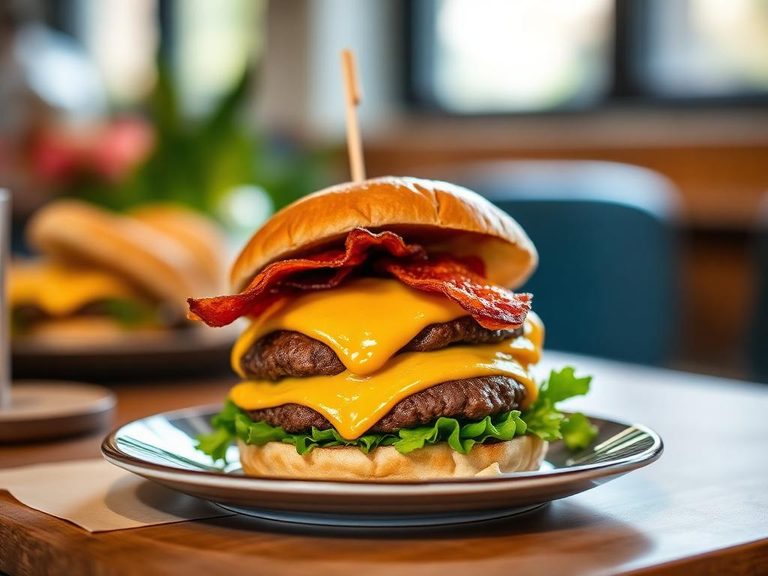
People love it for its deep, smoky savoriness and satisfying chew, making it a versatile ingredient that elevates everything from breakfast plates to salads and burgers.
⚠️ Watch-outs & how to enjoy it better
As a cured and cooked meat, it can be high in sodium and saturated fat, which may be a concern for those monitoring heart health or blood pressure. To enjoy it mindfully, practice portion control, choose lower-sodium brands when available, and pair it with fiber-rich vegetables like a side salad or roasted broccoli to balance the meal.
Key benefits
- Excellent source of complete protein for muscle maintenance.
- Very low in carbohydrates and sugars.
- Provides essential minerals like iron and zinc.
- Offers a smoky, savory flavor without added sugars.
🍽️ Popular dishes

🌍 Where it's eaten
💡 Did you know?
Beef bacon is often made from the navel end of the beef brisket, a cut that becomes exceptionally flavorful and tender when cured and smoked.
Full nutrition (USDA data · scales with serving)
| Water | 26.2 g |
| Energy | 449 kcal |
| Protein | 31.3 g |
| Total lipid (fat) | 34.4 g |
| Carbohydrate, by difference | 1.4 g |
| Fiber, total dietary | 0.00 g |
| Total Sugars | 0.00 g |
| Calcium, Ca | 9.0 mg |
| Iron, Fe | 3.1 mg |
| Magnesium, Mg | 27.0 mg |
| Phosphorus, P | 236 mg |
| Potassium, K | 412 mg |
| Sodium, Na | 1500 mg |
| Zinc, Zn | 6.4 mg |
| Copper, Cu | 0.12 mg |
| Selenium, Se | 26.8 ug |
| Vitamin C, total ascorbic acid | 0.00 mg |
| Thiamin | 0.09 mg |
| Riboflavin | 0.26 mg |
| Niacin | 6.5 mg |
| Vitamin B-6 | 0.31 mg |
| Folate, total | 8.0 ug |
| Folic acid | 0.00 ug |
| Folate, food | 8.0 ug |
| Folate, DFE | 8.0 ug |
| Choline, total | 119 mg |
| Vitamin B-12 | 3.5 ug |
| Vitamin B-12, added | 0.00 ug |
| Vitamin A, RAE | 0.00 ug |
| Retinol | 0.00 ug |
| Carotene, beta | 0.00 ug |
| Carotene, alpha | 0.00 ug |
| Cryptoxanthin, beta | 0.00 ug |
| Lycopene | 0.00 ug |
| Lutein + zeaxanthin | 0.00 ug |
| Vitamin E (alpha-tocopherol) | 0.29 mg |
| Vitamin E, added | 0.00 mg |
| Vitamin D (D2 + D3) | 0.20 ug |
| Vitamin K (phylloquinone) | 2.8 ug |
| Alcohol, ethyl | 0.00 g |
| Caffeine | 0.00 mg |
| Theobromine | 0.00 mg |
Fat & fatty acid profile (per 100g)
| Fatty acids, total saturated | 14.3 g |
| SFA 4:0 | 0.00 g |
| SFA 6:0 | 0.00 g |
| SFA 8:0 | 0.00 g |
| SFA 10:0 | 0.13 g |
| SFA 12:0 | 0.10 g |
| SFA 14:0 | 1.2 g |
| SFA 16:0 | 7.7 g |
| SFA 18:0 | 4.5 g |
| Fatty acids, total monounsaturated | 16.9 g |
| MUFA 16:1 | 2.3 g |
| MUFA 18:1 | 14.6 g |
| MUFA 20:1 | 0.00 g |
| MUFA 22:1 | 0.00 g |
| Fatty acids, total polyunsaturated | 1.6 g |
| PUFA 18:2 | 1.3 g |
| PUFA 18:3 | 0.33 g |
| PUFA 18:4 | 0.00 g |
| PUFA 20:4 | 0.00 g |
| PUFA 20:5 n-3 (EPA) | 0.00 g |
| PUFA 22:5 n-3 (DPA) | 0.00 g |
| PUFA 22:6 n-3 (DHA) | 0.00 g |
| Cholesterol | 119 mg |
Amino acid profile (per 100g)
Estimated from Beef, variety meats and by-products, mechanically separated beef, raw — USDA does not publish this profile for Beef.
| Tryptophan | 0.17 g |
| Threonine | 0.47 g |
| Isoleucine | 0.58 g |
| Leucine | 1.2 g |
| Lysine | 1.2 g |
| Methionine | 0.43 g |
| Cystine | 0.23 g |
| Phenylalanine | 0.64 g |
| Tyrosine | 0.38 g |
| Valine | 0.92 g |
| Arginine | 1.2 g |
| Histidine | 0.44 g |
| Alanine | 1.0 g |
| Aspartic acid | 1.3 g |
| Glutamic acid | 2.1 g |
| Glycine | 1.2 g |
| Proline | 0.92 g |
| Serine | 0.57 g |
FAQ
Is beef bacon healthier than pork bacon?
It's a different nutritional profile. Beef bacon is typically higher in protein and lower in carbohydrates per serving, but it can be similarly high in sodium and saturated fat. The 'healthier' choice depends on your specific dietary goals.
Can I use beef bacon in recipes that call for pork bacon?
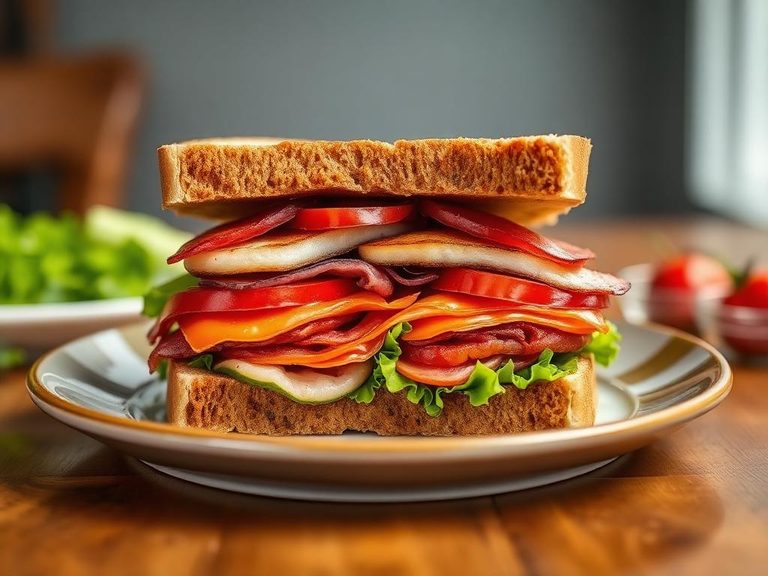
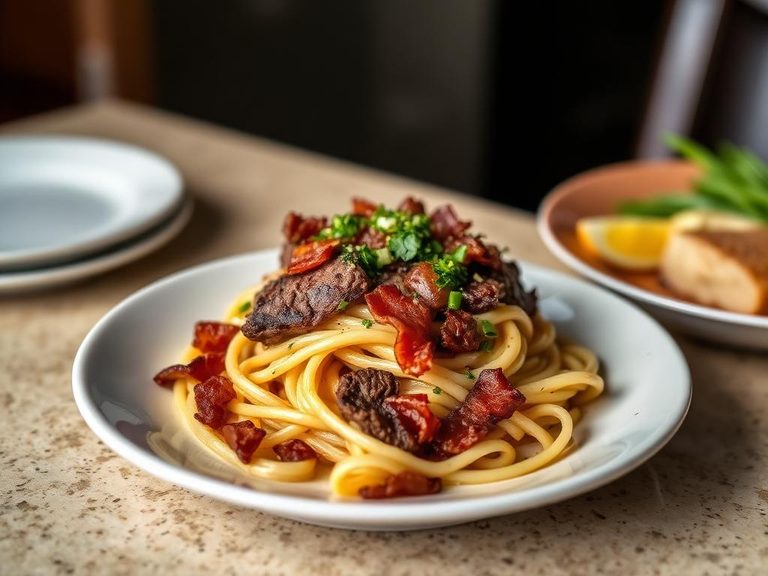
Yes, it's a direct substitute in most recipes like salads, pastas, and toppings. Be aware that its texture is often chewier and its flavor more robust, so it may alter the final dish's character slightly.
How should I store leftover cooked beef bacon?
Allow it to cool completely, then store in an airtight container in the refrigerator for up to 4 days. It can also be frozen for longer storage.
Nutrient density (calculated · NRF9.3)
Nutrient Rich Foods index: beneficial nutrients (protein, fiber, vitamins, minerals) minus saturated fat, added sugar & sodium, per 100 kcal.
NRF9.3 index — Fulgoni, Keast & Drewnowski, 2009. Computed from USDA nutrients.
Weight-loss friendliness (composite index)
Energy density 4.49 kcal/g · 28% calories from protein · 0.0 g fiber · 0.0 g sugar per 100 g.
Composite of energy density (Rolls et al., 1999), protein & fiber satiety, minus sugar. A calculated heuristic — ranks satiety-per-calorie, not a clinical measure.
Dietary load (calculated from USDA values)
Potential renal acid load. Positive = acid-forming, negative = alkaline-forming.
Sodium-to-potassium ratio: 3.64 (lower is better — aim for ≤ 1)
Sodium:potassium per WHO potassium guidance. Computed from USDA nutrients.