

Bacon, for use on a sandwich
Common food

Photo: Wikipedia
Bacon for sandwiches is typically made from cured pork belly, sliced to a medium thickness for optimal texture. It delivers a powerful savory punch with a distinct salty-smoky flavor, a crispy yet chewy bite, and a rich mouthfeel from its rendered fat. Nutritionally, it is a very high-protein, high-fat food with minimal carbohydrates, making it a dense source of energy and satiety.
Calorie split: 32% protein · 2% carbs · 66% fat
↓ Full nutrition💚 Why it's loved
People adore bacon for its intoxicating aroma and the complex interplay of salty, smoky, and savory (umami) flavors that are deeply satisfying. Its versatility is legendary—it can elevate a simple sandwich, a salad, or a breakfast plate, making it a beloved comfort food across many cultures.
⚠️ Watch-outs & how to enjoy it better
Bacon is high in sodium and saturated fat, which can be a concern for those monitoring heart health or blood pressure. To mitigate this, practice strict portion control, choose lower-sodium brands, and balance your meal by pairing it with fiber-rich vegetables or whole-grain bread to slow fat absorption and add nutrients. Always cook it thoroughly to a safe internal temperature.
Key benefits
- Excellent source of high-quality complete protein.
- Provides essential B vitamins like B1 (thiamine), B6, and B12.
- Contains minerals such as selenium, phosphorus, and zinc.
- High fat content promotes satiety and flavor satisfaction.
- Versatile ingredient that enhances many dishes with umami.
🍽️ Popular dishes
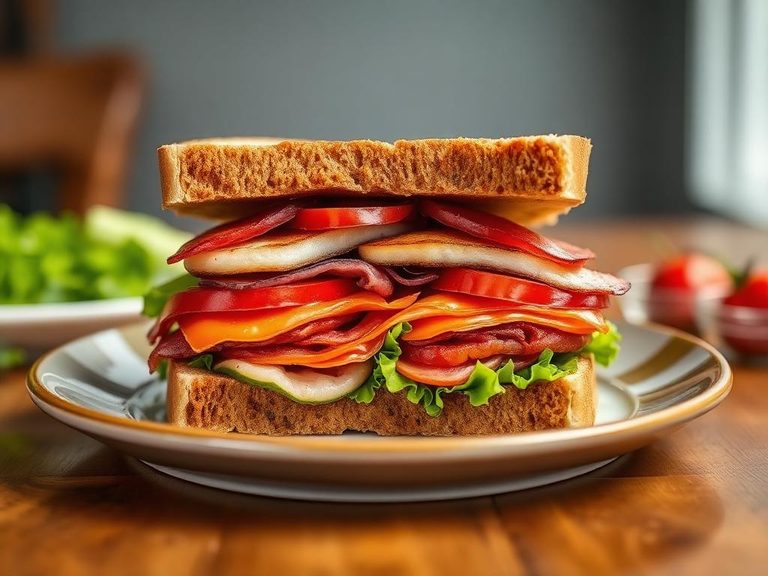
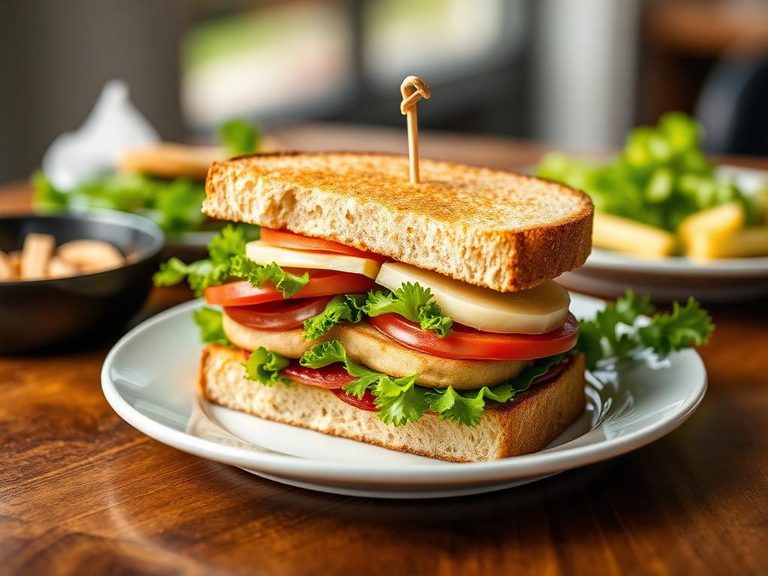
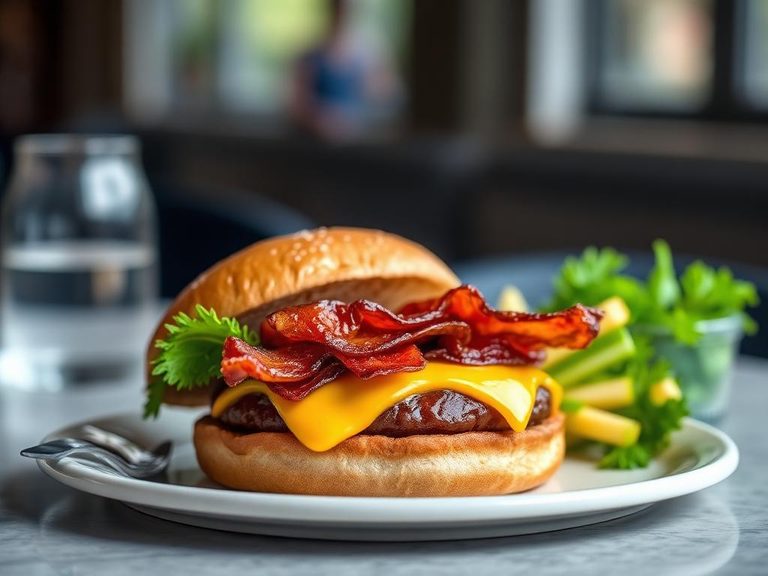
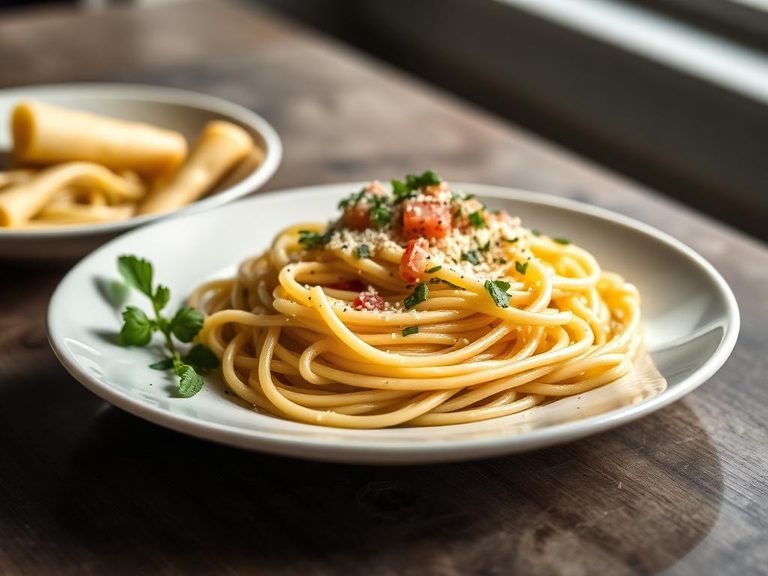
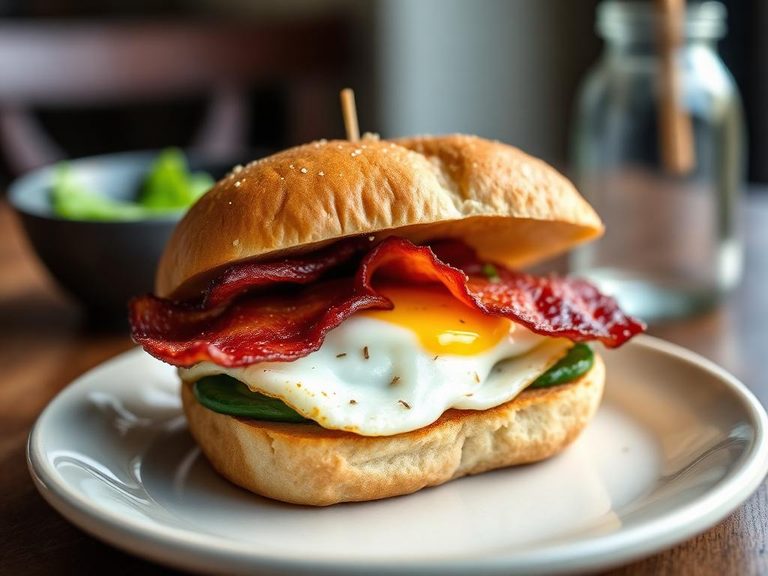
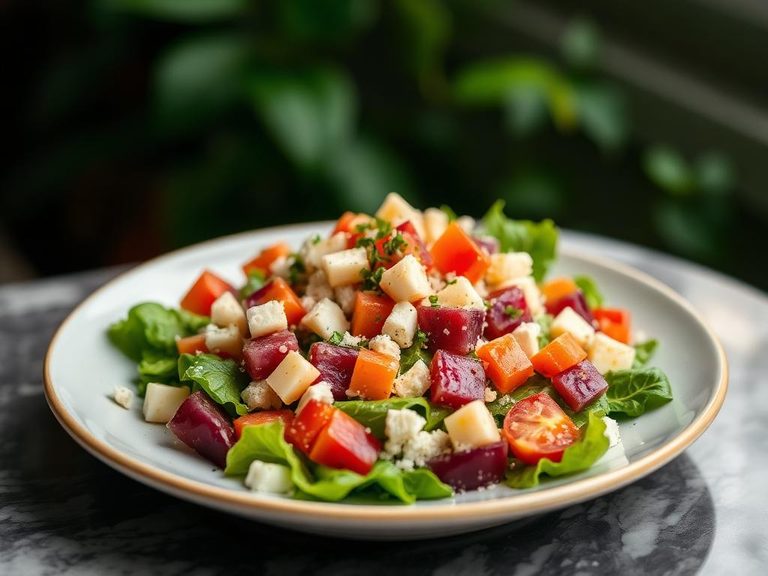
🌍 Where it's eaten
💡 Did you know?
The word 'bacon' comes from the Old High German 'bacho,' meaning 'back,' and the practice of curing pork belly is so ancient that the Chinese were salting pork bellies as early as 1500 BCE.
Full nutrition (USDA data · scales with serving)
| Water | 16.3 g |
| Energy | 494 kcal |
| Protein | 39.4 g |
| Total lipid (fat) | 36.2 g |
| Carbohydrate, by difference | 2.0 g |
| Fiber, total dietary | 0.00 g |
| Total Sugars | 2.5 g |
| Calcium, Ca | 13.0 mg |
| Iron, Fe | 1.2 mg |
| Magnesium, Mg | 35.0 mg |
| Phosphorus, P | 409 mg |
| Potassium, K | 544 mg |
| Sodium, Na | 1798 mg |
| Zinc, Zn | 3.5 mg |
| Copper, Cu | 0.12 mg |
| Selenium, Se | 50.7 ug |
| Vitamin C, total ascorbic acid | 0.00 mg |
| Thiamin | 0.56 mg |
| Riboflavin | 0.23 mg |
| Niacin | 10.5 mg |
| Vitamin B-6 | 0.54 mg |
| Folate, total | 0.00 ug |
| Folic acid | 0.00 ug |
| Folate, food | 0.00 ug |
| Folate, DFE | 0.00 ug |
| Choline, total | 89.5 mg |
| Vitamin B-12 | 1.1 ug |
| Vitamin B-12, added | 0.00 ug |
| Vitamin A, RAE | 11.0 ug |
| Retinol | 11.0 ug |
| Carotene, beta | 0.00 ug |
| Carotene, alpha | 0.00 ug |
| Cryptoxanthin, beta | 0.00 ug |
| Lycopene | 0.00 ug |
| Lutein + zeaxanthin | 0.00 ug |
| Vitamin E (alpha-tocopherol) | 0.42 mg |
| Vitamin E, added | 0.00 mg |
| Vitamin D (D2 + D3) | 0.40 ug |
| Vitamin K (phylloquinone) | 0.00 ug |
| Alcohol, ethyl | 0.00 g |
| Caffeine | 0.00 mg |
| Theobromine | 0.00 mg |
Fat & fatty acid profile (per 100g)
| Fatty acids, total saturated | 12.5 g |
| SFA 4:0 | 0.00 g |
| SFA 6:0 | 0.00 g |
| SFA 8:0 | 0.01 g |
| SFA 10:0 | 0.03 g |
| SFA 12:0 | 0.02 g |
| SFA 14:0 | 0.47 g |
| SFA 16:0 | 7.9 g |
| SFA 18:0 | 3.9 g |
| Fatty acids, total monounsaturated | 15.7 g |
| MUFA 16:1 | 0.83 g |
| MUFA 18:1 | 14.6 g |
| MUFA 20:1 | 0.29 g |
| MUFA 22:1 | 0.01 g |
| Fatty acids, total polyunsaturated | 6.0 g |
| PUFA 18:2 | 5.3 g |
| PUFA 18:3 | 0.24 g |
| PUFA 18:4 | 0.00 g |
| PUFA 20:4 | 0.16 g |
| PUFA 20:5 n-3 (EPA) | 0.00 g |
| PUFA 22:5 n-3 (DPA) | 0.02 g |
| PUFA 22:6 n-3 (DHA) | 0.01 g |
| Cholesterol | 99.0 mg |
Amino acid profile (per 100g)
Estimated from Bacon, turkey, low sodium — USDA does not publish this profile for Bacon.
| Tryptophan | 0.19 g |
| Threonine | 0.65 g |
| Isoleucine | 0.52 g |
| Leucine | 1.3 g |
| Lysine | 1.5 g |
| Methionine | 0.47 g |
| Cystine | 0.17 g |
| Phenylalanine | 0.59 g |
| Tyrosine | 0.53 g |
| Valine | 0.59 g |
| Arginine | 1.1 g |
| Histidine | 0.49 g |
| Alanine | 1.0 g |
| Aspartic acid | 1.5 g |
| Glutamic acid | 2.5 g |
| Glycine | 0.93 g |
| Proline | 1.1 g |
| Serine | 0.72 g |
FAQ
What's the difference between 'streaky' and 'back' bacon?
Streaky bacon (common in the US) comes from the pork belly, has alternating layers of fat and meat, and crisps up well. Back bacon (common in the UK and Canada) comes from the loin, is meatier with a fat cap, and has a chewier, ham-like texture.
Is it safe to eat bacon every day?
While delicious, regular high consumption of processed meats like bacon is linked to health risks. Most dietary guidelines recommend limiting processed meat intake. Enjoying it occasionally as part of a balanced diet is the standard recommendation.
How can I make bacon less greasy for a sandwich?
Cook it on a rack in the oven at 400°F (200°C) to let fat drip away. After cooking, place slices on a plate lined with paper towels to absorb excess grease before assembling your sandwich.
Nutrient density (calculated · NRF9.3)
Nutrient Rich Foods index: beneficial nutrients (protein, fiber, vitamins, minerals) minus saturated fat, added sugar & sodium, per 100 kcal.
NRF9.3 index — Fulgoni, Keast & Drewnowski, 2009. Computed from USDA nutrients.
Weight-loss friendliness (composite index)
Energy density 4.94 kcal/g · 32% calories from protein · 0.0 g fiber · 2.5 g sugar per 100 g.
Composite of energy density (Rolls et al., 1999), protein & fiber satiety, minus sugar. A calculated heuristic — ranks satiety-per-calorie, not a clinical measure.
Dietary load (calculated from USDA values)
Potential renal acid load. Positive = acid-forming, negative = alkaline-forming.
Sodium-to-potassium ratio: 3.31 (lower is better — aim for ≤ 1)
Sodium:potassium per WHO potassium guidance. Computed from USDA nutrients.