

Babyfood, fruit, apricot with tapioca, strained
Whole food · Baby Foods

Photo: Wikipedia
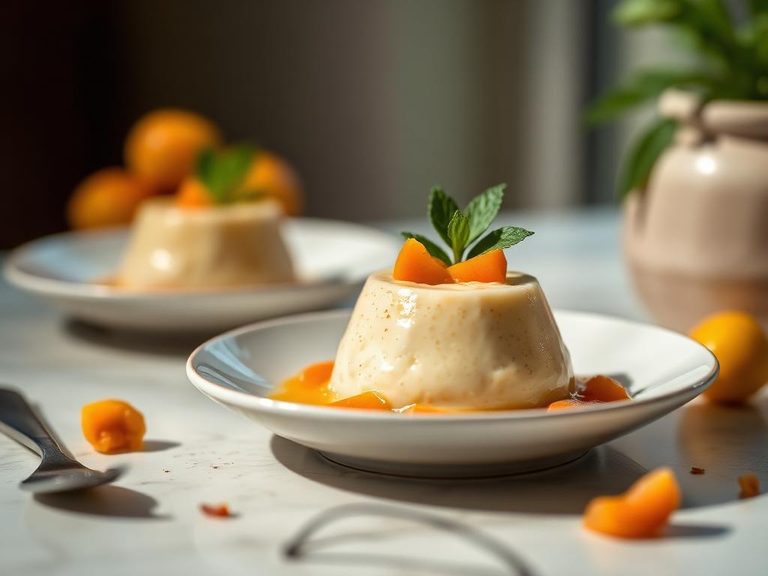
A smooth, spoonable purée of sweet apricots and mild tapioca starch, this baby food offers a gentle, sunny flavor with a slightly thickened, velvety texture. It is a low-fat, low-calorie option that provides a quick source of energy from its carbohydrate content, primarily from the fruit's natural sugars and the tapioca.
Calorie split: 2% protein · 98% carbs · 0% fat
↓ Full nutrition💚 Why it's loved
Parents and caregivers appreciate its simple, clean ingredient list and mild, universally palatable flavor that introduces babies to fruit. The smooth, strained texture is ideal for early eaters, and the subtle sweetness from apricots is naturally appealing without added sugars.
⚠️ Watch-outs & how to enjoy it better
The high carbohydrate content (16.3g per 100g) can cause a rapid blood-sugar spike, especially if consumed alone. To counteract this, pair it with a source of protein or healthy fat, like a small serving of plain yogurt or a few crushed nuts (if age-appropriate), to slow glucose absorption.
Key benefits
- Excellent source of vitamin A (beta-carotene) for eye and immune health.
- Provides dietary fiber to support healthy digestion.
- Naturally low in fat and cholesterol-free.
- Tapioca adds a gentle, easy-to-digest carbohydrate source.
- Free from common allergens like dairy, nuts, and gluten.
🍽️ Popular dishes
🌍 Where it's eaten
💡 Did you know?
Apricots are one of the oldest cultivated fruits, with evidence of their use in ancient China and Armenia over 4,000 years ago, long before they became a staple in baby food.
Full nutrition (USDA data · scales with serving)
| Water | 83.1 g |
| Energy | 60.0 kcal |
| Energy | 250 kj |
| Protein | 0.30 g |
| Total lipid (fat) | 0.00 g |
| Ash | 0.30 g |
| Carbohydrate, by difference | 16.3 g |
| Fiber, total dietary | 1.5 g |
| Total Sugars | 1.4 g |
| Calcium, Ca | 9.0 mg |
| Iron, Fe | 0.30 mg |
| Magnesium, Mg | 4.0 mg |
| Phosphorus, P | 10.0 mg |
| Potassium, K | 121 mg |
| Sodium, Na | 0.00 mg |
| Zinc, Zn | 0.05 mg |
| Copper, Cu | 0.03 mg |
| Selenium, Se | 0.30 ug |
| Vitamin C, total ascorbic acid | 21.6 mg |
| Thiamin | 0.01 mg |
| Riboflavin | 0.01 mg |
| Niacin | 0.20 mg |
| Pantothenic acid | 0.13 mg |
| Vitamin B-6 | 0.03 mg |
| Folate, total | 2.0 ug |
| Folic acid | 0.00 ug |
| Folate, food | 2.0 ug |
| Folate, DFE | 2.0 ug |
| Choline, total | 1.3 mg |
| Vitamin B-12 | 0.00 ug |
| Vitamin B-12, added | 0.00 ug |
| Vitamin A, RAE | 36.0 ug |
| Retinol | 0.00 ug |
| Carotene, beta | 412 ug |
| Carotene, alpha | 7.0 ug |
| Cryptoxanthin, beta | 39.0 ug |
| Vitamin A, IU | 725 iu |
| Lycopene | 0.00 ug |
| Lutein + zeaxanthin | 11.0 ug |
| Vitamin E (alpha-tocopherol) | 0.10 mg |
| Vitamin E, added | 0.00 mg |
| Vitamin D (D2 + D3), International Units | 0.00 iu |
| Vitamin D (D2 + D3) | 0.00 ug |
| Vitamin K (phylloquinone) | 0.40 ug |
| Alcohol, ethyl | 0.00 g |
| Caffeine | 0.00 mg |
| Theobromine | 0.00 mg |
Fat & fatty acid profile (per 100g)
| Fatty acids, total saturated | 0.00 g |
| SFA 4:0 | 0.00 g |
| SFA 6:0 | 0.00 g |
| SFA 8:0 | 0.00 g |
| SFA 10:0 | 0.00 g |
| SFA 12:0 | 0.00 g |
| SFA 14:0 | 0.00 g |
| SFA 16:0 | 0.00 g |
| SFA 18:0 | 0.00 g |
| Fatty acids, total monounsaturated | 0.00 g |
| MUFA 16:1 | 0.00 g |
| MUFA 18:1 | 0.00 g |
| MUFA 20:1 | 0.00 g |
| MUFA 22:1 | 0.00 g |
| Fatty acids, total polyunsaturated | 0.00 g |
| PUFA 18:2 | 0.00 g |
| PUFA 18:3 | 0.00 g |
| PUFA 18:4 | 0.00 g |
| PUFA 20:4 | 0.00 g |
| PUFA 20:5 n-3 (EPA) | 0.00 g |
| PUFA 22:5 n-3 (DPA) | 0.00 g |
| PUFA 22:6 n-3 (DHA) | 0.00 g |
| Cholesterol | 0.00 mg |
Amino acid profile (per 100g)
Estimated from Babyfood, grape juice, no sugar, canned — USDA does not publish this profile for Babyfood.
| Threonine | 0.02 g |
| Isoleucine | 0.01 g |
| Leucine | 0.02 g |
| Lysine | 0.02 g |
| Methionine | 0.03 g |
| Cystine | 0.01 g |
| Phenylalanine | 0.02 g |
| Tyrosine | 0.02 g |
| Valine | 0.02 g |
| Arginine | 0.06 g |
| Histidine | 0.03 g |
| Alanine | 0.04 g |
| Aspartic acid | 0.10 g |
| Glutamic acid | 0.18 g |
| Glycine | 0.03 g |
| Proline | 0.03 g |
| Serine | 0.04 g |
FAQ
Is this baby food safe for infants under 6 months?
Most pediatric guidelines recommend introducing solid foods, including strained fruits, around 6 months of age, when the baby shows signs of readiness. Always consult your pediatrician.
Does the tapioca make it a choking hazard?
No, the tapioca is fully cooked and strained into a smooth purée, making it very safe for early eaters. The texture is designed to be easy to swallow.
Can I mix this with other baby foods?
Absolutely. Its mild flavor pairs well with other strained fruits like pear or peach, or with vegetable purées like sweet potato or carrot for a balanced meal.
Nutrient density (calculated · NRF9.3)
Nutrient Rich Foods index: beneficial nutrients (protein, fiber, vitamins, minerals) minus saturated fat, added sugar & sodium, per 100 kcal.
NRF9.3 index — Fulgoni, Keast & Drewnowski, 2009. Computed from USDA nutrients.
Weight-loss friendliness (composite index)
Energy density 0.60 kcal/g · 2% calories from protein · 1.5 g fiber · 1.4 g sugar per 100 g.
Composite of energy density (Rolls et al., 1999), protein & fiber satiety, minus sugar. A calculated heuristic — ranks satiety-per-calorie, not a clinical measure.
Dietary load (calculated from USDA values)
Potential renal acid load. Positive = acid-forming, negative = alkaline-forming.
Sodium-to-potassium ratio: 0.00 (lower is better — aim for ≤ 1)
Sodium:potassium per WHO potassium guidance. Computed from USDA nutrients.