

Babyfood, fruit, applesauce, strained
Whole food · Baby Foods

Photo: Wikipedia
This is the quintessential first fruit for many infants: a smooth, velvety puree made from cooked and strained apples. It has a naturally sweet, mild flavor and a silky, lump-free texture perfect for spoon-feeding. Nutritionally, it's a gentle source of quick energy from natural fruit sugars and provides a small amount of dietary fiber.
Calorie split: 2% protein · 94% carbs · 4% fat
↓ Full nutrition💚 Why it's loved
Parents love it for its simplicity and reliability as a safe, nutritious starter food. Its naturally sweet taste is often a baby's first introduction to fruit flavors, and its smooth consistency makes it easy for beginners to swallow.
⚠️ Watch-outs & how to enjoy it better
The high natural sugar content (nearly 10g per 100g) can contribute to blood sugar spikes if not paired with other foods. To counteract this, always serve it alongside a source of protein or fat, like mixing it with plain whole-milk yogurt or serving it with a small piece of soft cheese. For babies, it's also important to introduce a variety of flavors early to avoid flavor preference issues.
Key benefits
- Excellent first food for infants due to mild flavor and smooth texture
- Naturally free of common allergens like dairy, soy, and gluten
- Provides quick, easily digestible energy from natural fruit sugars
- Contains soluble fiber (pectin) which can support digestive health
- Convenient, shelf-stable, and requires no preparation
🍽️ Popular dishes
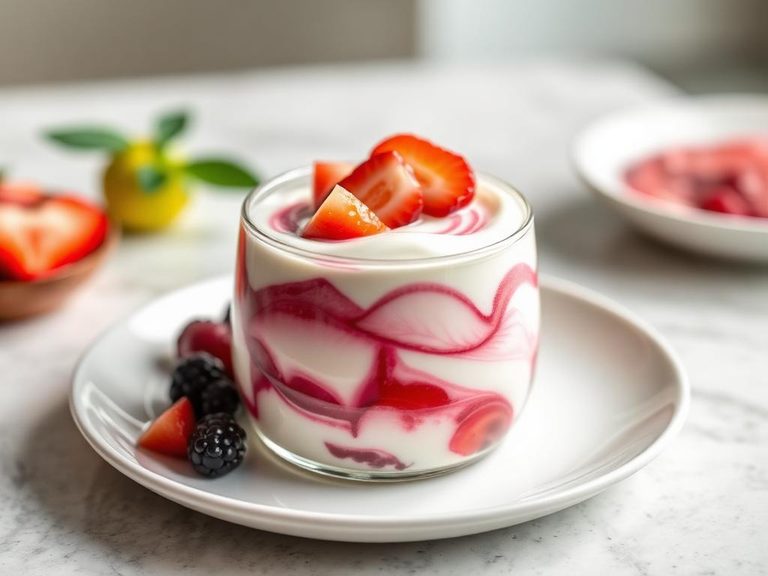
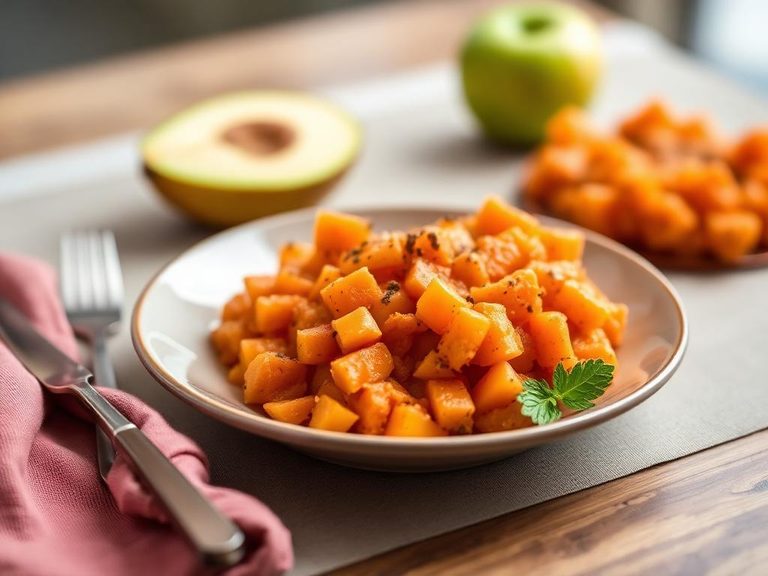
🌍 Where it's eaten
💡 Did you know?
Commercial strained applesauce is often made from a blend of apple varieties chosen specifically for their ability to create a smooth, non-grainy texture after cooking and straining, unlike some apples that can become mealy.
Full nutrition (USDA data · scales with serving)
| Water | 88.6 g |
| Energy | 41.0 kcal |
| Energy | 172 kj |
| Protein | 0.20 g |
| Total lipid (fat) | 0.20 g |
| Ash | 0.20 g |
| Carbohydrate, by difference | 10.8 g |
| Fiber, total dietary | 1.7 g |
| Total Sugars | 9.9 g |
| Calcium, Ca | 4.0 mg |
| Iron, Fe | 0.22 mg |
| Magnesium, Mg | 3.0 mg |
| Phosphorus, P | 7.0 mg |
| Potassium, K | 71.0 mg |
| Sodium, Na | 0.00 mg |
| Zinc, Zn | 0.02 mg |
| Copper, Cu | 0.04 mg |
| Selenium, Se | 0.30 ug |
| Fluoride, F | 1.0 ug |
| Vitamin C, total ascorbic acid | 38.3 mg |
| Thiamin | 0.01 mg |
| Riboflavin | 0.03 mg |
| Niacin | 0.06 mg |
| Pantothenic acid | 0.11 mg |
| Vitamin B-6 | 0.03 mg |
| Folate, total | 2.0 ug |
| Folic acid | 0.00 ug |
| Folate, food | 2.0 ug |
| Folate, DFE | 2.0 ug |
| Choline, total | 3.4 mg |
| Vitamin B-12 | 0.00 ug |
| Vitamin B-12, added | 0.00 ug |
| Vitamin A, RAE | 1.0 ug |
| Retinol | 0.00 ug |
| Carotene, beta | 12.0 ug |
| Carotene, alpha | 0.00 ug |
| Cryptoxanthin, beta | 9.0 ug |
| Vitamin A, IU | 28.0 iu |
| Lycopene | 0.00 ug |
| Lutein + zeaxanthin | 17.0 ug |
| Vitamin E (alpha-tocopherol) | 0.60 mg |
| Vitamin E, added | 0.00 mg |
| Vitamin D (D2 + D3), International Units | 0.00 iu |
| Vitamin D (D2 + D3) | 0.00 ug |
| Vitamin K (phylloquinone) | 0.50 ug |
| Alcohol, ethyl | 0.00 g |
| Caffeine | 0.00 mg |
| Theobromine | 0.00 mg |
Fat & fatty acid profile (per 100g)
| Fatty acids, total saturated | 0.03 g |
| SFA 4:0 | 0.00 g |
| SFA 6:0 | 0.00 g |
| SFA 8:0 | 0.00 g |
| SFA 10:0 | 0.00 g |
| SFA 12:0 | 0.00 g |
| SFA 14:0 | 0.00 g |
| SFA 16:0 | 0.03 g |
| SFA 18:0 | 0.00 g |
| Fatty acids, total monounsaturated | 0.01 g |
| MUFA 16:1 | 0.00 g |
| MUFA 18:1 | 0.01 g |
| MUFA 20:1 | 0.00 g |
| MUFA 22:1 | 0.00 g |
| Fatty acids, total polyunsaturated | 0.06 g |
| PUFA 18:2 | 0.05 g |
| PUFA 18:3 | 0.01 g |
| PUFA 18:4 | 0.00 g |
| PUFA 20:4 | 0.00 g |
| PUFA 20:5 n-3 (EPA) | 0.00 g |
| PUFA 22:5 n-3 (DPA) | 0.00 g |
| PUFA 22:6 n-3 (DHA) | 0.00 g |
| Cholesterol | 0.00 mg |
Amino acid profile (per 100g)
Estimated from Babyfood, grape juice, no sugar, canned — USDA does not publish this profile for Babyfood.
| Threonine | 0.02 g |
| Isoleucine | 0.01 g |
| Leucine | 0.02 g |
| Lysine | 0.02 g |
| Methionine | 0.03 g |
| Cystine | 0.01 g |
| Phenylalanine | 0.02 g |
| Tyrosine | 0.02 g |
| Valine | 0.02 g |
| Arginine | 0.06 g |
| Histidine | 0.03 g |
| Alanine | 0.04 g |
| Aspartic acid | 0.10 g |
| Glutamic acid | 0.18 g |
| Glycine | 0.03 g |
| Proline | 0.03 g |
| Serine | 0.04 g |
FAQ
Is this the same as regular applesauce?
Yes, but 'strained' or 'stage 1' baby food applesauce is cooked and pureed to an ultra-smooth, completely lump-free consistency, whereas regular applesauce may have a chunkier texture.
Why does it have so much sugar?
The sugar listed is naturally occurring fructose from the apples themselves. No added sugar is typically used in plain baby food varieties.
Can I use it in baking?
Absolutely. It's a popular fat substitute in muffins, cakes, and pancakes, adding moisture and natural sweetness while reducing the need for oil or butter.
Nutrient density (calculated · NRF9.3)
Nutrient Rich Foods index: beneficial nutrients (protein, fiber, vitamins, minerals) minus saturated fat, added sugar & sodium, per 100 kcal.
NRF9.3 index — Fulgoni, Keast & Drewnowski, 2009. Computed from USDA nutrients.
Weight-loss friendliness (composite index)
Energy density 0.41 kcal/g · 2% calories from protein · 1.7 g fiber · 9.9 g sugar per 100 g.
Composite of energy density (Rolls et al., 1999), protein & fiber satiety, minus sugar. A calculated heuristic — ranks satiety-per-calorie, not a clinical measure.
Dietary load (calculated from USDA values)
Potential renal acid load. Positive = acid-forming, negative = alkaline-forming.
Sodium-to-potassium ratio: 0.00 (lower is better — aim for ≤ 1)
Sodium:potassium per WHO potassium guidance. Computed from USDA nutrients.