

Babyfood, cereal, mixed, with applesauce and bananas, strained
Whole food · Baby Foods

Photo: Wikipedia
A smooth, velvety purée of finely strained mixed cereal, applesauce, and banana, designed for infants transitioning to solids. Its taste is gently sweet and comforting, with a mild apple-banana flavor that is neither overpowering nor bland. Nutritionally, it's a low-fat, carbohydrate-focused energy source, providing a quick, easily digestible fuel for growing babies.
Calorie split: 4% protein · 91% carbs · 6% fat
↓ Full nutrition💚 Why it's loved
Parents love it for its convenience and reliability as a first food that babies readily accept. Its gentle, familiar sweetness from apple and banana makes it a go-to for fuss-free mealtimes.
⚠️ Watch-outs & how to enjoy it better
The high sugar content (11.1g per 100g) can contribute to a rapid blood-sugar spike, which is a consideration for infants with specific metabolic concerns. To counteract this, pair it with a source of protein or fat (like a small amount of full-fat yogurt or a smear of nut butter, if age-appropriate) to slow digestion, and use it as part of a varied diet rather than a sole staple.
Key benefits
- Provides quick, easily digestible energy from natural fruit sugars and grains.
- The strained texture is ideal for infants learning to swallow and digest solids.
- Offers a mild, palatable introduction to mixed flavors of fruit and grain.
- Low in fat and sodium, aligning with early infant dietary guidelines.
- Contains a small amount of dietary fiber from the cereal and fruit components.
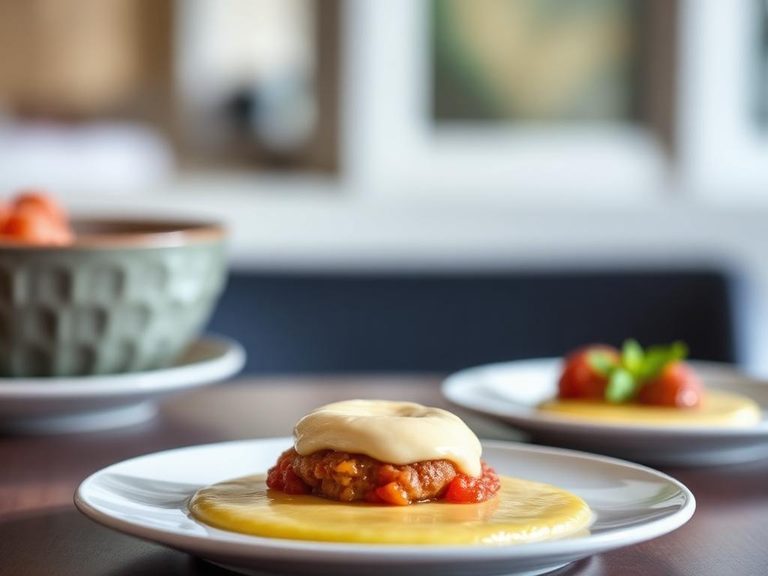
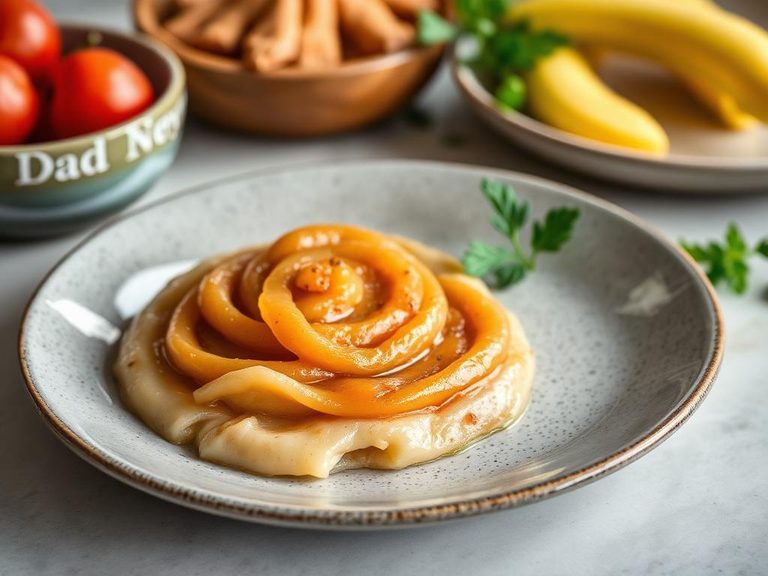
🍽️ Popular dishes
🌍 Where it's eaten
💡 Did you know?
The 'strained' process involves pushing the cooked mixture through a fine mesh, which not only creates a smooth texture but also removes any fibrous bits, making it exceptionally gentle on an infant's developing digestive system.
Full nutrition (USDA data · scales with serving)
| Water | 80.0 g |
| Energy | 82.0 kcal |
| Energy | 343 kj |
| Protein | 0.71 g |
| Total lipid (fat) | 0.51 g |
| Ash | 0.40 g |
| Carbohydrate, by difference | 18.4 g |
| Fiber, total dietary | 1.0 g |
| Total Sugars | 11.1 g |
| Calcium, Ca | 91.0 mg |
| Iron, Fe | 6.8 mg |
| Magnesium, Mg | 7.0 mg |
| Phosphorus, P | 29.0 mg |
| Potassium, K | 111 mg |
| Sodium, Na | 5.0 mg |
| Zinc, Zn | 1.0 mg |
| Copper, Cu | 0.06 mg |
| Selenium, Se | 2.6 ug |
| Fluoride, F | 1.1 ug |
| Vitamin C, total ascorbic acid | 15.9 mg |
| Thiamin | 0.13 mg |
| Riboflavin | 0.16 mg |
| Niacin | 2.0 mg |
| Pantothenic acid | 0.20 mg |
| Vitamin B-6 | 0.10 mg |
| Folate, total | 25.0 ug |
| Folic acid | 25.0 ug |
| Folate, food | 0.00 ug |
| Folate, DFE | 43.0 ug |
| Choline, total | 3.5 mg |
| Vitamin B-12 | 0.51 ug |
| Vitamin B-12, added | 0.51 ug |
| Vitamin A, RAE | 0.00 ug |
| Retinol | 0.00 ug |
| Carotene, beta | 0.00 ug |
| Carotene, alpha | 0.00 ug |
| Cryptoxanthin, beta | 0.00 ug |
| Vitamin A, IU | 0.00 iu |
| Lycopene | 0.00 ug |
| Lutein + zeaxanthin | 10.0 ug |
| Vitamin E (alpha-tocopherol) | 0.03 mg |
| Vitamin E, added | 0.03 mg |
| Vitamin D (D2 + D3), International Units | 0.00 iu |
| Vitamin D (D2 + D3) | 0.00 ug |
| Vitamin K (phylloquinone) | 0.30 ug |
| Alcohol, ethyl | 0.00 g |
| Caffeine | 0.00 mg |
| Theobromine | 0.00 mg |
Fat & fatty acid profile (per 100g)
| Fatty acids, total saturated | 0.09 g |
| SFA 4:0 | 0.00 g |
| SFA 6:0 | 0.00 g |
| SFA 8:0 | 0.00 g |
| SFA 10:0 | 0.00 g |
| SFA 12:0 | 0.00 g |
| SFA 14:0 | 0.00 g |
| SFA 16:0 | 0.08 g |
| SFA 18:0 | 0.01 g |
| Fatty acids, total monounsaturated | 0.14 g |
| MUFA 16:1 | 0.00 g |
| MUFA 18:1 | 0.13 g |
| MUFA 20:1 | 0.00 g |
| MUFA 22:1 | 0.00 g |
| Fatty acids, total polyunsaturated | 0.19 g |
| PUFA 18:2 | 0.18 g |
| PUFA 18:3 | 0.01 g |
| PUFA 18:4 | 0.00 g |
| PUFA 20:4 | 0.00 g |
| PUFA 20:5 n-3 (EPA) | 0.00 g |
| PUFA 22:5 n-3 (DPA) | 0.00 g |
| PUFA 22:6 n-3 (DHA) | 0.00 g |
| Cholesterol | 0.00 mg |
Amino acid profile (per 100g)
| Tryptophan | 0.01 g |
| Threonine | 0.04 g |
| Isoleucine | 0.04 g |
| Leucine | 0.09 g |
| Lysine | 0.04 g |
| Methionine | 0.03 g |
| Cystine | 0.03 g |
| Phenylalanine | 0.06 g |
| Tyrosine | 0.04 g |
| Valine | 0.06 g |
| Arginine | 0.07 g |
| Histidine | 0.03 g |
| Alanine | 0.05 g |
| Aspartic acid | 0.08 g |
| Glutamic acid | 0.31 g |
| Glycine | 0.05 g |
| Proline | 0.09 g |
| Serine | 0.05 g |
FAQ
At what age can my baby start eating this?
This strained cereal is typically introduced around 4-6 months, when babies show signs of readiness for solids, such as good head control and interest in food.
Is this a good source of iron?
While it may contain some iron from the cereal, it is not a primary source. Many commercial baby cereals are fortified with iron, so check the label. For optimal iron absorption, pair it with a vitamin C-rich food like a small amount of puréed sweet potato or tomato.
Can I mix this with formula or breast milk?
Yes, you can thin the consistency with breast milk, formula, or water to make it easier for your baby to eat and to introduce familiar flavors.
Nutrient density (calculated · NRF9.3)
Nutrient Rich Foods index: beneficial nutrients (protein, fiber, vitamins, minerals) minus saturated fat, added sugar & sodium, per 100 kcal.
NRF9.3 index — Fulgoni, Keast & Drewnowski, 2009. Computed from USDA nutrients.
Weight-loss friendliness (composite index)
Energy density 0.82 kcal/g · 3% calories from protein · 1.0 g fiber · 11.1 g sugar per 100 g.
Composite of energy density (Rolls et al., 1999), protein & fiber satiety, minus sugar. A calculated heuristic — ranks satiety-per-calorie, not a clinical measure.
Dietary load (calculated from USDA values)
Potential renal acid load. Positive = acid-forming, negative = alkaline-forming.
Sodium-to-potassium ratio: 0.05 (lower is better — aim for ≤ 1)
Sodium:potassium per WHO potassium guidance. Computed from USDA nutrients.