

Asparagus, canned, cooked with oil
Common food
Canned asparagus cooked with oil offers a tender, slightly fibrous texture and a milder, less grassy flavor than fresh spears. The added oil gives it a richer mouthfeel and a subtle savory note, while the canning process softens the stalks significantly. It's a convenient, low-calorie pantry staple with a notable fat content from the cooking oil.
Calorie split: 17% protein · 19% carbs · 64% fat
↓ Full nutrition💚 Why it's loved
People love it for its year-round availability and the rich, savory flavor the oil imparts, making it a simple, satisfying side dish. Its soft texture and mild taste make it a versatile ingredient that blends easily into salads, pastas, and casseroles.
⚠️ Watch-outs & how to enjoy it better
The canning process can result in a softer, less crisp texture than fresh asparagus, and the added oil increases the fat content. Those watching their sodium intake should be aware that canned vegetables often contain added salt, so rinsing the asparagus before use is recommended. Additionally, asparagus contains oxalates, which can be a concern for individuals prone to kidney stones.
Key benefits
- Good source of dietary fiber (1.6g per 100g)
- Low in calories (45 kcal per 100g)
- Provides plant-based protein (2.08g per 100g)
- Contains healthy fats from the cooking oil
- Quick and convenient for meal preparation
🍽️ Popular dishes
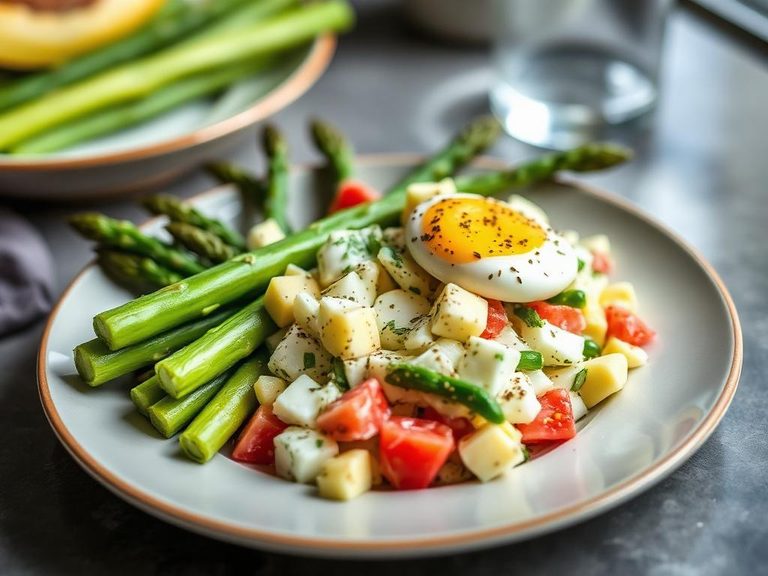
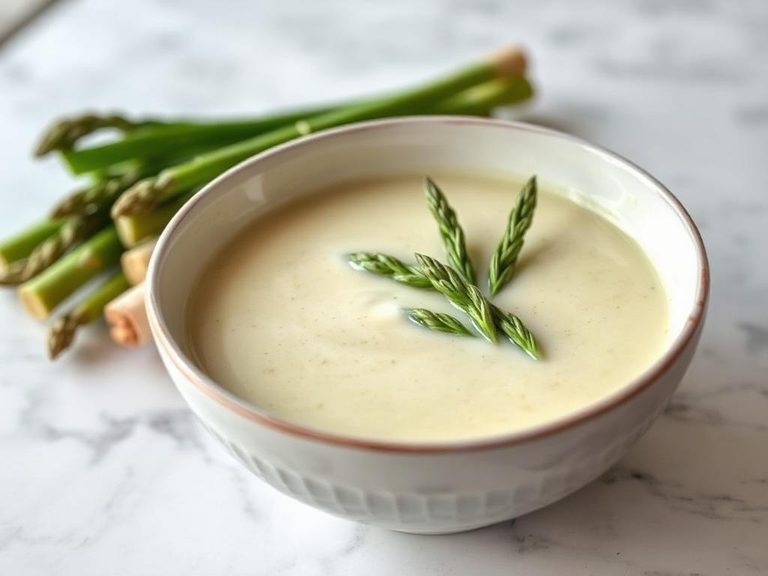

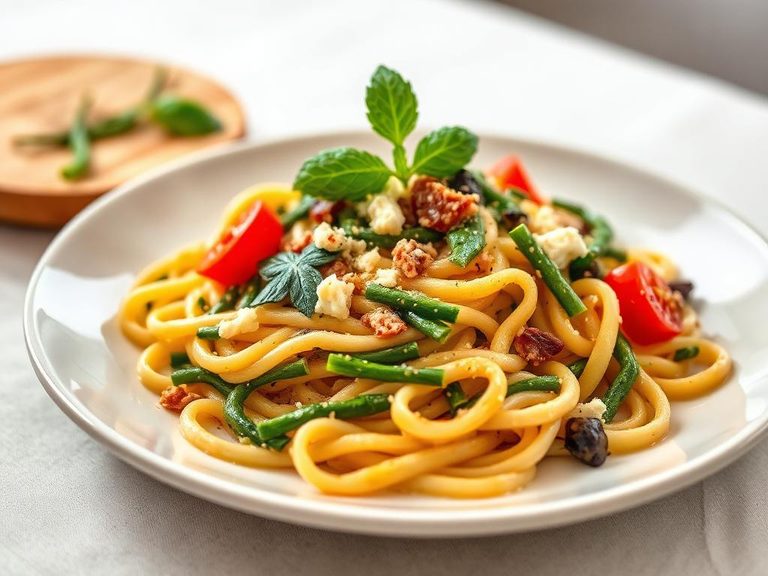
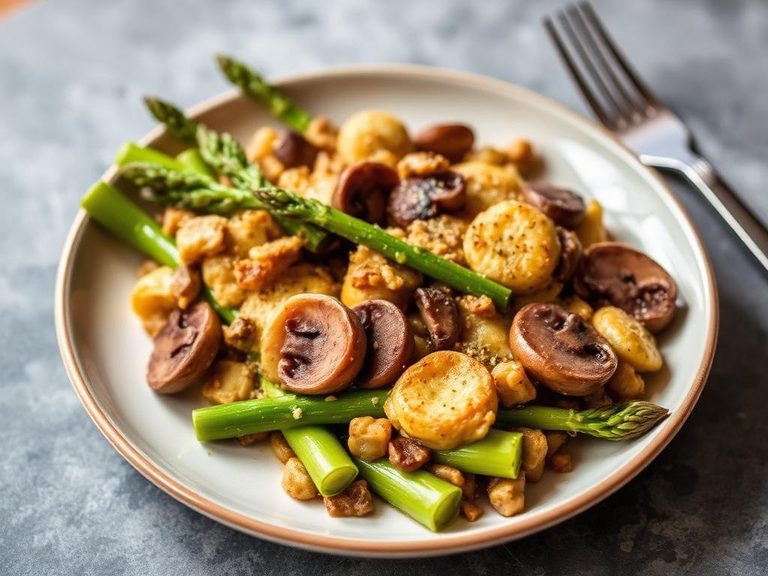
🌍 Where it's eaten
💡 Did you know?
Asparagus is one of the few vegetables that can cause a distinct, sulfur-like smell in urine due to the breakdown of asparagusic acid, a compound unique to the plant.
Full nutrition (USDA data · scales with serving)
| Water | 91.2 g |
| Energy | 45.0 kcal |
| Protein | 2.1 g |
| Total lipid (fat) | 3.5 g |
| Carbohydrate, by difference | 2.4 g |
| Fiber, total dietary | 1.6 g |
| Total Sugars | 1.0 g |
| Calcium, Ca | 16.0 mg |
| Iron, Fe | 1.8 mg |
| Magnesium, Mg | 10.0 mg |
| Phosphorus, P | 42.0 mg |
| Potassium, K | 167 mg |
| Sodium, Na | 279 mg |
| Zinc, Zn | 0.39 mg |
| Copper, Cu | 0.09 mg |
| Selenium, Se | 1.6 ug |
| Vitamin C, total ascorbic acid | 16.1 mg |
| Thiamin | 0.06 mg |
| Riboflavin | 0.10 mg |
| Niacin | 0.93 mg |
| Vitamin B-6 | 0.11 mg |
| Folate, total | 89.0 ug |
| Folic acid | 0.00 ug |
| Folate, food | 89.0 ug |
| Folate, DFE | 89.0 ug |
| Choline, total | 20.8 mg |
| Vitamin B-12 | 0.00 ug |
| Vitamin B-12, added | 0.00 ug |
| Vitamin A, RAE | 40.0 ug |
| Retinol | 0.00 ug |
| Carotene, beta | 479 ug |
| Carotene, alpha | 0.00 ug |
| Cryptoxanthin, beta | 0.00 ug |
| Lycopene | 23.0 ug |
| Lutein + zeaxanthin | 612 ug |
| Vitamin E (alpha-tocopherol) | 1.7 mg |
| Vitamin E, added | 0.00 mg |
| Vitamin D (D2 + D3) | 0.00 ug |
| Vitamin K (phylloquinone) | 43.0 ug |
| Alcohol, ethyl | 0.00 g |
| Caffeine | 0.00 mg |
| Theobromine | 0.00 mg |
Fat & fatty acid profile (per 100g)
| Fatty acids, total saturated | 0.53 g |
| SFA 4:0 | 0.00 g |
| SFA 6:0 | 0.00 g |
| SFA 8:0 | 0.00 g |
| SFA 10:0 | 0.00 g |
| SFA 12:0 | 0.00 g |
| SFA 14:0 | 0.01 g |
| SFA 16:0 | 0.41 g |
| SFA 18:0 | 0.09 g |
| Fatty acids, total monounsaturated | 1.3 g |
| MUFA 16:1 | 0.01 g |
| MUFA 18:1 | 1.2 g |
| MUFA 20:1 | 0.02 g |
| MUFA 22:1 | 0.00 g |
| Fatty acids, total polyunsaturated | 1.4 g |
| PUFA 18:2 | 1.3 g |
| PUFA 18:3 | 0.14 g |
| PUFA 18:4 | 0.00 g |
| PUFA 20:4 | 0.00 g |
| PUFA 20:5 n-3 (EPA) | 0.00 g |
| PUFA 22:5 n-3 (DPA) | 0.00 g |
| PUFA 22:6 n-3 (DHA) | 0.00 g |
| Cholesterol | 0.00 mg |
Amino acid profile (per 100g)
Estimated from Asparagus, cooked, boiled, drained — USDA does not publish this profile for Asparagus.
| Tryptophan | 0.03 g |
| Threonine | 0.09 g |
| Isoleucine | 0.08 g |
| Leucine | 0.14 g |
| Lysine | 0.11 g |
| Methionine | 0.03 g |
| Cystine | 0.03 g |
| Phenylalanine | 0.08 g |
| Tyrosine | 0.06 g |
| Valine | 0.13 g |
| Arginine | 0.10 g |
| Histidine | 0.05 g |
| Alanine | 0.13 g |
| Aspartic acid | 0.56 g |
| Glutamic acid | 0.26 g |
| Glycine | 0.10 g |
| Proline | 0.08 g |
| Serine | 0.12 g |
FAQ
Is canned asparagus as nutritious as fresh?
Canned asparagus retains most of its vitamins and minerals, but the canning process can reduce some heat-sensitive nutrients like vitamin C. The added oil increases the fat content, which can be beneficial for fat-soluble vitamin absorption but adds calories.
How can I reduce the sodium in canned asparagus?
Rinse the asparagus under cold water for a minute or two before using it. This can remove up to 40% of the added sodium from the canning liquid.
Can I use the liquid from the can?
The liquid, or brine, is often high in sodium and may contain added sugars or preservatives. It's best to drain and rinse the asparagus unless you're using the liquid in a recipe where its flavor is desired and the sodium content is accounted for.
Nutrient density (calculated · NRF9.3)
Nutrient Rich Foods index: beneficial nutrients (protein, fiber, vitamins, minerals) minus saturated fat, added sugar & sodium, per 100 kcal.
NRF9.3 index — Fulgoni, Keast & Drewnowski, 2009. Computed from USDA nutrients.
Weight-loss friendliness (composite index)
Energy density 0.45 kcal/g · 18% calories from protein · 1.6 g fiber · 1.0 g sugar per 100 g.
Composite of energy density (Rolls et al., 1999), protein & fiber satiety, minus sugar. A calculated heuristic — ranks satiety-per-calorie, not a clinical measure.
Dietary load (calculated from USDA values)
Potential renal acid load. Positive = acid-forming, negative = alkaline-forming.
Sodium-to-potassium ratio: 1.67 (lower is better — aim for ≤ 1)
Sodium:potassium per WHO potassium guidance. Computed from USDA nutrients.