

Asparagus, fresh, cooked with oil
Common food
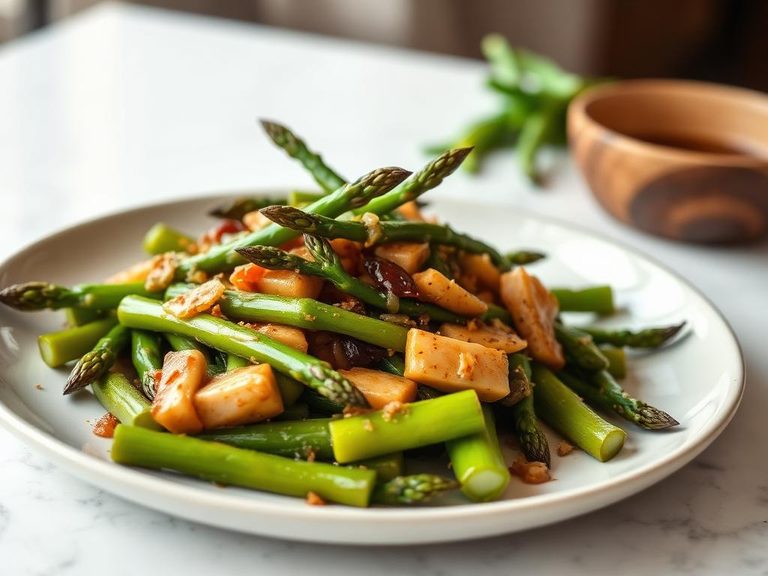
Fresh asparagus, cooked with a touch of oil, transforms into a tender-crisp, slightly nutty, and earthy vegetable with a satisfying snap. Its vibrant green color and delicate, grassy aroma make it a springtime favorite, while its low-calorie profile (just 49 kcal per 100g) and decent protein content (2.29g) make it a smart, nutrient-dense addition to any meal.
Calorie split: 17% protein · 30% carbs · 54% fat
↓ Full nutrition💚 Why it's loved
People adore asparagus for its unique, savory flavor that pairs beautifully with everything from eggs to steak, and its versatility in cooking—grilled, roasted, steamed, or sautéed. It’s also a cultural staple in spring celebrations, symbolizing renewal and freshness in cuisines worldwide.
⚠️ Watch-outs & how to enjoy it better
Some find asparagus's strong, sulfurous aftertaste (caused by asparagusic acid) off-putting, and it can cause digestive discomfort like bloating due to its high fiber and raffinose content. To mitigate this, cook it gently (steaming or blanching) and pair it with a small amount of healthy fat (like olive oil) or protein (like eggs) to improve digestibility and reduce gas.
Key benefits
- Rich in folate and vitamin K for bone and cell health
- Contains antioxidants like glutathione and flavonoids
- Good source of fiber (2.2g) to support digestion
- Low in calories and carbohydrates, ideal for weight management
- Provides essential minerals like iron and potassium
🍽️ Popular dishes
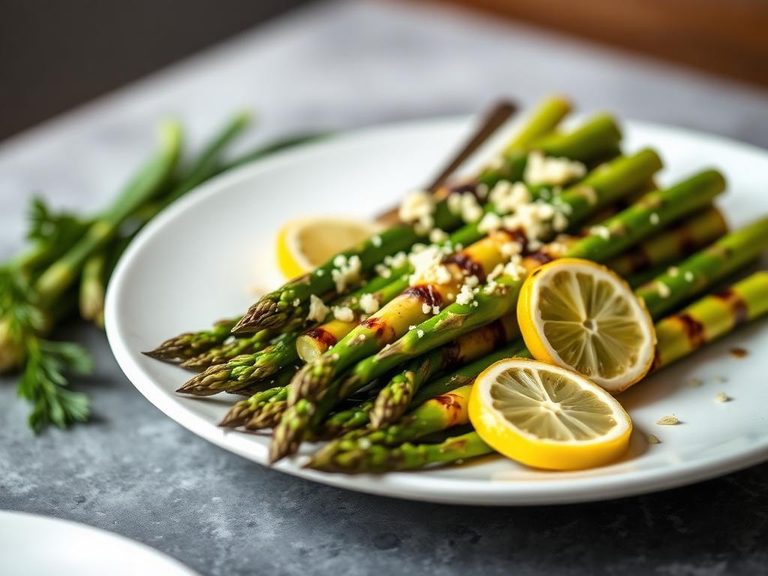
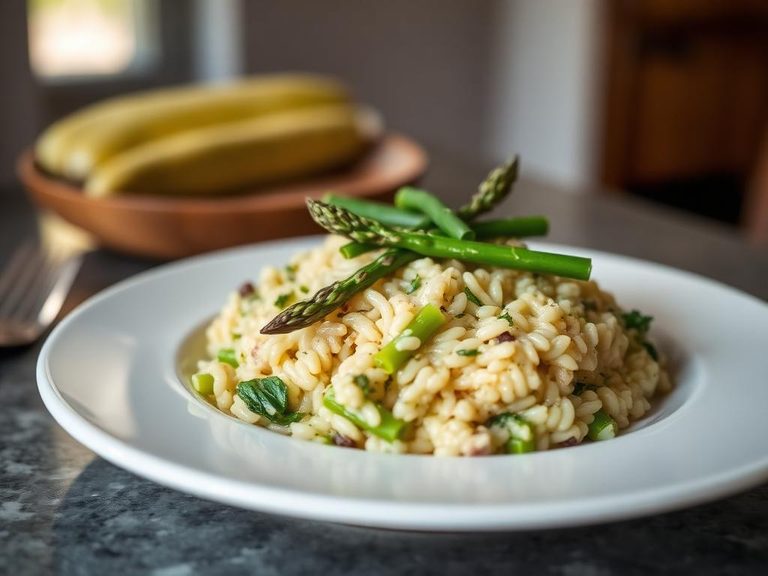
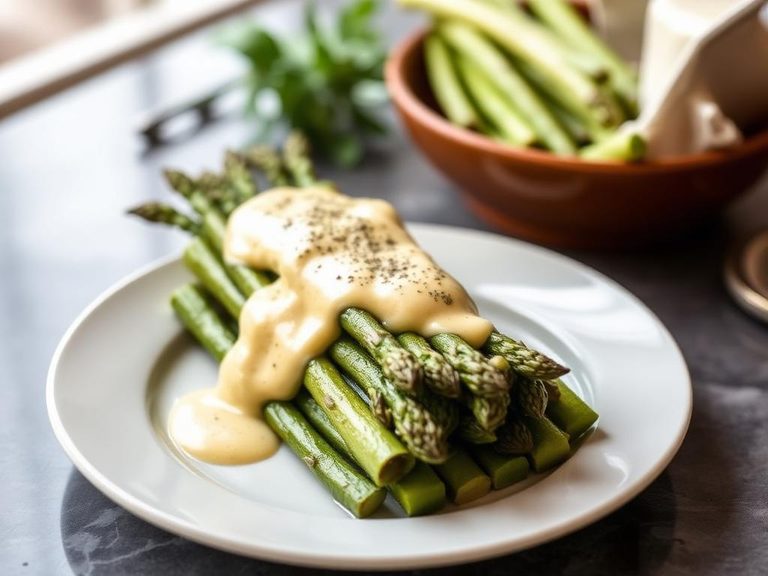

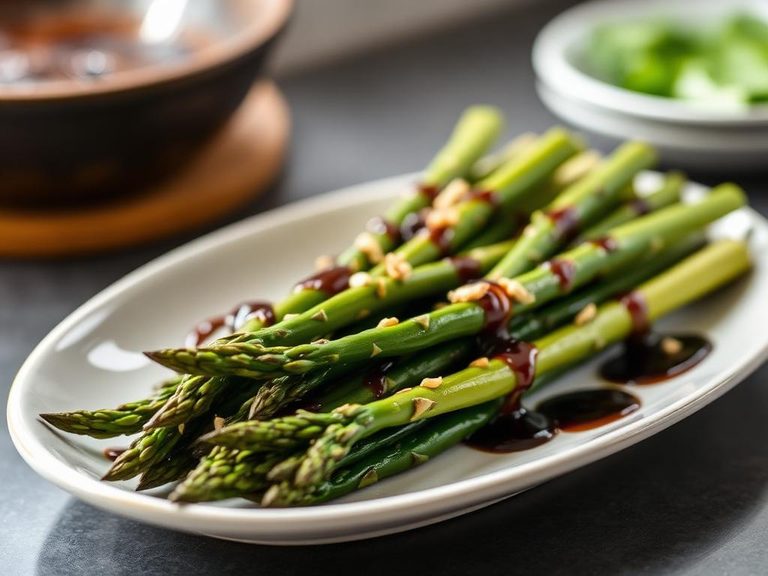
🌍 Where it's eaten
💡 Did you know?
Asparagus is a member of the lily family, and its shoots can grow up to 10 inches in a single day under ideal conditions, making it one of the fastest-growing vegetables.
Full nutrition (USDA data · scales with serving)
| Water | 89.5 g |
| Energy | 49.0 kcal |
| Protein | 2.3 g |
| Total lipid (fat) | 3.3 g |
| Carbohydrate, by difference | 4.0 g |
| Fiber, total dietary | 2.2 g |
| Total Sugars | 2.0 g |
| Calcium, Ca | 25.0 mg |
| Iron, Fe | 2.2 mg |
| Magnesium, Mg | 15.0 mg |
| Phosphorus, P | 54.0 mg |
| Potassium, K | 210 mg |
| Sodium, Na | 123 mg |
| Zinc, Zn | 0.56 mg |
| Copper, Cu | 0.20 mg |
| Selenium, Se | 2.4 ug |
| Vitamin C, total ascorbic acid | 5.0 mg |
| Thiamin | 0.13 mg |
| Riboflavin | 0.14 mg |
| Niacin | 0.97 mg |
| Vitamin B-6 | 0.09 mg |
| Folate, total | 46.0 ug |
| Folic acid | 0.00 ug |
| Folate, food | 46.0 ug |
| Folate, DFE | 46.0 ug |
| Choline, total | 16.7 mg |
| Vitamin B-12 | 0.00 ug |
| Vitamin B-12, added | 0.00 ug |
| Vitamin A, RAE | 38.0 ug |
| Retinol | 0.00 ug |
| Carotene, beta | 444 ug |
| Carotene, alpha | 9.0 ug |
| Cryptoxanthin, beta | 0.00 ug |
| Lycopene | 0.00 ug |
| Lutein + zeaxanthin | 702 ug |
| Vitamin E (alpha-tocopherol) | 1.8 mg |
| Vitamin E, added | 0.00 mg |
| Vitamin D (D2 + D3) | 0.00 ug |
| Vitamin K (phylloquinone) | 46.4 ug |
| Alcohol, ethyl | 0.00 g |
| Caffeine | 0.00 mg |
| Theobromine | 0.00 mg |
Fat & fatty acid profile (per 100g)
| Fatty acids, total saturated | 0.46 g |
| SFA 4:0 | 0.00 g |
| SFA 6:0 | 0.00 g |
| SFA 8:0 | 0.00 g |
| SFA 10:0 | 0.00 g |
| SFA 12:0 | 0.00 g |
| SFA 14:0 | 0.00 g |
| SFA 16:0 | 0.34 g |
| SFA 18:0 | 0.09 g |
| Fatty acids, total monounsaturated | 1.3 g |
| MUFA 16:1 | 0.01 g |
| MUFA 18:1 | 1.3 g |
| MUFA 20:1 | 0.02 g |
| MUFA 22:1 | 0.00 g |
| Fatty acids, total polyunsaturated | 1.3 g |
| PUFA 18:2 | 1.1 g |
| PUFA 18:3 | 0.15 g |
| PUFA 18:4 | 0.00 g |
| PUFA 20:4 | 0.00 g |
| PUFA 20:5 n-3 (EPA) | 0.00 g |
| PUFA 22:5 n-3 (DPA) | 0.00 g |
| PUFA 22:6 n-3 (DHA) | 0.00 g |
| Cholesterol | 0.00 mg |
Amino acid profile (per 100g)
Estimated from Asparagus, cooked, boiled, drained — USDA does not publish this profile for Asparagus.
| Tryptophan | 0.03 g |
| Threonine | 0.09 g |
| Isoleucine | 0.08 g |
| Leucine | 0.14 g |
| Lysine | 0.11 g |
| Methionine | 0.03 g |
| Cystine | 0.03 g |
| Phenylalanine | 0.08 g |
| Tyrosine | 0.06 g |
| Valine | 0.13 g |
| Arginine | 0.10 g |
| Histidine | 0.05 g |
| Alanine | 0.13 g |
| Aspartic acid | 0.56 g |
| Glutamic acid | 0.26 g |
| Glycine | 0.10 g |
| Proline | 0.08 g |
| Serine | 0.12 g |
FAQ
Is cooked asparagus healthy?
Yes, it's low in calories (49 kcal/100g), high in fiber (2.2g), and packed with vitamins like K and folate, making it a nutritious choice.
How do I cook asparagus to keep it tender-crisp?
Blanch or steam it for 3-5 minutes, or sauté with oil over medium heat for 5-7 minutes, until it's bright green and slightly crunchy.
Can asparagus cause digestive issues?
Yes, its high fiber and raffinose content may cause bloating or gas. To reduce this, cook it well and pair with protein or fat to aid digestion.
Nutrient density (calculated · NRF9.3)
Nutrient Rich Foods index: beneficial nutrients (protein, fiber, vitamins, minerals) minus saturated fat, added sugar & sodium, per 100 kcal.
NRF9.3 index — Fulgoni, Keast & Drewnowski, 2009. Computed from USDA nutrients.
Weight-loss friendliness (composite index)
Energy density 0.49 kcal/g · 19% calories from protein · 2.2 g fiber · 2.0 g sugar per 100 g.
Composite of energy density (Rolls et al., 1999), protein & fiber satiety, minus sugar. A calculated heuristic — ranks satiety-per-calorie, not a clinical measure.
Dietary load (calculated from USDA values)
Potential renal acid load. Positive = acid-forming, negative = alkaline-forming.
Sodium-to-potassium ratio: 0.59 (lower is better — aim for ≤ 1)
Sodium:potassium per WHO potassium guidance. Computed from USDA nutrients.