

Asparagus, frozen, cooked with oil
Common food
This is a quick-cook, oil-sautéed version of frozen asparagus, offering tender-crisp spears with a rich, savory depth from the fat. Nutritionally, it's a standout low-calorie, high-fiber vegetable, with the added oil providing satisfying mouthfeel and aiding in the absorption of its fat-soluble vitamins.
Calorie split: 24% protein · 15% carbs · 61% fat
↓ Full nutrition💚 Why it's loved
People love it for the perfect balance of convenience and flavor—the frozen spears cook quickly to a tender-crisp texture, while the oil sauté adds a savory richness that elevates the vegetable's natural, slightly earthy sweetness.
⚠️ Watch-outs & how to enjoy it better
The added oil increases the calorie and fat content compared to steamed or boiled asparagus. For those monitoring fat intake or managing conditions like gallbladder issues, the portion of oil should be measured. A simple counteract is to use a heart-healthy oil like olive or avocado oil in moderation and pair it with a lean protein source like grilled chicken or fish to create a balanced meal.
Key benefits
- Excellent source of dietary fiber for digestive health.
- Very low in calories, ideal for weight management.
- Rich in antioxidants like glutathione and rutin.
- Provides folate, essential for cell growth.
- Cooking with oil enhances absorption of vitamins A and K.
🍽️ Popular dishes
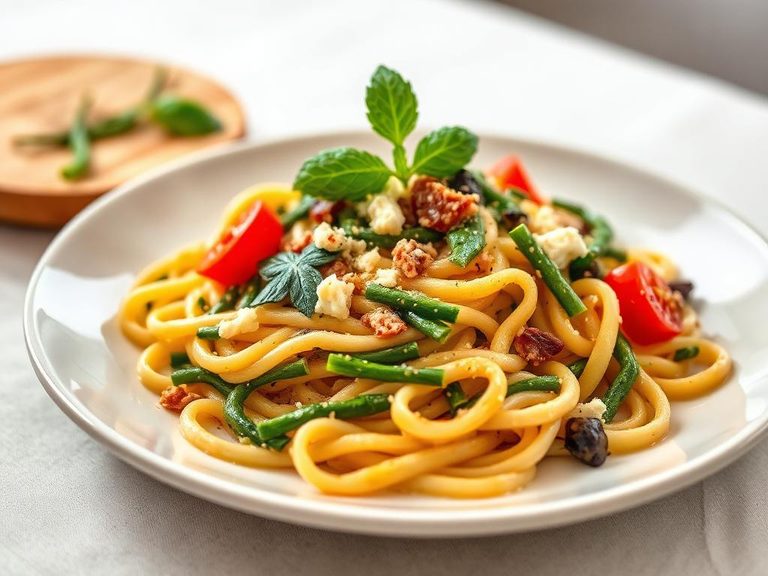
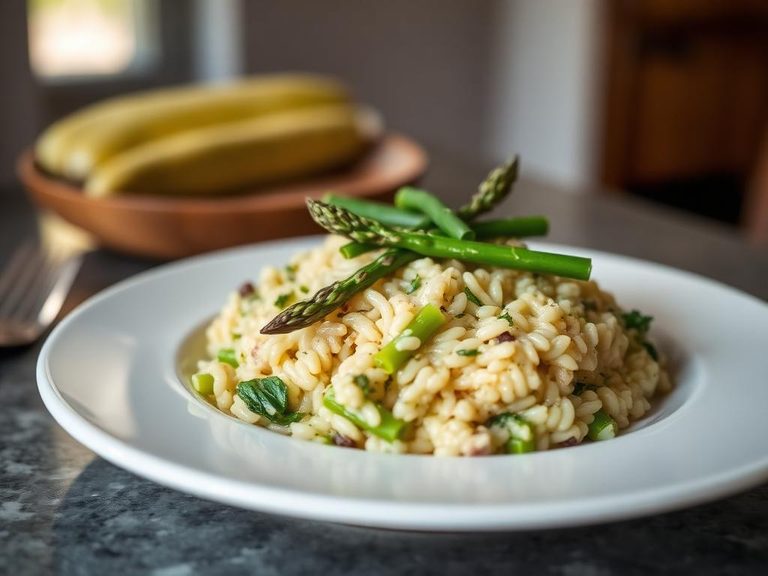
🌍 Where it's eaten
💡 Did you know?
Asparagus is a member of the lily family, making it a botanical cousin to onions, garlic, and tulips.
Full nutrition (USDA data · scales with serving)
| Water | 91.1 g |
| Energy | 44.0 kcal |
| Protein | 2.9 g |
| Total lipid (fat) | 3.3 g |
| Carbohydrate, by difference | 1.9 g |
| Fiber, total dietary | 1.5 g |
| Total Sugars | 0.31 g |
| Calcium, Ca | 18.0 mg |
| Iron, Fe | 0.55 mg |
| Magnesium, Mg | 10.0 mg |
| Phosphorus, P | 47.0 mg |
| Potassium, K | 167 mg |
| Sodium, Na | 115 mg |
| Zinc, Zn | 0.40 mg |
| Copper, Cu | 0.10 mg |
| Selenium, Se | 3.8 ug |
| Vitamin C, total ascorbic acid | 23.6 mg |
| Thiamin | 0.06 mg |
| Riboflavin | 0.10 mg |
| Niacin | 1.0 mg |
| Vitamin B-6 | 0.02 mg |
| Folate, total | 131 ug |
| Folic acid | 0.00 ug |
| Folate, food | 131 ug |
| Folate, DFE | 131 ug |
| Choline, total | 20.2 mg |
| Vitamin B-12 | 0.00 ug |
| Vitamin B-12, added | 0.00 ug |
| Vitamin A, RAE | 39.0 ug |
| Retinol | 0.00 ug |
| Carotene, beta | 468 ug |
| Carotene, alpha | 0.00 ug |
| Cryptoxanthin, beta | 0.00 ug |
| Lycopene | 23.0 ug |
| Lutein + zeaxanthin | 598 ug |
| Vitamin E (alpha-tocopherol) | 1.7 mg |
| Vitamin E, added | 0.00 mg |
| Vitamin D (D2 + D3) | 0.00 ug |
| Vitamin K (phylloquinone) | 80.4 ug |
| Alcohol, ethyl | 0.00 g |
| Caffeine | 0.00 mg |
| Theobromine | 0.00 mg |
Fat & fatty acid profile (per 100g)
| Fatty acids, total saturated | 0.48 g |
| SFA 4:0 | 0.00 g |
| SFA 6:0 | 0.00 g |
| SFA 8:0 | 0.00 g |
| SFA 10:0 | 0.00 g |
| SFA 12:0 | 0.00 g |
| SFA 14:0 | 0.00 g |
| SFA 16:0 | 0.36 g |
| SFA 18:0 | 0.09 g |
| Fatty acids, total monounsaturated | 1.2 g |
| MUFA 16:1 | 0.01 g |
| MUFA 18:1 | 1.2 g |
| MUFA 20:1 | 0.02 g |
| MUFA 22:1 | 0.00 g |
| Fatty acids, total polyunsaturated | 1.3 g |
| PUFA 18:2 | 1.2 g |
| PUFA 18:3 | 0.14 g |
| PUFA 18:4 | 0.00 g |
| PUFA 20:4 | 0.00 g |
| PUFA 20:5 n-3 (EPA) | 0.00 g |
| PUFA 22:5 n-3 (DPA) | 0.00 g |
| PUFA 22:6 n-3 (DHA) | 0.00 g |
| Cholesterol | 0.00 mg |
Amino acid profile (per 100g)
Estimated from Asparagus, cooked, boiled, drained — USDA does not publish this profile for Asparagus.
| Tryptophan | 0.03 g |
| Threonine | 0.09 g |
| Isoleucine | 0.08 g |
| Leucine | 0.14 g |
| Lysine | 0.11 g |
| Methionine | 0.03 g |
| Cystine | 0.03 g |
| Phenylalanine | 0.08 g |
| Tyrosine | 0.06 g |
| Valine | 0.13 g |
| Arginine | 0.10 g |
| Histidine | 0.05 g |
| Alanine | 0.13 g |
| Aspartic acid | 0.56 g |
| Glutamic acid | 0.26 g |
| Glycine | 0.10 g |
| Proline | 0.08 g |
| Serine | 0.12 g |
FAQ
Why is my frozen asparagus mushy?
Overcooking is the common culprit. Frozen asparagus is blanched before freezing, so it needs less cooking time. Sauté it just until heated through and tender-crisp, usually 3-5 minutes from frozen.
Can I use the cooking water from frozen asparagus?
It's generally not recommended. The blanching process means some nutrients leach into the water, and the water may contain a slightly bitter or metallic taste from the vegetable. It's better to use fresh stock or water for soups.
Is the nutritional value the same as fresh asparagus?
Frozen asparagus retains most of its nutrients, sometimes even better than 'fresh' that has traveled long distances. The quick-freeze process locks in vitamins. The main difference is texture and the added oil in this preparation.
Nutrient density (calculated · NRF9.3)
Nutrient Rich Foods index: beneficial nutrients (protein, fiber, vitamins, minerals) minus saturated fat, added sugar & sodium, per 100 kcal.
NRF9.3 index — Fulgoni, Keast & Drewnowski, 2009. Computed from USDA nutrients.
Weight-loss friendliness (composite index)
Energy density 0.44 kcal/g · 26% calories from protein · 1.5 g fiber · 0.3 g sugar per 100 g.
Composite of energy density (Rolls et al., 1999), protein & fiber satiety, minus sugar. A calculated heuristic — ranks satiety-per-calorie, not a clinical measure.
Dietary load (calculated from USDA values)
Potential renal acid load. Positive = acid-forming, negative = alkaline-forming.
Sodium-to-potassium ratio: 0.69 (lower is better — aim for ≤ 1)
Sodium:potassium per WHO potassium guidance. Computed from USDA nutrients.