

Soup, cream of asparagus, canned, prepared with equal volume milk
Whole food · Soups, Sauces, and Gravies

Photo: Wikipedia
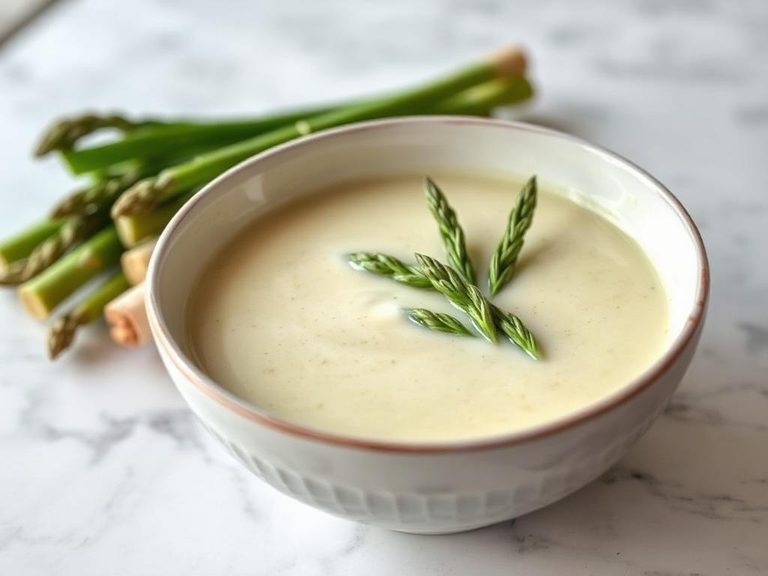
This is a classic, velvety canned soup, transformed into a richer, creamier dish by preparing it with an equal volume of milk. It offers a smooth, comforting texture with a delicate, earthy asparagus flavor, subtly sweetened by the dairy. Nutritionally, it's a light yet satisfying option, providing a modest 65 kcal per 100g with a balanced profile of protein, carbs, and fat.
Calorie split: 15% protein · 40% carbs · 45% fat
↓ Full nutrition💚 Why it's loved
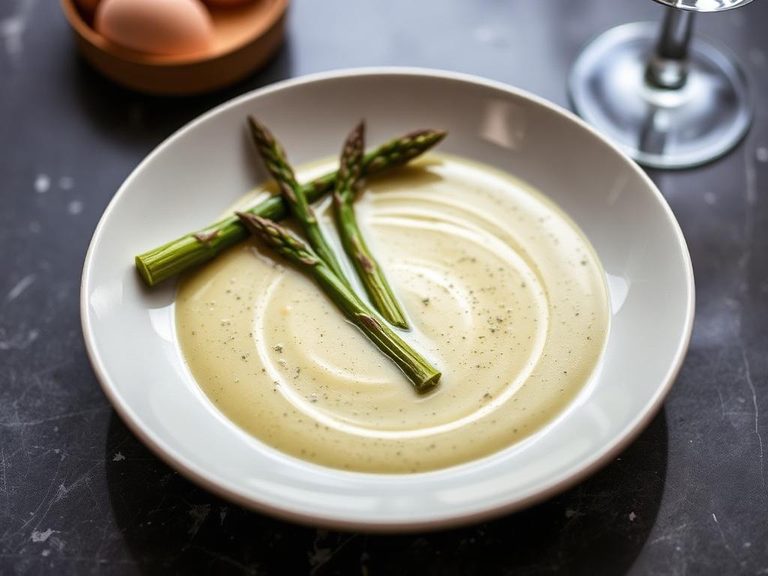
People love its nostalgic, comforting warmth and the simple, creamy flavor that pairs well with crusty bread. It's a versatile base that can be dressed up with croutons, cheese, or a swirl of cream for a more elegant presentation.
⚠️ Watch-outs & how to enjoy it better
The canned version can be high in sodium, which may concern those monitoring salt intake. To counteract this, look for low-sodium varieties or dilute with extra milk and water, and pair with a low-salt side like a fresh salad. Those with lactose intolerance or a milk allergy should use a lactose-free or plant-based milk alternative.
Key benefits
- Provides a quick, low-calorie meal or starter option.
- Contains a good source of protein when prepared with milk.
- Offers a convenient way to include vegetable-based nutrition.
- The milk addition boosts calcium and vitamin D intake.
- A comforting, easy-to-digest food for convalescence or light meals.
🍽️ Popular dishes



🌍 Where it's eaten
💡 Did you know?
The practice of canning soup dates back to the early 19th century, with the first commercial canning factory in the US opening in 1812, making it one of the earliest convenience foods.
Full nutrition (USDA data · scales with serving)
| Water | 86.0 g |
| Energy | 65.0 kcal |
| Energy | 272 kj |
| Protein | 2.5 g |
| Total lipid (fat) | 3.3 g |
| Ash | 1.6 g |
| Carbohydrate, by difference | 6.6 g |
| Fiber, total dietary | 0.30 g |
| Calcium, Ca | 70.0 mg |
| Iron, Fe | 0.35 mg |
| Magnesium, Mg | 8.0 mg |
| Phosphorus, P | 62.0 mg |
| Potassium, K | 145 mg |
| Sodium, Na | 420 mg |
| Zinc, Zn | 0.37 mg |
| Copper, Cu | 0.06 mg |
| Manganese, Mn | 0.15 mg |
| Vitamin C, total ascorbic acid | 1.6 mg |
| Thiamin | 0.04 mg |
| Riboflavin | 0.11 mg |
| Niacin | 0.35 mg |
| Pantothenic acid | 0.21 mg |
| Vitamin B-6 | 0.03 mg |
| Folate, total | 12.0 ug |
| Folic acid | 0.00 ug |
| Folate, food | 12.0 ug |
| Folate, DFE | 12.0 ug |
| Vitamin B-12 | 0.20 ug |
| Vitamin A, RAE | 25.0 ug |
| Retinol | 16.0 ug |
| Vitamin A, IU | 242 iu |
| Alcohol, ethyl | 0.00 g |
Fat & fatty acid profile (per 100g)
| Fatty acids, total saturated | 1.3 g |
| SFA 4:0 | 0.07 g |
| SFA 6:0 | 0.04 g |
| SFA 8:0 | 0.03 g |
| SFA 10:0 | 0.05 g |
| SFA 12:0 | 0.06 g |
| SFA 14:0 | 0.21 g |
| SFA 16:0 | 0.57 g |
| SFA 18:0 | 0.26 g |
| Fatty acids, total monounsaturated | 0.84 g |
| MUFA 16:1 | 0.05 g |
| MUFA 18:1 | 0.76 g |
| MUFA 20:1 | 0.00 g |
| MUFA 22:1 | 0.00 g |
| Fatty acids, total polyunsaturated | 0.90 g |
| PUFA 18:2 | 0.86 g |
| PUFA 18:3 | 0.04 g |
| PUFA 18:4 | 0.00 g |
| PUFA 20:4 | 0.00 g |
| PUFA 20:5 n-3 (EPA) | 0.00 g |
| PUFA 22:5 n-3 (DPA) | 0.00 g |
| PUFA 22:6 n-3 (DHA) | 0.00 g |
| Cholesterol | 9.0 mg |
Amino acid profile (per 100g)
| Tryptophan | 0.03 g |
| Threonine | 0.10 g |
| Isoleucine | 0.14 g |
| Leucine | 0.23 g |
| Lysine | 0.17 g |
| Methionine | 0.06 g |
| Cystine | 0.03 g |
| Phenylalanine | 0.12 g |
| Tyrosine | 0.11 g |
| Valine | 0.15 g |
| Arginine | 0.09 g |
| Histidine | 0.06 g |
| Alanine | 0.09 g |
| Aspartic acid | 0.19 g |
| Glutamic acid | 0.58 g |
| Glycine | 0.06 g |
| Proline | 0.24 g |
| Serine | 0.13 g |
FAQ
Is canned cream of asparagus soup healthy?
It can be a part of a healthy diet, especially when prepared with milk to boost protein and calcium. However, it's often high in sodium, so choosing low-sodium versions and watching portion sizes is recommended.
How can I make canned cream of asparagus soup taste better?
Enhance its flavor by sautéing fresh garlic and onion before adding the soup and milk, or stir in a pinch of nutmeg, black pepper, or a squeeze of lemon juice. Top with fresh herbs like chives or parsley.
Can I use this soup as a base for other dishes?
Absolutely! It's a classic base for casseroles, pot pies, or as a sauce for chicken or fish. It can also be used to make a creamy asparagus pasta sauce or a savory dip.
Nutrient density (calculated · NRF9.3)
Nutrient Rich Foods index: beneficial nutrients (protein, fiber, vitamins, minerals) minus saturated fat, added sugar & sodium, per 100 kcal.
NRF9.3 index — Fulgoni, Keast & Drewnowski, 2009. Computed from USDA nutrients.
Weight-loss friendliness (composite index)
Energy density 0.65 kcal/g · 16% calories from protein · 0.3 g fiber · 0.0 g sugar per 100 g.
Composite of energy density (Rolls et al., 1999), protein & fiber satiety, minus sugar. A calculated heuristic — ranks satiety-per-calorie, not a clinical measure.
Dietary load (calculated from USDA values)
Potential renal acid load. Positive = acid-forming, negative = alkaline-forming.
Sodium-to-potassium ratio: 2.90 (lower is better — aim for ≤ 1)
Sodium:potassium per WHO potassium guidance. Computed from USDA nutrients.