Yogurt, plain, whole milk
Whole food · Dairy and Egg Products
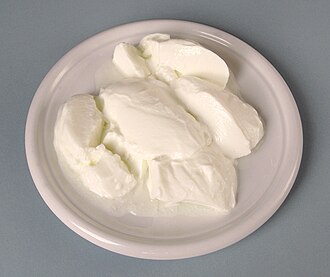
Photo: Wikipedia
Plain whole-milk yogurt is a thick, creamy, and tangy fermented dairy product with a smooth, spoonable texture. Its flavor profile is a balanced mix of mild sweetness and lactic acidity, with a rich mouthfeel from the whole milk fat. Nutritionally, it provides a solid source of protein and healthy fats for satiety, with naturally occurring sugars from lactose.
💚 Why it's loved
People love its versatile, creamy base that can be sweet or savory, and its satisfying tang. It's a staple in countless cuisines, enjoyed simply or as a foundational ingredient in both breakfasts and dinners.
⚠️ Watch-outs & how to enjoy it better
The natural lactose and sugars can cause digestive discomfort for those with lactose intolerance or sensitivity. Its acidity can also be a concern for those with acid reflux or sensitive teeth. To counteract, choose lactose-free versions, consume in smaller portions, or pair it with fiber-rich foods like oats or berries to slow sugar absorption.
Key benefits
- Excellent source of high-quality protein for muscle maintenance.
- Provides probiotics that support a healthy gut microbiome.
- Rich in calcium and phosphorus for bone health.
- Whole-milk fat enhances absorption of fat-soluble vitamins.
- Offers a balanced mix of protein, fat, and carbs for sustained energy.
🍽️ Popular dishes
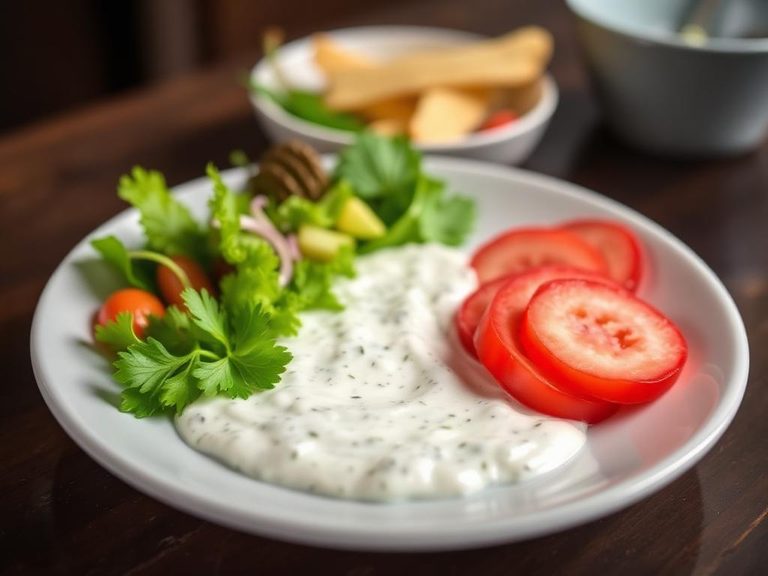




🌍 Where it's eaten
💡 Did you know?
The name 'yogurt' comes from the Turkish word 'yoğurmak,' which means to thicken or curdle, reflecting its ancient origins in the region.
Full nutrition (scales with serving)
| Water | 87.9 g |
| Energy | 61.0 kcal |
| Energy | 257 kj |
| Protein | 3.5 g |
| Total lipid (fat) | 3.3 g |
| Ash | 0.72 g |
| Carbohydrate, by difference | 4.7 g |
| Fiber, total dietary | 0.00 g |
| Total Sugars | 4.7 g |
| Calcium, Ca | 121 mg |
| Iron, Fe | 0.05 mg |
| Magnesium, Mg | 12.0 mg |
| Phosphorus, P | 95.0 mg |
| Potassium, K | 155 mg |
| Sodium, Na | 46.0 mg |
| Zinc, Zn | 0.59 mg |
| Copper, Cu | 0.01 mg |
| Manganese, Mn | 0.00 mg |
| Selenium, Se | 2.2 ug |
| Fluoride, F | 12.0 ug |
| Vitamin C, total ascorbic acid | 0.50 mg |
| Thiamin | 0.03 mg |
| Riboflavin | 0.14 mg |
| Niacin | 0.07 mg |
| Pantothenic acid | 0.39 mg |
| Vitamin B-6 | 0.03 mg |
| Folate, total | 7.0 ug |
| Folic acid | 0.00 ug |
| Folate, food | 7.0 ug |
| Folate, DFE | 7.0 ug |
| Choline, total | 15.2 mg |
| Vitamin B-12 | 0.37 ug |
| Vitamin B-12, added | 0.00 ug |
| Vitamin A, RAE | 27.0 ug |
| Retinol | 27.0 ug |
| Carotene, beta | 5.0 ug |
| Carotene, alpha | 0.00 ug |
| Cryptoxanthin, beta | 0.00 ug |
| Vitamin A, IU | 99.0 iu |
| Lycopene | 0.00 ug |
| Lutein + zeaxanthin | 0.00 ug |
| Vitamin E (alpha-tocopherol) | 0.06 mg |
| Vitamin E, added | 0.00 mg |
| Vitamin D (D2 + D3), International Units | 2.0 iu |
| Vitamin D (D2 + D3) | 0.10 ug |
| Vitamin D3 (cholecalciferol) | 0.10 ug |
| Vitamin K (phylloquinone) | 0.20 ug |
| Alcohol, ethyl | 0.00 g |
| Caffeine | 0.00 mg |
| Theobromine | 0.00 mg |
Fat & fatty acid profile (per 100g)
| Fatty acids, total saturated | 2.1 g |
| SFA 4:0 | 0.10 g |
| SFA 6:0 | 0.07 g |
| SFA 8:0 | 0.04 g |
| SFA 10:0 | 0.09 g |
| SFA 12:0 | 0.11 g |
| SFA 14:0 | 0.34 g |
| SFA 16:0 | 0.89 g |
| SFA 18:0 | 0.32 g |
| Fatty acids, total monounsaturated | 0.89 g |
| MUFA 16:1 | 0.07 g |
| MUFA 18:1 | 0.74 g |
| MUFA 20:1 | 0.00 g |
| MUFA 22:1 | 0.00 g |
| Fatty acids, total polyunsaturated | 0.09 g |
| PUFA 18:2 | 0.07 g |
| PUFA 18:3 | 0.03 g |
| PUFA 18:4 | 0.00 g |
| PUFA 20:4 | 0.00 g |
| PUFA 20:5 n-3 (EPA) | 0.00 g |
| PUFA 22:5 n-3 (DPA) | 0.00 g |
| PUFA 22:6 n-3 (DHA) | 0.00 g |
| Cholesterol | 13.0 mg |
Amino acid profile (per 100g)
| Tryptophan | 0.02 g |
| Threonine | 0.14 g |
| Isoleucine | 0.19 g |
| Leucine | 0.35 g |
| Lysine | 0.31 g |
| Methionine | 0.10 g |
| Cystine | 0.03 g |
| Phenylalanine | 0.19 g |
| Tyrosine | 0.17 g |
| Valine | 0.29 g |
| Arginine | 0.10 g |
| Histidine | 0.09 g |
| Alanine | 0.15 g |
| Aspartic acid | 0.28 g |
| Glutamic acid | 0.68 g |
| Glycine | 0.08 g |
| Proline | 0.41 g |
| Serine | 0.21 g |
FAQ
What's the difference between plain yogurt and Greek yogurt?
Greek yogurt is strained to remove most of the whey, resulting in a thicker, creamier texture and a higher concentration of protein and fat per serving compared to regular plain yogurt.
Is the sugar in plain yogurt added?
No. The sugar listed on the nutrition label for plain, unsweetened yogurt is naturally occurring lactose, the milk sugar, not added sugar.
Can I use plain yogurt in hot cooking?
Yes, but it can curdle if boiled directly. To prevent this, temper it by mixing a small amount of the hot liquid into the yogurt first, then stir it into the dish off the heat or over very low heat.