Pork, cured, ham, center slice, country-style, separable lean only, raw
Whole food · Pork Products

Photo: Wikipedia
This is a lean, raw cut from the center of a country-style cured ham, prized for its deep, savory pork flavor and firm, meaty texture that holds up well to cooking. Nutritionally, it's a powerhouse of protein with minimal fat and virtually no carbohydrates, making it a staple for high-protein, low-carb diets. Its country-style cure imparts a distinctive, robust saltiness that defines its character.
💚 Why it's loved
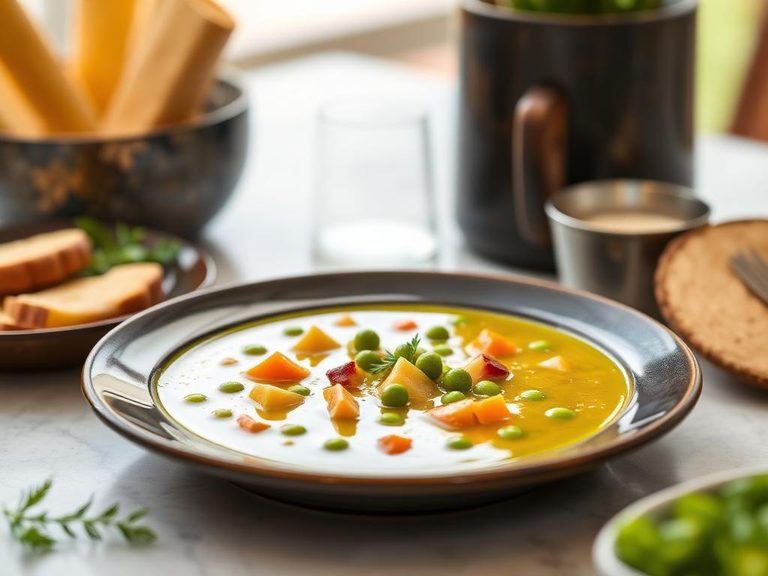
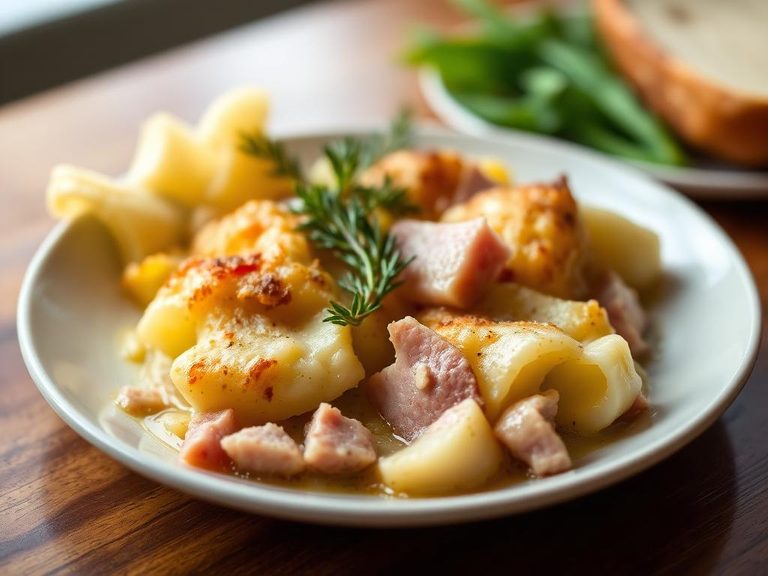
People love it for its intense, concentrated ham flavor and satisfying chew, which comes from the traditional curing process. Its versatility allows it to be the star of a hearty breakfast, a flavorful addition to salads, or the savory foundation for soups and stews.
⚠️ Watch-outs & how to enjoy it better
The primary downside is its very high sodium content from the curing salt, which can be a concern for those monitoring blood pressure or fluid retention. To mitigate this, soak slices in cold water for 30-60 minutes before cooking, or pair it with potassium-rich vegetables like spinach or broccoli to help balance electrolytes.
Key benefits
- Exceptionally high in complete protein for muscle maintenance
- Very low in carbohydrates and sugars
- Source of essential B vitamins like thiamine and niacin
- Contains minerals such as zinc and selenium
- Versatile base for both simple and complex dishes
🍽️ Popular dishes

🌍 Where it's eaten
💡 Did you know?
The 'country-style' designation often means the ham was cured with a dry salt mixture rather than being injected with brine, resulting in a denser, more intensely flavored product that requires careful cooking to avoid toughness.
Full nutrition (scales with serving)
| Water | 55.9 g |
| Energy | 195 kcal |
| Energy | 816 kj |
| Protein | 27.8 g |
| Total lipid (fat) | 8.3 g |
| Ash | 7.7 g |
| Carbohydrate, by difference | 0.30 g |
| Fiber, total dietary | 0.00 g |
| Total Sugars | 0.00 g |
| Calcium, Ca | 10.0 mg |
| Iron, Fe | 1.1 mg |
| Magnesium, Mg | 25.0 mg |
| Phosphorus, P | 318 mg |
| Potassium, K | 510 mg |
| Sodium, Na | 2695 mg |
| Zinc, Zn | 2.8 mg |
| Copper, Cu | 0.11 mg |
| Manganese, Mn | 0.05 mg |
| Selenium, Se | 25.8 ug |
| Vitamin C, total ascorbic acid | 0.00 mg |
| Thiamin | 0.57 mg |
| Riboflavin | 0.24 mg |
| Niacin | 3.9 mg |
| Pantothenic acid | 0.40 mg |
| Vitamin B-6 | 0.42 mg |
| Folate, total | 5.0 ug |
| Folic acid | 0.00 ug |
| Folate, food | 5.0 ug |
| Folate, DFE | 5.0 ug |
| Choline, total | 106 mg |
| Betaine | 7.0 mg |
| Vitamin B-12 | 0.88 ug |
| Vitamin B-12, added | 0.00 ug |
| Vitamin A, RAE | 0.00 ug |
| Retinol | 0.00 ug |
| Carotene, beta | 0.00 ug |
| Carotene, alpha | 0.00 ug |
| Cryptoxanthin, beta | 0.00 ug |
| Vitamin A, IU | 0.00 iu |
| Lycopene | 0.00 ug |
| Lutein + zeaxanthin | 0.00 ug |
| Vitamin E (alpha-tocopherol) | 0.28 mg |
| Vitamin E, added | 0.00 mg |
| Vitamin D (D2 + D3), International Units | 37.0 iu |
| Vitamin D (D2 + D3) | 0.90 ug |
| Vitamin D3 (cholecalciferol) | 0.90 ug |
| Vitamin K (phylloquinone) | 0.00 ug |
| Alcohol, ethyl | 0.00 g |
| Caffeine | 0.00 mg |
| Theobromine | 0.00 mg |
Fat & fatty acid profile (per 100g)
| Fatty acids, total saturated | 2.8 g |
| SFA 4:0 | 0.00 g |
| SFA 6:0 | 0.00 g |
| SFA 8:0 | 0.00 g |
| SFA 10:0 | 0.03 g |
| SFA 12:0 | 0.02 g |
| SFA 14:0 | 0.11 g |
| SFA 16:0 | 1.8 g |
| SFA 18:0 | 0.86 g |
| Fatty acids, total monounsaturated | 3.8 g |
| MUFA 16:1 | 0.32 g |
| MUFA 18:1 | 3.5 g |
| MUFA 20:1 | 0.00 g |
| MUFA 22:1 | 0.00 g |
| Fatty acids, total polyunsaturated | 0.97 g |
| PUFA 18:2 | 0.77 g |
| PUFA 18:3 | 0.09 g |
| PUFA 18:4 | 0.00 g |
| PUFA 20:4 | 0.11 g |
| PUFA 20:5 n-3 (EPA) | 0.00 g |
| PUFA 22:5 n-3 (DPA) | 0.00 g |
| PUFA 22:6 n-3 (DHA) | 0.00 g |
| Cholesterol | 70.0 mg |
Amino acid profile (per 100g)
| Tryptophan | 0.33 g |
| Threonine | 1.2 g |
| Isoleucine | 1.2 g |
| Leucine | 2.2 g |
| Lysine | 2.4 g |
| Methionine | 0.73 g |
| Cystine | 0.42 g |
| Phenylalanine | 1.2 g |
| Tyrosine | 0.91 g |
| Valine | 1.2 g |
| Arginine | 1.8 g |
| Histidine | 1.00 g |
| Alanine | 1.6 g |
| Aspartic acid | 2.6 g |
| Glutamic acid | 4.5 g |
| Glycine | 1.4 g |
| Proline | 1.2 g |
| Serine | 1.1 g |
FAQ
What does 'separable lean only' mean?
It means the nutritional values are for the lean meat portion only, with all visible fat trimmed away. This results in a lower fat and calorie count compared to the whole cut.
How is this different from regular baked ham?
This is a raw, cured cut meant to be cooked at home. Baked ham is typically pre-cooked, often with added glazes. This cut offers more control over seasoning and cooking method.
Is it safe to eat raw?
No. Although it is cured, it is sold raw and must be cooked to a safe internal temperature (145°F / 63°C with a 3-minute rest) to eliminate potential pathogens.