

Yogurt, nonfat milk, fruit
Common food
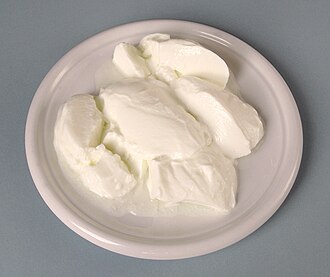
Photo: Wikipedia
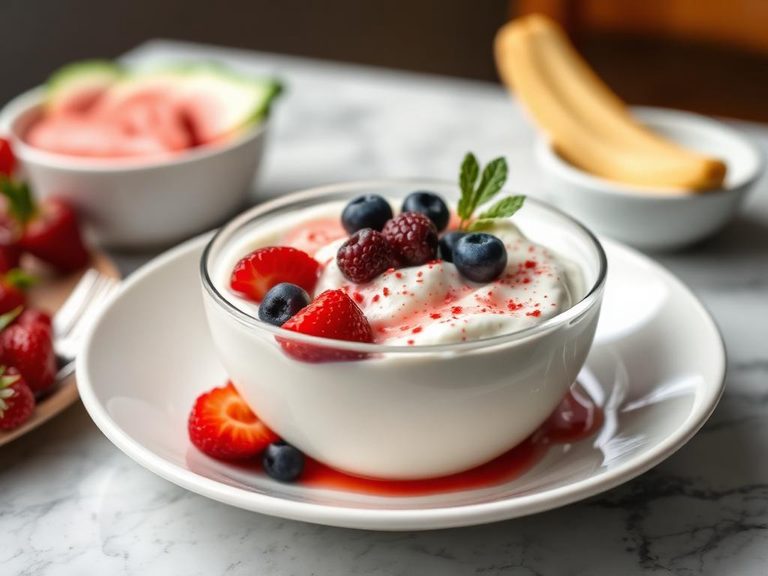
A light, refreshing blend of tangy nonfat yogurt swirled with sweet fruit, creating a creamy yet not-too-heavy snack or breakfast. The texture is smooth and spoonable, with a clean, bright flavor from the fruit that balances the yogurt's natural tartness. It's a low-calorie, high-protein option that delivers a satisfying sweetness without the fat.
Calorie split: 32% protein · 67% carbs · 2% fat
↓ Full nutrition💚 Why it's loved
People adore it for its perfect harmony of creamy, tangy, and sweet flavors, making it feel like an indulgence while being nutritious. It's incredibly versatile—eaten plain, layered in parfaits, blended into smoothies, or used as a topping.
⚠️ Watch-outs & how to enjoy it better
The high natural sugar content from fruit can cause a rapid blood-sugar spike, especially if consumed alone. To counteract this, always pair it with a source of fiber or healthy fat, like a handful of nuts, chia seeds, or a sprinkle of oats. Those with lactose intolerance should opt for lactose-free versions or start with small portions.
Key benefits
- Excellent source of high-quality protein for muscle maintenance.
- Naturally low in fat, supporting heart-healthy diets.
- Provides calcium and probiotics for bone and gut health.
- Offers a quick, balanced energy boost from carbs and protein.
- A versatile base for adding fiber and healthy fats.
🍽️ Popular dishes


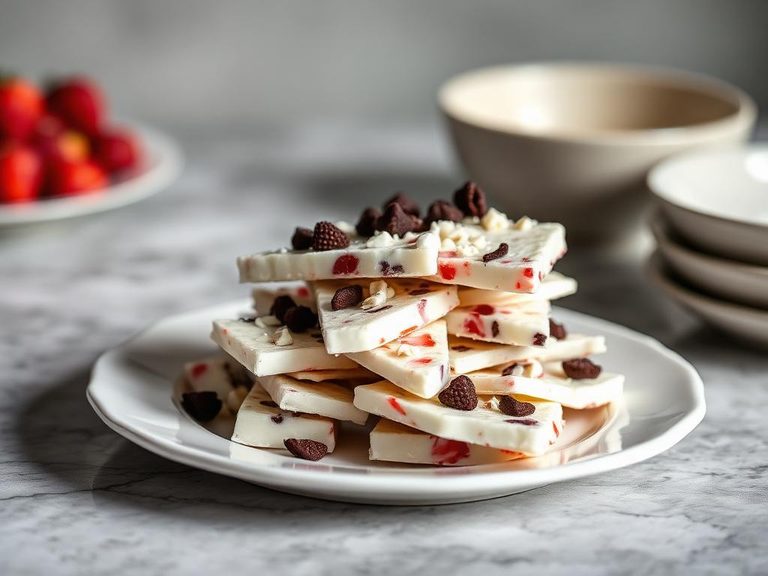
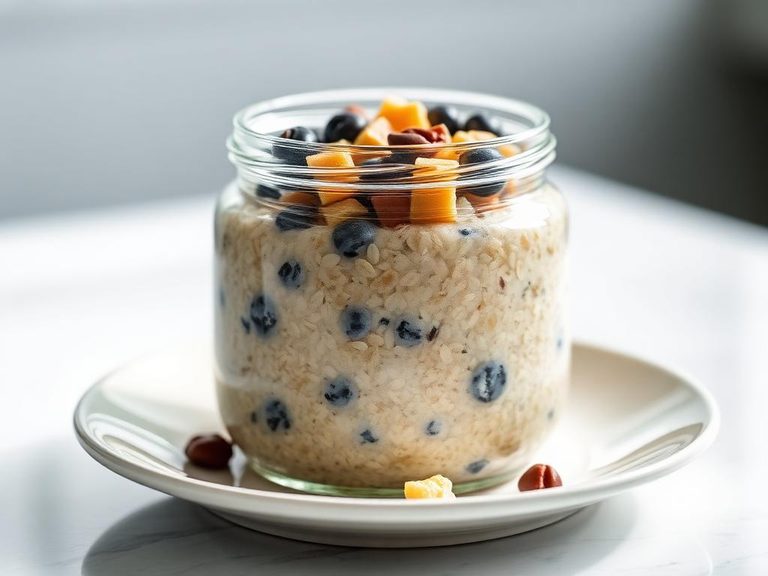
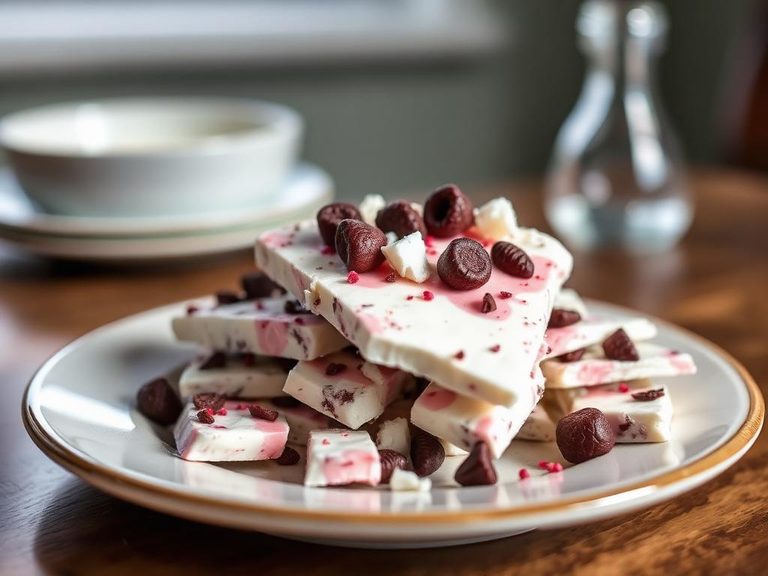
🌍 Where it's eaten
💡 Did you know?
The specific combination of nonfat milk yogurt and fruit is a modern nutritional powerhouse, but the practice of fermenting milk with fruit is ancient—Persians were fermenting milk with figs as early as 5000 BCE.
Full nutrition (USDA data · scales with serving)
| Water | 87.7 g |
| Energy | 46.0 kcal |
| Protein | 3.6 g |
| Total lipid (fat) | 0.08 g |
| Carbohydrate, by difference | 7.6 g |
| Fiber, total dietary | 0.00 g |
| Total Sugars | 7.1 g |
| Calcium, Ca | 144 mg |
| Iron, Fe | 0.00 mg |
| Magnesium, Mg | 13.0 mg |
| Phosphorus, P | 109 mg |
| Potassium, K | 181 mg |
| Sodium, Na | 45.0 mg |
| Zinc, Zn | 0.52 mg |
| Copper, Cu | 0.00 mg |
| Selenium, Se | 3.1 ug |
| Vitamin C, total ascorbic acid | 0.90 mg |
| Thiamin | 0.04 mg |
| Riboflavin | 0.20 mg |
| Niacin | 0.11 mg |
| Vitamin B-6 | 0.05 mg |
| Folate, total | 10.0 ug |
| Folic acid | 0.00 ug |
| Folate, food | 10.0 ug |
| Folate, DFE | 10.0 ug |
| Choline, total | 13.2 mg |
| Vitamin B-12 | 0.52 ug |
| Vitamin B-12, added | 0.00 ug |
| Vitamin A, RAE | 0.00 ug |
| Retinol | 0.00 ug |
| Carotene, beta | 0.00 ug |
| Carotene, alpha | 0.00 ug |
| Cryptoxanthin, beta | 0.00 ug |
| Lycopene | 0.00 ug |
| Lutein + zeaxanthin | 0.00 ug |
| Vitamin E (alpha-tocopherol) | 0.00 mg |
| Vitamin E, added | 0.00 mg |
| Vitamin D (D2 + D3) | 1.2 ug |
| Vitamin K (phylloquinone) | 0.20 ug |
| Alcohol, ethyl | 0.00 g |
| Caffeine | 0.00 mg |
| Theobromine | 0.00 mg |
Fat & fatty acid profile (per 100g)
| Fatty acids, total saturated | 0.10 g |
| SFA 4:0 | 0.00 g |
| SFA 6:0 | 0.00 g |
| SFA 8:0 | 0.00 g |
| SFA 10:0 | 0.00 g |
| SFA 12:0 | 0.01 g |
| SFA 14:0 | 0.02 g |
| SFA 16:0 | 0.04 g |
| SFA 18:0 | 0.01 g |
| Fatty acids, total monounsaturated | 0.04 g |
| MUFA 16:1 | 0.00 g |
| MUFA 18:1 | 0.04 g |
| MUFA 20:1 | 0.00 g |
| MUFA 22:1 | 0.00 g |
| Fatty acids, total polyunsaturated | 0.00 g |
| PUFA 18:2 | 0.00 g |
| PUFA 18:3 | 0.00 g |
| PUFA 18:4 | 0.00 g |
| PUFA 20:4 | 0.00 g |
| PUFA 20:5 n-3 (EPA) | 0.00 g |
| PUFA 22:5 n-3 (DPA) | 0.00 g |
| PUFA 22:6 n-3 (DHA) | 0.00 g |
| Cholesterol | 3.0 mg |
Amino acid profile (per 100g)
Estimated from Frozen yogurts, vanilla, soft-serve — USDA does not publish this profile for Yogurt.
| Tryptophan | 0.05 g |
| Threonine | 0.17 g |
| Isoleucine | 0.23 g |
| Leucine | 0.37 g |
| Lysine | 0.30 g |
| Methionine | 0.09 g |
| Cystine | 0.04 g |
| Phenylalanine | 0.18 g |
| Tyrosine | 0.18 g |
| Valine | 0.25 g |
| Arginine | 0.14 g |
| Histidine | 0.10 g |
| Alanine | 0.13 g |
| Aspartic acid | 0.28 g |
| Glutamic acid | 0.79 g |
| Glycine | 0.08 g |
| Proline | 0.36 g |
| Serine | 0.20 g |
FAQ
Is the sugar in this product added or natural?
The sugar is primarily natural lactose from the milk and fructose from the fruit. Check the ingredient list for any added sweeteners like cane sugar or high-fructose corn syrup.
Can I eat this if I'm lactose intolerant?
Some people with lactose intolerance can tolerate yogurt due to the bacterial cultures breaking down some lactose. Look for brands labeled 'lactose-free' or start with a small portion to test your tolerance.
How does this compare to full-fat yogurt with fruit?
This version is significantly lower in calories and fat, making it leaner. Full-fat yogurt will be more satiating and may help with nutrient absorption, but at a higher calorie cost.
Nutrient density (calculated · NRF9.3)
Nutrient Rich Foods index: beneficial nutrients (protein, fiber, vitamins, minerals) minus saturated fat, added sugar & sodium, per 100 kcal.
NRF9.3 index — Fulgoni, Keast & Drewnowski, 2009. Computed from USDA nutrients.
Weight-loss friendliness (composite index)
Energy density 0.46 kcal/g · 32% calories from protein · 0.0 g fiber · 7.1 g sugar per 100 g.
Composite of energy density (Rolls et al., 1999), protein & fiber satiety, minus sugar. A calculated heuristic — ranks satiety-per-calorie, not a clinical measure.
Dietary load (calculated from USDA values)
Potential renal acid load. Positive = acid-forming, negative = alkaline-forming.
Sodium-to-potassium ratio: 0.25 (lower is better — aim for ≤ 1)
Sodium:potassium per WHO potassium guidance. Computed from USDA nutrients.