

Yogurt, Greek, nonfat milk, flavors other than fruit
Common food
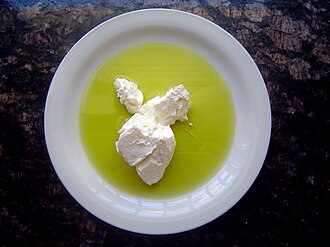
Photo: Wikipedia
This is a thick, protein-packed strained yogurt made from nonfat milk, with a smooth, creamy texture and a mild, tangy flavor. It's a nutritional powerhouse, delivering over 9 grams of protein per 100 grams for very few calories, making it a staple for health-conscious eating. The nonfat base gives it a clean, light finish without any heaviness.
Calorie split: 51% protein · 45% carbs · 4% fat
↓ Full nutrition💚 Why it's loved
People love it for its incredibly creamy, satisfying texture that feels indulgent while being nutritionally lean. It's a kitchen chameleon, seamlessly blending into smoothies, dips, marinades, or standing alone as a cool, tangy snack.
⚠️ Watch-outs & how to enjoy it better
The pronounced tanginess can be off-putting to some, and its thick texture may feel dry without mixing. For those monitoring blood sugar, the added sugars in flavored varieties can cause spikes. Counteract this by choosing plain, unsweetened versions and pairing it with fiber-rich fruits, nuts, or seeds to slow sugar absorption and enhance satiety.
Key benefits
- Excellent source of high-quality protein for muscle repair and satiety.
- Very low in fat, making it a lean protein option.
- Contains probiotics that support a healthy gut microbiome.
- Good source of calcium for bone health.
- Versatile base for both sweet and savory dishes.
🍽️ Popular dishes
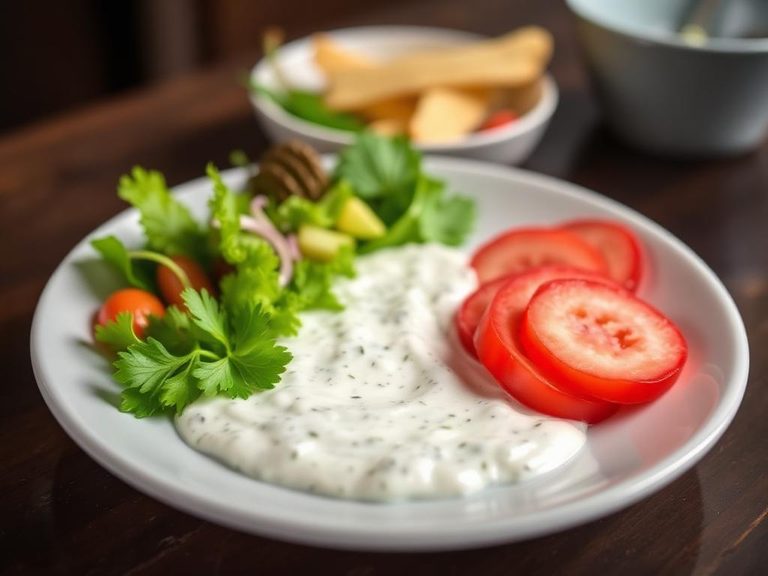

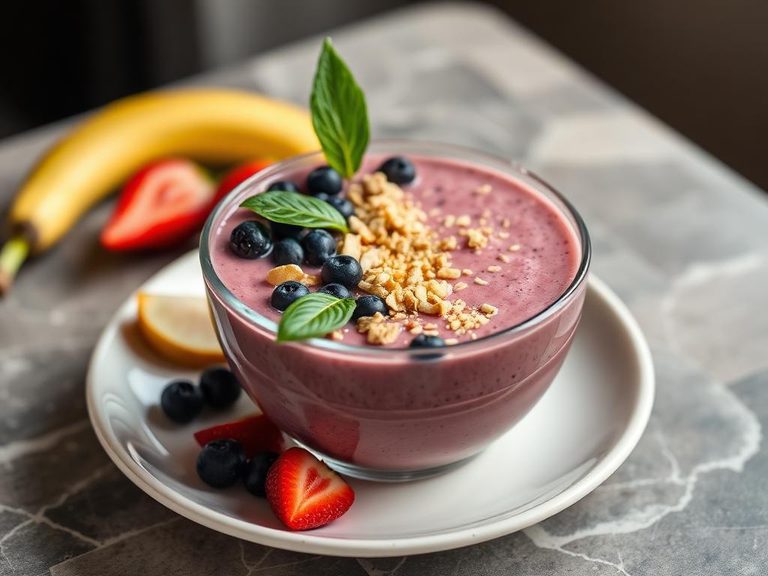



🌍 Where it's eaten
💡 Did you know?
The straining process that gives Greek yogurt its signature thickness can remove up to half the liquid whey, concentrating the protein to nearly double that of regular yogurt.
Full nutrition (USDA data · scales with serving)
| Water | 81.6 g |
| Energy | 73.0 kcal |
| Protein | 9.2 g |
| Total lipid (fat) | 0.34 g |
| Carbohydrate, by difference | 8.2 g |
| Fiber, total dietary | 0.00 g |
| Total Sugars | 7.9 g |
| Calcium, Ca | 99.0 mg |
| Iron, Fe | 0.06 mg |
| Magnesium, Mg | 10.0 mg |
| Phosphorus, P | 121 mg |
| Potassium, K | 126 mg |
| Sodium, Na | 32.0 mg |
| Zinc, Zn | 0.47 mg |
| Copper, Cu | 0.02 mg |
| Selenium, Se | 8.8 ug |
| Vitamin C, total ascorbic acid | 0.00 mg |
| Thiamin | 0.02 mg |
| Riboflavin | 0.25 mg |
| Niacin | 0.19 mg |
| Vitamin B-6 | 0.06 mg |
| Folate, total | 6.0 ug |
| Folic acid | 0.00 ug |
| Folate, food | 6.0 ug |
| Folate, DFE | 6.0 ug |
| Choline, total | 13.4 mg |
| Vitamin B-12 | 0.62 ug |
| Vitamin B-12, added | 0.00 ug |
| Vitamin A, RAE | 1.0 ug |
| Retinol | 1.0 ug |
| Carotene, beta | 0.00 ug |
| Carotene, alpha | 0.00 ug |
| Cryptoxanthin, beta | 0.00 ug |
| Lycopene | 0.00 ug |
| Lutein + zeaxanthin | 0.00 ug |
| Vitamin E (alpha-tocopherol) | 0.01 mg |
| Vitamin E, added | 0.00 mg |
| Vitamin D (D2 + D3) | 0.90 ug |
| Vitamin K (phylloquinone) | 0.00 ug |
| Alcohol, ethyl | 0.00 g |
| Caffeine | 0.00 mg |
| Theobromine | 0.00 mg |
Fat & fatty acid profile (per 100g)
| Fatty acids, total saturated | 0.10 g |
| SFA 4:0 | 0.00 g |
| SFA 6:0 | 0.00 g |
| SFA 8:0 | 0.00 g |
| SFA 10:0 | 0.01 g |
| SFA 12:0 | 0.01 g |
| SFA 14:0 | 0.01 g |
| SFA 16:0 | 0.04 g |
| SFA 18:0 | 0.02 g |
| Fatty acids, total monounsaturated | 0.04 g |
| MUFA 16:1 | 0.00 g |
| MUFA 18:1 | 0.04 g |
| MUFA 20:1 | 0.00 g |
| MUFA 22:1 | 0.00 g |
| Fatty acids, total polyunsaturated | 0.01 g |
| PUFA 18:2 | 0.01 g |
| PUFA 18:3 | 0.00 g |
| PUFA 18:4 | 0.00 g |
| PUFA 20:4 | 0.00 g |
| PUFA 20:5 n-3 (EPA) | 0.00 g |
| PUFA 22:5 n-3 (DPA) | 0.00 g |
| PUFA 22:6 n-3 (DHA) | 0.00 g |
| Cholesterol | 4.0 mg |
Amino acid profile (per 100g)
Estimated from Frozen yogurts, vanilla, soft-serve — USDA does not publish this profile for Yogurt.
| Tryptophan | 0.05 g |
| Threonine | 0.17 g |
| Isoleucine | 0.23 g |
| Leucine | 0.37 g |
| Lysine | 0.30 g |
| Methionine | 0.09 g |
| Cystine | 0.04 g |
| Phenylalanine | 0.18 g |
| Tyrosine | 0.18 g |
| Valine | 0.25 g |
| Arginine | 0.14 g |
| Histidine | 0.10 g |
| Alanine | 0.13 g |
| Aspartic acid | 0.28 g |
| Glutamic acid | 0.79 g |
| Glycine | 0.08 g |
| Proline | 0.36 g |
| Serine | 0.20 g |
FAQ
What's the difference between Greek yogurt and regular yogurt?
Greek yogurt is strained to remove most of the liquid whey, resulting in a thicker, creamier texture and a significantly higher protein concentration by weight.
Is nonfat Greek yogurt as healthy as full-fat?
Nonfat versions are lower in calories and saturated fat, making them ideal for those watching fat intake. Full-fat varieties can be more satiating and may contain more fat-soluble vitamins, but both are nutritious choices.
Why does Greek yogurt sometimes have a bitter aftertaste?
A slight bitterness can come from the fermentation process or the specific bacterial cultures used. It's often masked when mixed with other ingredients like honey, fruit, or granola.
Nutrient density (calculated · NRF9.3)
Nutrient Rich Foods index: beneficial nutrients (protein, fiber, vitamins, minerals) minus saturated fat, added sugar & sodium, per 100 kcal.
NRF9.3 index — Fulgoni, Keast & Drewnowski, 2009. Computed from USDA nutrients.
Weight-loss friendliness (composite index)
Energy density 0.73 kcal/g · 50% calories from protein · 0.0 g fiber · 7.9 g sugar per 100 g.
Composite of energy density (Rolls et al., 1999), protein & fiber satiety, minus sugar. A calculated heuristic — ranks satiety-per-calorie, not a clinical measure.
Dietary load (calculated from USDA values)
Potential renal acid load. Positive = acid-forming, negative = alkaline-forming.
Sodium-to-potassium ratio: 0.25 (lower is better — aim for ≤ 1)
Sodium:potassium per WHO potassium guidance. Computed from USDA nutrients.