

Yogurt, Greek, NS as to type of milk, flavors other than fruit
Common food
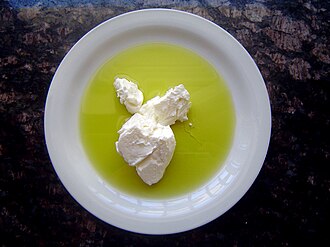
Photo: Wikipedia
Greek yogurt is a thick, strained yogurt with a rich, creamy texture and a distinct tangy flavor. Its high protein content makes it a nutritionally dense choice, offering a substantial 9 grams of protein per 100g serving. The straining process removes much of the whey, concentrating the nutrients and creating its signature velvety consistency.
Calorie split: 45% protein · 40% carbs · 15% fat
↓ Full nutrition💚 Why it's loved
People love its luxuriously thick, spoonable texture and tangy taste that pairs perfectly with everything from honey and granola to herbs and spices. It's a culinary chameleon, serving as a healthy breakfast, a protein-packed snack, or a creamy ingredient in cooking.
⚠️ Watch-outs & how to enjoy it better
The natural tang can be too sharp for some palates, and flavored varieties often contain added sugars, which can contribute to blood sugar spikes. For those with lactose intolerance, the straining process reduces but doesn't eliminate lactose; choosing a lactose-free version or pairing it with a small amount of fiber (like berries) can help mitigate digestive discomfort.
Key benefits
- Excellent source of high-quality protein for muscle maintenance
- Rich in calcium for bone health
- Contains probiotics that support gut health
- Provides a good balance of protein and carbohydrates for sustained energy
- Versatile base for both sweet and savory dishes
🍽️ Popular dishes






🌍 Where it's eaten
💡 Did you know?
The straining process that defines Greek yogurt can remove up to 50% of the liquid whey, which is why it's often called 'labneh' or 'yogurt cheese' in the Middle East when strained even further until it reaches a spreadable consistency.
Full nutrition (USDA data · scales with serving)
| Water | 80.8 g |
| Energy | 81.0 kcal |
| Protein | 9.1 g |
| Total lipid (fat) | 1.3 g |
| Carbohydrate, by difference | 8.2 g |
| Fiber, total dietary | 0.00 g |
| Total Sugars | 7.9 g |
| Calcium, Ca | 98.0 mg |
| Iron, Fe | 0.06 mg |
| Magnesium, Mg | 10.0 mg |
| Phosphorus, P | 120 mg |
| Potassium, K | 124 mg |
| Sodium, Na | 32.0 mg |
| Zinc, Zn | 0.47 mg |
| Copper, Cu | 0.02 mg |
| Selenium, Se | 8.7 ug |
| Vitamin C, total ascorbic acid | 0.00 mg |
| Thiamin | 0.02 mg |
| Riboflavin | 0.25 mg |
| Niacin | 0.19 mg |
| Vitamin B-6 | 0.06 mg |
| Folate, total | 6.0 ug |
| Folic acid | 0.00 ug |
| Folate, food | 6.0 ug |
| Folate, DFE | 6.0 ug |
| Choline, total | 13.5 mg |
| Vitamin B-12 | 0.62 ug |
| Vitamin B-12, added | 0.00 ug |
| Vitamin A, RAE | 9.0 ug |
| Retinol | 9.0 ug |
| Carotene, beta | 2.0 ug |
| Carotene, alpha | 0.00 ug |
| Cryptoxanthin, beta | 0.00 ug |
| Lycopene | 0.00 ug |
| Lutein + zeaxanthin | 0.00 ug |
| Vitamin E (alpha-tocopherol) | 0.04 mg |
| Vitamin E, added | 0.00 mg |
| Vitamin D (D2 + D3) | 0.90 ug |
| Vitamin K (phylloquinone) | 0.10 ug |
| Alcohol, ethyl | 0.00 g |
| Caffeine | 0.00 mg |
| Theobromine | 0.00 mg |
Fat & fatty acid profile (per 100g)
| Fatty acids, total saturated | 0.71 g |
| SFA 4:0 | 0.03 g |
| SFA 6:0 | 0.02 g |
| SFA 8:0 | 0.01 g |
| SFA 10:0 | 0.04 g |
| SFA 12:0 | 0.03 g |
| SFA 14:0 | 0.11 g |
| SFA 16:0 | 0.30 g |
| SFA 18:0 | 0.14 g |
| Fatty acids, total monounsaturated | 0.33 g |
| MUFA 16:1 | 0.02 g |
| MUFA 18:1 | 0.29 g |
| MUFA 20:1 | 0.00 g |
| MUFA 22:1 | 0.00 g |
| Fatty acids, total polyunsaturated | 0.05 g |
| PUFA 18:2 | 0.03 g |
| PUFA 18:3 | 0.01 g |
| PUFA 18:4 | 0.00 g |
| PUFA 20:4 | 0.00 g |
| PUFA 20:5 n-3 (EPA) | 0.00 g |
| PUFA 22:5 n-3 (DPA) | 0.00 g |
| PUFA 22:6 n-3 (DHA) | 0.00 g |
| Cholesterol | 7.0 mg |
Amino acid profile (per 100g)
Estimated from Frozen yogurts, vanilla, soft-serve — USDA does not publish this profile for Yogurt.
| Tryptophan | 0.05 g |
| Threonine | 0.17 g |
| Isoleucine | 0.23 g |
| Leucine | 0.37 g |
| Lysine | 0.30 g |
| Methionine | 0.09 g |
| Cystine | 0.04 g |
| Phenylalanine | 0.18 g |
| Tyrosine | 0.18 g |
| Valine | 0.25 g |
| Arginine | 0.14 g |
| Histidine | 0.10 g |
| Alanine | 0.13 g |
| Aspartic acid | 0.28 g |
| Glutamic acid | 0.79 g |
| Glycine | 0.08 g |
| Proline | 0.36 g |
| Serine | 0.20 g |
FAQ
What's the difference between Greek yogurt and regular yogurt?
Greek yogurt is strained to remove most of the liquid whey, resulting in a thicker, creamier texture and a higher concentration of protein and lower lactose content compared to regular, unstrained yogurt.
Is Greek yogurt good for weight loss?
It can be a helpful part of a weight management plan due to its high protein content, which promotes feelings of fullness and helps preserve muscle mass. However, portion control and choosing plain varieties over sweetened ones are key.
Can I use Greek yogurt as a substitute for sour cream or mayonnaise?
Yes, it's an excellent substitute. Use it in equal amounts for sour cream in dips, toppings, or baking. For mayonnaise, it can replace half or all of it in recipes like potato salad or chicken salad, adding a tangy flavor and reducing fat.
Nutrient density (calculated · NRF9.3)
Nutrient Rich Foods index: beneficial nutrients (protein, fiber, vitamins, minerals) minus saturated fat, added sugar & sodium, per 100 kcal.
NRF9.3 index — Fulgoni, Keast & Drewnowski, 2009. Computed from USDA nutrients.
Weight-loss friendliness (composite index)
Energy density 0.81 kcal/g · 45% calories from protein · 0.0 g fiber · 7.9 g sugar per 100 g.
Composite of energy density (Rolls et al., 1999), protein & fiber satiety, minus sugar. A calculated heuristic — ranks satiety-per-calorie, not a clinical measure.
Dietary load (calculated from USDA values)
Potential renal acid load. Positive = acid-forming, negative = alkaline-forming.
Sodium-to-potassium ratio: 0.26 (lower is better — aim for ≤ 1)
Sodium:potassium per WHO potassium guidance. Computed from USDA nutrients.