

Yogurt, Greek, nonfat milk, fruit
Common food
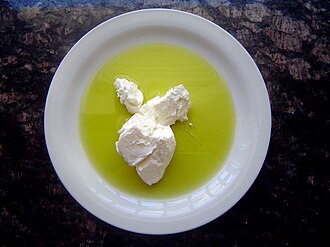
Photo: Wikipedia
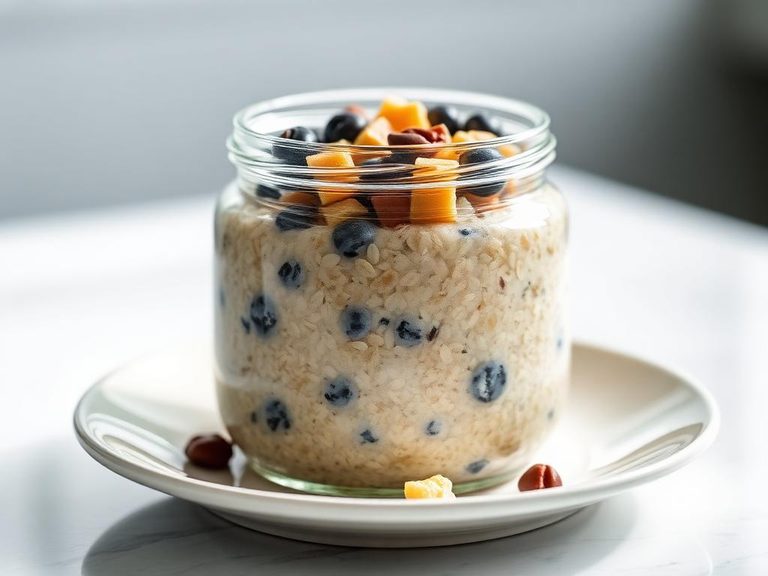
This is a thick, creamy Greek yogurt strained to remove whey, swirled with a fruit compote or jam. Its signature tangy, velvety base contrasts with the sweet, bright burst of fruit, creating a satisfying textural experience. Nutritionally, it's a protein powerhouse, delivering over 9 grams per 100 grams with minimal fat.
Calorie split: 44% protein · 52% carbs · 4% fat
↓ Full nutrition💚 Why it's loved
People love the perfect balance of its rich, creamy tartness with the natural sweetness of fruit, making it feel indulgent yet healthy. Its versatility as a breakfast staple, dessert, or ingredient in both sweet and savory dishes makes it a kitchen workhorse.
⚠️ Watch-outs & how to enjoy it better
The added fruit component can significantly increase sugar content, potentially causing blood-sugar spikes if consumed alone. Those with lactose intolerance may still experience discomfort despite the straining process. **Tip:** Pair with a handful of nuts or seeds to add healthy fats and fiber, which slows sugar absorption and promotes fullness.
Key benefits
- Excellent source of high-quality protein for muscle maintenance.
- Low in fat, making it a lean protein choice.
- Contains probiotics for gut health (if live cultures are present).
- Provides calcium and phosphorus for bone health.
- A convenient, no-cook meal or snack option.
🍽️ Popular dishes


🌍 Where it's eaten
💡 Did you know?
The straining process that defines Greek yogurt is so effective it takes about 4 pounds of regular milk to produce just 1 pound of the finished product.
Full nutrition (USDA data · scales with serving)
| Water | 79.0 g |
| Energy | 83.0 kcal |
| Protein | 9.2 g |
| Total lipid (fat) | 0.34 g |
| Carbohydrate, by difference | 10.8 g |
| Fiber, total dietary | 0.10 g |
| Total Sugars | 8.2 g |
| Calcium, Ca | 101 mg |
| Iron, Fe | 0.12 mg |
| Magnesium, Mg | 10.0 mg |
| Phosphorus, P | 123 mg |
| Potassium, K | 134 mg |
| Sodium, Na | 36.0 mg |
| Zinc, Zn | 0.48 mg |
| Copper, Cu | 0.03 mg |
| Selenium, Se | 9.0 ug |
| Vitamin C, total ascorbic acid | 1.0 mg |
| Thiamin | 0.02 mg |
| Riboflavin | 0.26 mg |
| Niacin | 0.19 mg |
| Vitamin B-6 | 0.06 mg |
| Folate, total | 7.0 ug |
| Folic acid | 0.00 ug |
| Folate, food | 7.0 ug |
| Folate, DFE | 7.0 ug |
| Choline, total | 14.6 mg |
| Vitamin B-12 | 0.62 ug |
| Vitamin B-12, added | 0.00 ug |
| Vitamin A, RAE | 1.0 ug |
| Retinol | 1.0 ug |
| Carotene, beta | 0.00 ug |
| Carotene, alpha | 0.00 ug |
| Cryptoxanthin, beta | 0.00 ug |
| Lycopene | 0.00 ug |
| Lutein + zeaxanthin | 0.00 ug |
| Vitamin E (alpha-tocopherol) | 0.02 mg |
| Vitamin E, added | 0.00 mg |
| Vitamin D (D2 + D3) | 0.90 ug |
| Vitamin K (phylloquinone) | 0.00 ug |
| Alcohol, ethyl | 0.00 g |
| Caffeine | 0.00 mg |
| Theobromine | 0.00 mg |
Fat & fatty acid profile (per 100g)
| Fatty acids, total saturated | 0.10 g |
| SFA 4:0 | 0.00 g |
| SFA 6:0 | 0.00 g |
| SFA 8:0 | 0.00 g |
| SFA 10:0 | 0.01 g |
| SFA 12:0 | 0.01 g |
| SFA 14:0 | 0.01 g |
| SFA 16:0 | 0.04 g |
| SFA 18:0 | 0.02 g |
| Fatty acids, total monounsaturated | 0.04 g |
| MUFA 16:1 | 0.00 g |
| MUFA 18:1 | 0.04 g |
| MUFA 20:1 | 0.00 g |
| MUFA 22:1 | 0.00 g |
| Fatty acids, total polyunsaturated | 0.01 g |
| PUFA 18:2 | 0.01 g |
| PUFA 18:3 | 0.00 g |
| PUFA 18:4 | 0.00 g |
| PUFA 20:4 | 0.00 g |
| PUFA 20:5 n-3 (EPA) | 0.00 g |
| PUFA 22:5 n-3 (DPA) | 0.00 g |
| PUFA 22:6 n-3 (DHA) | 0.00 g |
| Cholesterol | 4.0 mg |
Amino acid profile (per 100g)
Estimated from Frozen yogurts, vanilla, soft-serve — USDA does not publish this profile for Yogurt.
| Tryptophan | 0.05 g |
| Threonine | 0.17 g |
| Isoleucine | 0.23 g |
| Leucine | 0.37 g |
| Lysine | 0.30 g |
| Methionine | 0.09 g |
| Cystine | 0.04 g |
| Phenylalanine | 0.18 g |
| Tyrosine | 0.18 g |
| Valine | 0.25 g |
| Arginine | 0.14 g |
| Histidine | 0.10 g |
| Alanine | 0.13 g |
| Aspartic acid | 0.28 g |
| Glutamic acid | 0.79 g |
| Glycine | 0.08 g |
| Proline | 0.36 g |
| Serine | 0.20 g |
FAQ
Is the fruit mixed in or on top?
It varies by brand. Some are 'fruit on the bottom' for a layered effect, while others are pre-mixed throughout for consistent flavor in every spoonful.
How does the protein compare to regular yogurt?
Greek yogurt typically has nearly double the protein of regular yogurt because the straining process concentrates the milk solids.
Is it good for baking?
Yes, it's an excellent substitute for sour cream, buttermilk, or oil in many recipes, adding moisture and protein while reducing fat.
Nutrient density (calculated · NRF9.3)
Nutrient Rich Foods index: beneficial nutrients (protein, fiber, vitamins, minerals) minus saturated fat, added sugar & sodium, per 100 kcal.
NRF9.3 index — Fulgoni, Keast & Drewnowski, 2009. Computed from USDA nutrients.
Weight-loss friendliness (composite index)
Energy density 0.83 kcal/g · 44% calories from protein · 0.1 g fiber · 8.2 g sugar per 100 g.
Composite of energy density (Rolls et al., 1999), protein & fiber satiety, minus sugar. A calculated heuristic — ranks satiety-per-calorie, not a clinical measure.
Dietary load (calculated from USDA values)
Potential renal acid load. Positive = acid-forming, negative = alkaline-forming.
Sodium-to-potassium ratio: 0.27 (lower is better — aim for ≤ 1)
Sodium:potassium per WHO potassium guidance. Computed from USDA nutrients.