

Yogurt, Greek, nonfat, Fruit on Bottom, Pomegranate, CHOBANI
Whole food · Dairy and Egg Products

Photo: Wikipedia
This is a single-serving cup of Chobani's nonfat Greek yogurt, featuring a vibrant pomegranate fruit layer at the bottom. The yogurt itself is thick, creamy, and tart, providing a high-protein base that you mix with the sweet, jewel-toned pomegranate compote. It's a nutritionally dense snack, packing over 7 grams of protein per 100 grams with virtually no fat.
Calorie split: 37% protein · 61% carbs · 2% fat
↓ Full nutrition💚 Why it's loved
People love the satisfying contrast between the cool, tangy Greek yogurt and the burst of sweet, fruity pomegranate flavor. It's celebrated as a quick, protein-packed breakfast or snack that feels like a treat without the guilt.
⚠️ Watch-outs & how to enjoy it better
The fruit layer, while delicious, adds concentrated sugars, which can cause blood-sugar spikes if eaten alone. Those monitoring sugar intake should pair it with a handful of nuts or seeds for added fat and fiber to slow absorption. The dairy content is a common allergen for those with lactose intolerance or milk allergies.
Key benefits
- Excellent source of high-quality protein for satiety and muscle support.
- Very low in fat, making it a light yet filling option.
- Contains probiotics from live and active cultures.
- Good source of calcium for bone health.
- Provides a convenient, pre-portioned snack.
🍽️ Popular dishes
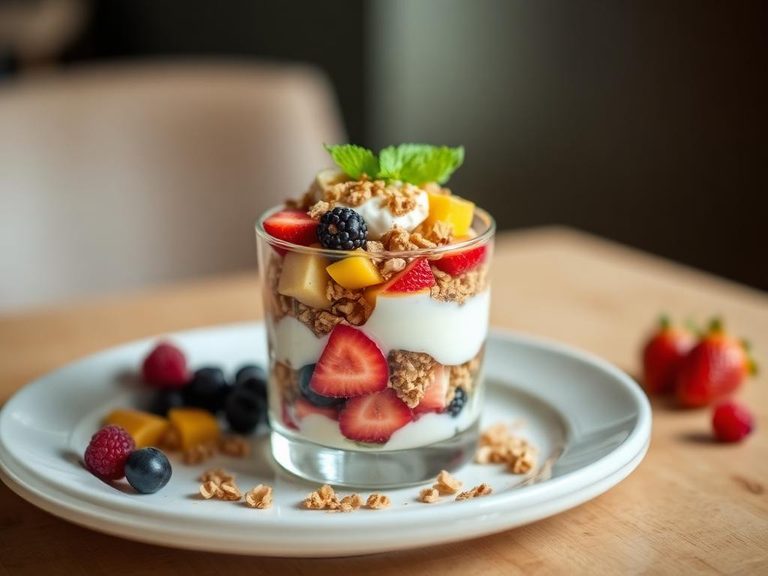
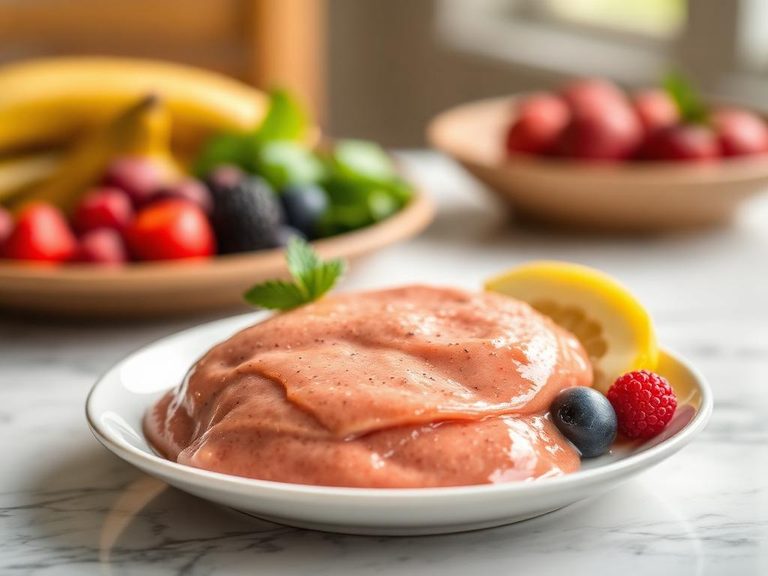
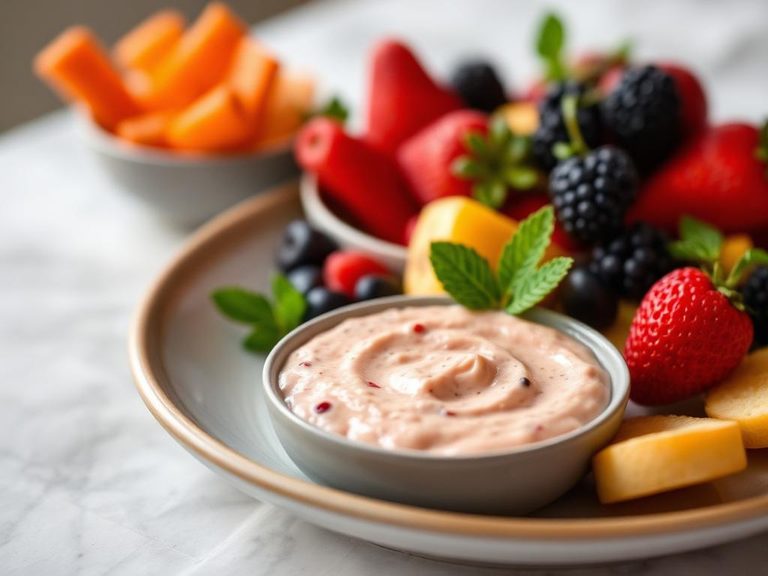
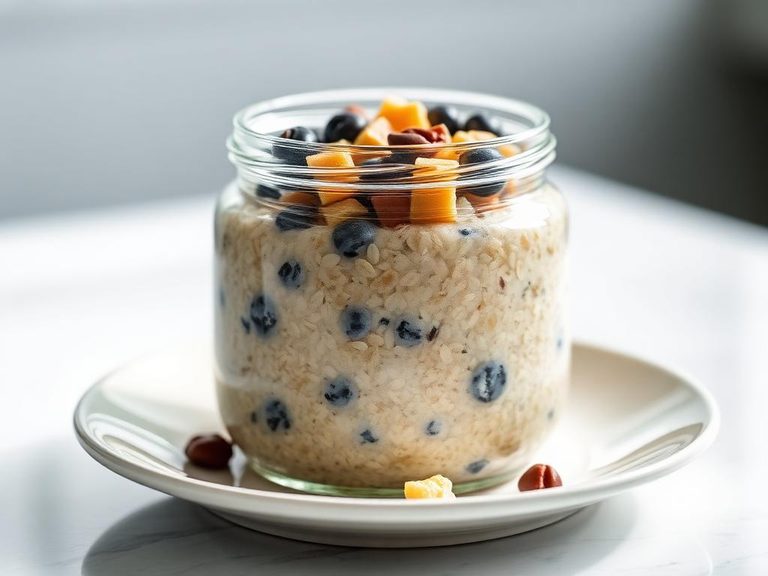
🌍 Where it's eaten
💡 Did you know?
Chobani's 'Fruit on the Bottom' line was inspired by founder Hamdi Ulukaya's childhood memories of eating yogurt with fruit in Turkey.
Full nutrition (USDA data · scales with serving)
| Water | 79.6 g |
| Energy | 80.0 kcal |
| Energy | 335 kj |
| Protein | 7.5 g |
| Total lipid (fat) | 0.18 g |
| Ash | 0.64 g |
| Carbohydrate, by difference | 12.1 g |
| Fiber, total dietary | 0.80 g |
| Calcium, Ca | 93.0 mg |
| Iron, Fe | 0.15 mg |
| Potassium, K | 128 mg |
| Sodium, Na | 31.0 mg |
| Vitamin C, total ascorbic acid | 0.30 mg |
| Vitamin A, RAE | 3.0 ug |
| Retinol | 0.00 ug |
| Carotene, beta | 37.0 ug |
| Carotene, alpha | 0.00 ug |
| Cryptoxanthin, beta | 0.00 ug |
| Vitamin A, IU | 62.0 iu |
| Alcohol, ethyl | 0.00 g |
| Caffeine | 0.00 mg |
Fat & fatty acid profile (per 100g)
| Fatty acids, total saturated | 0.10 g |
| Fatty acids, total monounsaturated | 0.05 g |
| Fatty acids, total polyunsaturated | 0.04 g |
| Fatty acids, total trans | 0.07 g |
| Cholesterol | 4.0 mg |
Amino acid profile (per 100g)
| Tryptophan | 0.11 g |
| Threonine | 0.33 g |
| Isoleucine | 0.40 g |
| Leucine | 0.74 g |
| Lysine | 0.64 g |
| Methionine | 0.20 g |
| Cystine | 0.05 g |
| Phenylalanine | 0.37 g |
| Tyrosine | 0.37 g |
| Valine | 0.49 g |
| Arginine | 0.27 g |
| Histidine | 0.21 g |
| Alanine | 0.25 g |
| Aspartic acid | 0.59 g |
| Glutamic acid | 1.6 g |
| Glycine | 0.14 g |
| Proline | 0.76 g |
| Serine | 0.41 g |
FAQ
Is the fruit on the bottom real fruit?
Yes, it is made from real pomegranate juice and fruit pieces, though it also contains some added sugar for sweetness and preservation.
Why is it so high in protein?
Greek yogurt is strained to remove excess whey, concentrating the protein. Chobani uses a proprietary straining process to achieve its signature thick texture and high protein content.
Can I eat this if I'm lactose intolerant?
Some people with lactose intolerance find they can tolerate Greek yogurt, as the straining process reduces lactose content. However, it's not lactose-free, so individual tolerance varies.
Nutrient density (calculated · NRF9.3)
Nutrient Rich Foods index: beneficial nutrients (protein, fiber, vitamins, minerals) minus saturated fat, added sugar & sodium, per 100 kcal.
NRF9.3 index — Fulgoni, Keast & Drewnowski, 2009. Computed from USDA nutrients.
Weight-loss friendliness (composite index)
Energy density 0.80 kcal/g · 37% calories from protein · 0.8 g fiber · 0.0 g sugar per 100 g.
Composite of energy density (Rolls et al., 1999), protein & fiber satiety, minus sugar. A calculated heuristic — ranks satiety-per-calorie, not a clinical measure.
Dietary load (calculated from USDA values)
Sodium-to-potassium ratio: 0.24 (lower is better — aim for ≤ 1)
Sodium:potassium per WHO potassium guidance. Computed from USDA nutrients.