

Yogurt, Greek, NS as to type of milk, plain
Common food
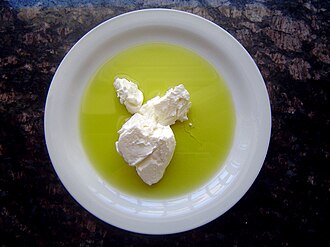
Photo: Wikipedia
Greek yogurt is a thick, strained yogurt with a rich, creamy texture and a distinctively tangy flavor. Its straining process removes much of the whey, concentrating its protein content to over 10 grams per 100 grams while keeping calories low. It's a protein powerhouse with a smooth, velvety mouthfeel that sets it apart from regular yogurt.
Calorie split: 60% protein · 21% carbs · 18% fat
↓ Full nutrition💚 Why it's loved
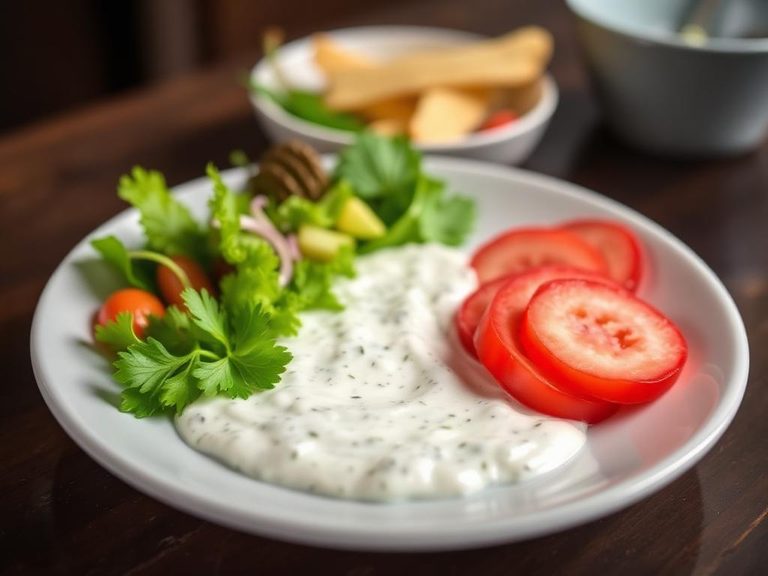
People love it for its luxuriously thick, spoonable texture and satisfying tang that isn't overly sour. Its high protein content makes it a filling, versatile staple that works equally well in a morning smoothie, a savory dip, or as a sour cream substitute.
⚠️ Watch-outs & how to enjoy it better
Its tartness can be off-putting to those accustomed to sweetened yogurts, and its thick texture may feel dense. Individuals with lactose intolerance may experience discomfort, and it can contain significant sodium in some brands. To counteract tartness, mix in fresh fruit or a drizzle of honey; for lactose sensitivity, choose brands labeled 'lactose-free' or start with small portions.
Key benefits
- Excellent source of high-quality protein for muscle maintenance
- Low in natural sugars compared to many other yogurts
- Rich in probiotics for gut health
- Provides calcium for bone strength
- Versatile base for both sweet and savory dishes
🍽️ Popular dishes





🌍 Where it's eaten
💡 Did you know?
The straining process to make Greek yogurt can remove up to three-quarters of the original liquid whey, which is why it's so much thicker and more protein-dense than regular yogurt.
Full nutrition (USDA data · scales with serving)
| Water | 84.2 g |
| Energy | 67.0 kcal |
| Protein | 10.2 g |
| Total lipid (fat) | 1.4 g |
| Carbohydrate, by difference | 3.6 g |
| Fiber, total dietary | 0.00 g |
| Total Sugars | 3.2 g |
| Calcium, Ca | 110 mg |
| Iron, Fe | 0.07 mg |
| Magnesium, Mg | 11.0 mg |
| Phosphorus, P | 135 mg |
| Potassium, K | 140 mg |
| Sodium, Na | 36.0 mg |
| Zinc, Zn | 0.52 mg |
| Copper, Cu | 0.02 mg |
| Selenium, Se | 9.8 ug |
| Vitamin C, total ascorbic acid | 0.00 mg |
| Thiamin | 0.02 mg |
| Riboflavin | 0.28 mg |
| Niacin | 0.21 mg |
| Vitamin B-6 | 0.06 mg |
| Folate, total | 7.0 ug |
| Folic acid | 0.00 ug |
| Folate, food | 7.0 ug |
| Folate, DFE | 7.0 ug |
| Choline, total | 15.2 mg |
| Vitamin B-12 | 0.69 ug |
| Vitamin B-12, added | 0.00 ug |
| Vitamin A, RAE | 9.0 ug |
| Retinol | 9.0 ug |
| Carotene, beta | 2.0 ug |
| Carotene, alpha | 0.00 ug |
| Cryptoxanthin, beta | 0.00 ug |
| Lycopene | 0.00 ug |
| Lutein + zeaxanthin | 0.00 ug |
| Vitamin E (alpha-tocopherol) | 0.04 mg |
| Vitamin E, added | 0.00 mg |
| Vitamin D (D2 + D3) | 0.00 ug |
| Vitamin K (phylloquinone) | 0.10 ug |
| Alcohol, ethyl | 0.00 g |
| Caffeine | 0.00 mg |
| Theobromine | 0.00 mg |
Fat & fatty acid profile (per 100g)
| Fatty acids, total saturated | 0.73 g |
| SFA 4:0 | 0.03 g |
| SFA 6:0 | 0.02 g |
| SFA 8:0 | 0.01 g |
| SFA 10:0 | 0.04 g |
| SFA 12:0 | 0.03 g |
| SFA 14:0 | 0.11 g |
| SFA 16:0 | 0.31 g |
| SFA 18:0 | 0.14 g |
| Fatty acids, total monounsaturated | 0.33 g |
| MUFA 16:1 | 0.02 g |
| MUFA 18:1 | 0.29 g |
| MUFA 20:1 | 0.00 g |
| MUFA 22:1 | 0.00 g |
| Fatty acids, total polyunsaturated | 0.05 g |
| PUFA 18:2 | 0.03 g |
| PUFA 18:3 | 0.01 g |
| PUFA 18:4 | 0.00 g |
| PUFA 20:4 | 0.00 g |
| PUFA 20:5 n-3 (EPA) | 0.00 g |
| PUFA 22:5 n-3 (DPA) | 0.00 g |
| PUFA 22:6 n-3 (DHA) | 0.00 g |
| Cholesterol | 8.0 mg |
Amino acid profile (per 100g)
Estimated from Frozen yogurts, vanilla, soft-serve — USDA does not publish this profile for Yogurt.
| Tryptophan | 0.05 g |
| Threonine | 0.17 g |
| Isoleucine | 0.23 g |
| Leucine | 0.37 g |
| Lysine | 0.30 g |
| Methionine | 0.09 g |
| Cystine | 0.04 g |
| Phenylalanine | 0.18 g |
| Tyrosine | 0.18 g |
| Valine | 0.25 g |
| Arginine | 0.14 g |
| Histidine | 0.10 g |
| Alanine | 0.13 g |
| Aspartic acid | 0.28 g |
| Glutamic acid | 0.79 g |
| Glycine | 0.08 g |
| Proline | 0.36 g |
| Serine | 0.20 g |
FAQ
Is Greek yogurt the same as regular yogurt?
No. Greek yogurt is strained to remove liquid whey, making it thicker, creamier, and higher in protein than regular yogurt, which is unstrained.
Why is Greek yogurt so high in protein?
The straining process concentrates the milk solids, effectively removing much of the liquid whey and lactose, which results in a significantly higher protein-to-volume ratio.
Can I use Greek yogurt in baking?
Yes, it's an excellent substitute for sour cream, buttermilk, or oil in many recipes, adding moisture and protein while reducing fat content.
Nutrient density (calculated · NRF9.3)
Nutrient Rich Foods index: beneficial nutrients (protein, fiber, vitamins, minerals) minus saturated fat, added sugar & sodium, per 100 kcal.
NRF9.3 index — Fulgoni, Keast & Drewnowski, 2009. Computed from USDA nutrients.
Weight-loss friendliness (composite index)
Energy density 0.67 kcal/g · 61% calories from protein · 0.0 g fiber · 3.2 g sugar per 100 g.
Composite of energy density (Rolls et al., 1999), protein & fiber satiety, minus sugar. A calculated heuristic — ranks satiety-per-calorie, not a clinical measure.
Dietary load (calculated from USDA values)
Potential renal acid load. Positive = acid-forming, negative = alkaline-forming.
Sodium-to-potassium ratio: 0.26 (lower is better — aim for ≤ 1)
Sodium:potassium per WHO potassium guidance. Computed from USDA nutrients.