

Yogurt, Greek, NS as to type of milk, fruit
Common food
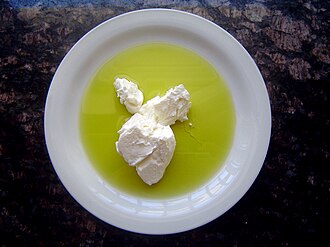
Photo: Wikipedia
Greek yogurt with fruit is a thick, creamy, strained yogurt swirled or mixed with fruit, offering a tangy-sweet flavor and a satisfying, spoonable texture. Its standout nutritional feature is its high protein content relative to its calorie count, making it a nutrient-dense choice. The addition of fruit provides natural sweetness and a pop of color, balancing the yogurt's inherent tartness.
Calorie split: 40% protein · 47% carbs · 13% fat
↓ Full nutrition💚 Why it's loved
People love it for the harmonious contrast between the rich, tangy yogurt base and the sweet, fruity component, creating a dessert-like experience without the guilt. Its versatility makes it a staple for quick breakfasts, post-workout fuel, or a healthy base for savory dishes.
⚠️ Watch-outs & how to enjoy it better
Many commercial fruit-flavored varieties can be high in added sugars, potentially leading to blood-sugar spikes. Those with dairy allergies or severe lactose intolerance should avoid it. To counteract sugar spikes, opt for plain Greek yogurt and mix in your own fresh or frozen fruit, or look for brands with no added sugars. Pairing it with a handful of nuts or seeds adds healthy fats and fiber to further stabilize blood sugar.
Key benefits
- Excellent source of protein for muscle maintenance and satiety.
- Provides probiotics for gut health.
- Good source of calcium for bone strength.
- Offers a convenient, balanced snack or breakfast option.
- Often lower in lactose than regular yogurt due to straining.
🍽️ Popular dishes




🌍 Where it's eaten
💡 Did you know?
The 'Greek' in Greek yogurt refers to the straining process, not the country of origin; this technique of concentrating yogurt by removing whey has been practiced for centuries across the Eastern Mediterranean and Middle East.
Full nutrition (USDA data · scales with serving)
| Water | 78.2 g |
| Energy | 91.0 kcal |
| Protein | 9.1 g |
| Total lipid (fat) | 1.3 g |
| Carbohydrate, by difference | 10.8 g |
| Fiber, total dietary | 0.10 g |
| Total Sugars | 8.2 g |
| Calcium, Ca | 100 mg |
| Iron, Fe | 0.12 mg |
| Magnesium, Mg | 10.0 mg |
| Phosphorus, P | 122 mg |
| Potassium, K | 133 mg |
| Sodium, Na | 35.0 mg |
| Zinc, Zn | 0.47 mg |
| Copper, Cu | 0.03 mg |
| Selenium, Se | 8.9 ug |
| Vitamin C, total ascorbic acid | 1.0 mg |
| Thiamin | 0.02 mg |
| Riboflavin | 0.26 mg |
| Niacin | 0.19 mg |
| Vitamin B-6 | 0.06 mg |
| Folate, total | 7.0 ug |
| Folic acid | 0.00 ug |
| Folate, food | 7.0 ug |
| Folate, DFE | 7.0 ug |
| Choline, total | 14.6 mg |
| Vitamin B-12 | 0.62 ug |
| Vitamin B-12, added | 0.00 ug |
| Vitamin A, RAE | 9.0 ug |
| Retinol | 9.0 ug |
| Carotene, beta | 2.0 ug |
| Carotene, alpha | 0.00 ug |
| Cryptoxanthin, beta | 0.00 ug |
| Lycopene | 0.00 ug |
| Lutein + zeaxanthin | 0.00 ug |
| Vitamin E (alpha-tocopherol) | 0.05 mg |
| Vitamin E, added | 0.00 mg |
| Vitamin D (D2 + D3) | 0.90 ug |
| Vitamin K (phylloquinone) | 0.10 ug |
| Alcohol, ethyl | 0.00 g |
| Caffeine | 0.00 mg |
| Theobromine | 0.00 mg |
Fat & fatty acid profile (per 100g)
| Fatty acids, total saturated | 0.71 g |
| SFA 4:0 | 0.03 g |
| SFA 6:0 | 0.02 g |
| SFA 8:0 | 0.01 g |
| SFA 10:0 | 0.04 g |
| SFA 12:0 | 0.03 g |
| SFA 14:0 | 0.11 g |
| SFA 16:0 | 0.30 g |
| SFA 18:0 | 0.14 g |
| Fatty acids, total monounsaturated | 0.33 g |
| MUFA 16:1 | 0.02 g |
| MUFA 18:1 | 0.29 g |
| MUFA 20:1 | 0.00 g |
| MUFA 22:1 | 0.00 g |
| Fatty acids, total polyunsaturated | 0.05 g |
| PUFA 18:2 | 0.03 g |
| PUFA 18:3 | 0.01 g |
| PUFA 18:4 | 0.00 g |
| PUFA 20:4 | 0.00 g |
| PUFA 20:5 n-3 (EPA) | 0.00 g |
| PUFA 22:5 n-3 (DPA) | 0.00 g |
| PUFA 22:6 n-3 (DHA) | 0.00 g |
| Cholesterol | 7.0 mg |
Amino acid profile (per 100g)
Estimated from Frozen yogurts, vanilla, soft-serve — USDA does not publish this profile for Yogurt.
| Tryptophan | 0.05 g |
| Threonine | 0.17 g |
| Isoleucine | 0.23 g |
| Leucine | 0.37 g |
| Lysine | 0.30 g |
| Methionine | 0.09 g |
| Cystine | 0.04 g |
| Phenylalanine | 0.18 g |
| Tyrosine | 0.18 g |
| Valine | 0.25 g |
| Arginine | 0.14 g |
| Histidine | 0.10 g |
| Alanine | 0.13 g |
| Aspartic acid | 0.28 g |
| Glutamic acid | 0.79 g |
| Glycine | 0.08 g |
| Proline | 0.36 g |
| Serine | 0.20 g |
FAQ
What's the difference between Greek yogurt and regular yogurt?
Greek yogurt is strained more to remove liquid whey, resulting in a thicker, creamier texture and a higher concentration of protein per serving compared to regular yogurt.
Is fruit-flavored Greek yogurt healthy?
It can be, but it depends on the brand. Check the label for added sugars. Many fruit-flavored varieties contain significant added sugar. A healthier option is to buy plain Greek yogurt and add your own fresh fruit.
Can I use fruit Greek yogurt in cooking?
Yes, but its sweetness makes it best suited for sweet dishes, baked goods, or as a topping. For savory cooking like marinades or sauces, plain Greek yogurt is typically preferred.
Nutrient density (calculated · NRF9.3)
Nutrient Rich Foods index: beneficial nutrients (protein, fiber, vitamins, minerals) minus saturated fat, added sugar & sodium, per 100 kcal.
NRF9.3 index — Fulgoni, Keast & Drewnowski, 2009. Computed from USDA nutrients.
Weight-loss friendliness (composite index)
Energy density 0.91 kcal/g · 40% calories from protein · 0.1 g fiber · 8.2 g sugar per 100 g.
Composite of energy density (Rolls et al., 1999), protein & fiber satiety, minus sugar. A calculated heuristic — ranks satiety-per-calorie, not a clinical measure.
Dietary load (calculated from USDA values)
Potential renal acid load. Positive = acid-forming, negative = alkaline-forming.
Sodium-to-potassium ratio: 0.26 (lower is better — aim for ≤ 1)
Sodium:potassium per WHO potassium guidance. Computed from USDA nutrients.