

Winter squash, cooked, fat added
Common food

Photo: Wikipedia
Winter squash, cooked with added fat, transforms from a firm, raw gourd into a tender, velvety delight with a naturally sweet, nutty flavor. The added fat—often butter or oil—amplifies its earthy richness and creates a silky mouthfeel that clings to the palate. At just 59 kcal per 100g, it offers a surprisingly light yet satisfying bite, with fiber and complex carbs providing steady energy without heaviness.
Calorie split: 5% protein · 54% carbs · 41% fat
↓ Full nutrition💚 Why it's loved
People adore its caramelized sweetness and buttery tenderness, which makes it a comforting staple in autumn and winter meals. Its versatility allows it to shine in soups, roasts, and even desserts, bridging savory and sweet traditions across cultures.
⚠️ Watch-outs & how to enjoy it better
The added fat can increase calorie density and may concern those monitoring saturated fat intake, while the natural sugars (3.2g/100g) can cause mild blood-sugar spikes if eaten in large portions. To counteract this, pair it with protein (like beans or nuts) or healthy fats (like olive oil) to slow sugar absorption, and stick to a 1-cup serving to keep carbs in check.
Key benefits
- Rich in beta-carotene, which the body converts to vitamin A for eye health
- Provides 2.7g fiber per 100g, supporting digestive regularity
- Low calorie density (59 kcal/100g) aids in weight management
- Contains antioxidants like lutein and zeaxanthin that may protect against cellular damage
- The added fat enhances absorption of fat-soluble vitamins A and E
🍽️ Popular dishes
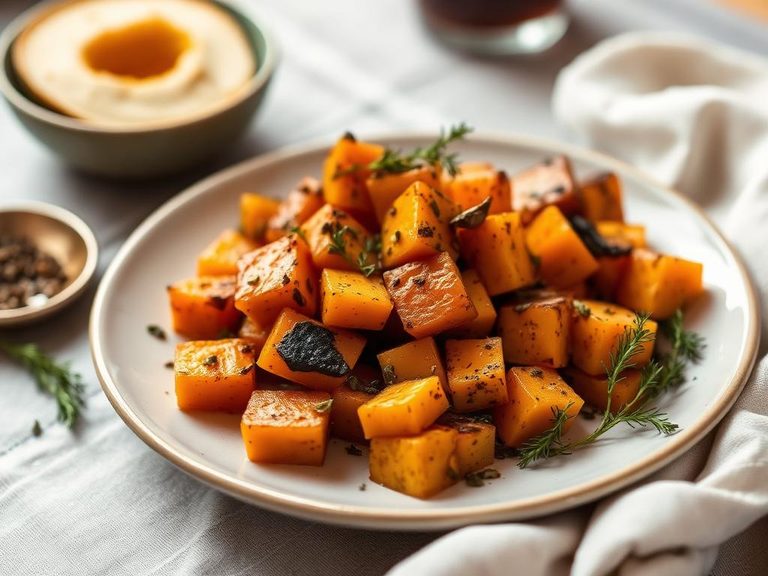
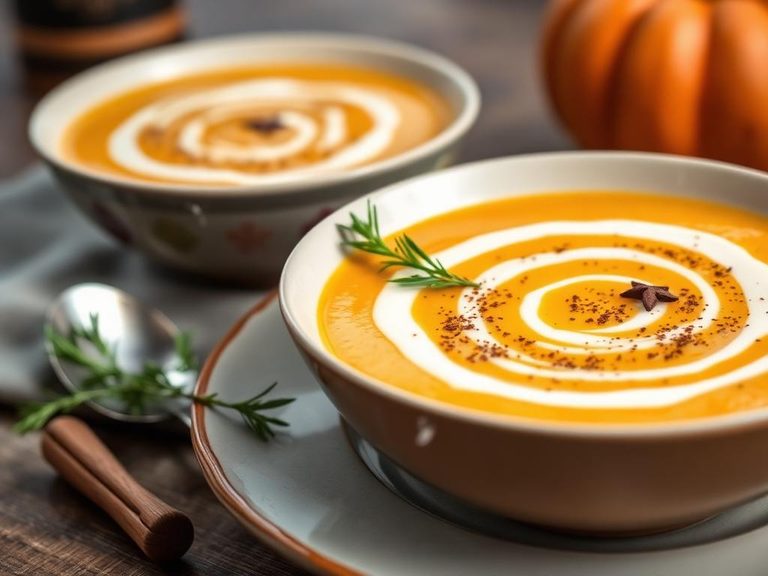
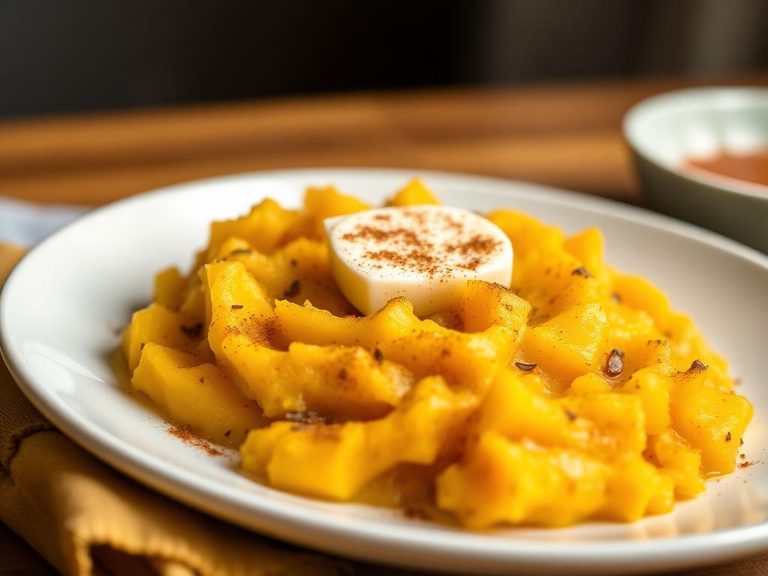
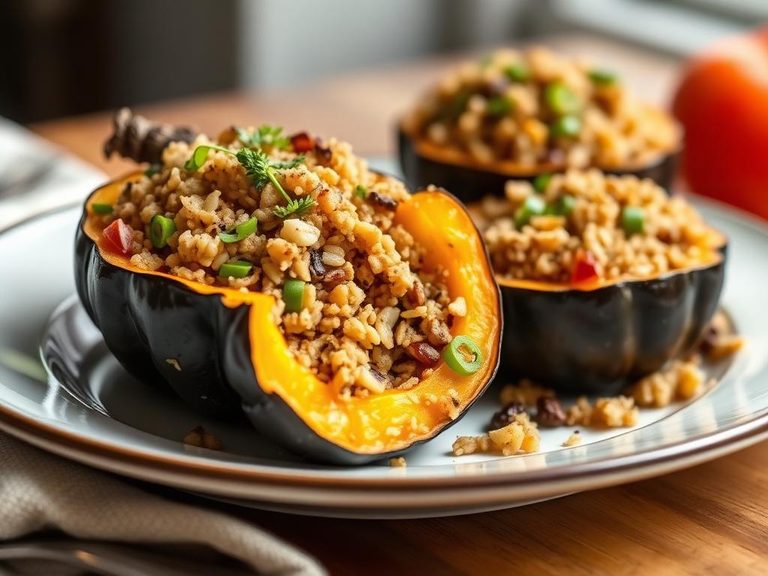
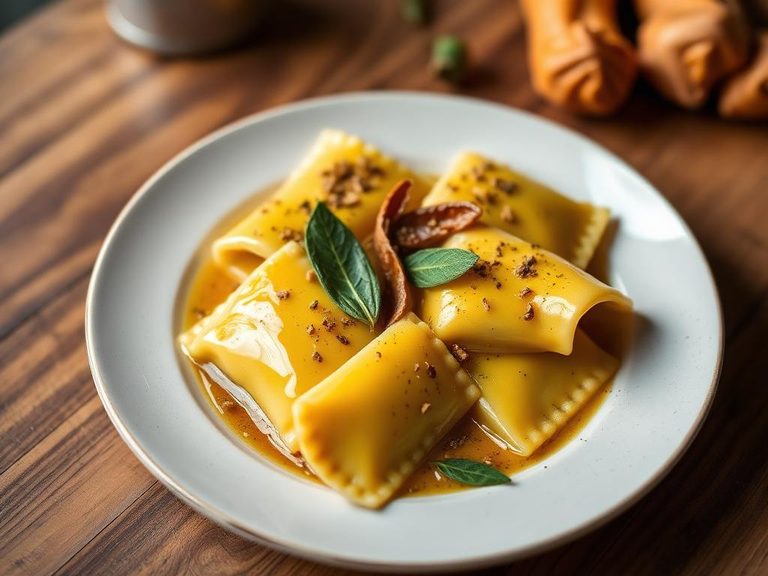
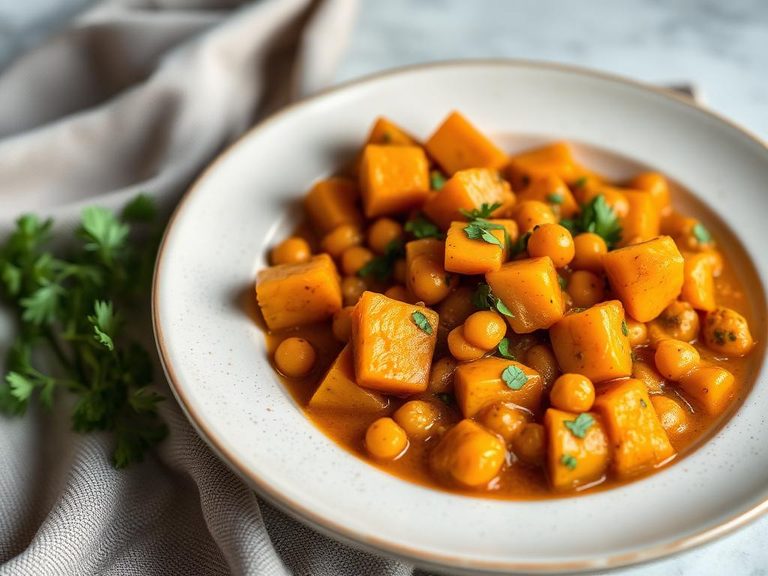
🌍 Where it's eaten
💡 Did you know?
Winter squash seeds were historically used by Native Americans as a natural deworming remedy, and modern studies confirm they contain compounds like cucurbitin that may have anti-parasitic properties.
Full nutrition (USDA data · scales with serving)
| Water | 86.7 g |
| Energy | 59.0 kcal |
| Protein | 0.87 g |
| Total lipid (fat) | 2.9 g |
| Carbohydrate, by difference | 8.6 g |
| Fiber, total dietary | 2.7 g |
| Total Sugars | 3.2 g |
| Calcium, Ca | 22.0 mg |
| Iron, Fe | 0.43 mg |
| Magnesium, Mg | 13.0 mg |
| Phosphorus, P | 19.0 mg |
| Potassium, K | 234 mg |
| Sodium, Na | 122 mg |
| Zinc, Zn | 0.21 mg |
| Copper, Cu | 0.08 mg |
| Selenium, Se | 0.40 ug |
| Vitamin C, total ascorbic acid | 9.3 mg |
| Thiamin | 0.02 mg |
| Riboflavin | 0.07 mg |
| Niacin | 0.48 mg |
| Vitamin B-6 | 0.17 mg |
| Folate, total | 19.0 ug |
| Folic acid | 0.00 ug |
| Folate, food | 19.0 ug |
| Folate, DFE | 19.0 ug |
| Choline, total | 10.5 mg |
| Vitamin B-12 | 0.00 ug |
| Vitamin B-12, added | 0.00 ug |
| Vitamin A, RAE | 264 ug |
| Retinol | 11.0 ug |
| Carotene, beta | 2709 ug |
| Carotene, alpha | 660 ug |
| Cryptoxanthin, beta | 0.00 ug |
| Lycopene | 0.00 ug |
| Lutein + zeaxanthin | 1370 ug |
| Vitamin E (alpha-tocopherol) | 0.50 mg |
| Vitamin E, added | 0.00 mg |
| Vitamin D (D2 + D3) | 0.00 ug |
| Vitamin K (phylloquinone) | 6.4 ug |
| Alcohol, ethyl | 0.00 g |
| Caffeine | 0.00 mg |
| Theobromine | 0.00 mg |
Fat & fatty acid profile (per 100g)
| Fatty acids, total saturated | 0.74 g |
| SFA 4:0 | 0.02 g |
| SFA 6:0 | 0.01 g |
| SFA 8:0 | 0.01 g |
| SFA 10:0 | 0.02 g |
| SFA 12:0 | 0.02 g |
| SFA 14:0 | 0.07 g |
| SFA 16:0 | 0.42 g |
| SFA 18:0 | 0.14 g |
| Fatty acids, total monounsaturated | 0.93 g |
| MUFA 16:1 | 0.02 g |
| MUFA 18:1 | 0.89 g |
| MUFA 20:1 | 0.01 g |
| MUFA 22:1 | 0.00 g |
| Fatty acids, total polyunsaturated | 0.87 g |
| PUFA 18:2 | 0.70 g |
| PUFA 18:3 | 0.17 g |
| PUFA 18:4 | 0.00 g |
| PUFA 20:4 | 0.00 g |
| PUFA 20:5 n-3 (EPA) | 0.00 g |
| PUFA 22:5 n-3 (DPA) | 0.00 g |
| PUFA 22:6 n-3 (DHA) | 0.00 g |
| Cholesterol | 2.0 mg |
Amino acid profile (per 100g)
Estimated from Squash, winter, butternut, frozen, unprepared — USDA does not publish this profile for Winter squash.
| Tryptophan | 0.03 g |
| Threonine | 0.05 g |
| Isoleucine | 0.07 g |
| Leucine | 0.10 g |
| Lysine | 0.07 g |
| Methionine | 0.02 g |
| Cystine | 0.01 g |
| Phenylalanine | 0.07 g |
| Tyrosine | 0.06 g |
| Valine | 0.08 g |
| Arginine | 0.10 g |
| Histidine | 0.03 g |
| Alanine | 0.07 g |
| Aspartic acid | 0.19 g |
| Glutamic acid | 0.31 g |
| Glycine | 0.07 g |
| Proline | 0.06 g |
| Serine | 0.07 g |
FAQ
Is winter squash high in sugar?
It contains 3.2g of sugar per 100g, which is moderate—less than many fruits. The fiber (2.7g) helps slow sugar absorption, making it a balanced choice for most diets.
Can I eat winter squash if I'm watching my fat intake?
Yes, but note that this version has added fat (2.88g per 100g). You can reduce fat by steaming or roasting with minimal oil, or choose plain cooked squash to cut calories.
What's the best way to store cooked winter squash?
Store in an airtight container in the refrigerator for up to 5 days. For longer storage, freeze in portions for up to 3 months, though texture may soften slightly.
Nutrient density (calculated · NRF9.3)
Nutrient Rich Foods index: beneficial nutrients (protein, fiber, vitamins, minerals) minus saturated fat, added sugar & sodium, per 100 kcal.
NRF9.3 index — Fulgoni, Keast & Drewnowski, 2009. Computed from USDA nutrients.
Weight-loss friendliness (composite index)
Energy density 0.59 kcal/g · 6% calories from protein · 2.7 g fiber · 3.2 g sugar per 100 g.
Composite of energy density (Rolls et al., 1999), protein & fiber satiety, minus sugar. A calculated heuristic — ranks satiety-per-calorie, not a clinical measure.
Dietary load (calculated from USDA values)
Potential renal acid load. Positive = acid-forming, negative = alkaline-forming.
Sodium-to-potassium ratio: 0.52 (lower is better — aim for ≤ 1)
Sodium:potassium per WHO potassium guidance. Computed from USDA nutrients.